AI Music and Me
Yes, AI Can Write Music — But Good AI Music Still Takes Real Skill
Lately, it seems like everyone with a laptop and a prompt window is a songwriter. Type in a few lines, hit “generate,” and out pops a verse and chorus that rhymes and even makes a little sense. But let’s get one thing straight: just because AI can churn out music doesn’t mean it’s good music. And if you want your AI-generated song to actually move people, it still takes something that can’t be downloaded—a little human skill.
I’ve played music most of my life. Piano lessons as a kid, guitar as a teenager, and countless hours messing around with chords, melodies, and lyrics that meant something to me. So when I started using AI to help me write music, it wasn’t about replacing that process—it was about amplifying it.
AI Is a Tool, Not a Talent
AI can spit out chord progressions, melodies, lyrics, even full-on orchestrations. But just like a grand piano doesn’t make you Chopin, AI won’t make you the next Paul Simon unless you know a few things first:
-
You need musical instincts. Knowing which chords feel right under a melody, or where the rhythm needs to shift, still matters.
-
You need taste. AI might offer 20 verses, but if you can’t tell which one has emotional weight or musical flow, you’re lost in the weeds.
-
You need lyric chops. Sure, AI can rhyme “fire” with “desire,” but will it know when to not rhyme? When to hold a line longer for impact? When less is more? That’s a songwriter’s job.
Good AI Music Comes From Good Musicians
I use AI as a co-writer, not a ghostwriter. I might start with a feeling—a story I want to tell, or a mood I’m chasing. I sketch out a few lines, pick a key, suggest a vibe. Then the AI kicks back ideas: chord progressions, verse concepts, rhyming couplets. And then I do the real work—editing, reworking, adding nuance, stripping away filler.
Sometimes the best line is the one I write myself after seeing five bad AI ones. Sometimes the AI nails a phrase I never would have thought of. It’s a collaboration, but the final product still has my fingerprints all over it.
If You Want Meaning, Bring the Meaning
AI doesn’t know heartbreak. It doesn’t get nostalgic over a childhood melody or write a love song because someone broke its heart at 2 a.m. That’s your job. You bring the story. You bring the honesty. The AI is just the fancy pencil you’re writing with.
I’ve seen people post AI songs that are technically correct—but emotionally vacant. And I’ve also seen artists use AI to accelerate their ideas, sketch whole arrangements in minutes, and bring out new creative angles they might never have found. The difference is always the human at the helm.
Final Chord
If you’ve got a background in piano or guitar, if you’ve written songs before, if you’ve ever obsessed over a rhyme or wrestled with a bridge that just wouldn’t land—AI can be an incredible creative partner. But like any bandmate, it plays better when you lead with confidence.
So yeah, anyone can write music with AI. But if you want to write good music with AI—music that sounds great and means something—it still takes skill. And the best news? That skill is something you can build. Just like always.
Now if you’ll excuse me, I’ve got a song to finish writing—with a little help from my (robot) friend.
Audiophile System

Old Ears, New Tricks: Streaming 8-Channel DTS Music to My Anthem MRX750
I may be approaching 70 and steadily trading in some of my high-frequency hearing for a little more wisdom (or so I tell myself), but one thing hasn’t faded: my love for loud, clean, immersive music. Not just stereo—I’m talking real multichannel sound. Eight channels of DTS-encoded bliss, filling my living room like a private concert hall. Here’s how I’ve set it up and why it still makes me feel like a kid on Christmas morning every time I hit play.
The Gear: Old Dog, Audiophile Tricks
At the center of it all is my Anthem MRX720 receiver, a beast of a unit with enough processing power and DAC magic to handle high-resolution multichannel music without flinching. Feeding it is a Windows 11 PC loaded with FLACs and DTS-encoded WAV files, many ripped from SACDs, DVD-As, and obscure European bootlegs I’m probably not allowed to legally own (but that’s between me and Klaus from Bavaria).
My speaker setup is a classic 7.1: two towers in front, center channel, two side surrounds, two rear surrounds, and a subwoofer that shakes the drywall if I’m feeling bold. Sometimes I pare it down to just the towers and surrounds for music-only sessions, but that Anthem makes even stereo content sound like it’s pouring in from the heavens.
The Path: From PC to Eardrum
Most multichannel music doesn’t stream easily from modern platforms—they’re all stereo and compression-happy. So I keep it local, baby. Here’s my setup:
-
Player: I use Foobar2000 with the WASAPI output plugin for bit-perfect playback. It’s nerdy, free, and endlessly customizable.
-
Format: Most of my music is in DTS 5.1 or 7.1 WAV/FLAC format. You can’t just throw this at Spotify and expect results. This stuff needs coaxing.
-
Connection: The PC is connected to the Anthem MRX750 via HDMI. HDMI is key—it’s the only reliable way to pipe full-resolution multichannel LPCM straight to the receiver without downsampling or converting.
-
Anthem ARC Genesis: I ran room correction using Anthem’s ARC software, which helped tame the bass and shape the mids. Even if I can’t hear everything over 12kHz anymore, I want what I can hear to sound perfect.
The Experience: Old Dog, Big Grin
When that first guitar lick from Pink Floyd’s Dark Side of the Moon comes swirling in from the rear channels and the kick drum thumps through the sub like a heartbeat, I don’t miss the 18kHz sparkle. I’m in the mix. Artists recorded this stuff for surround for a reason—because it’s glorious. It’s not background music. It’s not “Alexa, play yacht rock.” It’s an experience.
Sometimes I’ll cue up something orchestral—Mahler’s 5th in multichannel is a religious experience. Other times it’s old-school DTS-CDs from the early 2000s. You haven’t heard Steely Dan until they’re all around you, individually.
Age is Just a Number (and a Little Tinnitus)
Sure, my ears aren’t what they used to be. But thanks to smart EQ, good gear, and years of figuring this stuff out, I can still enjoy music in a way that rivals any twenty-something with a Spotify account and a Bluetooth speaker. And besides, when you’re pushing 95 decibels through Anthem-quality amplification, the highs start to shimmer again—if only in your imagination.
So if you’re an aging audiophile wondering whether multichannel music is worth the effort: Yes. Yes, it is. Fire up that DTS, crank up the Anthem, and let yourself get lost in the soundstage. Who says only young people get to rock out?
Disklavier Upgrades
Upgrading a Yamaha Disklavier Mark II with Pianostream—Thanks to Richie Hayes
When you’ve got a beautiful old Yamaha Disklavier Mark II sitting in your living room, you start to dream about what it could do with a few modern upgrades. The piano itself still plays like a dream, but the floppy-drive-based controller? Not so much. I wanted to stream songs wirelessly, play along with synced audio, and access modern performance libraries from my iPad. That’s when I discovered Piranostream—and thankfully, Richie Hayes.
This project would not have happened without Richie’s knowledge, encouragement, and technical expertise. Richie isn’t just a piano tech—he’s a Disklavier whisperer. His deep experience with Yamaha’s hardware, combined with a passion for helping people bring their pianos into the modern age, was exactly what I needed.
The Mission: Mark II Meets DKC-850
The key to modernizing the Disklavier was replacing the original controller with a Yamaha DKC-850, a much newer unit that supports USB, SD card media, and—most importantly—can interface with Piranostream. But while the DKC-850 was designed for newer models, getting it to talk to a Mark II from the late ‘90s required some finesse.
Enter Richie Hayes.
Richie patiently walked me through the entire process—how to connect the DKC-850 to the Mark II’s key and solenoid hardware, how to configure the unit to recognize the older electronics, and even how to troubleshoot MIDI signal paths. His documentation and one-on-one guidance made the whole process not just possible, but smooth.
A New Power Supply for a New Era
Of course, no upgrade project is complete without a minor crisis. The original power supply in the Mark II had seen better days—it was noisy, unstable, and beginning to fail intermittently. Richie again came to the rescue, advising on the safest and cleanest way to replace the power supply with a modern, reliable unit. Once installed, everything came alive. The piano booted clean, responded perfectly, and was finally ready for the 21st century.
Streaming with Piranostream
With the DKC-850 installed and humming, I connected Piranostream to my iPad and watched the magic happen. Suddenly, I could stream high-quality MIDI performances directly to the piano, complete with synchronized audio. Whether it was classical, jazz, or pop, the Mark II played it all back effortlessly, as if it had been born for this moment.
Final Thoughts: A Tip of the Hat to Richie Hayes
If you have an old Yamaha Disklavier Mark II—or really any Disklavier gathering dust—it’s not just salvageable. It can be spectacular. The upgrade path via a DKC-850 and Piranostream is real, and with someone like Richie Hayes in your corner, it’s not just doable—it’s enjoyable.
Richie, thank you for helping this piano find its voice again. You turned a tech headache into a musical joyride.
New Guitar – The Blackbird
Newest aquisition this year was a guitar I have had my eye one for a couple years. Special thanks to my buddy for finally selling this to me after years of envy.
My Old 1986 Midi Music Site……
Formerly known as my “Cool on a Disklavier Page” Written in 1986, this page is dedicated to my piano-a Mark IV Yamaha Disklavier, the first piece of furniture that Gina and I ever purchased. Our small recording studio includes a Fender Telecaster, A Martin D18, An Ovation , a Line 6 Guitar Port, an Antares ATR1, and a Dedicated Music Sequencing Dual Screen Computer loaded with various Sequencers, and composing software. This page is dedicated to Music for the Yamaha Disklavier. From my 1986 Midi Website.
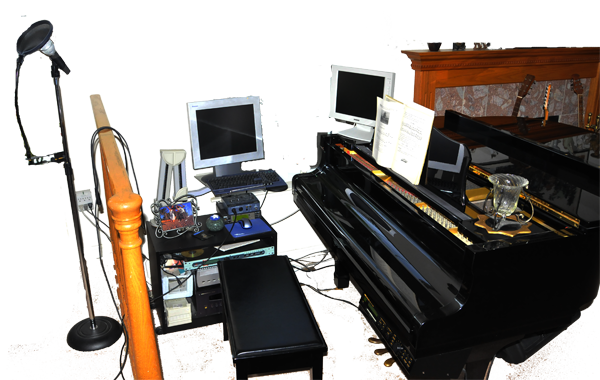
Hello and welcome to our Disklavier Cyber Music Collection. I have included on this page, an eclectic collection of “rare” midi that I have snagged in the surf. We listen to our midi thru a Yamaha MU80XG sound module combined with a Yamaha Disklavier Grand Piano and the following pieces have been chosen because they sound good on our setup and they are not found on every single Midi Web Page on Earth. WE stream this page to our piano to demo it! Should you accidentally run into some unusual piano midi, please zip it up and ATTACH it to some mail to us. * The following midi selections have been re sequenced and rechanneled for optimized quality on our specific setup. They might sound pretty bad on some sound generic card midi tone generators.
- you-never-give-me-your-money-beatles
- you-make-me-smile-dave-koz
- the-velocity-of-love-susan-ciani
- the-piano-theme-movie-soundtrack
- swing-cafe
- striving
- song-for-kei-david-benoit
- soft-days
- sing-allan-parsons-project
- roxanne-sting
- play-misty-for-me
- nice-but-unkown
- mias-song
- marin-m-walthius
- keepers
- josie-steely-dan
- james-pat-methaney
- home-again-ewf
- groovin-ewf
- freedom-at-midnight-david-benoit
- frankenstein-allen-parsons-project
- every-little-thing-bruce-hornsby
- early-morning-attitude-grp
- cybermusic-2
- cybermusic3
- cyberbeat-m-walthius
- constanz
- come-september-ewf
- cat-walk
- bop-university
- boogie-riff
- boogie-down-ewf
- blues-riff
- blue-danube-waltz-by-johann-strauss
- best-for-less
- angel-eyes
- an-olympic-theme-unknown
- after-the-love-is-gone-ewf
The Soundtrack of my life….
- Phoenix
- The Stokes
- Michael Hedges
- Don Ross
- Andy McKee
- Carlos Vamos
- Jesse Cook
- David Benoit
- James Taylor
- Dave Koz
- Joe Satriani
- Peter Townsend and the WHO
- Michael Franks
- Nick Drake
- Jack Johnson
- Norah Jones
- Steely Dan
- John Mayer
- Andrea Bocelli
- Linkin Park
- The Red Hot Chili Peppers
- The Greatfull Dead
- B-52s
- Pablo Cruise
- America
- The Doobie Brothers
- Jackson Brown
- Don McClean
- The Tubes
- Boz Scaggs
- The Beatles
- Chicago
- Creedence Clearwater Revival
- Santana
- JS Bach
- Mozart
- Vivaldi
- Beethovan