It had been a couple of months since I’d fished the lake — possibly my longest dry spell on local water that I can remember. The problem with a layoff like that is you have to relearn the place. San Luis fishes completely differently depending on the height of the reservoir, the water temperature, and the wind. Two months away and the lake basically forgets who you are.
This morning I got up at seven, deciding to go a little later than usual. There was a heat advisory, but nothing predicted over a hundred, and I’ve fished plenty of advisories before. With wind moving over the water it’s honestly fine, and if it isn’t, you jump in the lake. Bring enough ice water and it’s a non-issue. The upside is that heat advisories scare everybody else off — which is hilarious, because the heat cooks up big mats of green algae, and stripers love an algae mat. So I drove out feeling pretty optimistic.
A quick bit of good news before the embarrassing part. I’d heard last month — while I was down in Mexico chasing tarpon — that they were finally changing the mussel-inspection rules. At first it smelled like fake news; as recently as two weeks ago they were still inspecting boats and slapping an eight-day quarantine between the forebay and the lake. But when I pulled into the launch at Dinosaur Point and asked, common sense had at last broken out: single color band, no restrictions between the two bodies of water. Translation: I can fish the forebay and the lake on the same day, something I haven’t been able to do in years. I’ve been complaining about this exact rule in my blog for ages, so consider this my victory lap.
Now the embarrassing part.
As I slid the boat off the trailer, a little voice in the back of my head asked a simple question: did you put the plug in? And I could not, for the life of me, remember. Normally the inspection station is my unintentional checklist — but there was no inspection this time. Just a tag and a clear conscience. So with the boat already floating and the trailer still in the lake, I hopped aboard and flipped on the bilge pump, purely to see if anything was coming in. A glorious fountain of lake water erupted from the bilge. I leapt back out and yanked the boat onto the trailer faster than I’ve moved in years. Thank God I hadn’t motored off to discover this in open water. Up it came, and — yep — no plug. Rookie stuff. The boat had been in the water maybe five minutes, and it took me at least that long to drain it, screw the plug back in, and slink off like nothing happened. A couple of shore fishermen had front-row seats to the whole boat-launching dance. There were only four other trailers in the lot, so at least my audience was small.
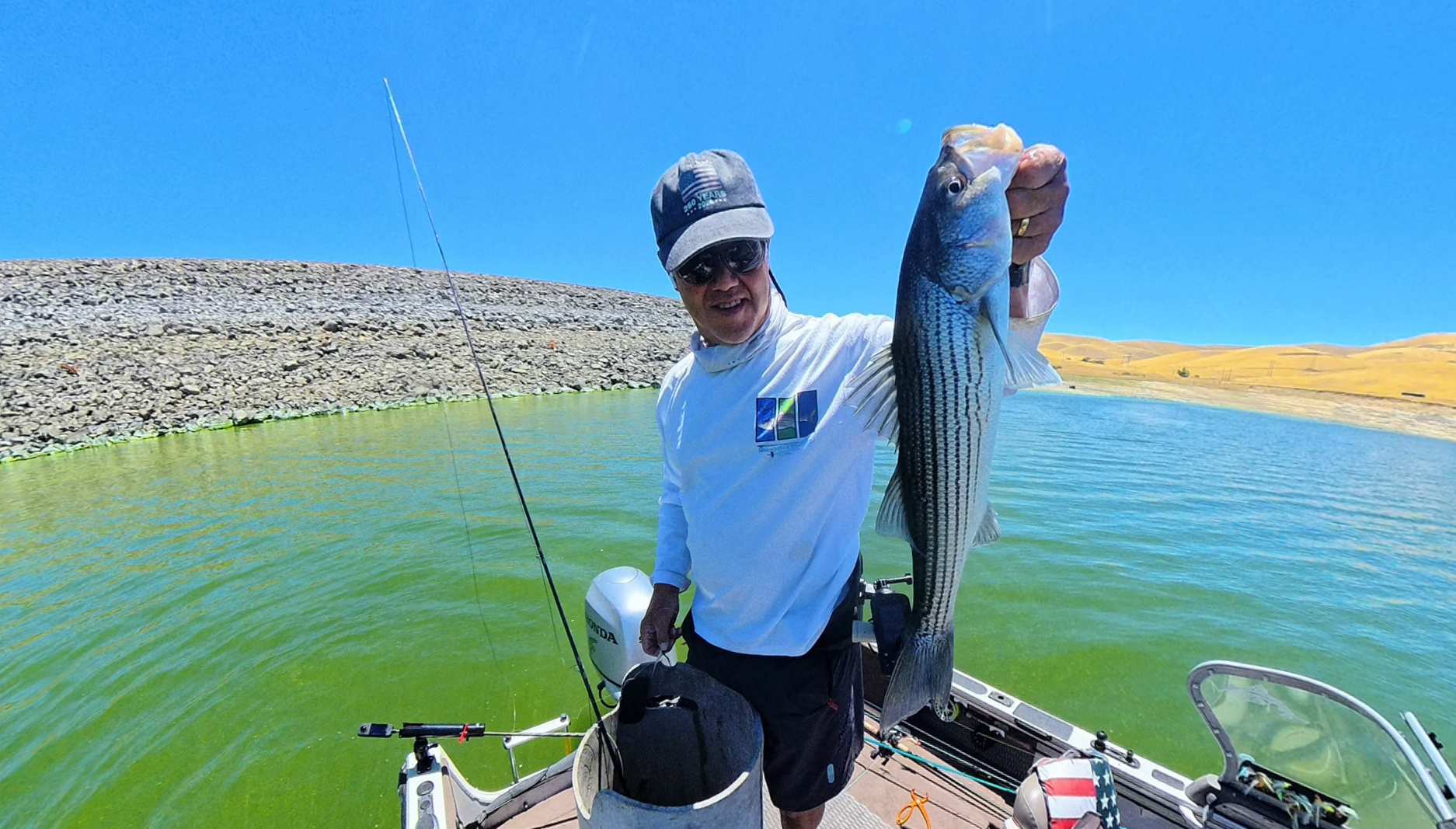
The local who’d been there since daybreak gave me the report: dead-flat morning, glassy, not a single fish working the surface. He did mention that big mats of green algae were blowing from the dam clear across to the Dinosaur Cove shoreline — said it like it was bad news. I told him that’s actually a good thing. Stripers tuck under those mats for shade, the bait does too, and the edges of an algae line can be money.
First stop, Las Piedras. I love those rocks. The water was well down the rocks, and I could see a green line where the wind was shoving a thick mat onto the bank. I LiveScoped the shoreline and marked fish right on the bottom — present, but not stacked in big schools. Maybe they were sulking in the cooler water, waiting out the heat.
I like to search with a size 2 Lee Haskins Delta Smelt, tweaked a little redder to read like a crawdad, fished on a 350-grain Outbound Short. I want that fly to sink like a brick, even in three or four feet of water. I’ve always fished the fastest-sinking lines I can get away with, and I control depth by when I start stripping and how fast — not by switching to floating, intermediate, or type-3 lines, which never help much when fish want a fast-moving fly. Heavy lines keep me in the water more, keep my line straighter, kill the slack, and let me actually feel the drop. You have to feel the drop. The earlier days fishing was about slow retrieves along the bottom trying to get the hunkered down fish to come up and eat. I could see them on the Livescope doing this. Very casual eating.
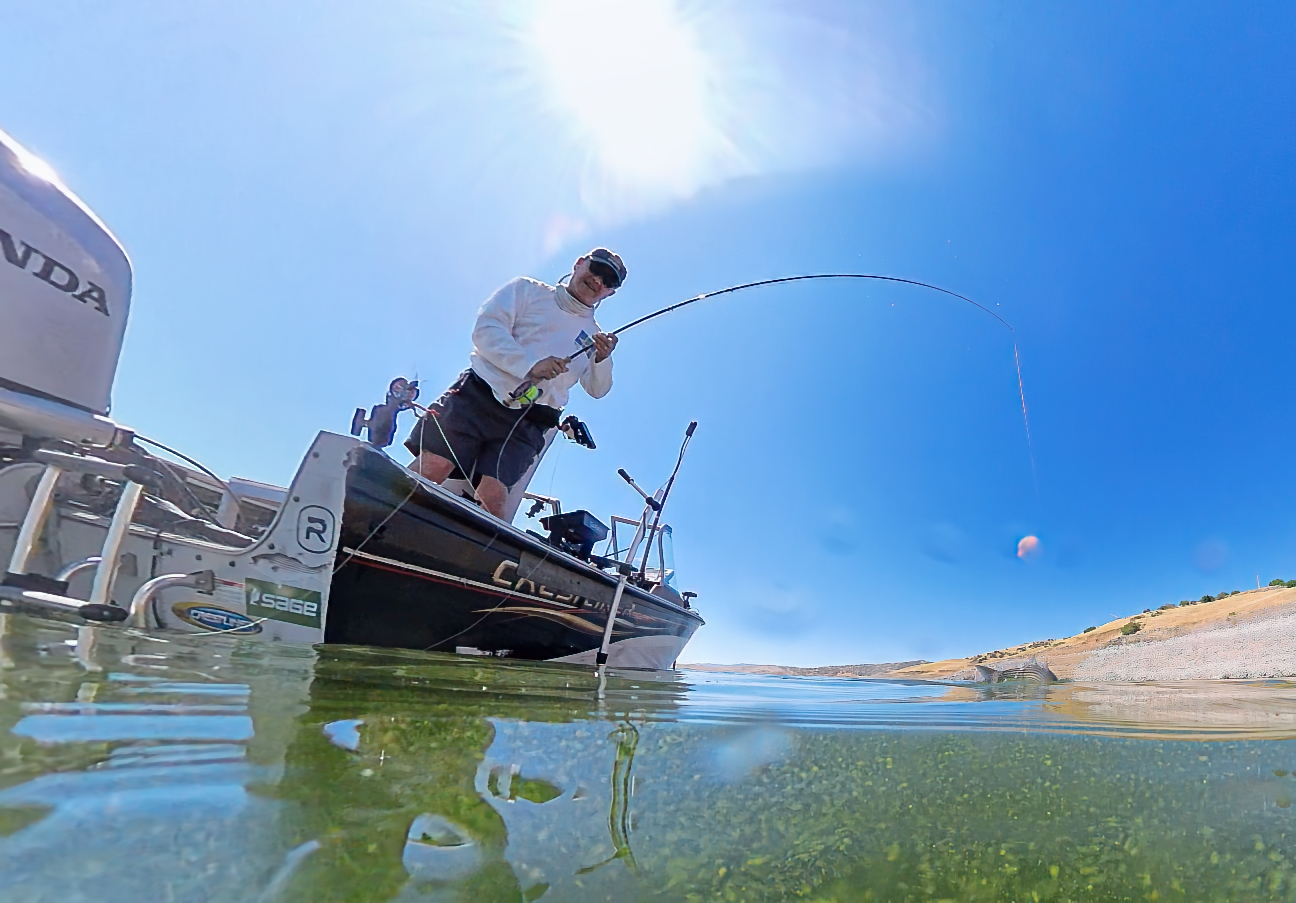
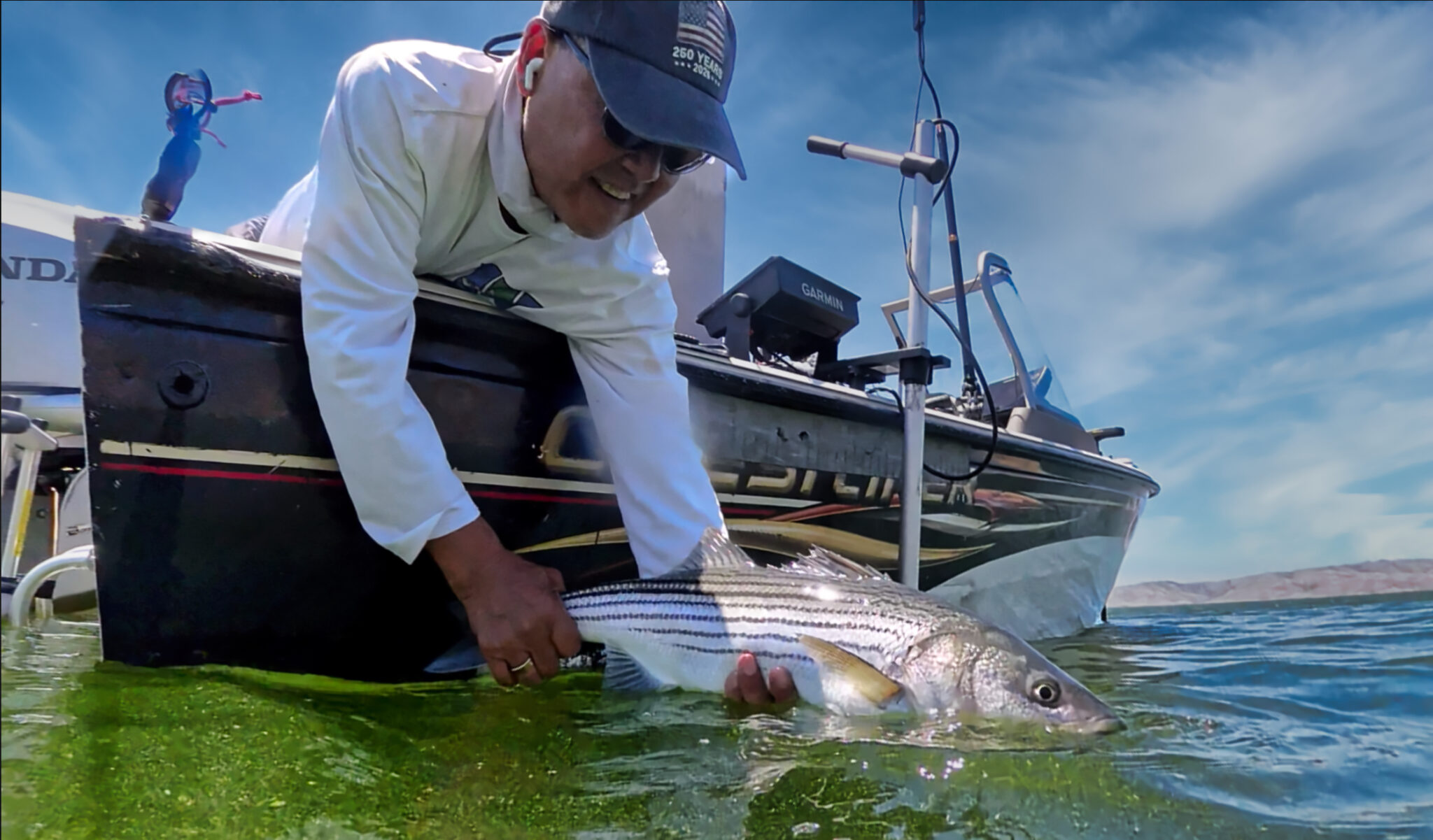
I picked one up right away fishing deep and slow — a 23-inch brute that pulled like a ten-pounder. After fishing the Delta with Mike Costello a couple weeks ago, I had a feeling that San Luis stripers were a bit wimpier than Delta fish. I was wrong. The fish today fought like savages and a couple took long runs and I am greedy giving line to stripers with 20 lb test – all the better to get them landed as fast as possible and get the fly back in the action.
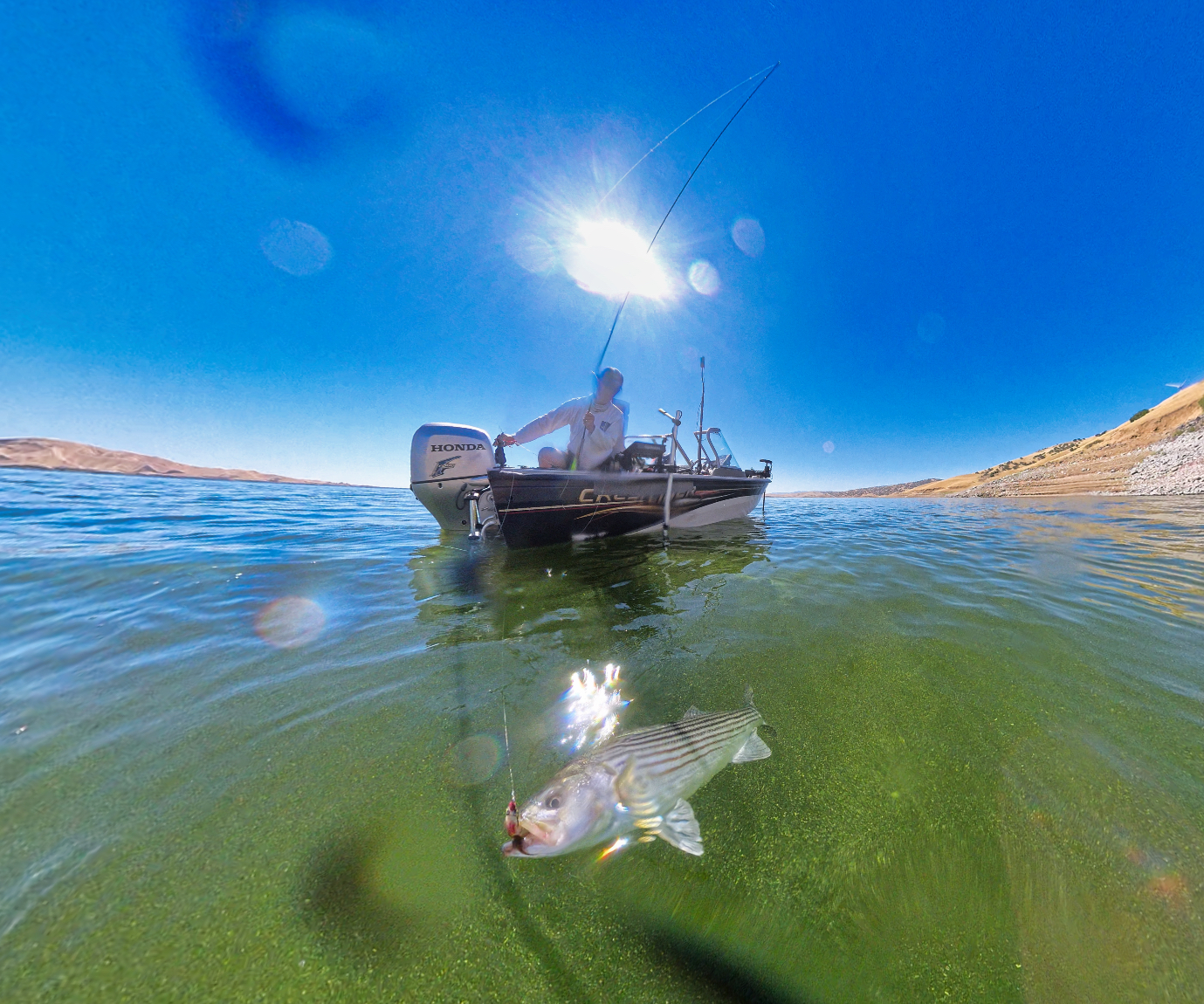
By late morning, the onshore breeze had pushed and concentrated the algae mat against the bank, and the bite changed. I started hooking more fish casting right at the shoreline, under the green muck. Strip, pause, boom, repeat. After a half-dozen like that, I snagged a fly on a rock and went in to retrieve it — and while I was there, made one idle cast parallel to the bank in literally a foot of water. Six casts later I’d landed three more fishing like that. The fish were tucked up against the shoreline under the mat, hunting bait i presume. I think they like it there: cozy, shaded, and catered.
I kept two for dinner, cleaned them on the spot, and pointed the boat toward the Bay of Pigs for the Dam Crawdadding Run. I love that stretch. The fish had no food in there stomachs – they were feeding opportunisticly which usually means any fly will do.
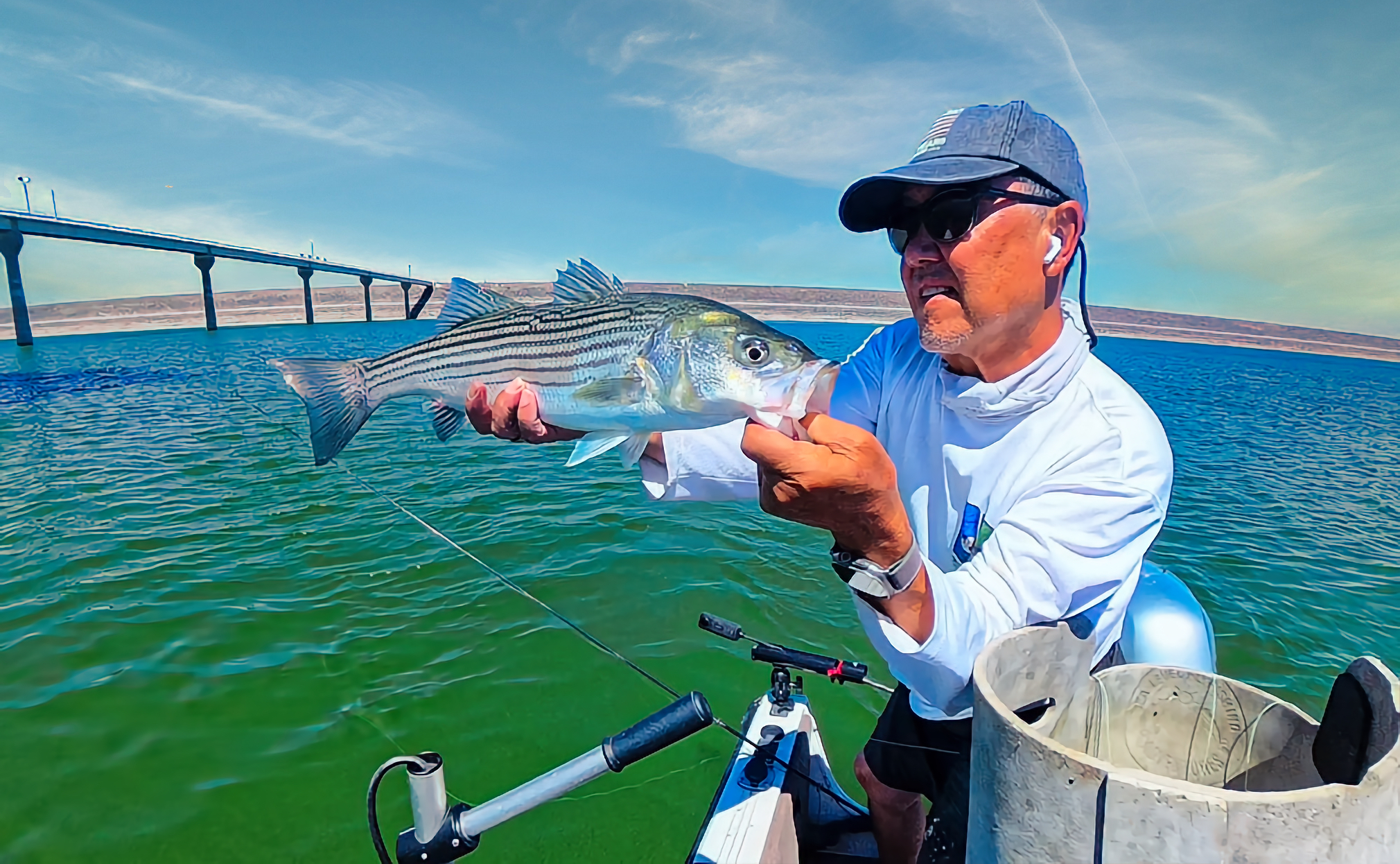
Across from the dam, the Bay of Pigs had about a hundred pelicans loafing on the shoreline and a herd of elk giving me the stare. Nothing says try me like a wall of pelicans — there’s bait under that. I Livscoped in and found exactly that: big schools of small stripers parked on the bottom. I played with these littel fish for awhile while I watched a couple trucks moving along the dam. They seemed to be shadowing me . I played with the dinks till they left and slid into the dam. . The water level showed only 7 feet at Dave’s Rock and 59 degrees. The water was still pretty cool. The Bay of Pigs corner of the dam is my single favorite stretch on the lake. I think it has the most food option in the lake. Baitfish, crawdads, American Shad and shrimp seem to love it there and fish hang there when bait is scarce. It is challenging to fish correctly and the fish cycle through it daily and seasonally. Those two trucks kept idling along the top of the dam while I worked my way down. setting the trolling motor on three, I worked the shoreine about 40 feet out. My parannoia had convinced me they were going to come kick me off but it turned out that they were watching the construction on the other side, not the water. Once I committed to the wall, they rolled by, waved, and left me alone all day. Felt like being shadowed by very polite security.
The wall fished exactly like Las Piedras: the fish were huigging the shorelines off the rock; short casts, three or four strips and bang. Slow, deliberate pauses — I’d strip-strip-strip, then pause for the same beat. Half the time you feel the take on the drop. The line isn’t drum-tight, but if you stay in touch with that sinking fly as it falls, you catch a lot more fish. It all comes back to keeping the line straight and tight through the whole cast.
Two weeks ago on the Delta, Mike Costello put me onto the Airflo Streamer Max Short, and I bought a couple from Lost Coast. I rigged two 8-weights for a head-to-head: one with my Outbound Short T-14, one with the Streamer Max. And honestly? I didn’t love the floating running line. With the Outbound Short and its intermediate sink-tip shooting line, the second the fly hits the water my line is tight and I’m already stripping — and that’s exactly when fish are today. I switched back and forth and back again to be sure: with the Streamer Max, that same cast left noticeably more slack on the first strip, even after I stretched it. Maybe it’s the articulation at the T-14-to-floating junction versus the intermediate, which isn’t articulated there — I honestly don’t know. But for picking apart a shoreline in one to six feet as you drift past it, the Streamer Max isn’t my tool. I’ll fish it with Mike. I won’t fish it at San Luis. I worked the wall from Dave’s Rock all the way to the guardrail and picked up another dozen.
Around noon I ran over to the trash racks just to confirm there were fish there. The wind had nudged up to six or seven — not bad — and I spot-locked along the north tower. The LiveScope lit up: huge schools of American shad circling nearly every pillar, with stripers seaming around them at thirty to fifty feet. Good to know it’s still loaded.
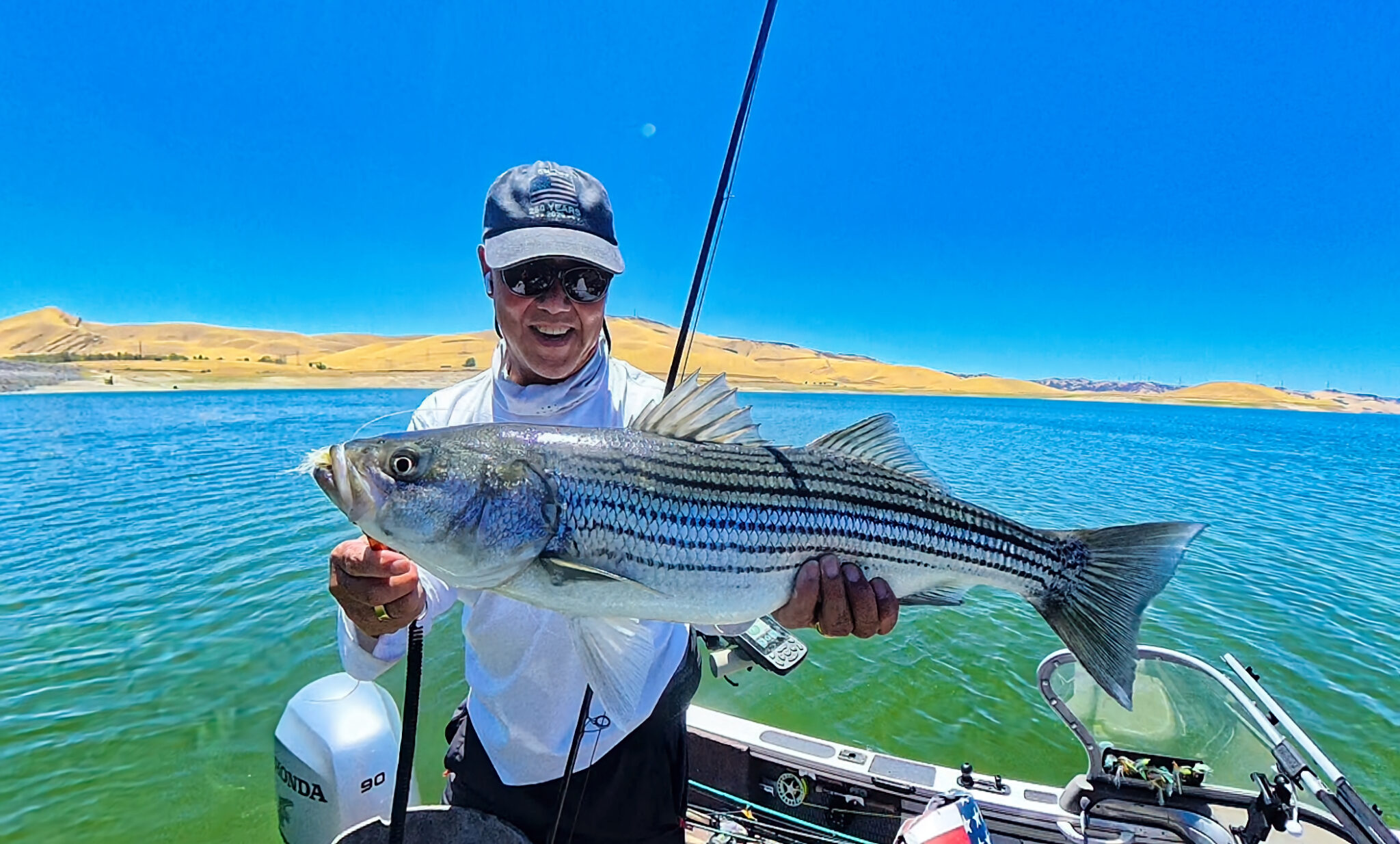
By 2:00 the heat had topped out around 95 degrees. I wasn’t bothered — I had ice water, a cooler full of drinks and food, and I was fishing in my swimsuit. Everyone else had fled by noon, presumably convinced they were one cast from heat exhaustion. It wasn’t even close to that bad. I pulled off the lake at 3:00pm with well over thirty really good fighting fish for the day. In In the Bay of Pigs, I hooked two big fish that took unstoppable runs. One of them took me into the backing before I lost it; the other I landed — a fat twenty-eight incher, estimated weight 10lbs and the biggest fish I’ve pulled out of San Luis this year.
What a way to come home. New regs, big fish, an algae mat doing my scouting for me — and best of all, I can finally run from lake to forebay again whenever I please.
Just, you know. Check the plug first.
I would say this was one of the best bigger fish days I’ve ever had.
Then the algae mat reached the bank, and the bite changed. I started hooking more fish casting right at the shoreline, under the green muck, than deep by the boat. Strip, pause, boom, repeat. After a half-dozen like that, I snagged a fly on a rock and went in to retrieve it — and while I was there, made one idle cast parallel to the bank in literally a foot of water. Six casts later I’d landed three more fishing like that. The fish were tucked up against the shoreline under the mat, hunting bait. I think they like it there: cozy, shaded, and catered.
I kept two for dinner, cleaned them on the spot, and pointed the boat toward the Bay of Pigs for the Dam Crawdadding Run. I love that stretch. The fish had no food in there stomachs – they were feeding opportunistic.
Across from the dam, the Bay of Pigs had about a hundred pelicans loafing on the shoreline and a herd of elk for good measure. Nothing says try me like a wall of pelicans — there’s bait under that. I Livscoped in and found exactly that: big schools of small stripers parked on the bottom. I played with these littel fish for awhile while I watched a coupler trucks moving along the dam. They seeme to be shadowing me but Im pretty paranoid. I played with the dinks till they left and slid into the dam. . The water level showed only 7 feet at Dave’s Rock . The Bay of Pigs corner of the dam is my single favorite stretch on the lake. I think it has the most food option in the lake. Baitfish, crawdads, American Shad and shrimp seem to love it there and fish hang there when bait is scarce. It is challenging to fish. \correctly and the fish cycle through it daily and seasonally. Two trucks kept idling along the top of the dam while I worked my way down. setting the trolling motor on three working the shoreine about 40 feet out. My parannoia convinced me they were going to come kick me off. Turns out they were watching the construction on the other side, not the water. Once I committed to the wall, they rolled by, waved, and left me alone all day. Felt like being shadowed by very polite security.
The wall fished exactly like Las Piedras: fish one to three feet off the rock, short casts, three or four strips and bang. Slow, deliberate pauses — I’d strip-strip-strip, then pause for the same beat. Half the time you feel the take on the drop. The line isn’t drum-tight, but if you stay in touch with that sinking fly as it falls, you catch a lot more fish. It all comes back to keeping the line straight and tight through the whole cast.
Two weeks ago on the Delta, Mike Costello put me onto the Airflo Streamer Max Short, and I bought a couple from Lost Coast. I rigged two 8-weights for a head-to-head: one with my Outbound Short T-14, one with the Streamer Max. And honestly? I didn’t love the floating running line. With the Outbound Short and its intermediate sink-tip shooting line, the second the fly hits the water my line is tight and I’m already stripping — and that’s exactly when fish are today. I switched back and forth and back again to be sure: with the Streamer Max, that same cast left noticeably more slack on the first strip, even after I stretched it. Maybe it’s the articulation at the T-14-to-floating junction versus the intermediate, which isn’t articulated there — I honestly don’t know. But for picking apart a shoreline in one to six feet as you drift past it, the Streamer Max isn’t my tool. I’ll fish it with Mike. I won’t fish it at San Luis. I worked the wall from Dave’s Rock all the way to the guardrail and picked up another dozen.
Around noon I ran over to the trash racks just to confirm there were fish there. The wind had nudged up to six or seven — not bad — and I spot-locked along the north tower. The LiveScope lit up: huge schools of American shad circling nearly every pillar, with stripers seaming around them at thirty to fifty feet. Good to know it’s still loaded.
By 2:00 the heat had topped out around 95 degrees. I wasn’t bothered — I had ice water, a cooler in the van, and was fishing in my swimsuit. Everyone else had fled, presumably convinced they were one cast from heat exhaustion. It wasn’t even close to that bad. I pulled off the lake at three with well over thirty really good fighting fish for the day. Including a fat 8 lbr that took me for a ride. In the Bay of Pigs, I hooked two big fish that took unstoppable runds. One of them took me into the backing before I lost it; the other I landed — a fat twenty-six-incher, easily eight pounds, and the biggest fish I’ve pulled out of San Luis this year.
What a way to come home. New regs, big fish, an algae mat doing my scouting for me — and best of all, I can finally run from lake to forebay again whenever I please.
Just, you know. Check the plug first.