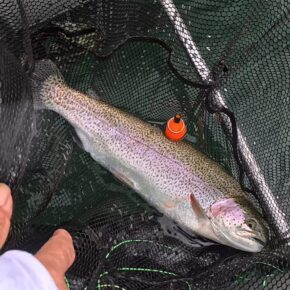
March 8 – 12 2026. What would the perfect four-day fly-fishing getaway look like? It might look a lot like these last four days at Henderson Springs. Four straight days of perfect spring weather in March is a rare thing. Last March I spent most of the week fishing through snow, hail, and rain. And even when the weather cooperates, heavy snowmelt often clouds the lakes and makes visibility less than ideal.
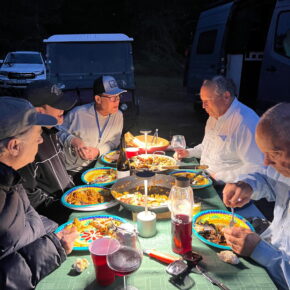
This year was different. All the lakes were full, spilling, and crystal clear. The fishing reports coming in were almost unbelievable—previous groups described it as “off the chart.” Most anglers who book Henderson Springs reserve a year in advance and return again and again. Word has gotten out: if you want world-class trout fishing in Northern California combined with comfort and solitude, this place is hard to beat. Our small group has come to appreciate that comfort more and more over the years. During the day we spread out across five lakes and ponds, often fishing completely alone—just you, the water, and your thoughts. In the evenings we gather again around the Pavilion campfire pit or in one of the two cozy lodges, cooking for each other, opening some very good wine, and talking about the day…and about life.
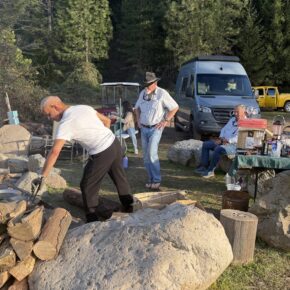
Our annual gathering of the “Cullinarians,” as we like to call ourselves, was especially anticipated this year. The tradition is simple: each night one of us prepares a gourmet meal for the others, each trying to outdo the previous year’s effort. It’s what happens when four die-hard fly fishermen also share a love of great food. And with Peter the Pyro in the mix, the evenings take on a life of their own. Between the seemingly endless lumber supply, the massive Stonehenge-esque pavilion fire pit that Mark and Wayne (not aliens) constructed with a bulldozer, Peter’s military-grade flamethrower, and his new lumberjack chainsaw, our campfires are truly world-class—and they burn for hours.
I usually try to stay out as long as possible as everyone drifts off to bed at their own pace. There’s something special about being the last one up, alone in the pitch black, quietly playing a guitar or just staring into the fire and into space. I wish my family could understand how I live for these moments and I often reflect on them. I wish they would share them with me but alas they are busy and focused elsewhere. The solitude and the campfire hours were wonderful—but the real highlights were the epicurean evenings and the fishing. I’ll save the fishing stories for last. This trip was where foodie meets fishy.
Over the four days I spent:
- 21 hours sleeping
- 10 hours cooking, eating, and drinking wine
- 9 hours around a huge campfire or staring up at a pitch-black sky full of stars
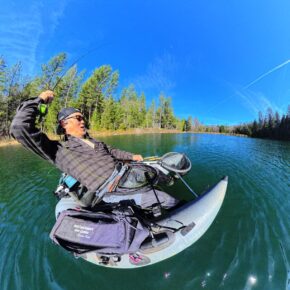
- 44 hours fishing
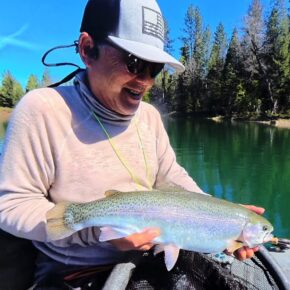
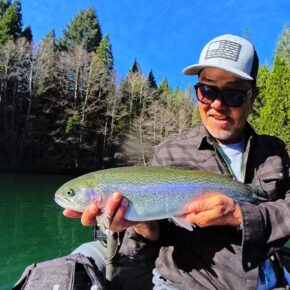
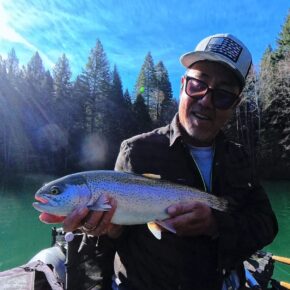
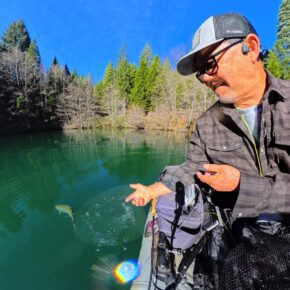
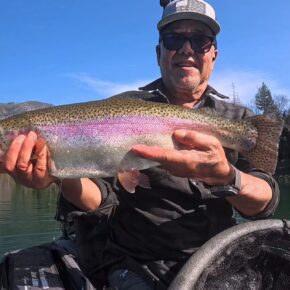
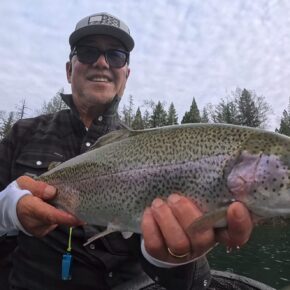
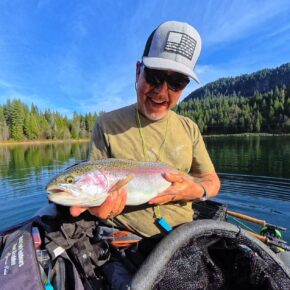
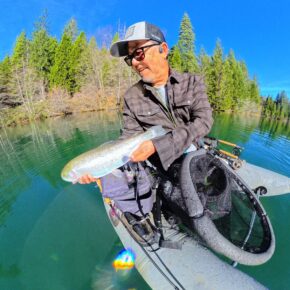
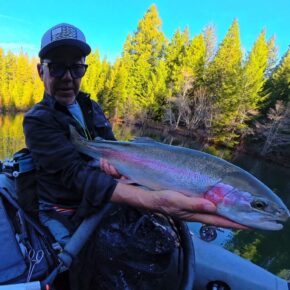
And in those 44 hours I caught 170 trout.
Night One – Norm’s Wild Duck
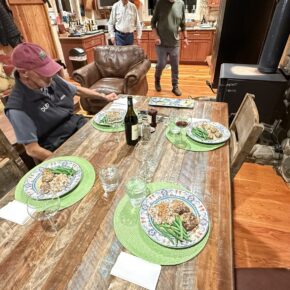
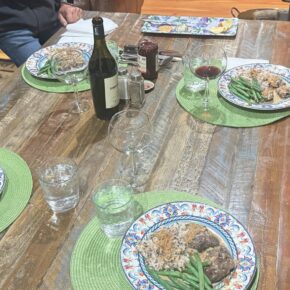
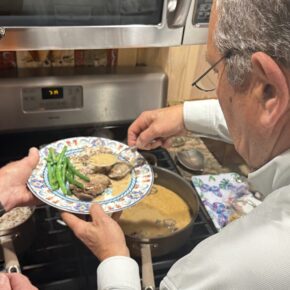
Norm opened the week with his legendary Lincolnberry Wild Duck, prepared perfectly. We started with Brie and crackers before the main course arrived—duck from Norm’s own shotgun, served with fresh green beans over wild rice and finished with a reduction sauce. It was a magnificent way to start the week. Norm isn’t slowing down in his Mid 80’s.
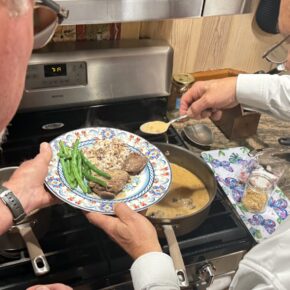
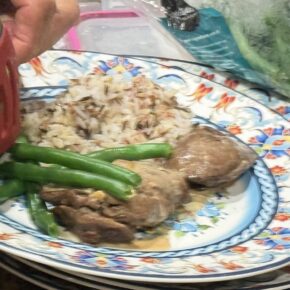
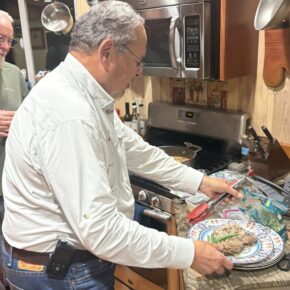
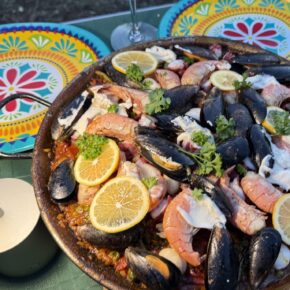
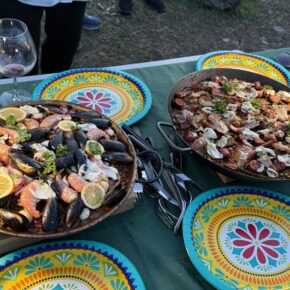
Night Two – Peter’s Wood-Fired Paella
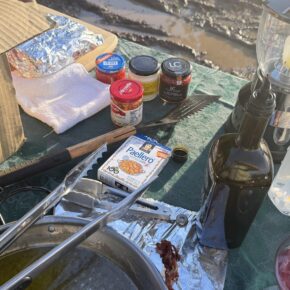
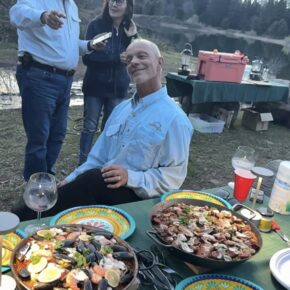
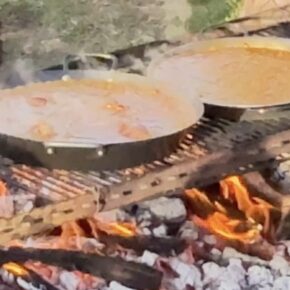
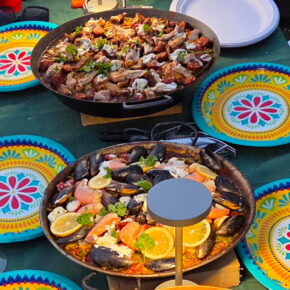
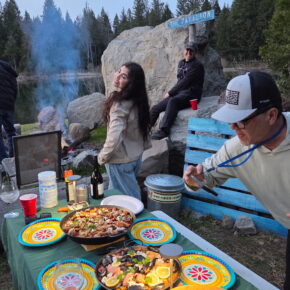
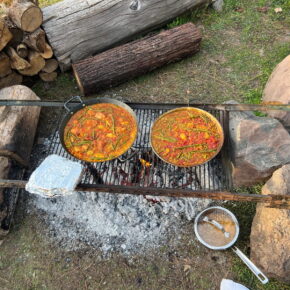
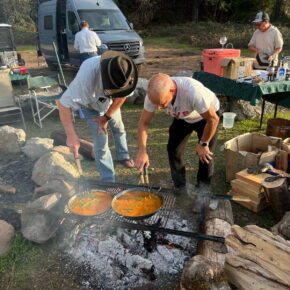
The next night Peter and Wayne made something I had never seen before—two paellas, one seafood and one meat. But the real twist was that everything was cooked over a wood fire. Perfect paella depends heavily on temperature control and timing, and watching Peter work over the coals was like watching a master chef. It helps that Peter is also a bit of a pyromaniac. With Wayne assisting, both paellas turned out perfectly. Jerry, who couldn’t make the trip this year, donated some incredible Alaskan shrimp—thanks Jerry, they were fantastic. That evening we ate by the campfire as Mark and Marie Henderson joined us with their daughter and son-in-law. It felt like a big family dinner. Wayne added smoked salmon and smoked chorizo appetizers that were every bit as good as they sound.
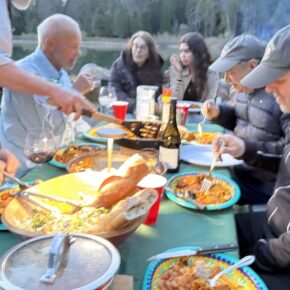
Night Three – My Turn
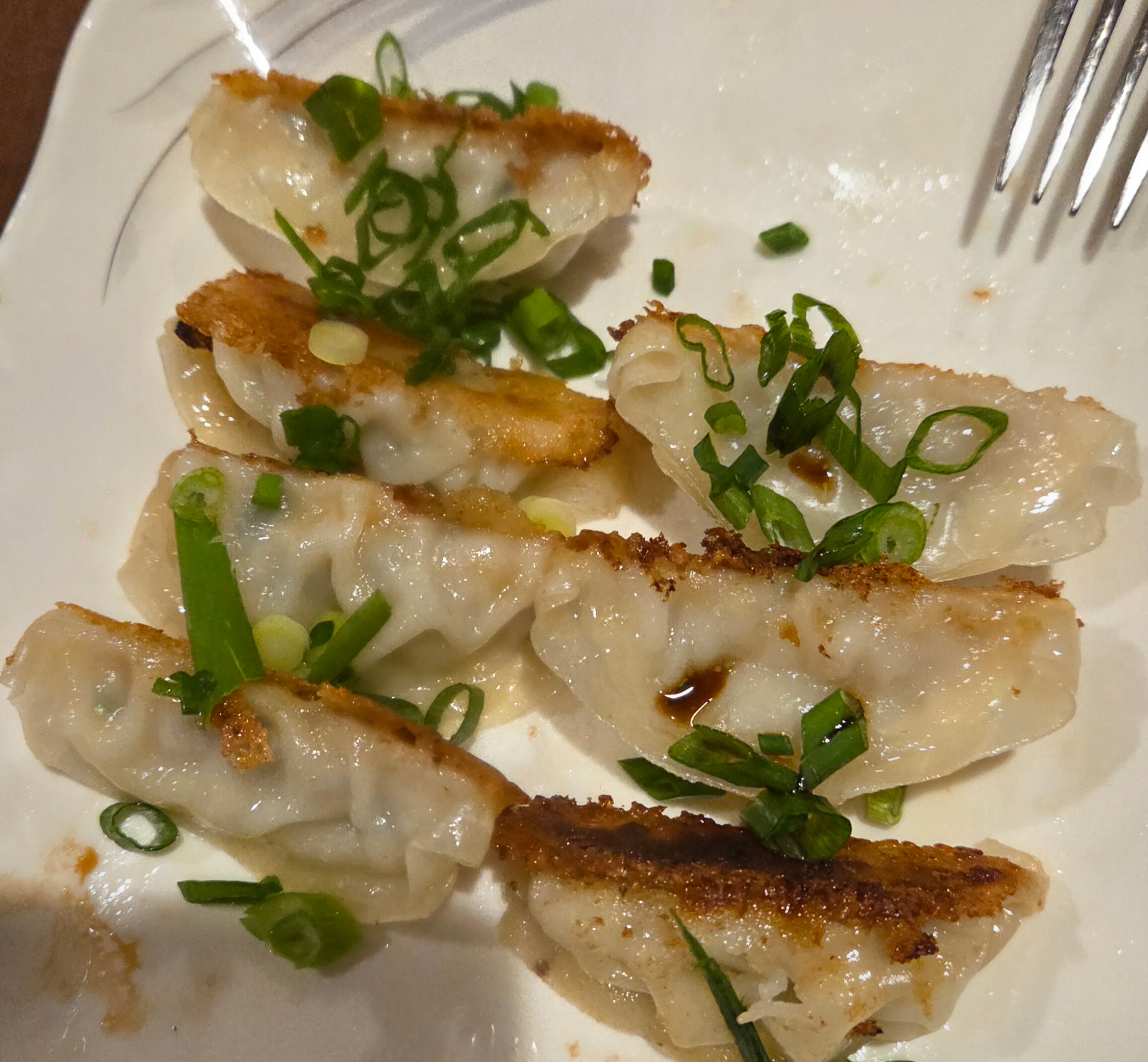
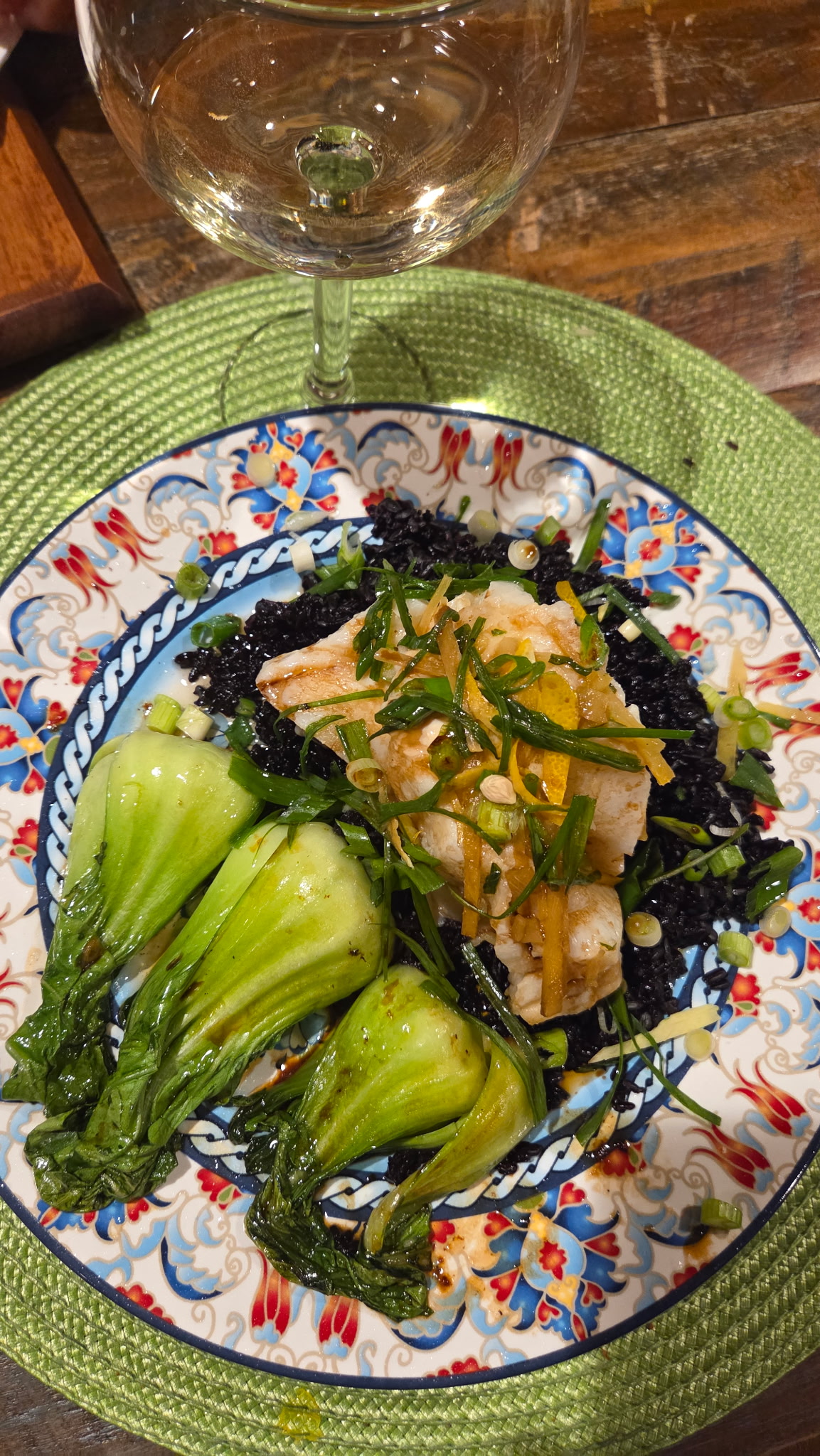
Back by request, I made steamed Chilean sea bass, Chinese style—finished with hot oil, soy sauce, ginger, green onions, and lemon zest. It was served over black rice with baby bok choy, seared and steamed in oyster sauce. For appetizers I made Japanese potstickers, which disappeared quickly. We paired the meal with a bottle of Clos de Soline- Harmonie, one of Gina’s favorite whites from Paso Robles. We’ve been supporting members there for years, and it was the perfect wine for the dish.
Night Four – Wayne’s Campfire Lamb
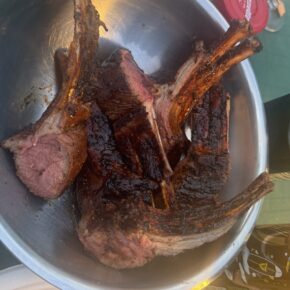
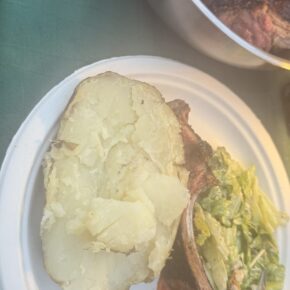
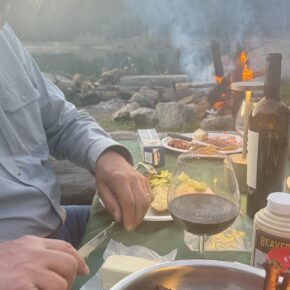
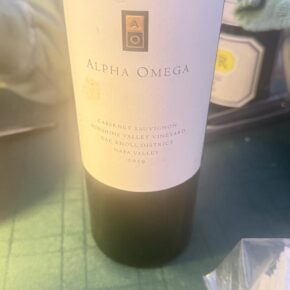
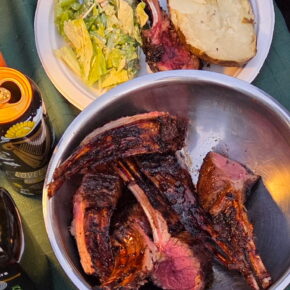
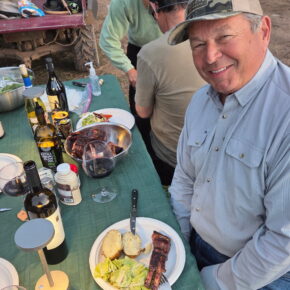
On the final night Wayne—CEO of Cattlemen’s Restaurants—took over the fire and prepared an incredible rack of lamb over hot campfire coals. The lamb was coated with reduced balsamic vinegar and slow-cooked on the grill. It was served with salad and Peter’s legendary coal-roasted potatoes. There is something magical about potatoes cooked slowly in campfire coals. Peter reminded me that when he was growing up, making a massive bonfire for roasting potatoes was practically a ritual—so big that it seemed like they were planning to cook potatoes even if the whole village burned down We enjoyed the lamb with a bottle of 2019 Alpha Omega Cabernet from Peter’s cellar—possibly one of the best wines I’ve had in a long time.
Lakeside Lunches
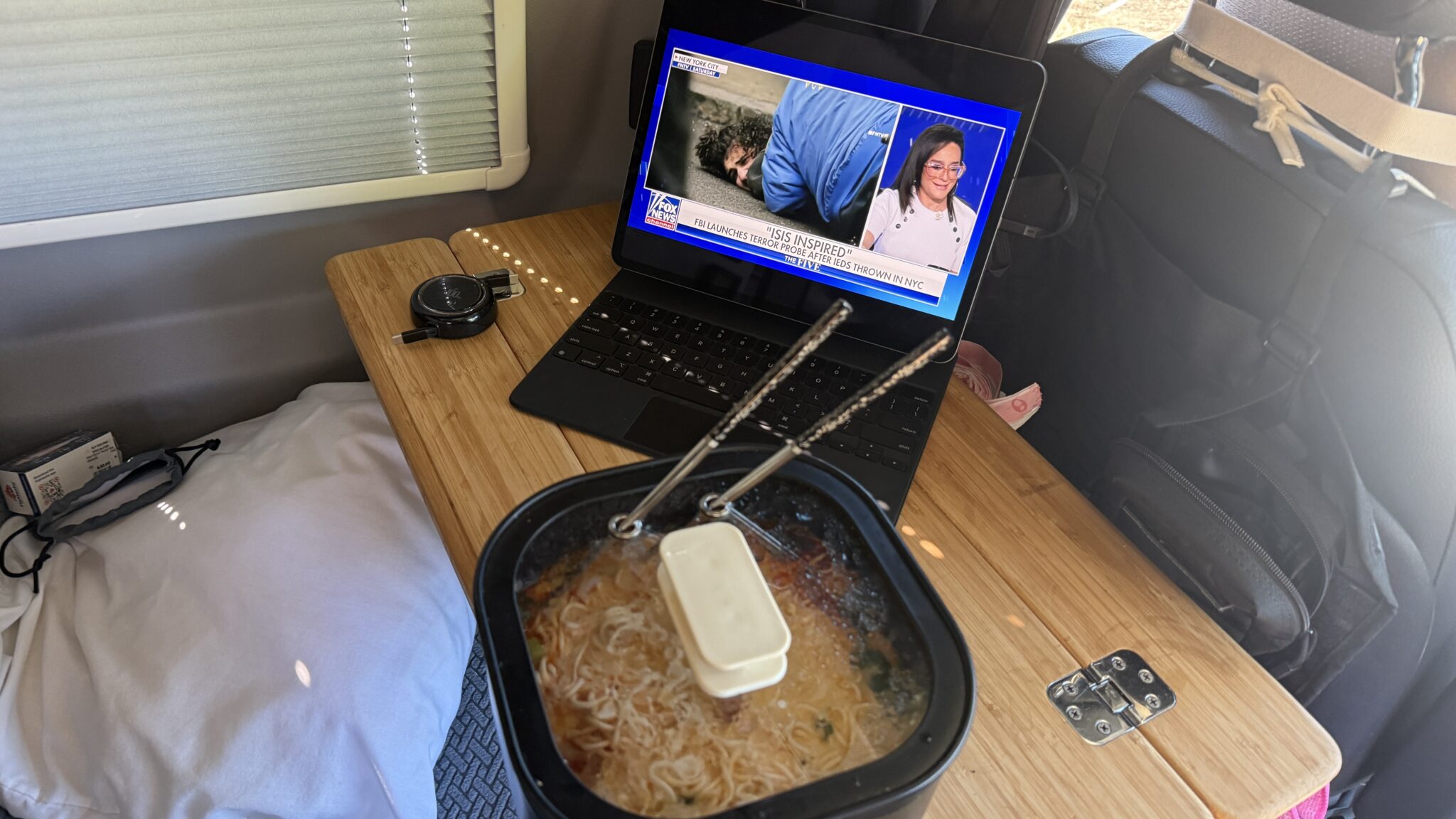
Lunches are usually a quieter affair for me. I like to cook alone in the van and make an elevated Laksa spicy noodle soup—loaded with fried tofu, char siu beef, and vegetables. Sometimes I heat up a precooked zong zi (joong)—a spicy rice dumpling wrapped in leaves that I grew up eating. One day I reheated Peter’s paella in the van and served it alongside the joong. It struck me how foods from completely different parts of the world can resemble each other. It turned into one of those memorable lakeside lunches you never forget.
Breakfast at Henderson
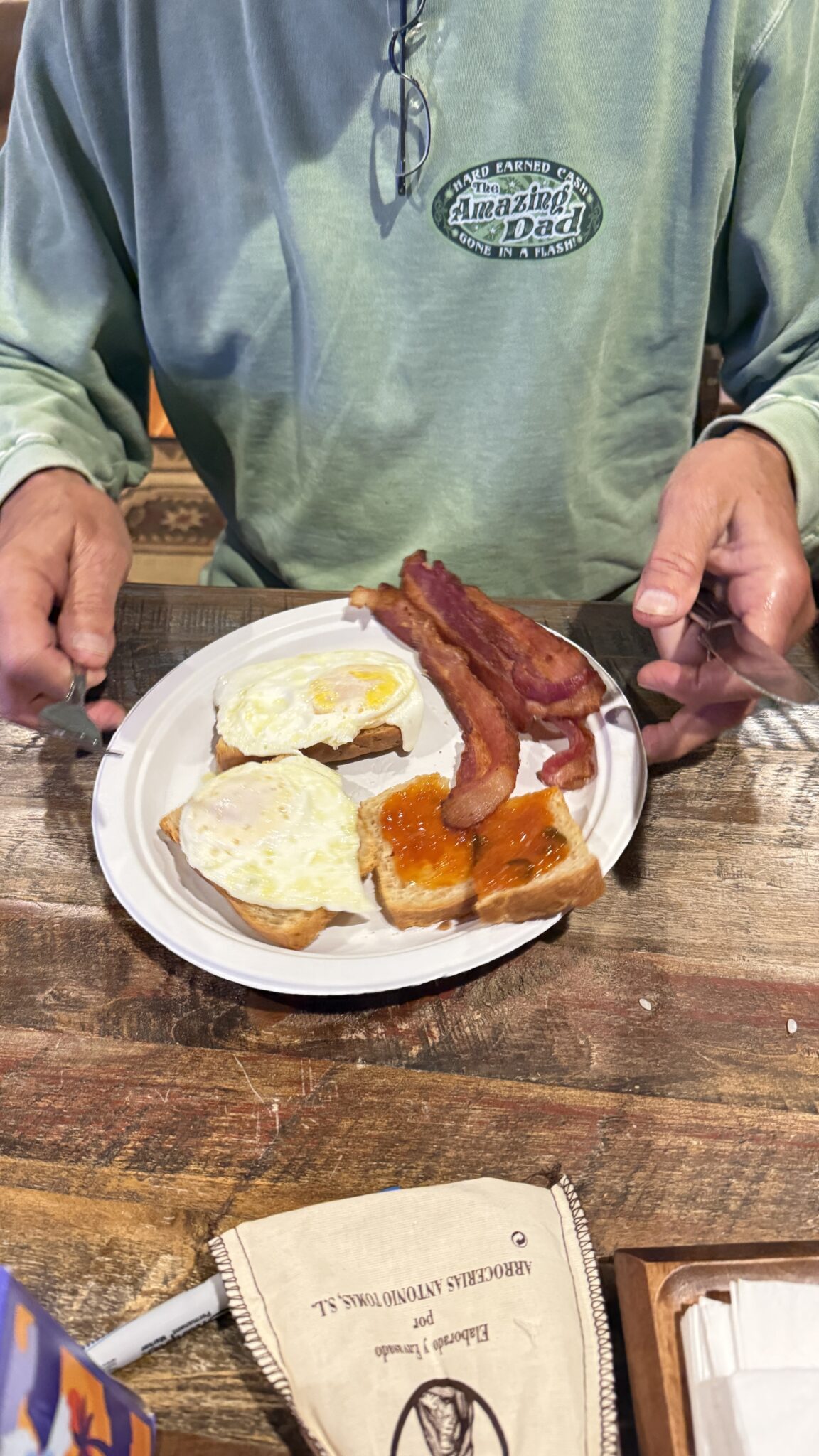
For breakfasts, Peter brought a couple dozen fresh eggs from his chickens. I mean some of the eggs had feathers stuck to them. After retiring from the tech world, he retreated to his sprawling ranch in Placer County, returning to his roots as a farmer—preserving endangered oak trees, tending fish ponds, and raising chickens and cattle. Those eggs tasted exactly the way farm eggs should.
The Fishing
Fishing the same water year after year is a funny pursuit. You go back convinced that this will be the season you finally crack the code, only to have the lake humble you again. I feel pretty confident on the ponds at Henderson Springs by now, but every year something happens that makes me question everything I thought I knew about those lakes.
A lot of the personality of Henderson starts with the genetics and upbringing of the fish. Quite a bit of thought goes into the strains of trout that get stocked there. Big holdover trout in places like Wildhorse Reservoir in Nevada grow huge because they eventually learn to eat the native bugs. They go through phases—first learning to recognize natural food like midges, mayflies, and chironomids—yet at the same time they’ll still smash fluorescent flies, what I loosely call “junk flies.”
If you’ve ever wondered why stocked trout attack bright flies like they’re candy, it probably goes back to their childhood. Hatchery trout spend their early lives eating pellets that are often bright orange or reddish in color. Over time they become conditioned to associate bold colors with food. So when a fluorescent pink or chartreuse fly drifts past, it triggers that same feeding response they learned in the hatchery tanks. Add in the competitive environment they grew up in—where food had to be grabbed quickly before another trout got it—and you end up with fish that strike first and ask questions later.
The funny thing is they never fully forget this behavior, even after surviving several seasons in the wild. Early feeding patterns get burned into their memory. When food is scarce or something bright drifts by, those old instincts resurface. The fly might not look natural to us, but somewhere in that trout’s brain it still resembles a pellet drifting down from above.
That said, hatchery trout don’t stay naïve forever. Once they spend enough time in natural water, they start to recognize real insects. After weeks or months feeding on midges, mayflies, caddis, and chironomids, they begin to notice size, shape, and timing. Trout are excellent learners, and during a strong hatch they’ll key in on a specific food source. When that happens, bright attractors often get ignored while flies that match the hatch suddenly become the ticket.
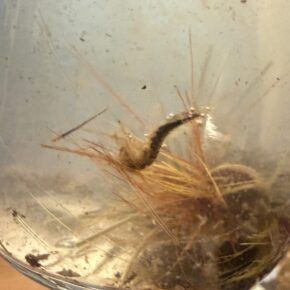
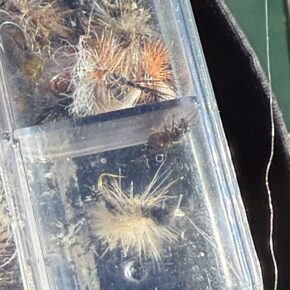
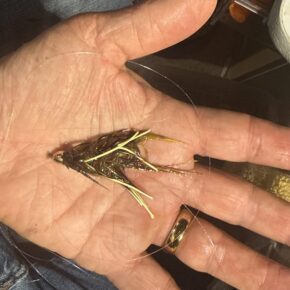
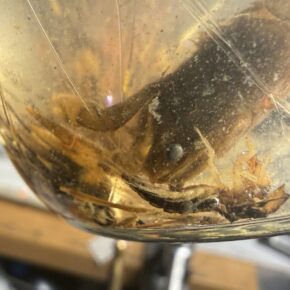
Energy efficiency plays a role too. In the wild, pellets don’t rain down every afternoon. Trout learn to feed where the calories make sense. During a hatch, hundreds of identical insects drift by, and it becomes efficient for the fish to lock onto one food source. If something doesn’t quite match what they’re eating, they often ignore it. The more consistent the hatch, the more selective the trout become. I pumped several fish this trip and found a conucopia of natural food. I found Calibaetis duns, Flying Ants, Calibaetis nymphs, Chironomids, Hexegenia nymphs and even a small Crayfish. The warm weather this week brought out some odd food for this time of year.
I remember fishing Pronghorn Reservoir years ago where pellet feeders on the shoreline went off automatically. When the pellets started hitting the water the fish went absolutely nuts. As the feeding cycle slowed, the trout became selective—even about pellets. It taught me that selectivity is often tied to scarcity. When food is abundant, fish get picky. When they’re hungry enough, they’ll eat almost anything.
Angling pressure plays into this as well. Trout that see the same bright attractor flies day after day and get hooked—or pricked—start to wise up. Over time they may ignore those patterns and respond better to natural imitations. Eventually the fish develops a blend of instincts: part hatchery opportunism, part wild trout selectivity. That’s why the same fish that crushes a fluorescent blob one day may demand a perfectly presented midge the next.
So how does all this play out at Henderson?
Henderson only sees about a dozen anglers a day spread across five ponds, which is pretty light pressure compared to most public waters. I usually fish it twice a year, and historically March has been better for numbers than May. But the real appeal for me is figuring out how the fish want to be caught during different parts of the season. There are a few techniques that, at the right time and place, are ridiculously effective. By effective I mean you can make three casts in a row and hook three fish. The first technique is fishing junk flies under an indicator at the right depth. Across most of the ponds, that sweet spot seems to be eight to ten feet down. Also dragging junk flies slowly over the bottom with a full sinking line when they are deep can change your momentum.
Some of the classic junk flies include:
-
Booby Fly – buoyant foam eyes keep it floating above the bottom
-
Blob Fly – a ball of fluorescent chenille that acts as a pure attractor
-
Mop Fly – mop strands that suggest a grub or worm
-
Egg Patterns – bright yarn or beads imitating fish eggs
-
San Juan Worm – simple but deadly annelid imitation
-
Squirmy Wormy – wiggly rubber worm that moves constantly
-
Egg-Sucking Leech – a leech with a bright egg head
-
Pulse Disc Burnt Orange Seal Bugger – flashy stillwater streamer
-
Fritz / FAB (Foam Arsed Blob) – popular UK attractor patterns
-
Balanced Leech – often fished under an indicator with bright colors
The funny thing about junk flies is they often work best when trout aren’t clearly feeding on a hatch. Instead of matching a bug, they trigger curiosity, aggression, or that old hatchery instinct that says: grab the bright thing before the other fish does. At Henderson these flies are especially deadly in the mornings. As the day warms and insects start to appear, the bug-educated fish begin focusing on real food. You can actually watch schools of trout cruising the shorelines. If you see one fish rise, there are usually ten more beneath it.
The second productive technique surprised me a bit. When trout aren’t rising, they’re usually either on the bottom in deeper water or tucked into weeds and timber near the edges. One of my favorite ways to search for those schools is to cast a size 8 burnt-orange seal bugger on a pulse disk, let it sink for about twenty seconds, then strip it back four times as fast as I can and pause—almost like stripping flies for striped bass.
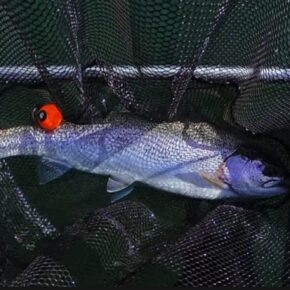
The pulse disk makes the bugger dart sideways on each strip, and for whatever reason that movement seems to flip a switch in hatchery trout. I’ve seen fish chase those flies like little stripers, racing them all the way to the rod tip and eating them with my leader already in the guides. It’s slightly unnerving—but a whole lot of fun. The pulse disk seems to make the fly sink like a flat stone from side to side. I caught a few on the 20 second count before the first strip.
Of course, sometimes fishing gets so easy you start wishing for a smarter fish. Luckily, there are a few of those around too. Some trout simply refuse junk flies and only eat chironomids or other natural insects. Norm and I spent a couple hours trying to figure out what fish were rising to in a corner of Frog Lake. With the warm weather I was hoping for a big hatch, but it never really materialized. Just scattered bugs here and there. But despite the lack of big hatches, I caught many fish on dry flies by looking for lone fish that were looking up and opportunistically feeding on top. Despite the lack of big hatches, there were moments when trout were simply looking up and grabbing whatever bugs they could find. Every day I managed to catch a couple on dries with a size 16 Irresistible, and when a few Calibaetis showed up a #18 black Missing Link worked well. I love the top water fish and one of them is worth 5 others fishing different methods. Most of my friends agree that fish caught on dry’s is the ultimate at Henderson especially if you have the opportunity or choice.
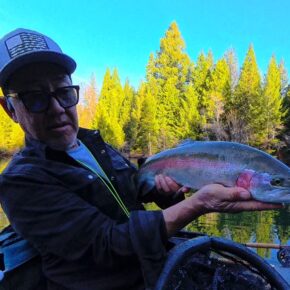
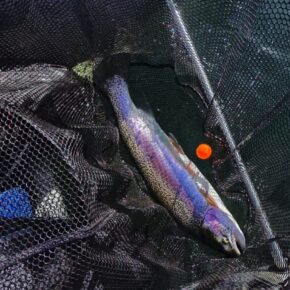
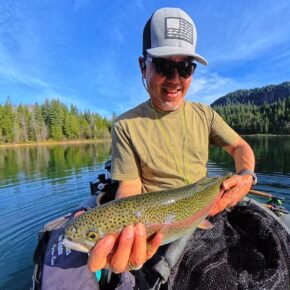
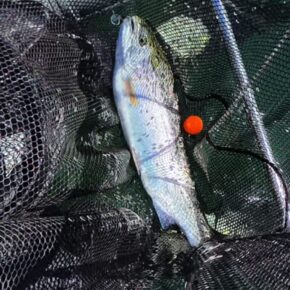
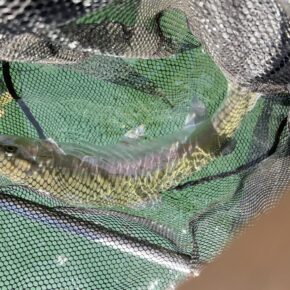
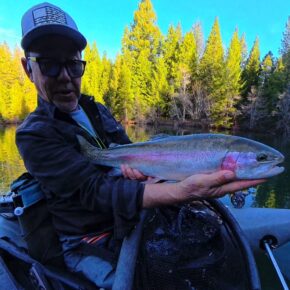
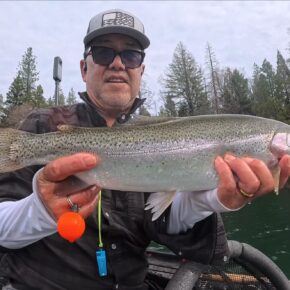
Another interesting observation this year was the trout themselves looked different. Last year’s fish were more bronze and red making them easy to recognize as holdover fish. This year’s fish were much more silver, and some were incredibly strong, making multiple long runs. I’d guess maybe ten percent of the fish I caught were holdovers from last year.
Wayne had an epic day fishing flies like the Soccer Mom (which I call a cowboy leech) and a pattern called the Glass Bead Assassin. Norm fooled some of the selective fish in Frog Lake with a beautiful Calibaetis Dun. .
Wayne also mentioned another plant of fish is coming—hopefully bigger ones—before our May trip. I can’t wait. With weather like this, we might even see an early Hex hatch. Thanks again to Mark and Maria Henderson whos hospitaity and generosity brings me back to Henderson every year and to my Cujlinarian Brothers Fish On and Eat well till next year.
-

- Found in a big fish
-
- fishtechy = meh in net
-
- Hex Nymph