May 10, 2022 — Some places hold such weight in history that standing there feels like stepping into a moment frozen in time. The Normandy American Cemetery and Memorial in Colleville-sur-Mer is one of those sacred places. Set on a bluff overlooking Omaha Beach, this World War II cemetery honors the thousands of American troops who gave their lives in Europe’s darkest hours.
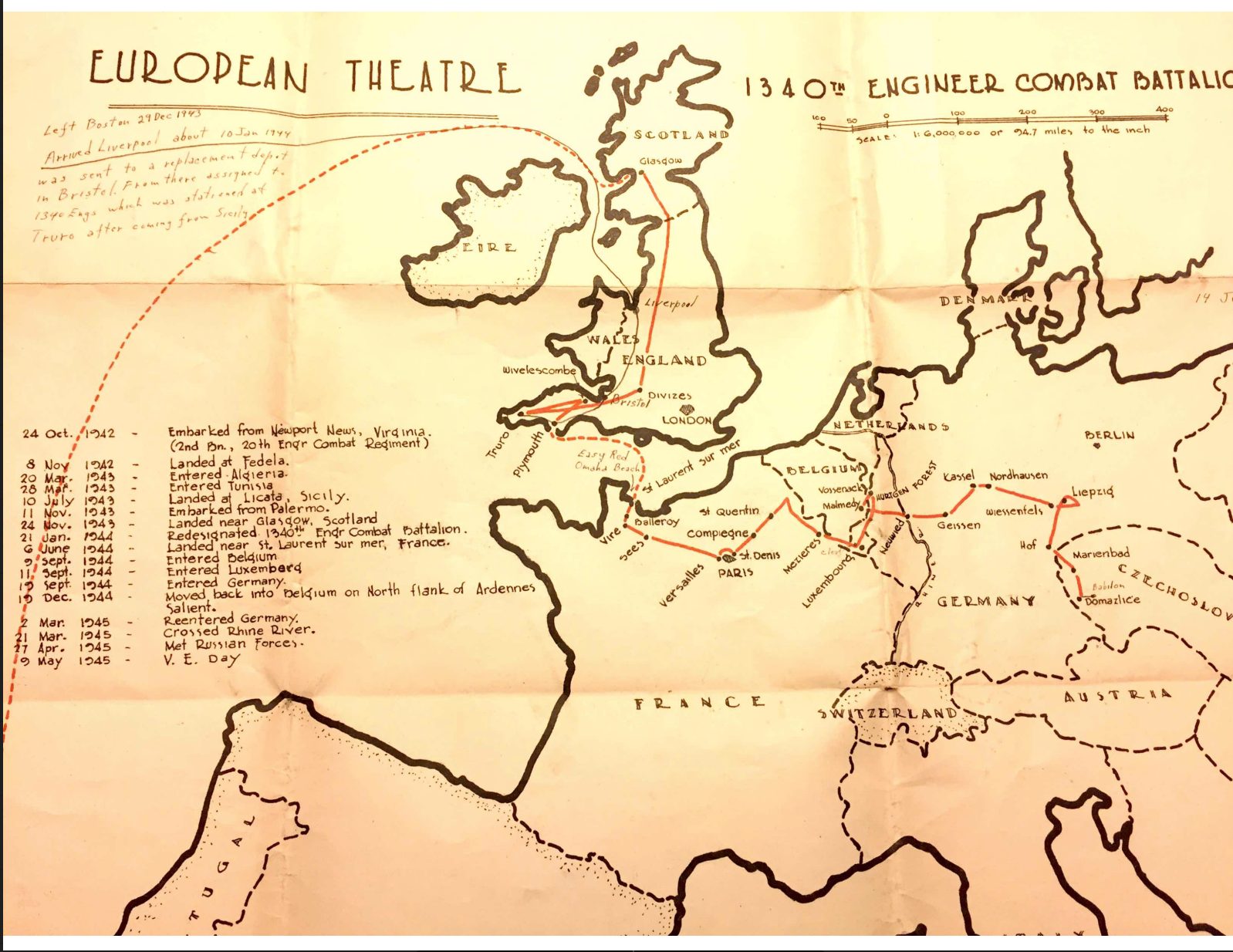
For years, Gina and I had dreamed of walking this hallowed ground—not just as tourists, but as family tracing footsteps. Gina’s father was in one of the battalions that stormed the beaches of Normandy. We had studied his unit’s route through France, talked about standing where he once stood, and imagined what he saw on D-Day.
Three weeks ago, we finally made that journey.
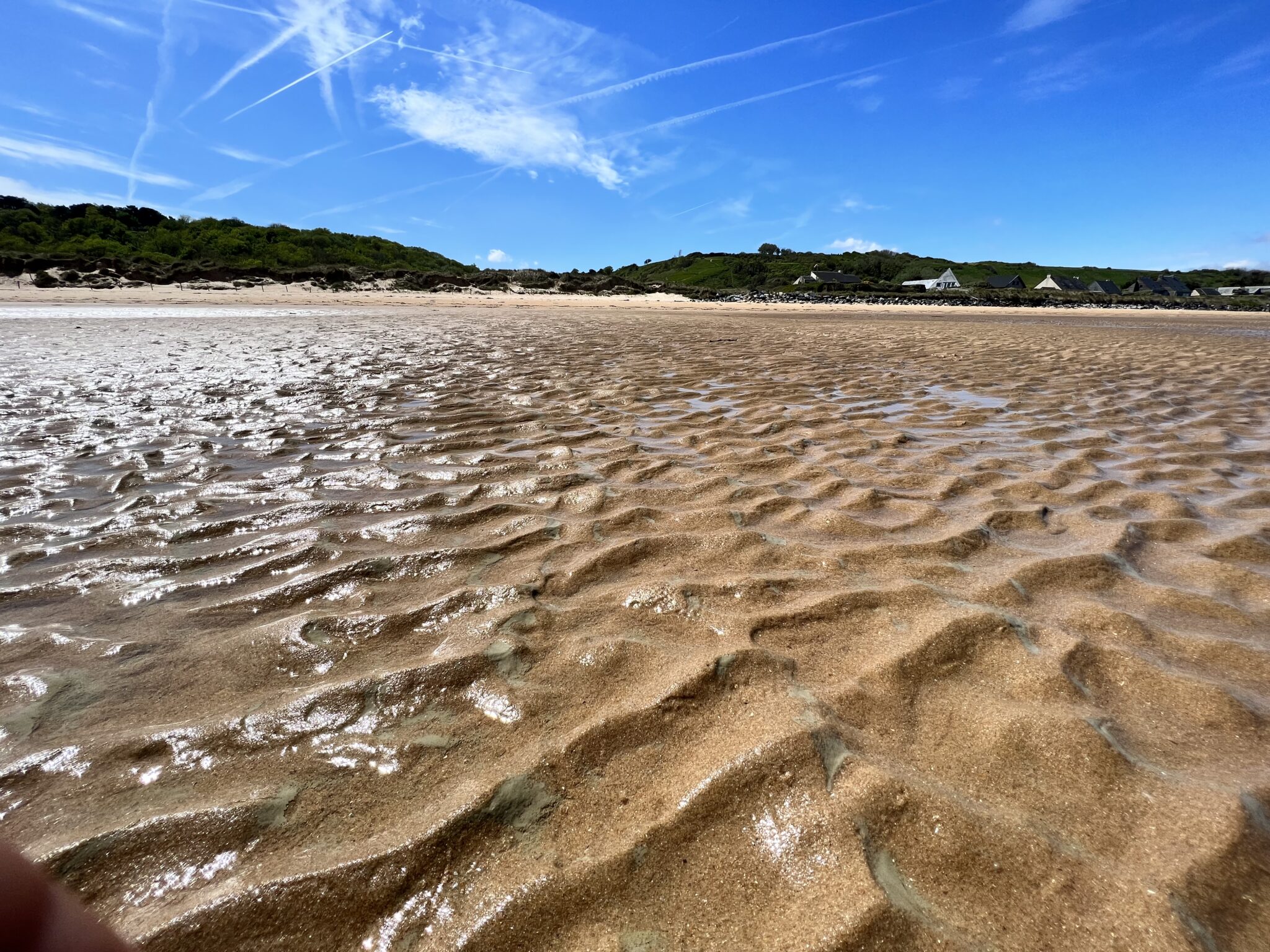
Legacy in the Sand: Honoring Nick and the 1340th Combat Engineers at Normandy
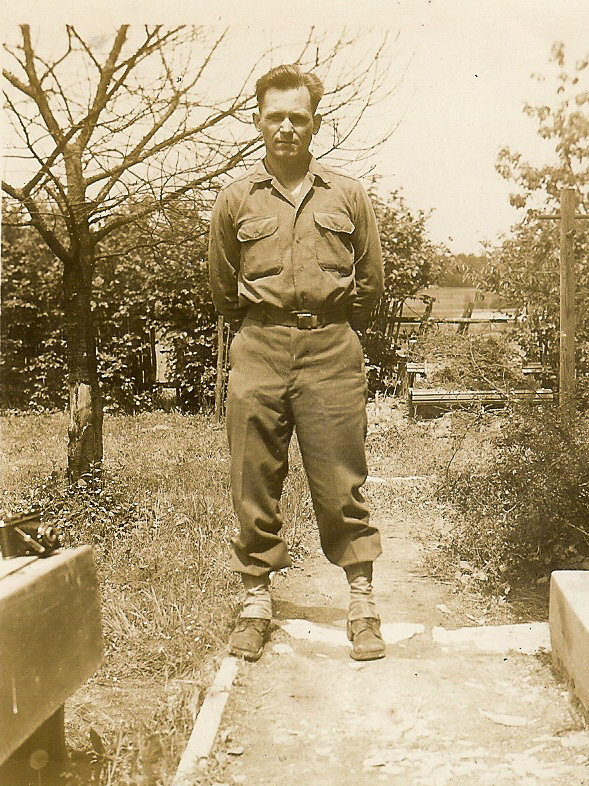
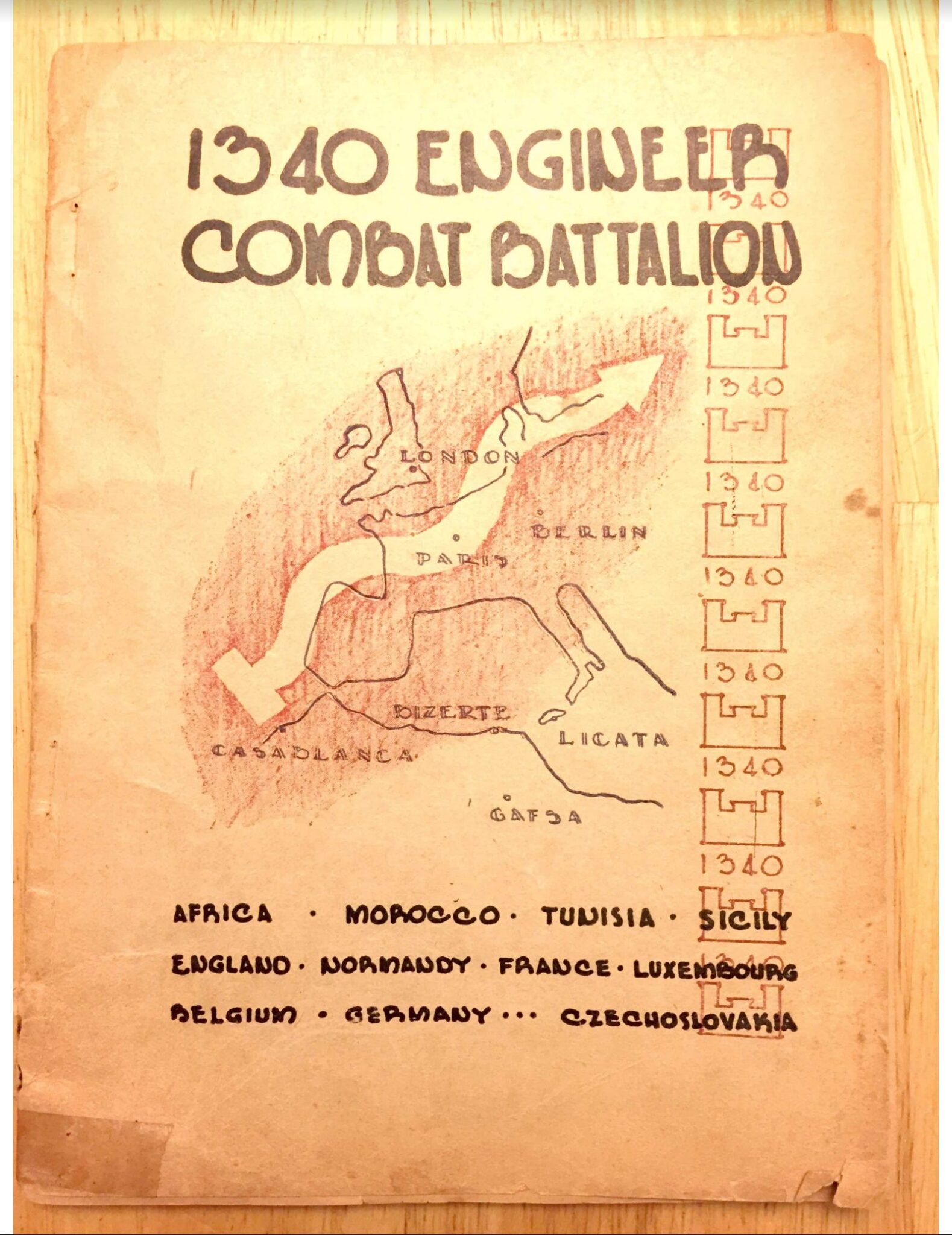
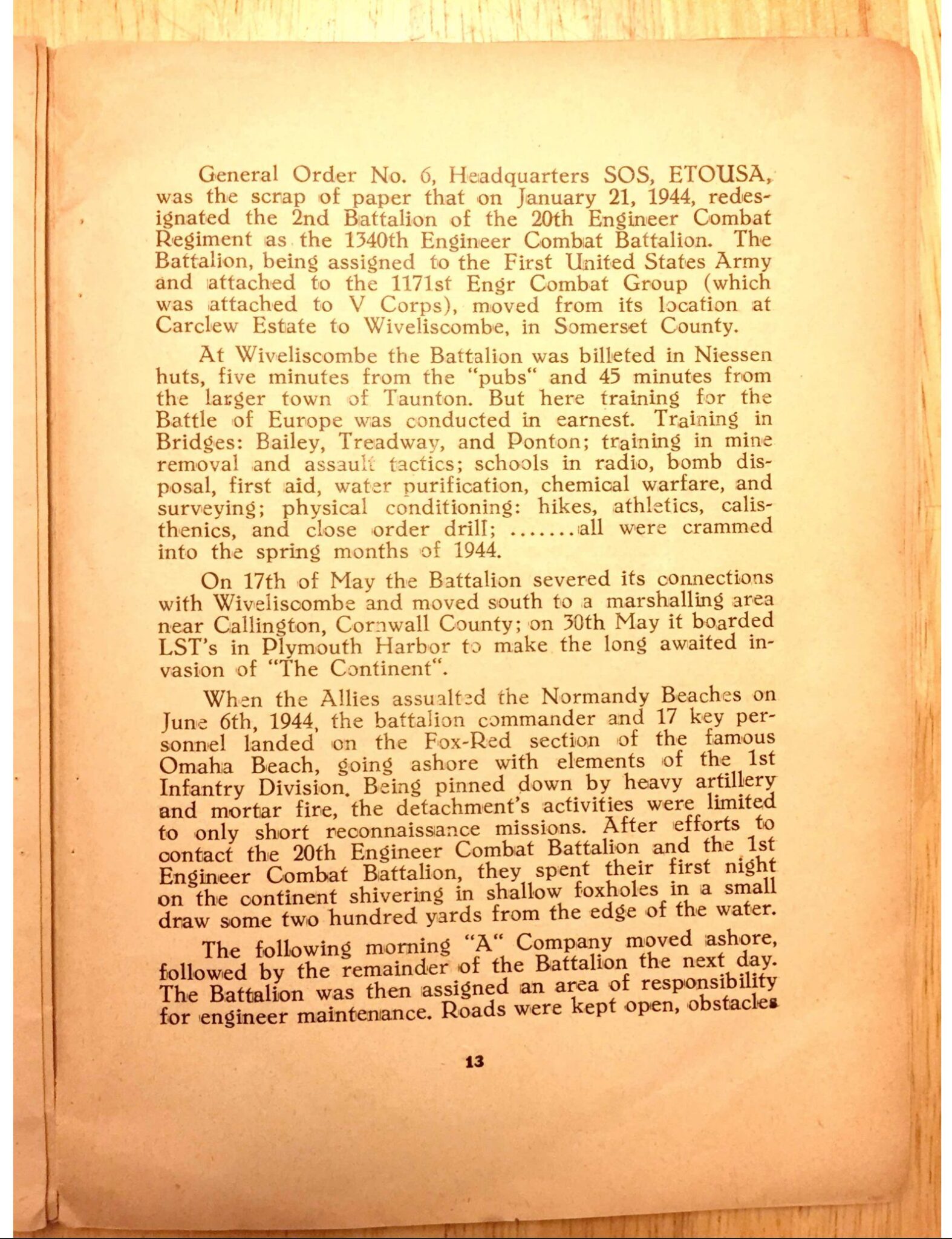
As part of a journey we had planned for years, Gina and I traveled to Normandy to trace the footsteps of her father, Nick—a man of quiet strength who landed on Omaha Beach in the first wave of D-Day. His role, and that of his unit, was seldom spoken of in history books, but it was vital. Nick was one of just 17 combat engineers from the 1340th Engineer Combat Battalion attached to the 29th Infantry Division, tasked with clearing obstacles, demolishing fortifications, and building the way forward—sometimes quite literally—for the invading Allied forces.
One of the most emotional stops on our tour was the Normandy American Cemetery in Colleville-sur-Mer, perched above the sands of Omaha Beach. It is a place of solemn beauty: over 9,000 white crosses and Stars of David standing in perfect rows, a living testament to the cost of freedom. We had always wanted to visit, not only to honor Nick’s service but also to connect with the untold stories of the engineers who made the invasion possible.
In all the years Nick was alive, we had searched for surviving members of the 1340th. Despite numerous efforts, we were never able to find another who had landed with him that morning. It remained a lingering absence—a brotherhood forever incomplete.
But this trip brought an unexpected gift.
Our tour guide and historian, John Fletcher, had quietly taken up the search on his own. With meticulous research and a historian’s persistence, he discovered that one of Nick’s fellow combat engineers—one of those same 17 who landed with him on June 6, 1944—was buried right there in Colleville-sur-Mer. He had died on the beach that very morning. Standing at his grave, Gina and I were overwhelmed with emotion. The connection we had searched for all these years was right beneath our feet, among the crosses facing the sea.
It was a powerful moment—one that brought home just how anonymous yet critical the engineers’ work had been.
Unlike the infantry and airborne divisions, who have monuments, documentaries, and books detailing their heroics, the combat engineers of the 1340th are barely remembered. Their mission was not to engage the enemy directly but to make the landings possible. Under relentless fire, they carried Bangalore torpedoes—long, tube-like explosives they had to assemble and shove under barbed wire entanglements. Nick once described being pinned down on the sand, German machine gun fire cracking overhead, as he and others crawled forward to breach the wire near a heavily fortified German stronghold.
Their tools were not just weapons, but shovels, saws, and explosives. They cleared minefields by hand. They built the bridges and causeways that allowed tanks and trucks to push off the beaches. They dismantled beach obstacles while the tide and enemy fire rose around them. In many ways, their work was invisible—but it was foundational. The invasion could not have succeeded without it.
Today, the legacy of the 1340th lives on in the bridges still in use, the roads they cut through the hedgerows, and the silent, often-overlooked plaques that mark their presence in history. There is only one plaque in Normandy that mentions them. Just one.
And yet, they were there. First in, exposed, and essential.
That day at Colleville-sur-Mer, standing in front of a grave marked with only a name and date, we felt the weight of that sacrifice. One of Nick’s own—his brother in arms—lay there. We don’t know if they shared a foxhole or a joke, but we know they shared that beach, that mission, that impossible morning.
And now, thanks to John Fletcher’s quiet determination, we were able to say thank you—not just to Nick, but to all 17 of the 1340th Combat Engineers who landed on D-Day. Their story may not be widely told, but it deserves to be remembered. We’ll carry it with us always.
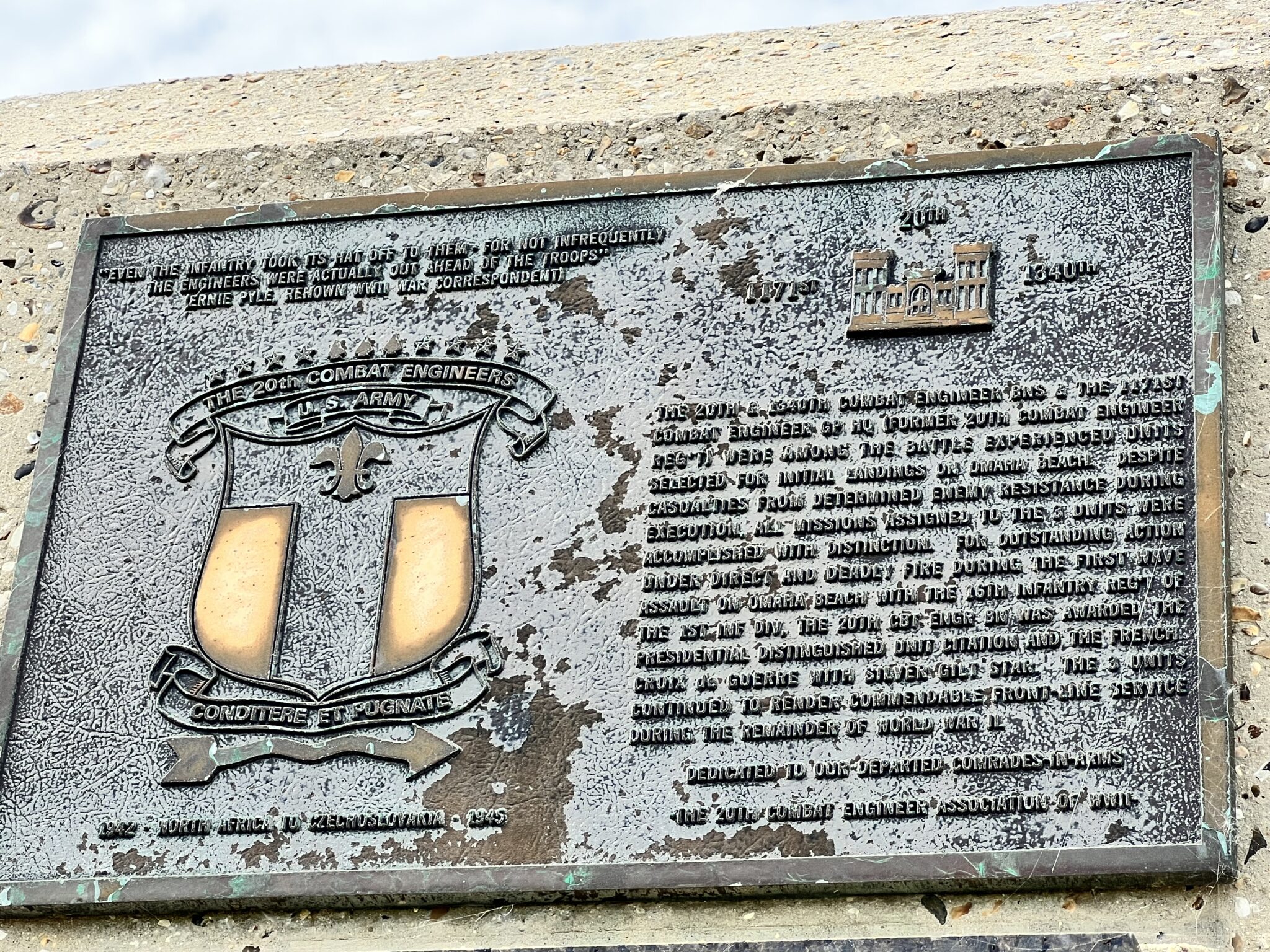
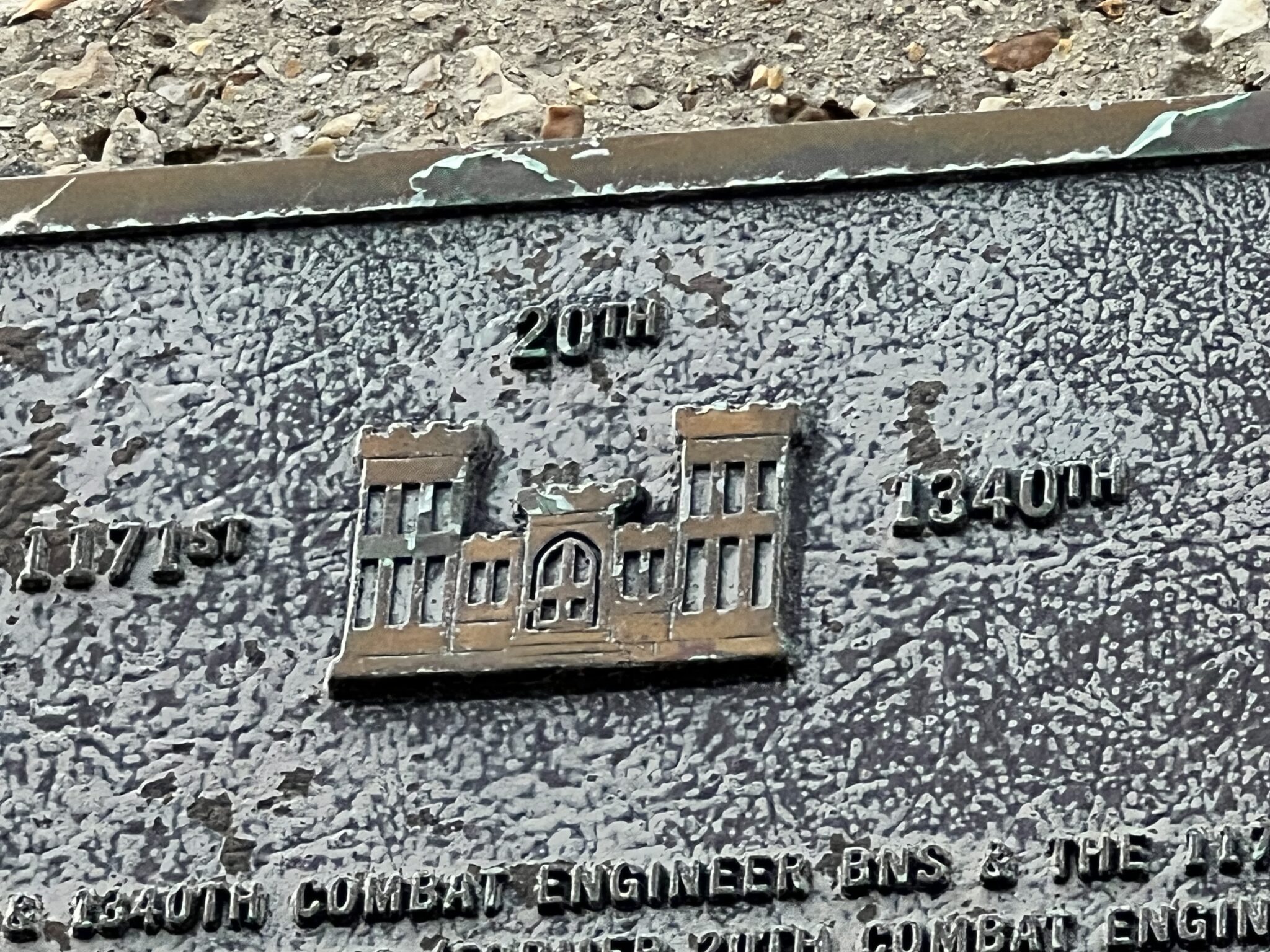
A Sacred Encounter: Honoring Lt. Douglas A. Chambers and the 1340th at Normandy
Some days stay with you forever—and May 10, 2022, was one of them. Gina and I had long prepared for our journey through Normandy, but nothing could have truly readied us for the quiet power of that morning at the Normandy American Cemetery in Colleville-sur-Mer.
From the moment we arrived, the day felt different.
We were met at the gate by a French representative, who greeted us warmly and ushered us into a private cart—an unexpected gesture that immediately set a reverent tone. Just as we entered the cemetery grounds, two sleek Dassault jets roared overhead, tipping their wings in salute. Half-joking, I asked if the flyover was for us. The representative smiled and said it was quite unusual—perhaps a rehearsal for the upcoming Memorial Day events—but regardless, it felt deeply symbolic.
The cemetery was quiet, almost reverent. A few groups of French high school students strolled through the grounds, their laughter respectful and hushed, and a handful of tour groups wandered the perfectly manicured paths. Despite the peacefulness, it was overwhelming to see thousands of white crosses and Stars of David stretching endlessly across the green lawn, all facing west toward home. American flags fluttered everywhere—an unfamiliar but stirring sight in France. It made me reflect on how rare it is to see a French flag flying on U.S. soil. Here, the roles were reversed, and the symbolism was heavy.
Looking out toward the calm sea, the tide low, I imagined the horizon on June 6, 1944, not as it was today, but choked with ships—thousands of them—bringing brave young men to shore. I saw, in my mind’s eye, Nick being dropped 100 yards from the beach, just as he had once described to us. The water was deep. The air was thick with smoke. And he, a combat engineer, was crawling toward a fortified cliff—the very one on which the cemetery now rests—armed not with a rifle, but with Bangalore torpedoes and sheer courage.
We were escorted to the grave of 2nd Lieutenant Douglas A. Chambers, a combat engineer from Minnesota with the 1340th Engineer Combat Battalion. He died on Omaha Beach on D-Day. This discovery was astonishing—most of the fallen from that day were eventually returned home to the States. Lt. Chambers, however, remained in Normandy, buried where he fell. His is the only known grave of a 1340th Battalion member in the cemetery, and given that there were only 17 from that unit in the first wave, it’s highly likely he knew Nick—perhaps even led him.
With the recent use of genetic databases, many unidentified soldiers buried here have been matched with descendants and brought home. That Lt. Chambers remains speaks to his own quiet duty: to represent the countless unnamed who bled for freedom on those sands.
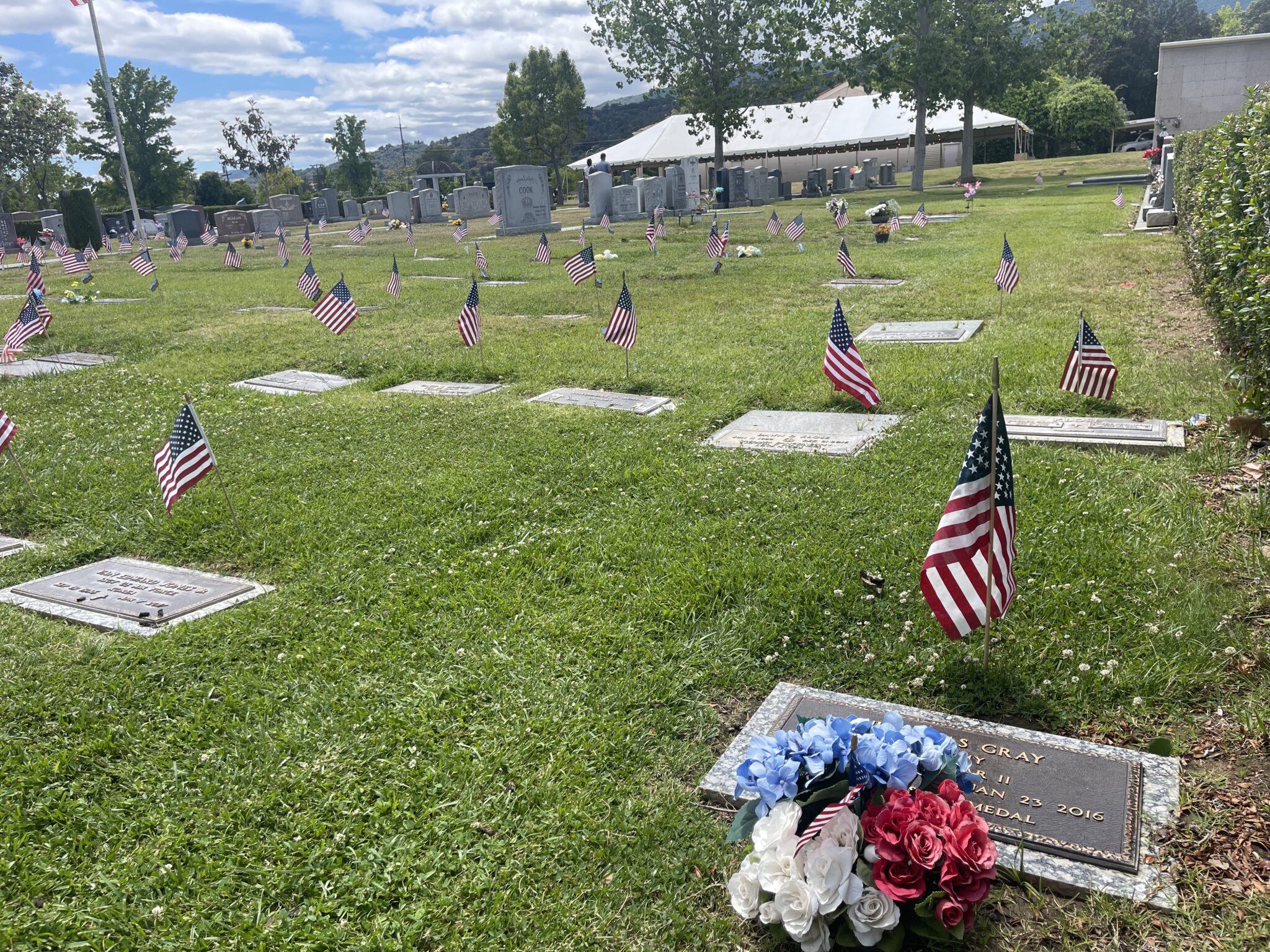
The ceremony at his grave was intimate and moving. Our guide knelt to rub sand from Omaha Beach into the engraving on the marble cross, making the letters stand out with a golden hue. Two flags—one American, one French—were placed beside the headstone. After the ceremony, we were told we could either leave them or take them back to the U.S. Gina made a quiet decision: those flags would go home, and she would place them at Nick’s grave in Los Gatos. In a small but meaningful way, these two men—comrades in arms—would be reunited.
Just as we were absorbing the gravity of it all, the notes of the U.S. national anthem drifted over the cemetery. Gina and I instinctively placed our hands over our hearts. And then, as if the day had been choreographed by history itself, a lone bugle sounded Taps across the fields of white.
We were told it was all coincidence.
But to us, it felt like something more—a whisper from the past, a salute from the fallen, a reminder that sacrifice echoes through time. Even our guide, a seasoned historian, was visibly emotional. Tears fell freely, and I couldn’t help but feel that on this day, in this place, the French honored our fallen with a level of reverence that we too often forget back home.
Memorial Day is not about barbecues or long weekends. It’s about men like Lt. Douglas A. Chambers, who likely took the bullet meant for someone else—maybe even for Nick. His sacrifice, and that of the 1340th Combat Engineers, paved the way for liberation. Their legacy is not just etched in stone, but built into the bridges and roads they carved through war-torn France.
We remember them not only because we must—but because we owe them everything.
Thank you, Lt. Chambers, for your service. Thank you for your sacrifice. Your courage made our family—and our freedom—possible.
.
Google Photo Album of our Paris Trip…..


Great information shared.. really enjoyed reading this post thank you author for sharing this post .. appreciated
Wow, what a wonderful thing you guys were able to encounter and experience.
That was a very moving mini dissertation and it brought me to tears!
Thanks for sharing that with me.
Great trip Meng! I have always been told that the french in Normandy love Americans and that it is a very special place to visit. My uncle stormed the beach there and told me that the opening scene of Saving Private Ryan was surprisingly accurate which is a little disturbing as violent as it was. In this world of madness its nice to know another place outside of Amerika, especially in France still is thankful for our fighting for them to protect their way of freedom. Unfortunately a lot of people in this country have forgotten that freedom comes at a price. Anyway I’m sure that is a trip that you will remember fondly for ever. Thanks for sharing