
August 7-15 2026
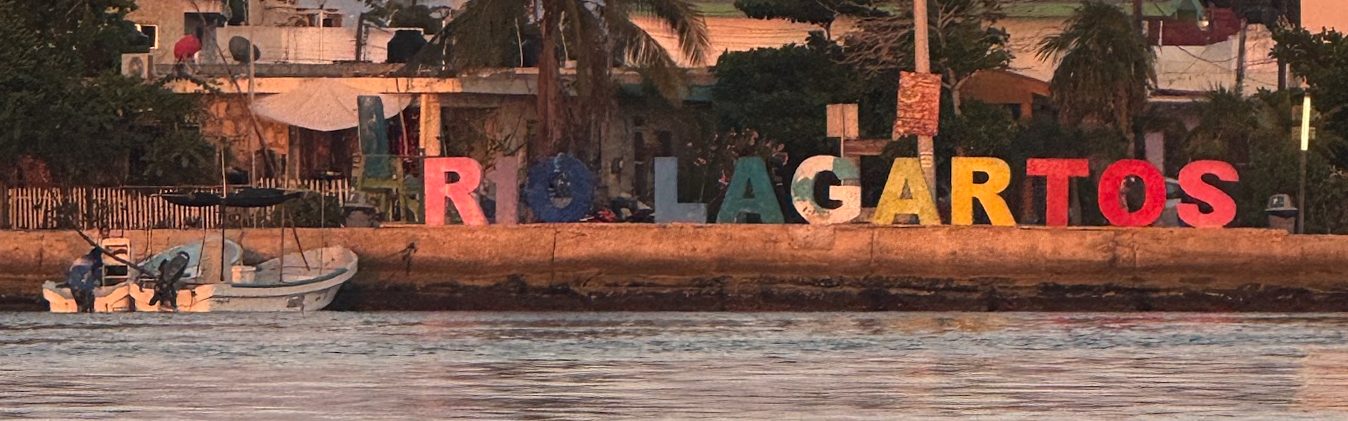
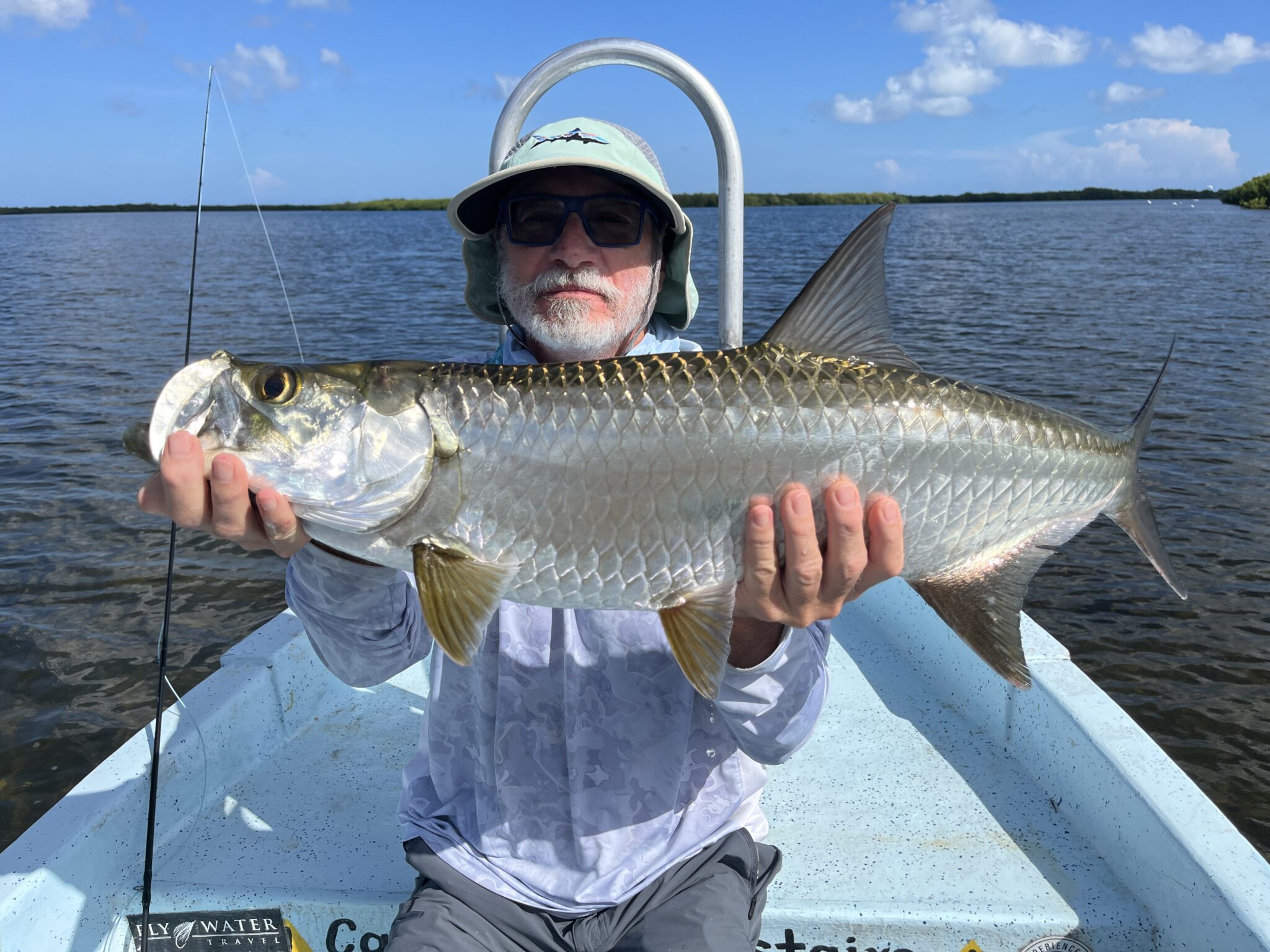
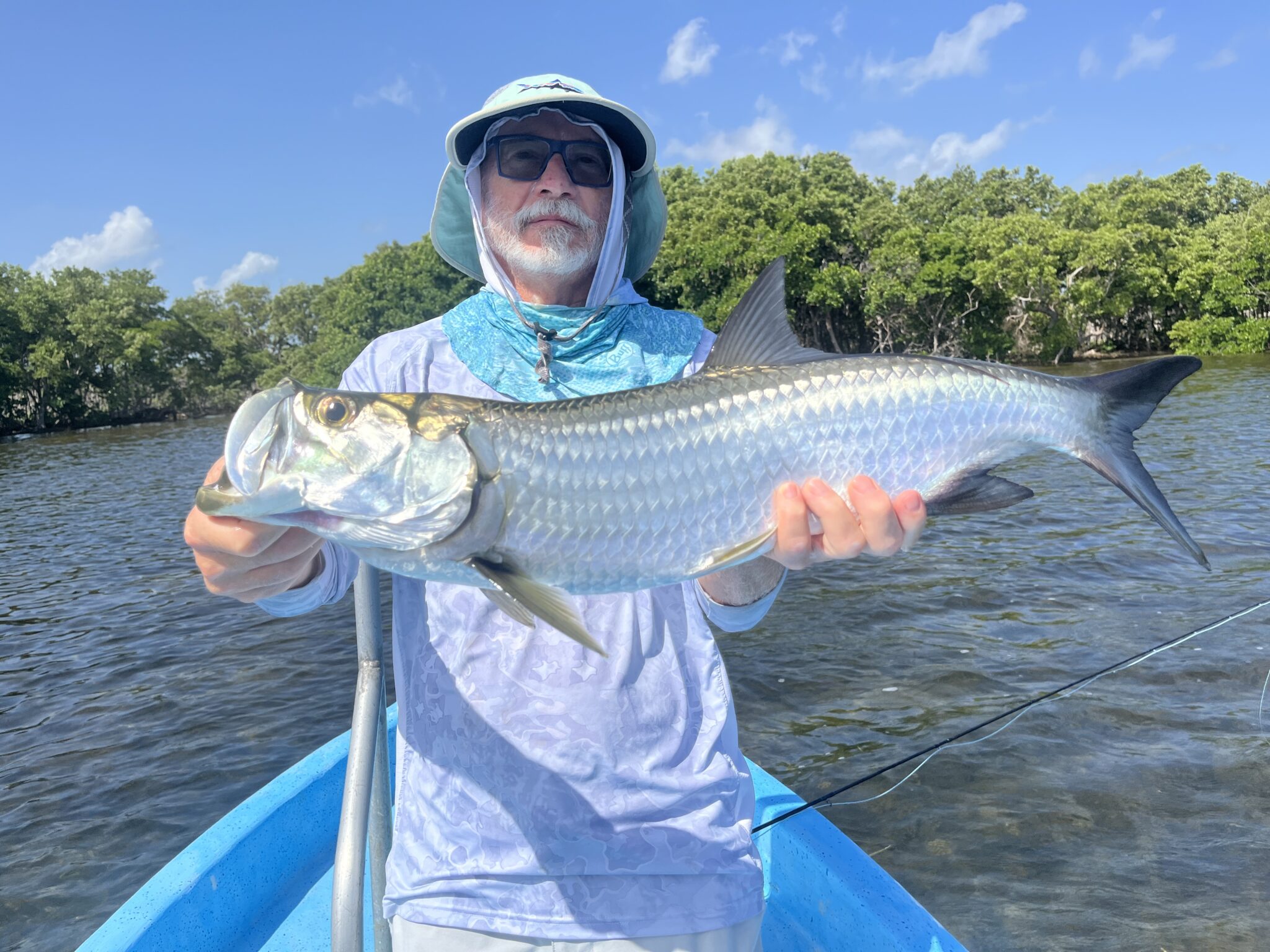
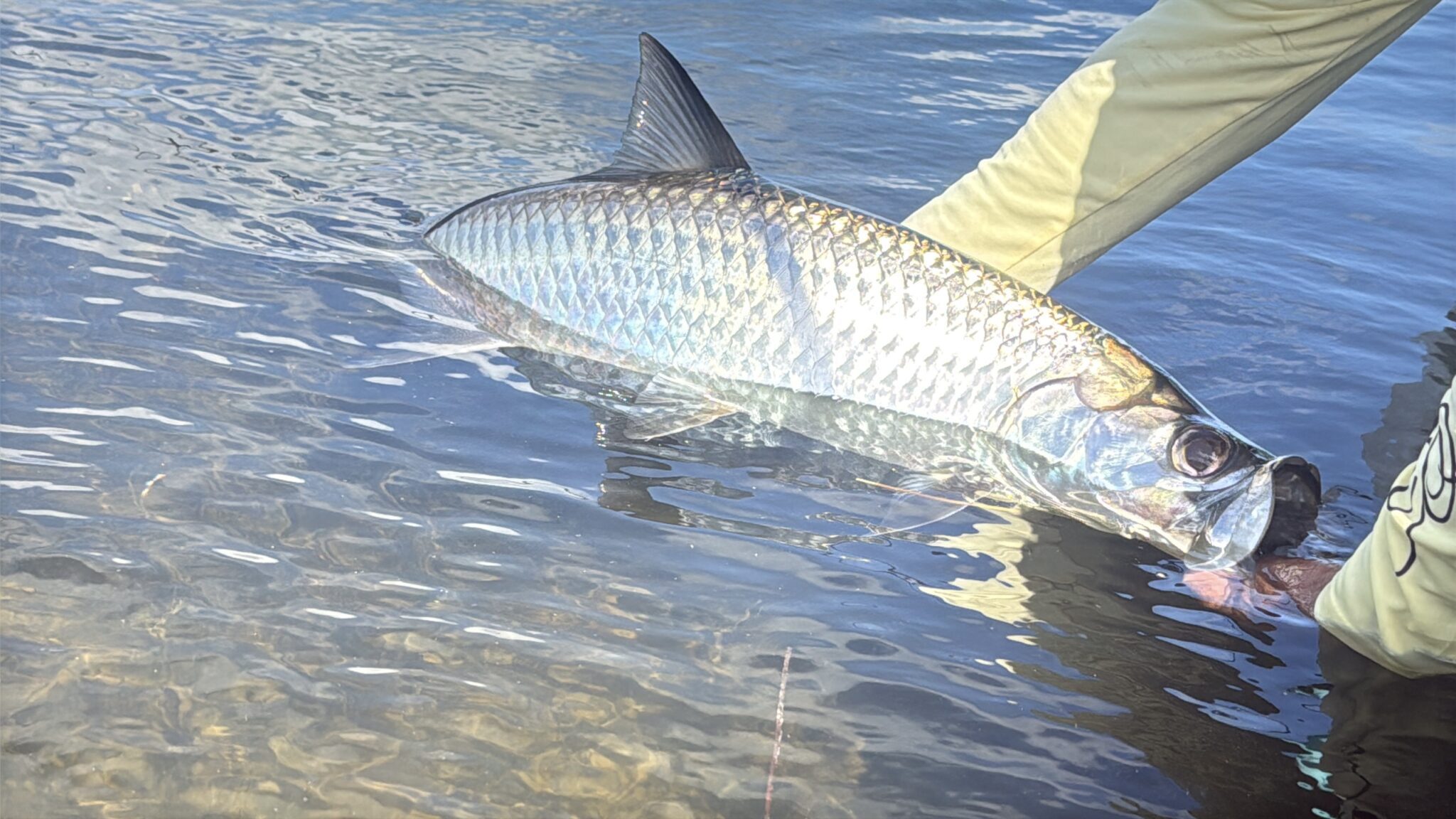
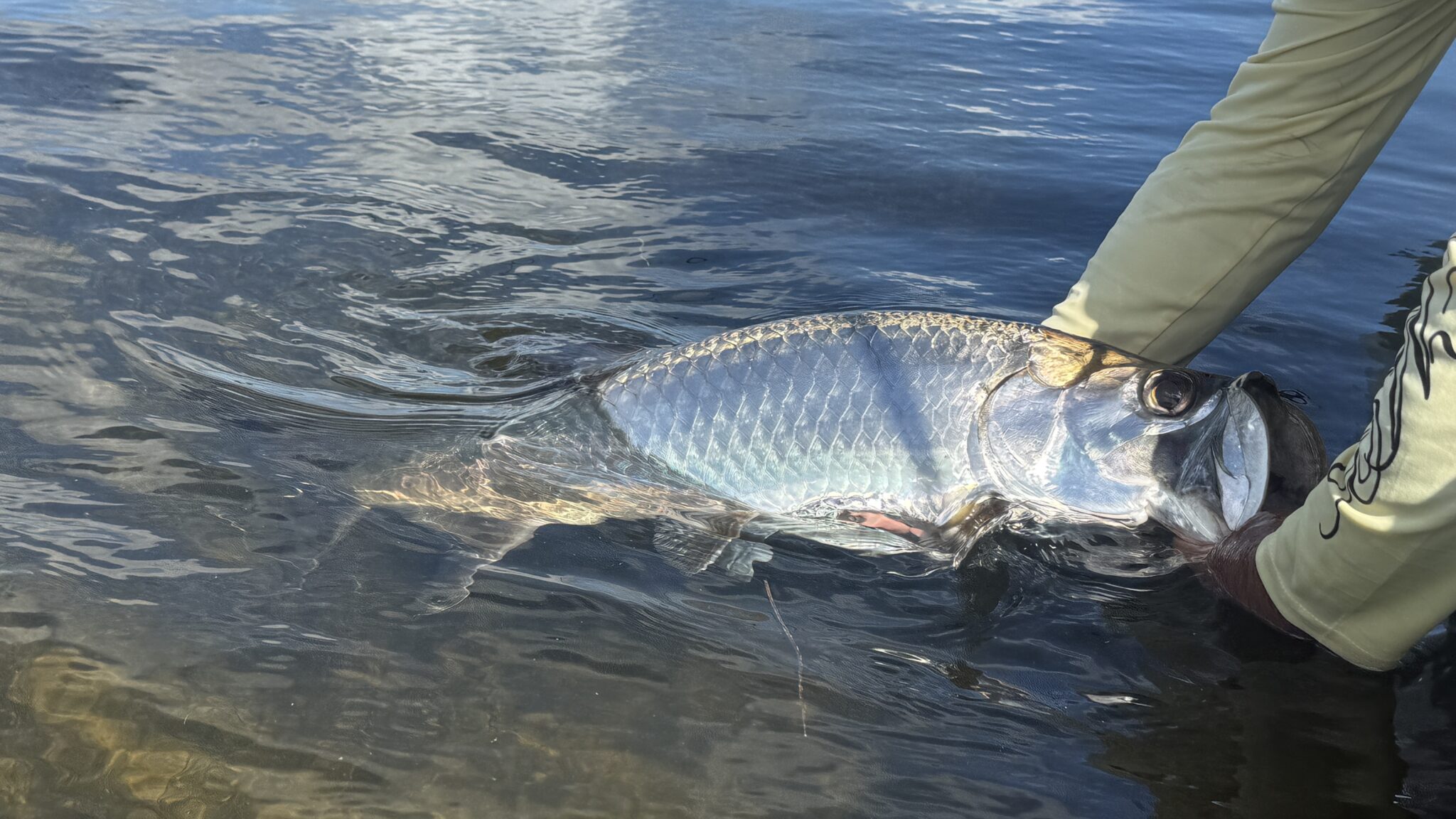
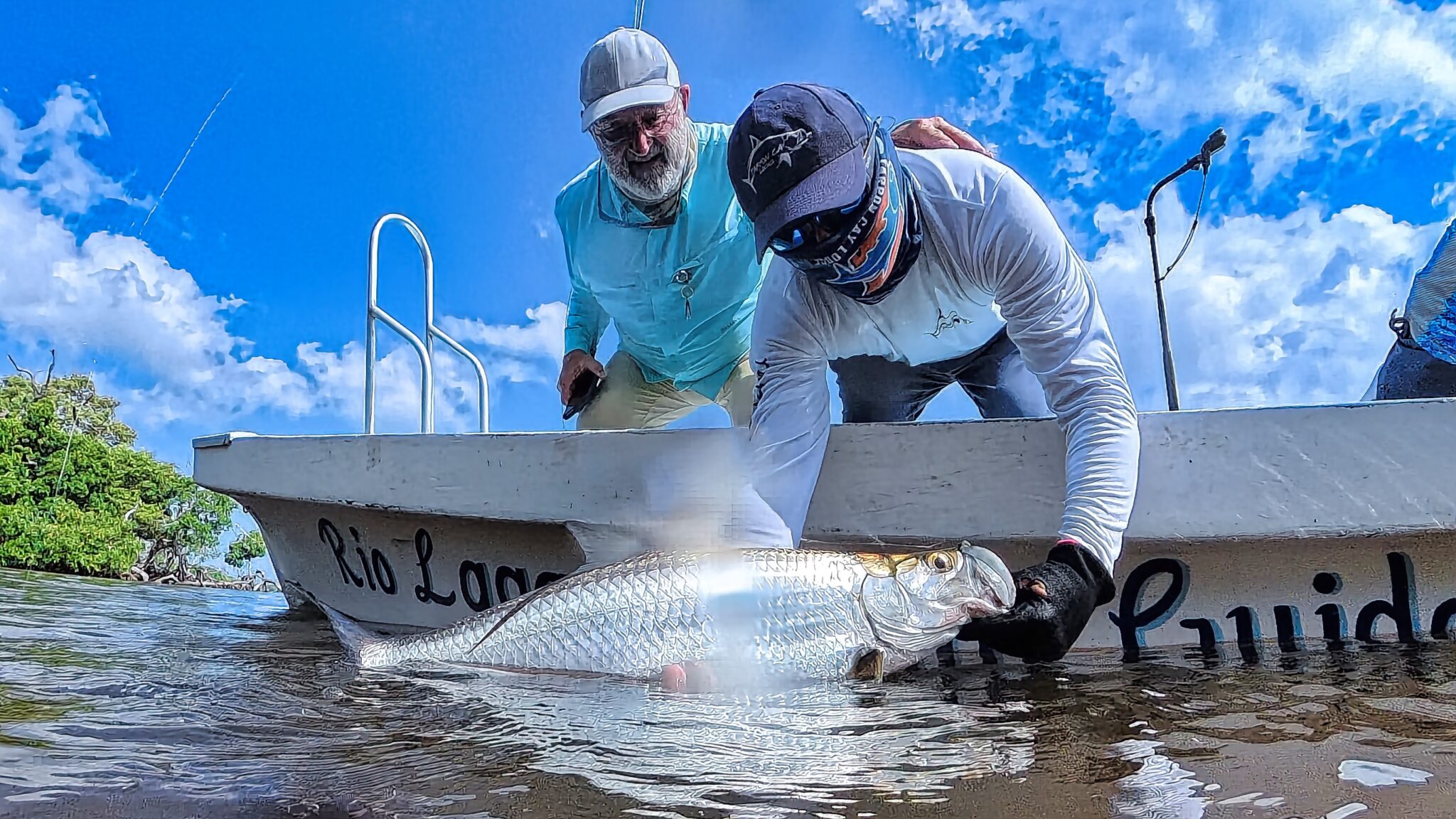
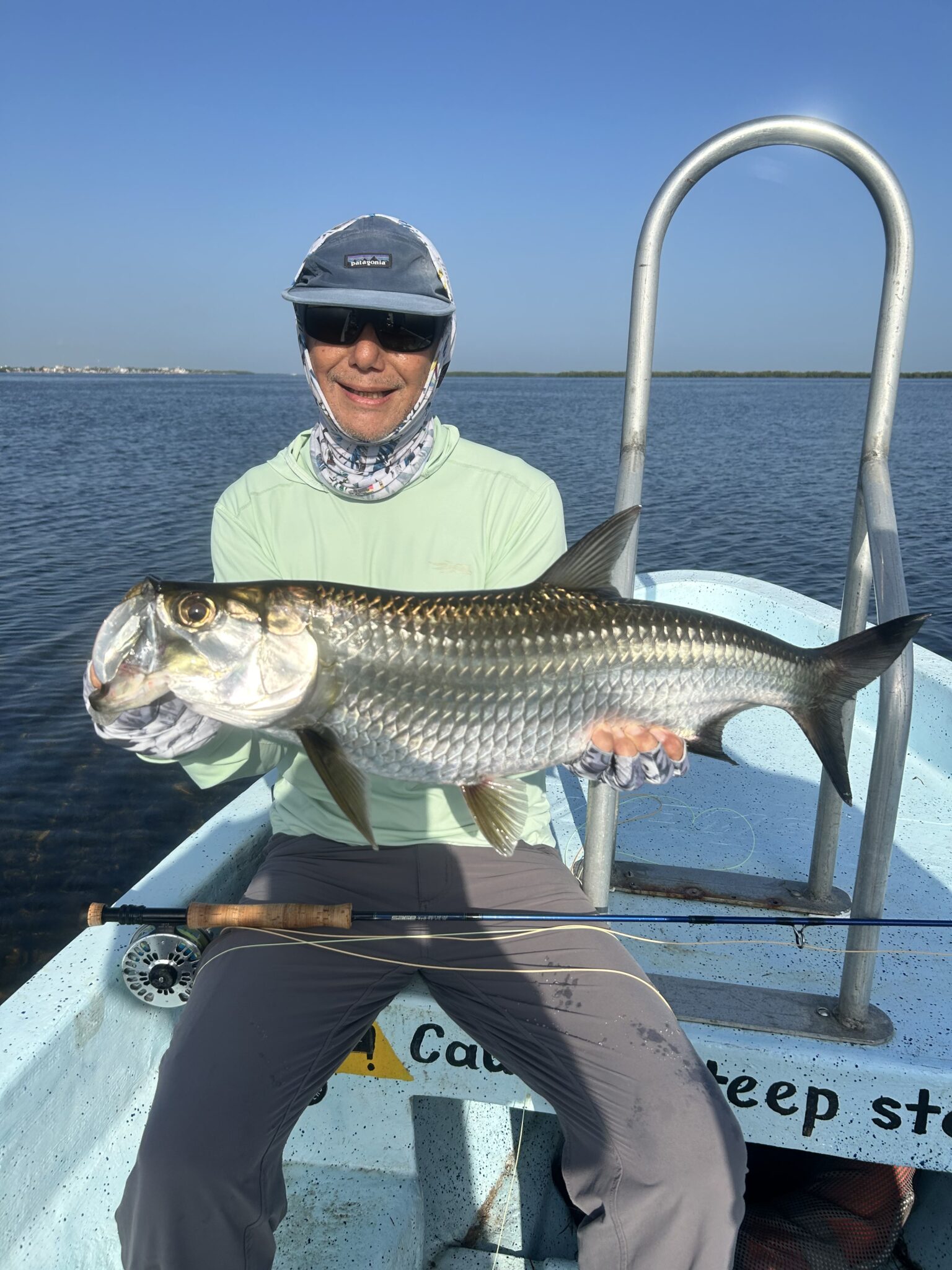
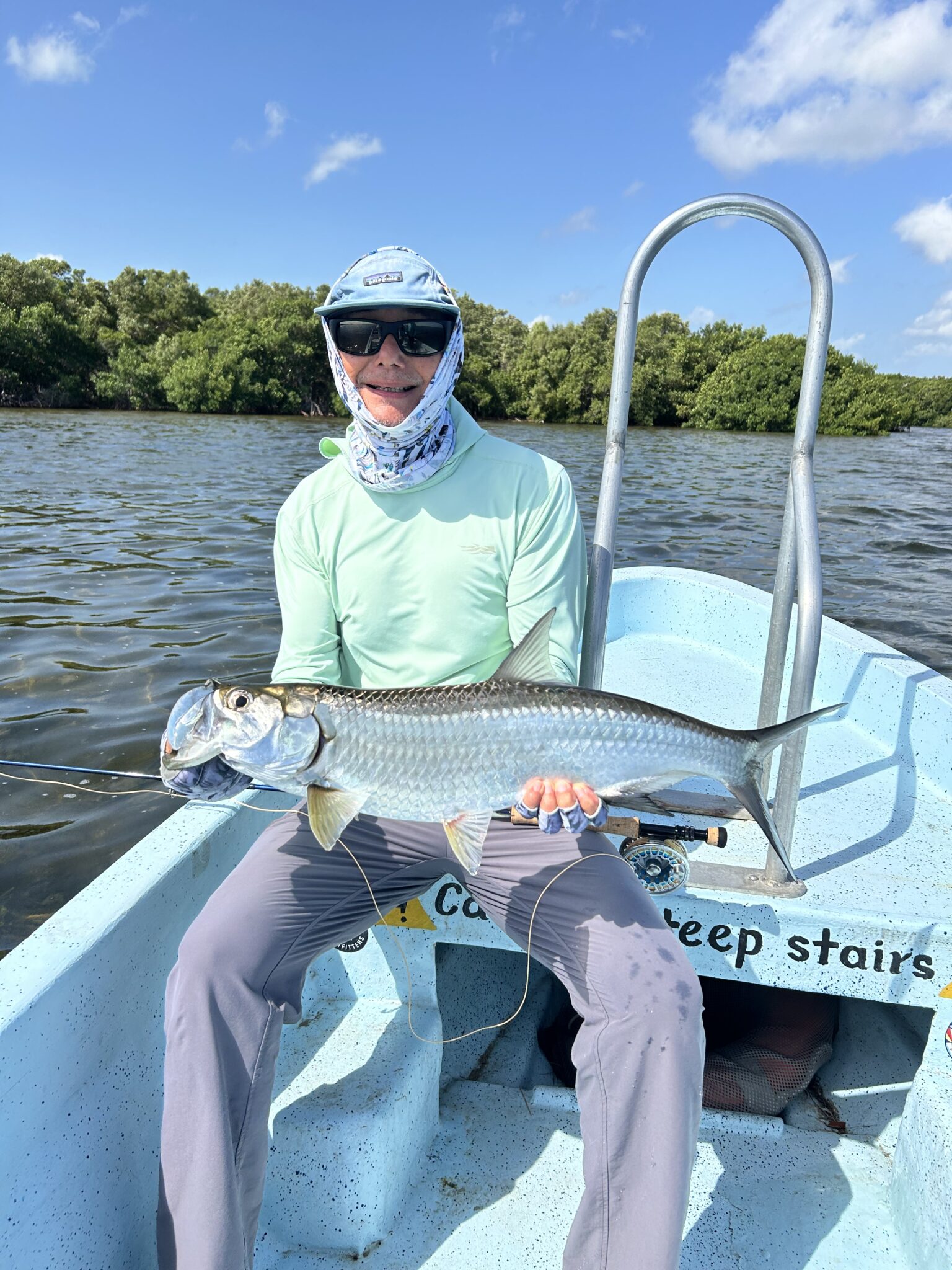
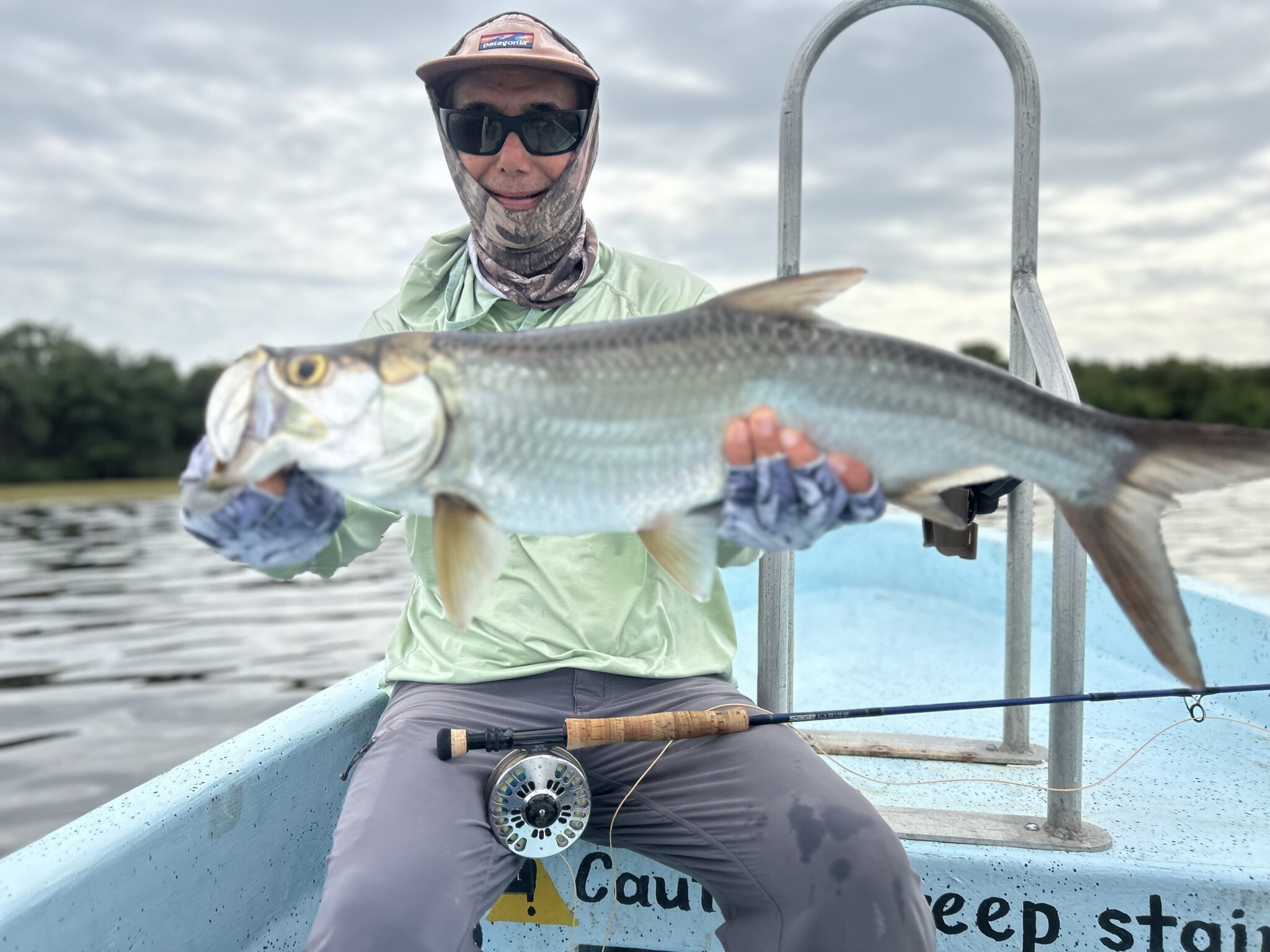
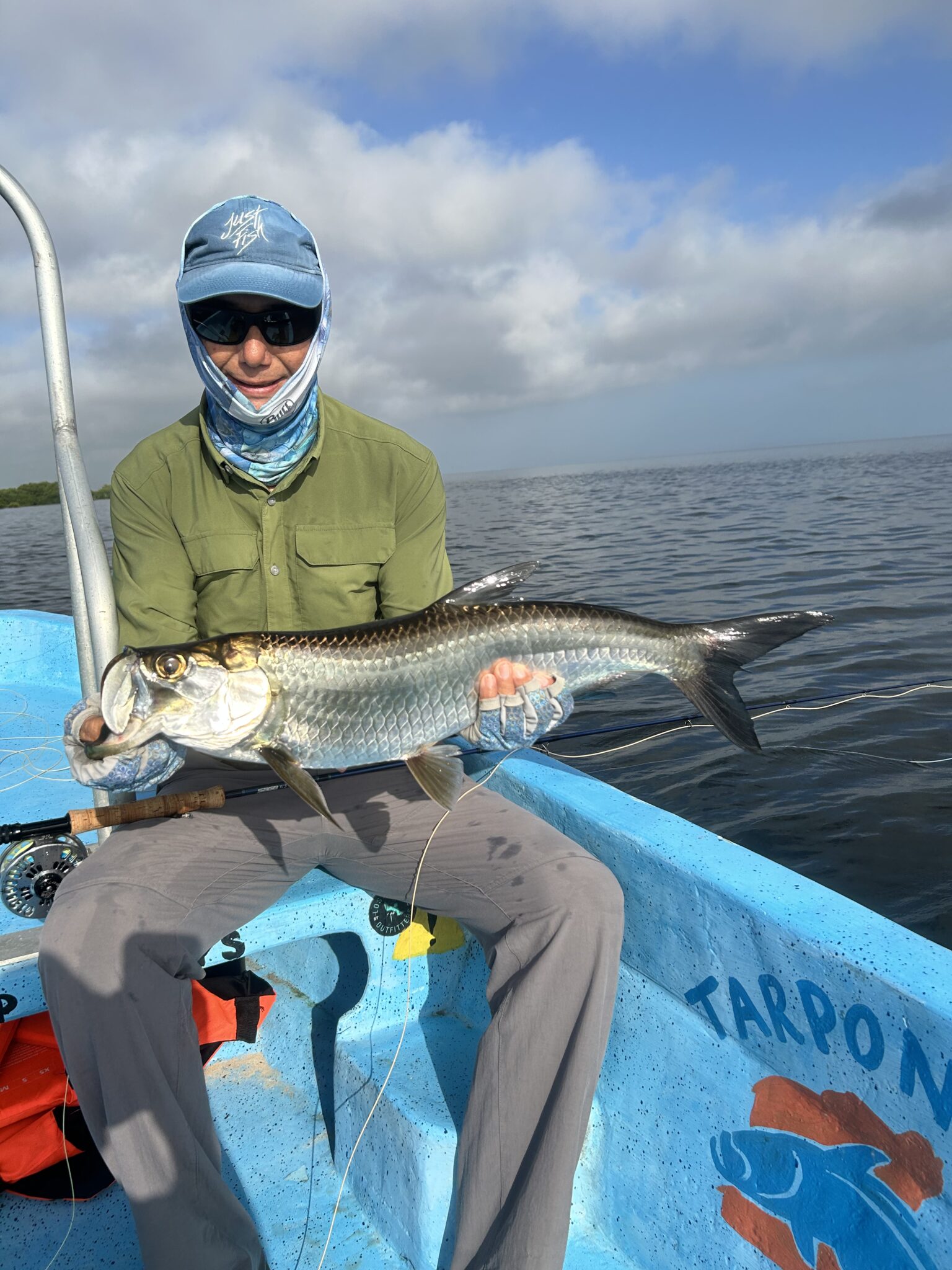
Not far from the organized insanity of Cancun, on the north coast of the Yucatán Peninsula, sits the little fishing village of Río Lagartos and Tarpon Cay Lodge. It’s one of those places where you can spend the morning casting to juvenile tarpon in six inches of water and the afternoon wondering why the Internet can’t successfully travel through a concrete wall. The attraction is the fishing. Miles and miles of shallow protected lagoons hold juvenile tarpon generally running from about six to twenty-five pounds, with occasional schools containing hundreds of fish. Much of the water is protected from commercial fishing, which is probably one reason the place can be ridiculously good.

I couldn’t have been more excited to return. A month earlier I’d fished for juvenile tarpon in Campeche, only about 200 miles away in what looks like essentially the same habitat. On paper it should have been similar. It wasn’t. Campeche was mediocre enough that it actually made me more excited about Río Lagartos. I wanted to know whether the spectacular fishing we’d experienced here the previous year was normal—or whether we’d simply gotten lucky and I’d spent the following twelve months bragging about an accident.
This year I was rooming and fishing with Lee Haskins for the first time. Lee has probably made twenty trips here and has fished with every conceivable variety of fly fisherman, from experts to people who probably shouldn’t be allowed around a fly rod without protective eyewear. He’s a terrific teacher and genuinely enjoys helping fishermen and guides get the most out of a trip. Unfortunately for Lee, I’m a lousy student. My preferred learning method is to question everything I’m told, try it my way, screw it up, and eventually discover that the person teaching me was right in the first place. It’s inefficient, but after seventy years I’ve become very good at it.
Getting to Tarpon Cay is basically a two-day migration. We flew nonstop from San Francisco to Cancun, ate a nice dinner, slept at the Marriott and climbed into a van the following morning for the three-hour ride to Río Lagartos. Everything was going beautifully until a Yucatán thunderstorm opened up and the driver’s-side windshield wiper flew off. We continued down the highway in torrential rain for several miles apparently using the Force, until our driver finally stopped, removed the functioning wiper from the passenger side and installed it on his side. I admired the ingenuity. I also added a few dollars to his tip for successfully delivering six American fishermen instead of becoming the lead story on the evening news.
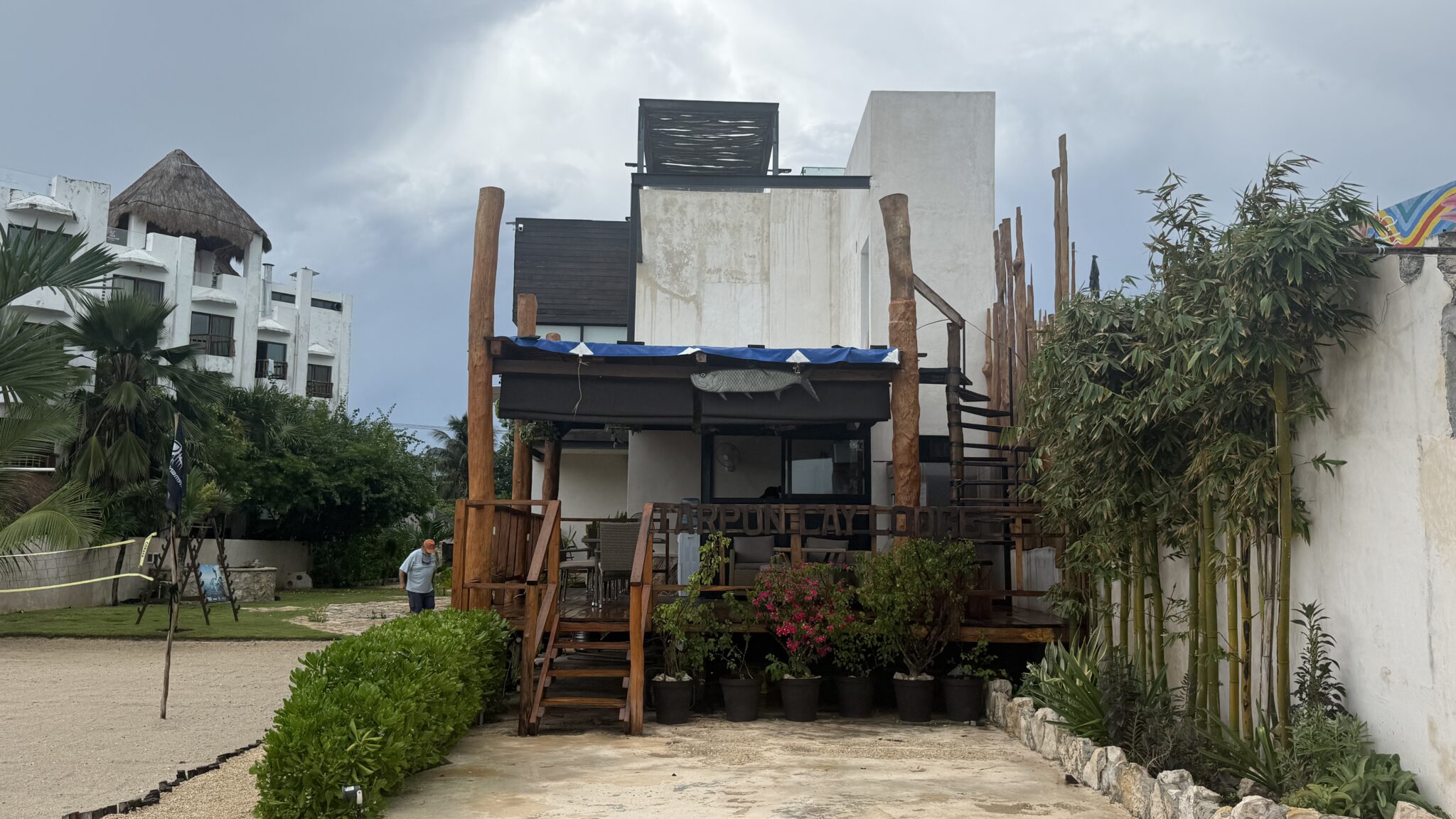
The lodge had changed since last year. Tarpon Cay moved from the Yum Ha Boutique Hotel to the Ría Aayin apartments, which are now called Tarpon Cay Lodge because they put a Tarpon Cay Lodge sign on the building. That’s apparently how real estate development works in Mexico. The apartments were comfortable, the boats were tied directly to the private dock, and there was a rooftop lounge with little plunge pools whose filters weren’t working. Given the temperature and roughly 95-percent humidity, those pools looked increasingly attractive as the week progressed. Fortunately, the air conditioning worked—even when lightning knocked out electricity to the entire town and the lodge went onto generator power. At that moment I didn’t care whether the generator powered another electrical appliance in Mexico. Keep my air conditioner alive and we’ll sort out civilization later.

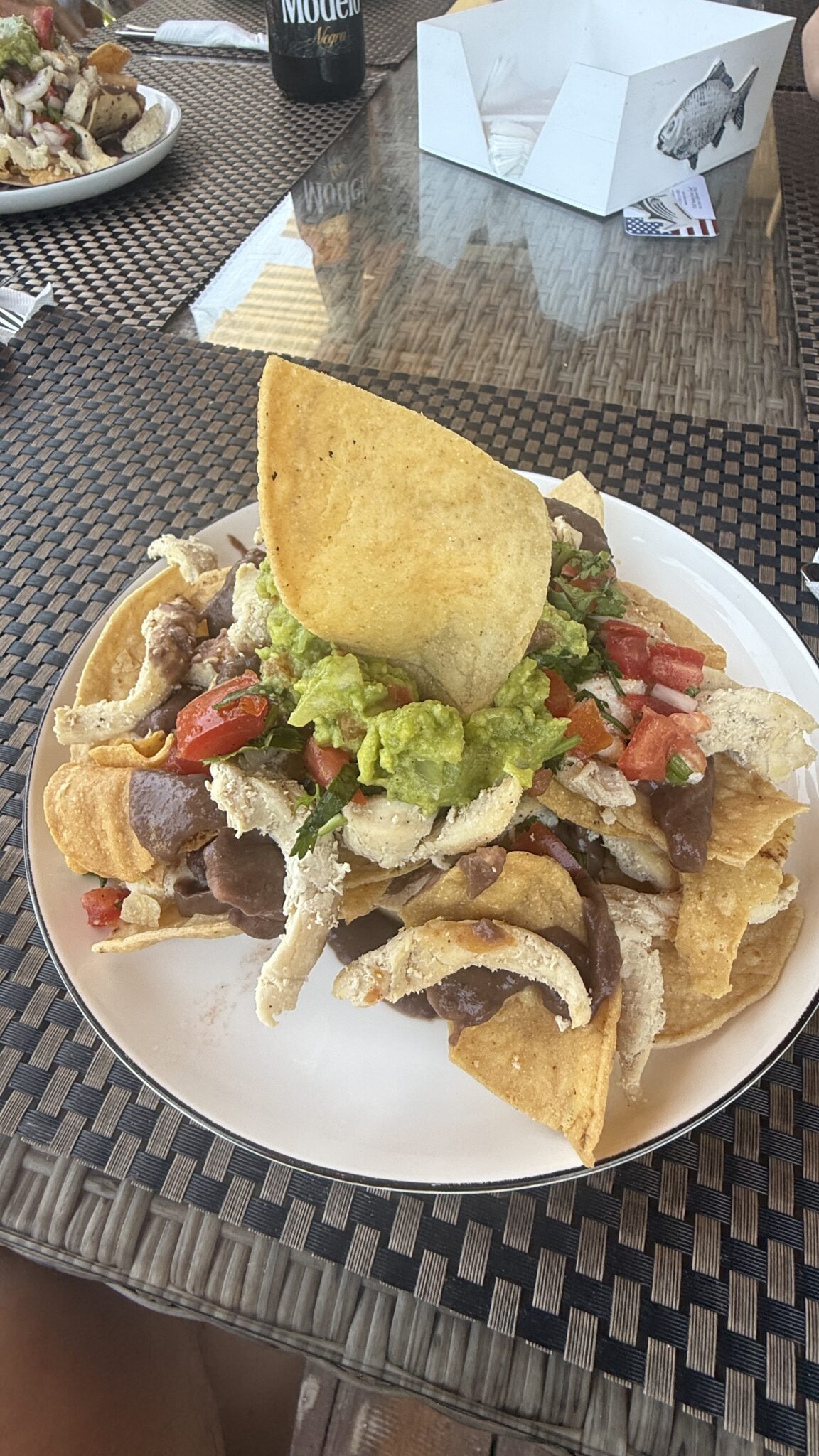
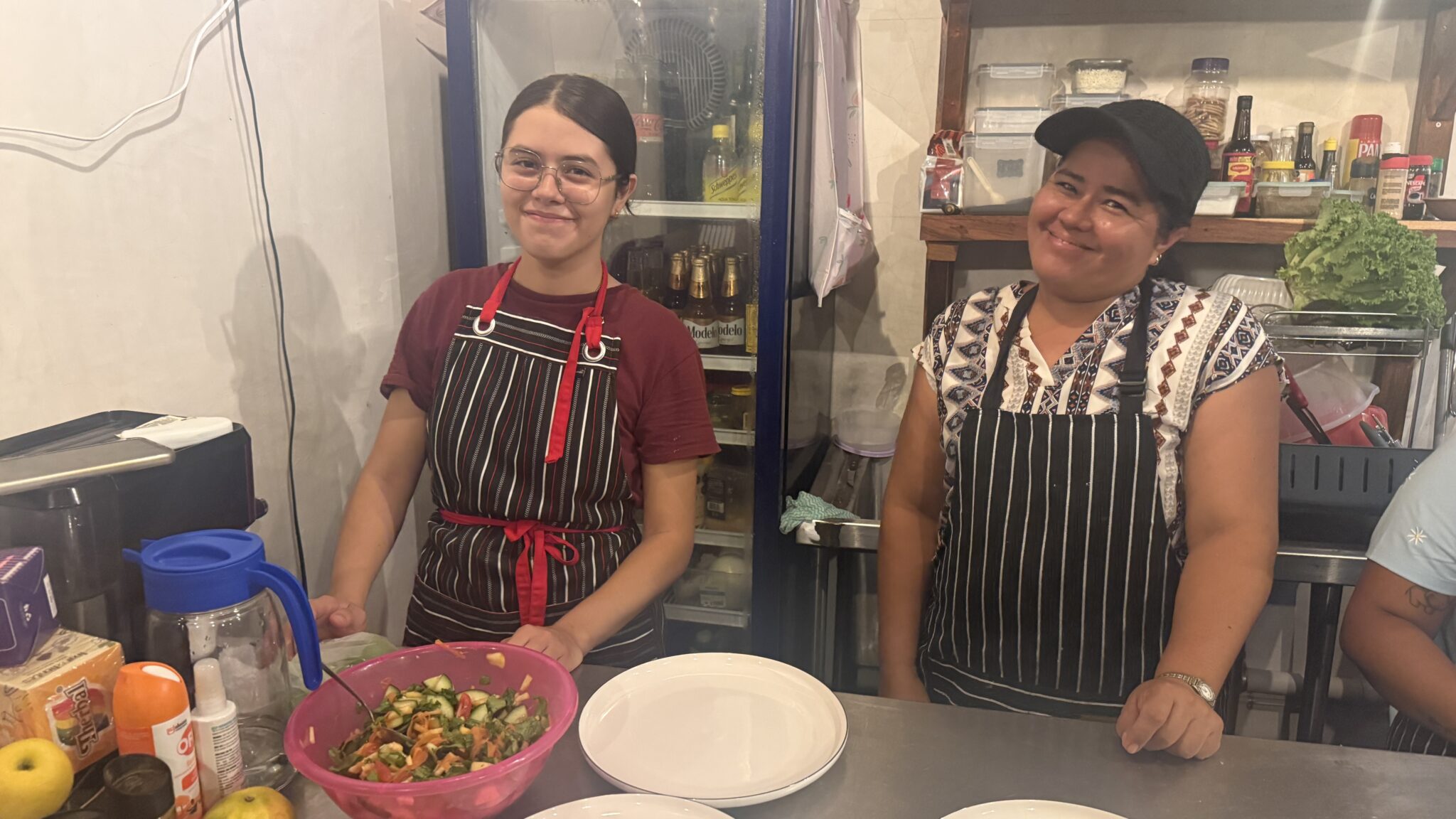
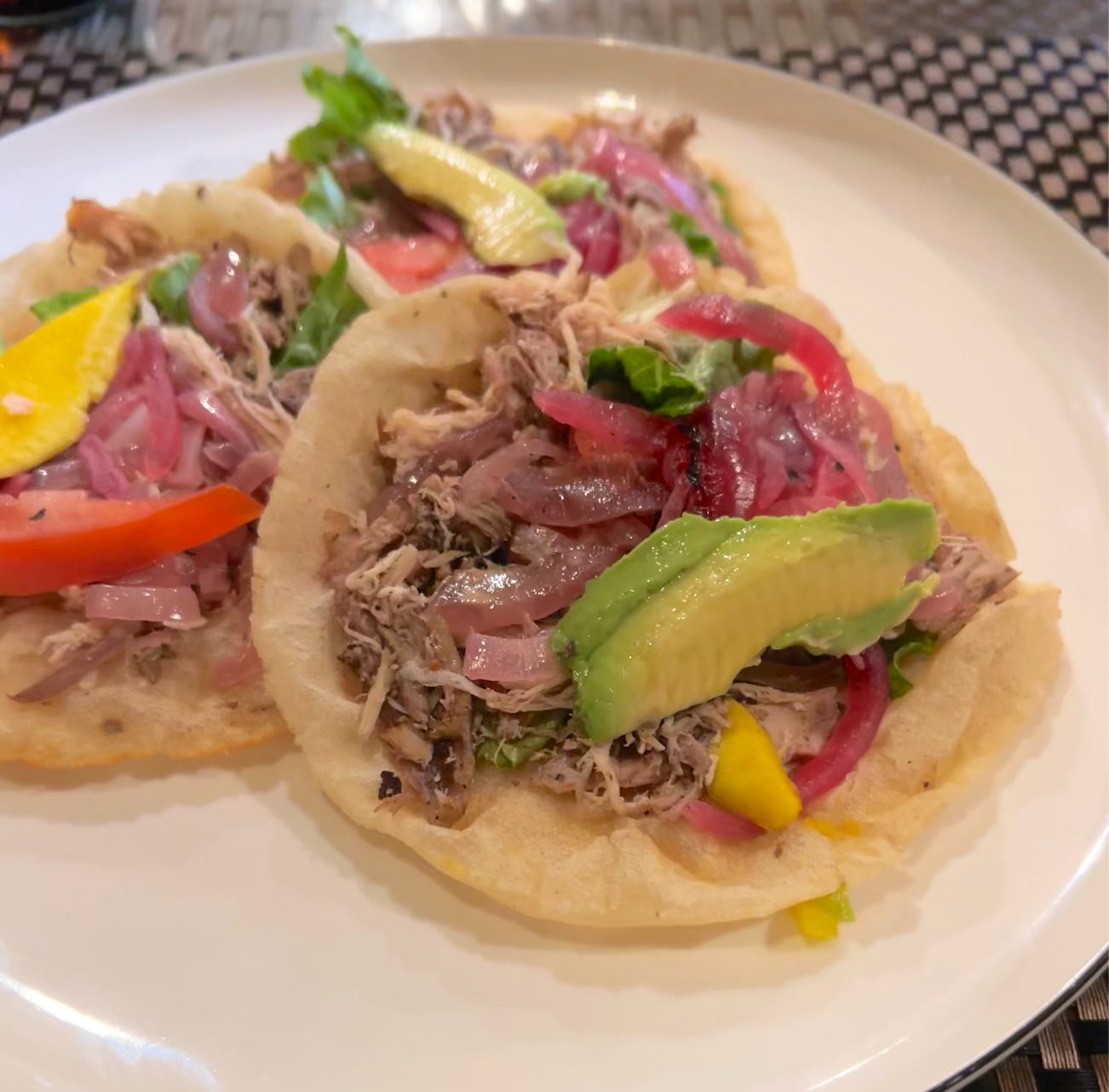
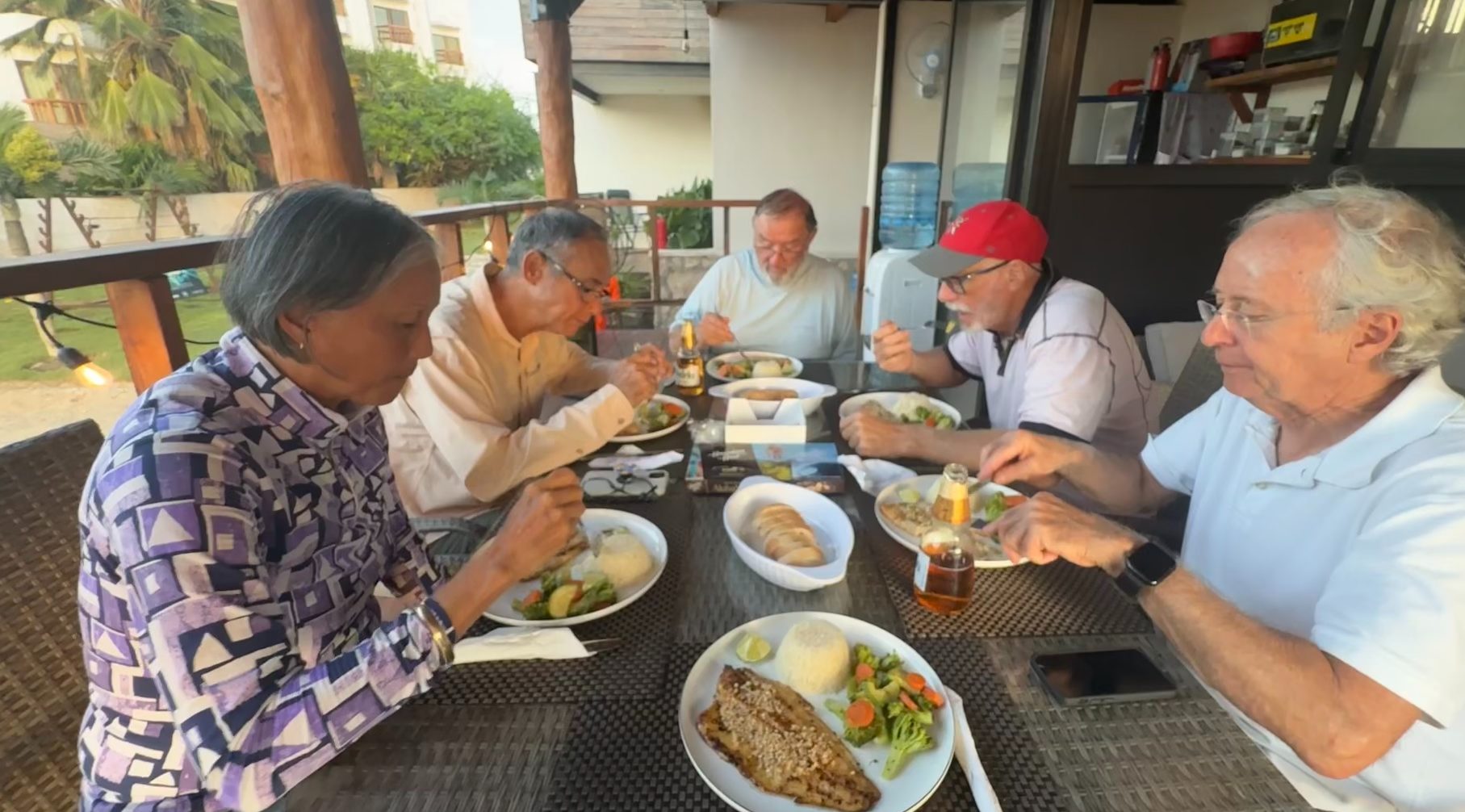
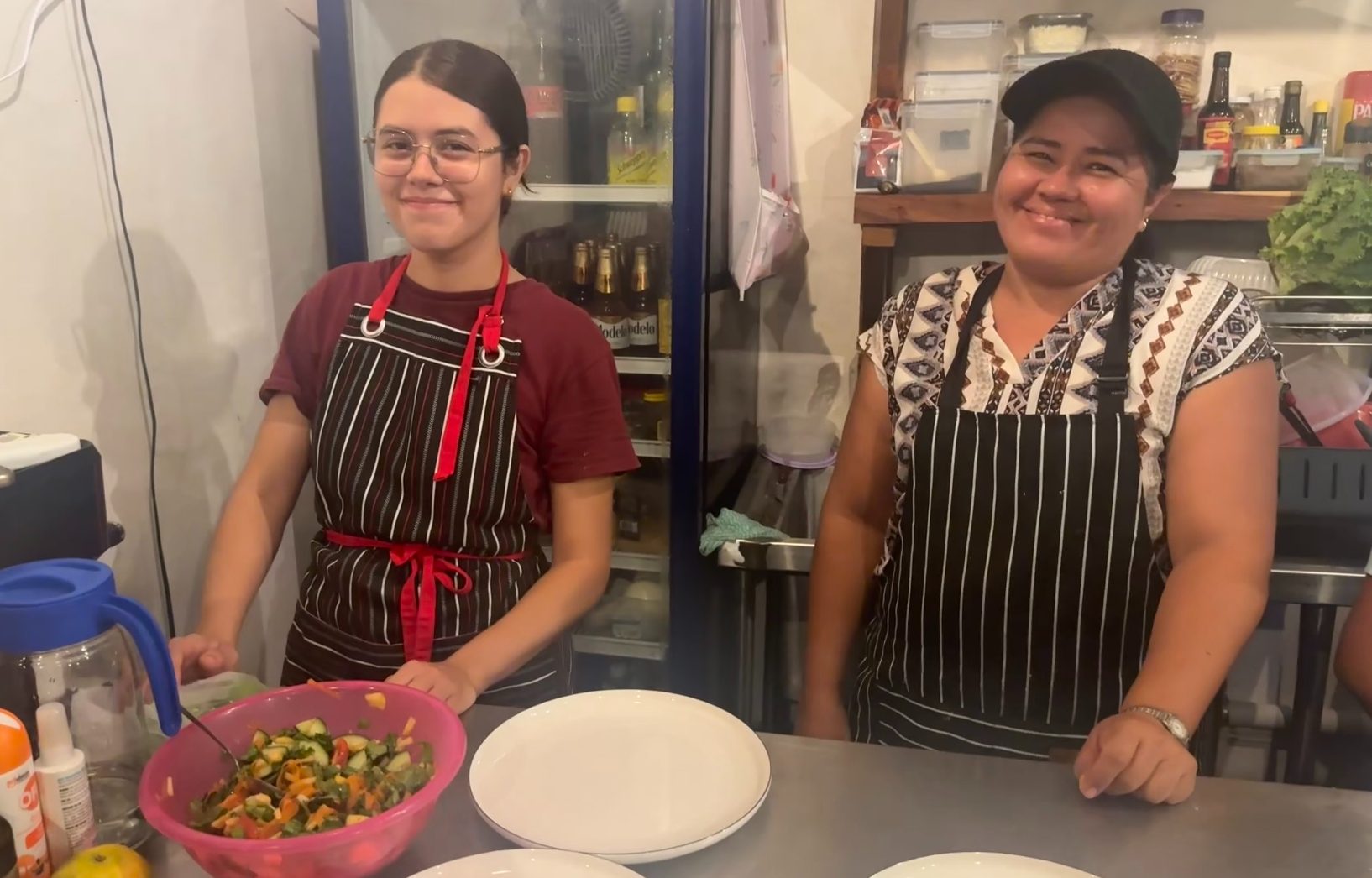
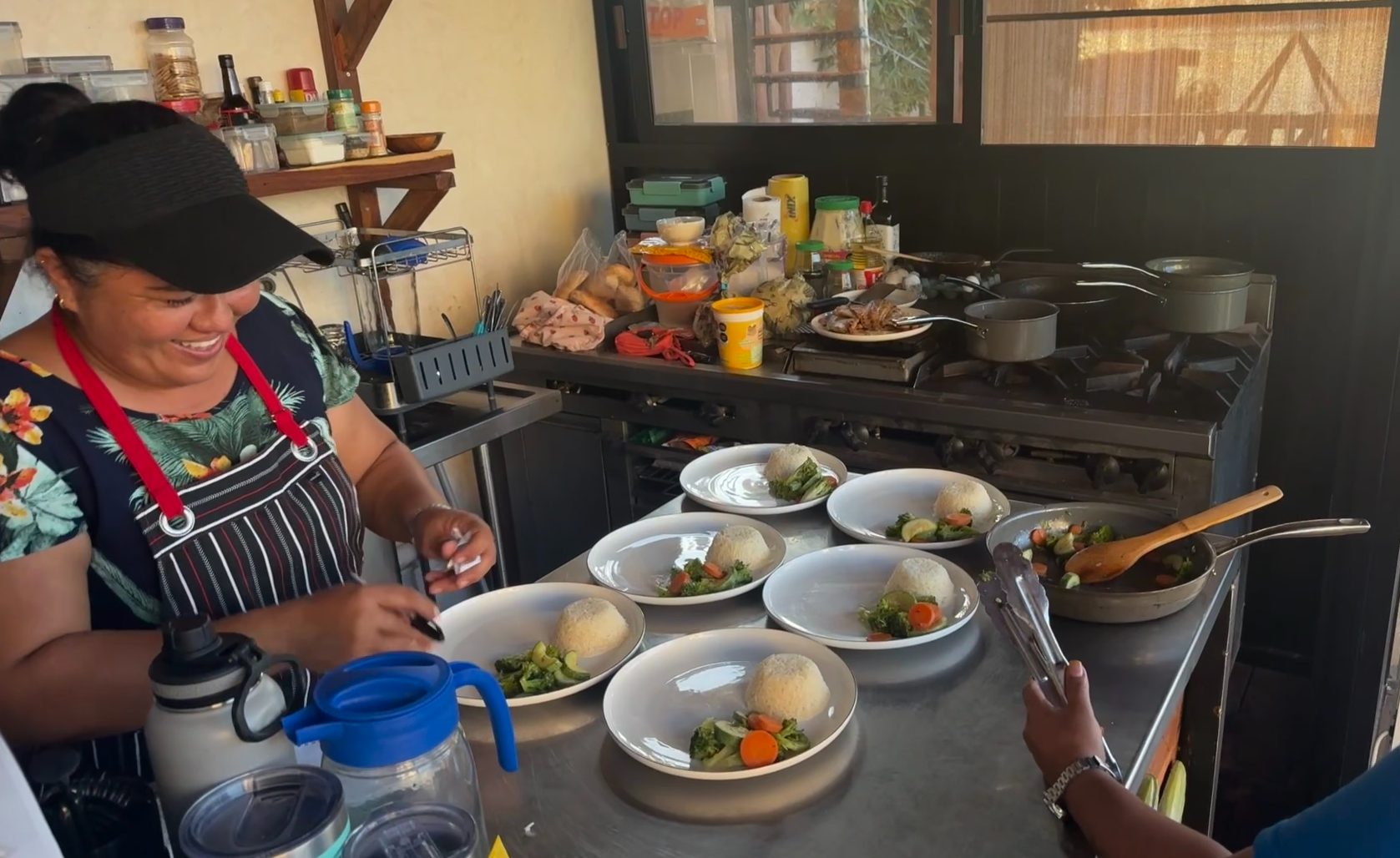
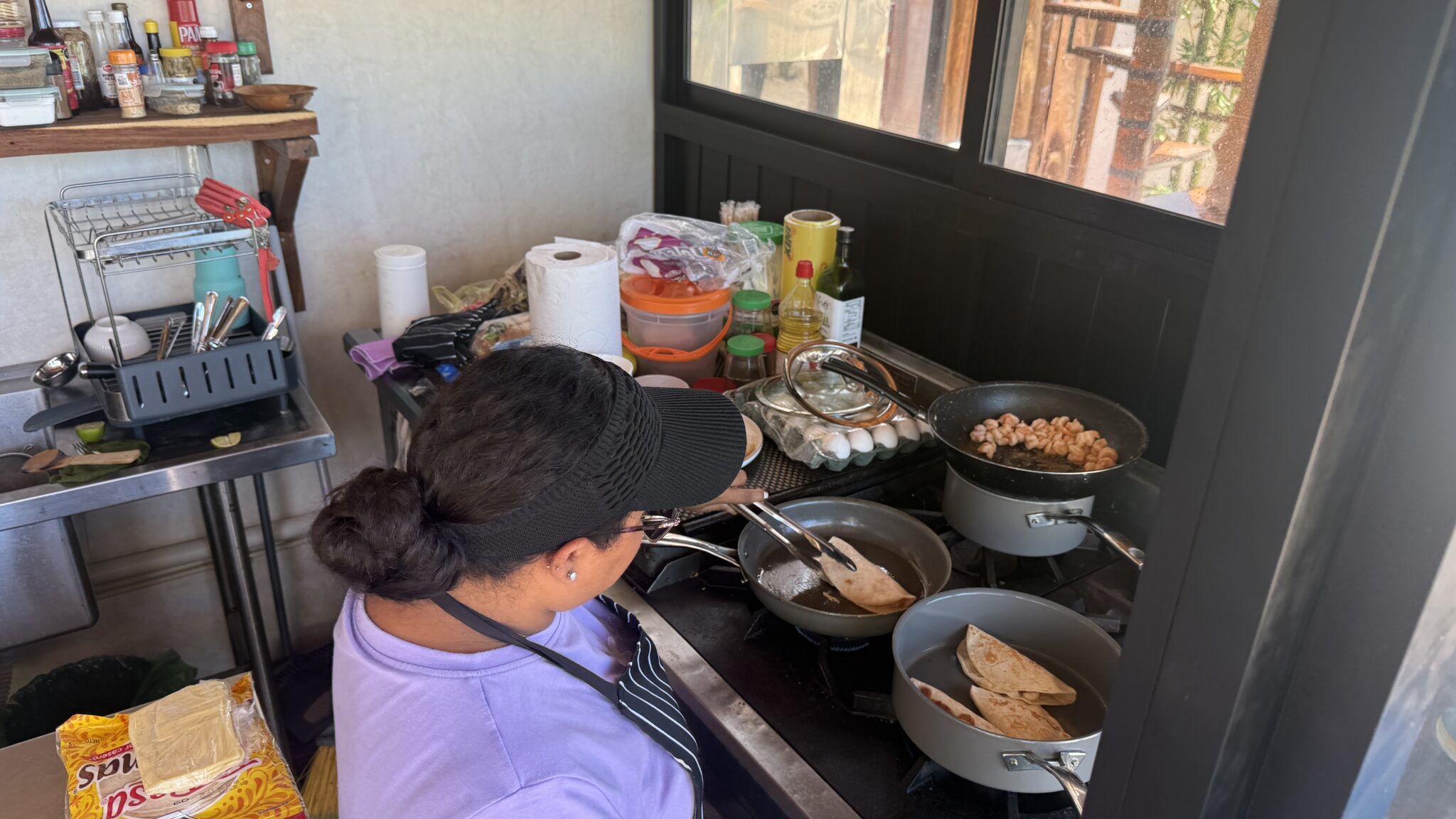
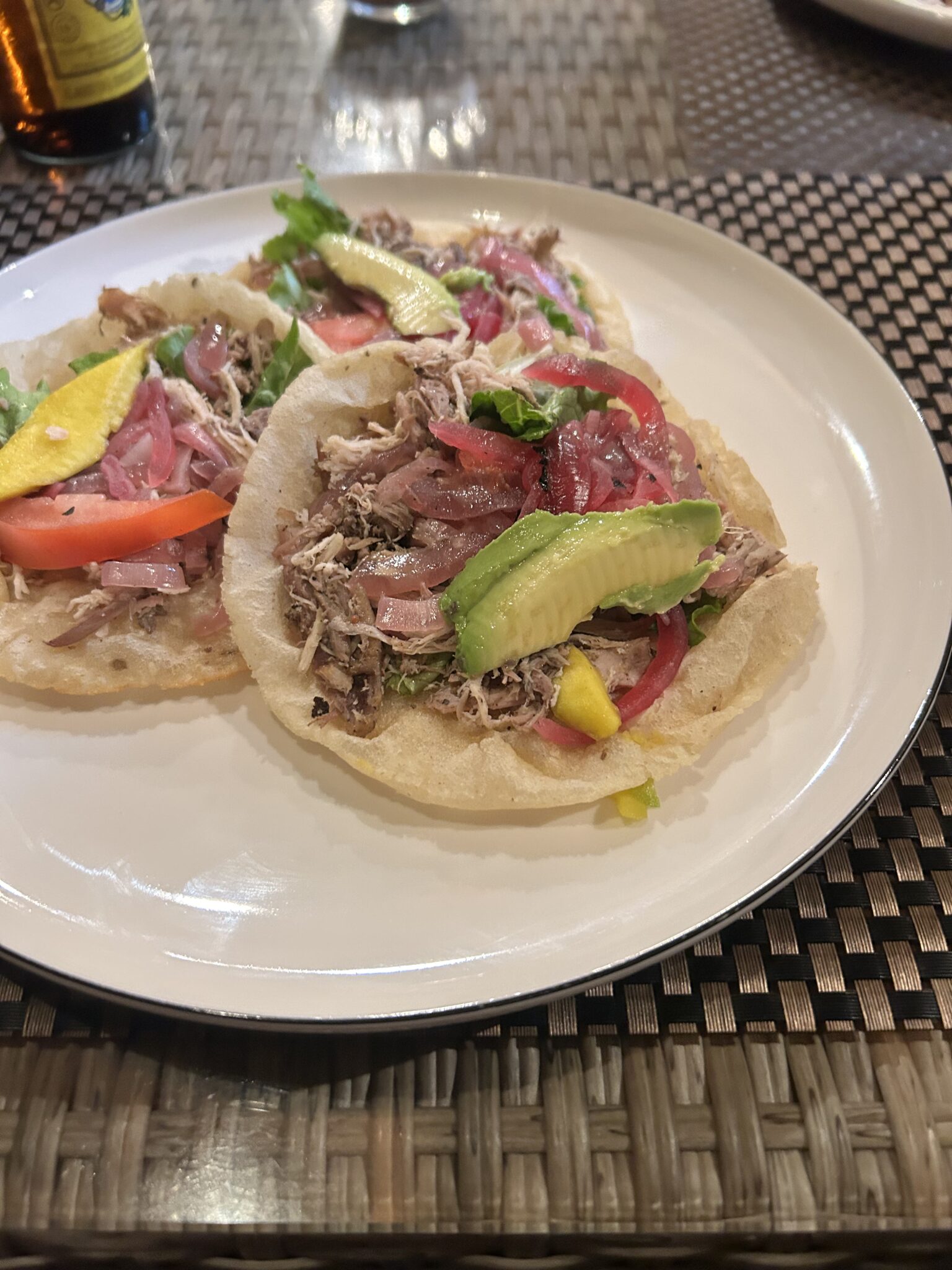
The food was good, family-style Mexican comfort food—fish, rice, vegetables, ceviche, pork, chicken, tacos, burritos and enchiladas. Somehow I came home a pound lighter despite eating like a Labrador every time we returned from fishing. The bar served beer but no cocktails or hard liquor, although they could produce a hand-pressed espresso. So apparently tequila was beyond the capabilities of the kitchen, but Italian coffee technology had successfully reached Río Lagartos. The outdoor dining room also introduced us to the local no-see-ums. For the first couple nights they ate every piece of exposed skin we owned. Nothing destroys the romance of dinner in the Yucatán quite like six grown adults spraying themselves with DEET before the appetizers arrive.












The Internet worked intermittently, which I’ve learned is Mexican for “Internet.” Cellular service ranged from poor to nonexistent, and the concrete walls of the apartments seemed specifically engineered to prevent Wi-Fi from escaping from one room to another. Eventually I discovered a couple magic spots near the television where a signal existed. Apparently the lodge hasn’t discovered Starlink yet. Elon Musk can provide Internet to boats in the middle of the Pacific Ocean, but my bedroom in Río Lagartos remained beyond the reach of modern civilization.
We had deliberately scheduled the trip around what were supposed to be favorable tides and the seasonal movement of larger tarpon. Naturally, when we arrived we were told the tides were unusually low and unpredictable and there weren’t as many fish around as last year. Perfect. We’d traveled 3,000 miles to fish according to a tide table that apparently the water had neglected to read.
It turns out Río Lagartos tides really are weird. This isn’t an open coastline where high tide at 7:42 means the water rises at 7:42. It’s an enormous, extremely shallow lagoon connected to the Gulf through narrow channels. The Gulf provides the tide, but then the water has to work its way through what amounts to a gigantic shallow plumbing system. Wind can push more water into the lagoon or suck it out, narrow channels accelerate the current, rain changes water levels, and the flats can lag substantially behind the predicted Gulf tide. Six inches of water can determine whether a flat is covered with feeding tarpon or resembles a parking lot. So the tide table isn’t wrong exactly. It’s more like a suggestion.
That was the beginning of the week. And before it was over, I would learn that I still didn’t know how to set a hook on a tarpon, Martine had mellowed considerably since last year, Lee could apparently summon permit by tying flies during lunch, Brian could hook tarpon by closing his eyes, and ladyfish may be the greatest consolation prize in fly fishing.
Most importantly, I was about to relearn one of the fundamental rules of tarpon fishing: When the guide screams “DON’T MOVE THE ROD!” he isn’t offering a topic for debate. Which, naturally, meant I had to debate it.
Day 1
There is nothing quite like being on the bow of a flats boat when the guide poles around a corner and suddenly there are ten tarpon rolling across a glassy flat directly toward you. After all the traveling, the broken windshield wiper, the thunderstorms and my concerns that last year’s great fishing might have been a fluke, there they were.
Our old friend Elisio was on the push pole, and Lee and I took turns on the bow. We worked surprisingly well together. Tarpon fishing with two fishermen is a little like dancing with someone you’ve never danced with before. If both people keep trying to lead, eventually somebody gets stepped on. Lee has been doing this forever and is generous about sharing the bow, so we quickly settled into a rhythm. It still took me a couple fish to remember what the hell I was doing.

I’d just fished juvenile tarpon in Campeche a month earlier, but apparently my brain had already erased everything I’d learned. The problem was the hook set. After decades of trout and striper fishing, when I see a fish eat a fly every neuron in my body screams LIFT THE ROD! Tarpon guides scream exactly the opposite. DON’T MOVE THE ROD! In addition, most people are in denile that they even do it including myself which is why I review film of every fail and yes I do it and deny it like every one else. Even a quick small flinch is enough to Fail the set.
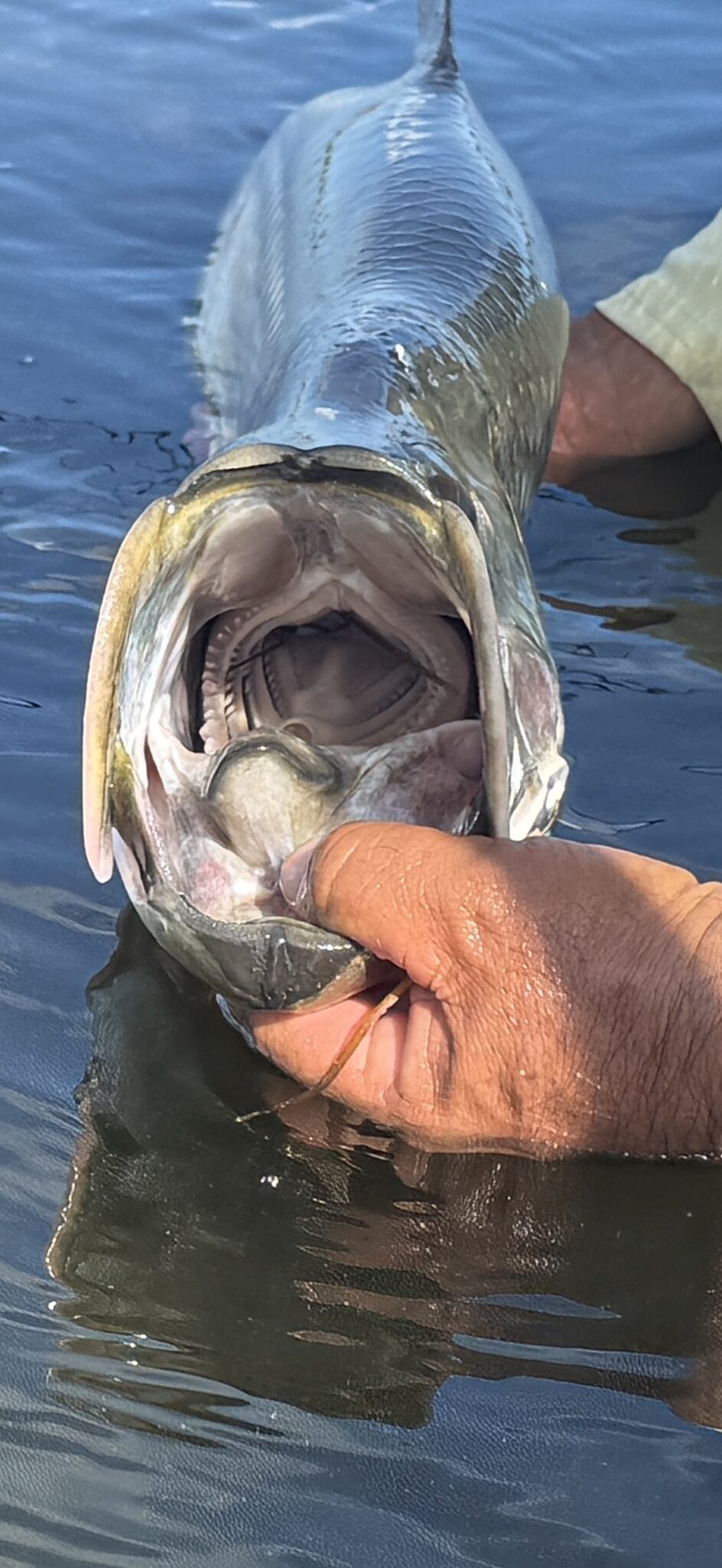
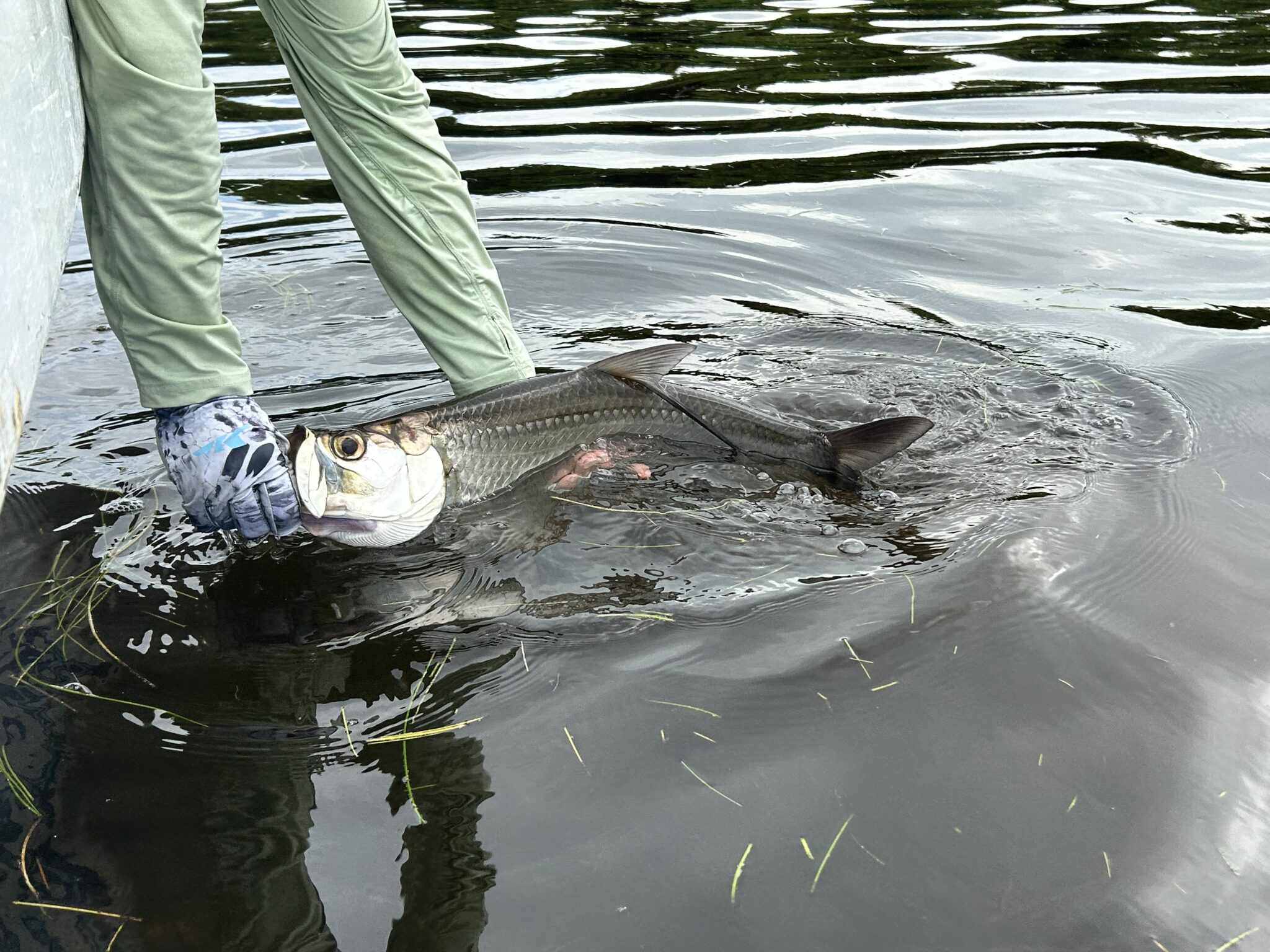
The reason is simple. A tarpon has a mouth apparently constructed from the same material used to make bowling balls. Raising the rod just bends it and absorbs the force you’re trying to put into the hook. The correct move is to keep the rod pointed at the fish and make a hard strip-set with the line hand. Feel the fish, strip again, bury the hook, let the fish turn—and then use the rod. It’s incredibly simple. Which is why I apparently require several hundred tarpon to learn it.
We caught fish throughout the day and finished the evening near the harbor casting to schools of ladyfish. They attacked practically anything we threw. Lee was pounding them on Gurglers while I was still trying to figure out exactly what they were.
Ladyfish fight like bonefish and jump like little tarpon. People call them the poor man’s tarpon. I’m going to call them my girlfriend on the side. They’re exciting, easy and always available when the tarpon aren’t cooperating. And to be clear this pertains only to fish.
Day 2
The second morning looked a lot like the first. Tarpon were rolling on the flats, although perhaps not quite in yesterday’s numbers. It was still vastly better than Campeche, which was rapidly becoming my personal unit of measurement for mediocre tarpon fishing. Lee and I were also getting better at the dance. One fishes, one watches, then switch. No arguments, no counting casts, no territorial disputes over the bow. My project for the day was improving my strip-set. I also wanted to film Lee closely because I’m a visual learner and figured I’d better document what somebody who actually knows what he’s doing looks like.
Then Lee hooked something that simply took off.
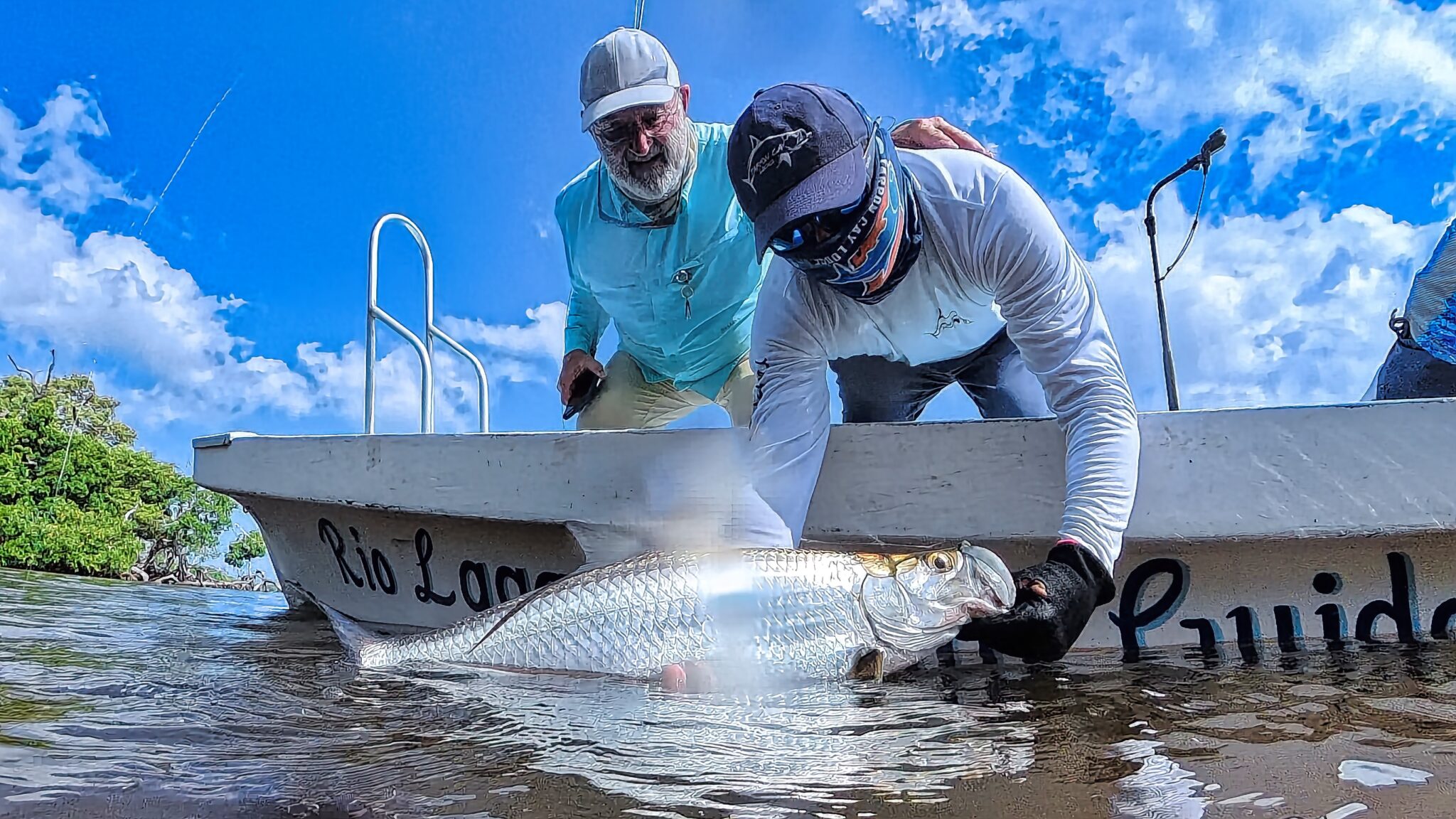
The fish ripped him well into his backing on its first run without jumping. That’s unusual for these juvenile tarpon. I grabbed the cameras and waited for the spectacular aerial display. Nothing. The fish just kept pulling. Even Elisio looked puzzled and muttered something in Spanish. Elisio doesn’t speak English and I don’t speak enough Spanish, but we’ve developed a pretty effective communication system based almost entirely on facial expressions. The man has a remarkably extensive vocabulary with his eyebrows. About twenty minutes later, Lee finally worked the fish close enough for us to see it. It jumped once—definitely a tarpon—and then I saw the problem. The fly was stuck on top of its head. Lee had essentially been fighting a tarpon from the wrong end. I’d never seen one hooked like that. It explained the strange fight and gave us some great photographs, although I’m not sure the tarpon appreciated being used as an educational demonstration.
Dinner every night became the fishing equivalent of show-and-tell. Everybody brought photographs and stories. Doug, Roger and Bryan were catching some impressive fish, and to my considerable annoyance the first-timers appeared to be outfishing Lee and me. Nothing keeps an experienced fisherman humble quite like watching somebody who’s never done it before immediately become better at it.
Day 3
Today, Lee teamed up with Bryan and Cresp, which gave me the chance to fish alone with Martine. Martine and I have history. Last year I lost a tarpon during a jump and the released line launched the fly directly into Martine’s face. He wasn’t pleased. He then spent the rest of the day making it quite clear that he wasn’t pleased. So I approached today’s reunion with modest expectations.
We had an amazing morning. Martine put me on the best flats I’de seen yet and I caught lots of fish following every instruction to the letter without debate. I learned alot that morning. To my surprise, Martine had mellowed considerably. He’d gotten married during the year, which may have had something to do with it. Marriage changes some men. Others simply learn that murdering American fly fishermen is bad for repeat business. Either way, we had a great day. More importantly, I finally understood what the guides had been trying to teach me about the hook set.
We had enough shots that I could actually experiment. Sometimes I’d strip-set while allowing the rod to sweep slightly sideways. Other times I kept the rod absolutely motionless and pointed directly at the fish. The difference was hard to ignore. Fish hooked with rod movement frequently stayed connected through only the first jump or two. Most of the fish I successfully brought to the boat came from sets where the rod didn’t move. Strip. Weight. Strip hard. No rod. Epiphany. Apparently the guides who do this every day actually knew something.
One particularly memorable fish took me straight into the backing, just like Lee’s snagged fish—except mine actually jumped, which at least confirmed I wasn’t fighting a submerged Buick. I was having a hell of a time turning it, and when I finally got it close to the boat, I saw the problem: the fish was also foul-hooked behind the head. Foul-hooked tarpon are a special kind of pain in the ass. You can’t steer them. You’re basically attached to a pissed-off fish that has the wheel and knows exactly where all the sharp objects are. Sure enough, this one made the classic tarpon assassination attempt. From the stern, it dove under the boat, clearly intending to come out the other side and leave me holding two pieces of fishing rod. Luckily, I was using my 8-foot Bad Ass Glass, and we were only in about four feet of water. I shoved the rod down under the boat as far as I could. The fish ripped another 30 feet of line off the reel, shot underneath us, and then exploded out of the water on the other side. That’s what tarpon call the Rope-a-Dope. Just when you think they’re finally tired, they reach down deep, find one last reserve of pure hatred, and pull the classic “fuck you and your tackle” move.

Fishing with Martine turned out to be a little like having your second colonoscopy: once you stop resisting and just let the professional do his job, the whole experience goes much better.
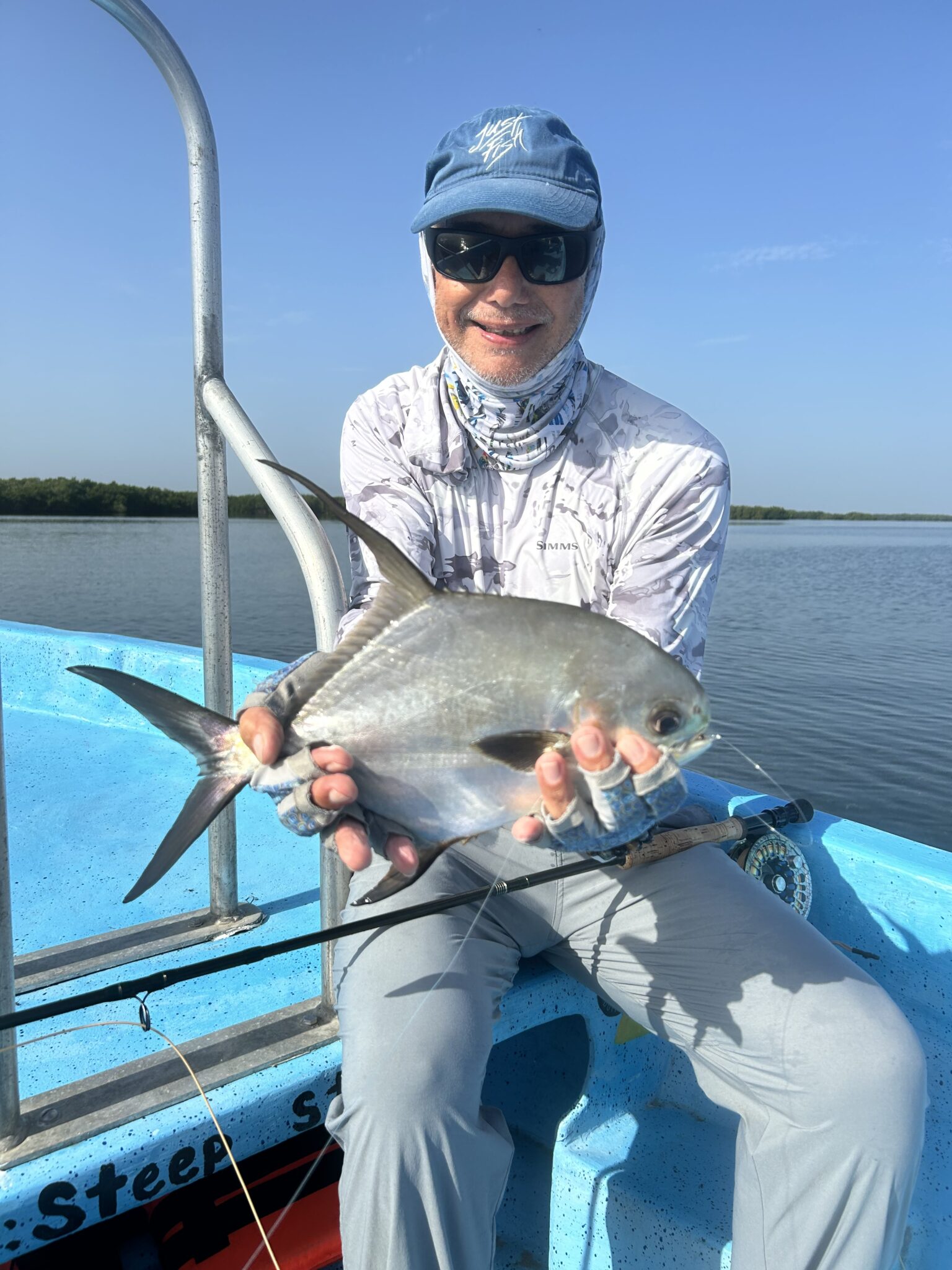
Meanwhile, Lee and Brian fishing with Creshad encountered something nobody expected. Permit. Schools of them. He didn’t hook one, but Lee came back from the morning session absolutely fired up. In roughly twenty years of coming here, he’d never seen permit on those flats. Forget the siesta. While the rest of us were recovering from five hours of fishing in tropical heat, Lee was rigging permit rods and tying permit flies like a man who had just discovered buried treasure.
Unfortunately, when we returned for the afternoon, Bryan was already back in Martine’s boat with his wife. You could almost hear the air leaving Lee’s sails. So I suggested Kathy fish with me and Bryan go back out with Lee. Kathy and I had a blast. She is an amazing woman, She is still a 4.5 Tennis player despite knee replacements at 70. We talked and laughed most of the afternoon. At one point I tried handing her the rod with a tarpon attached. She refused. Exactly what Gina would have done. Meanwhile Lee and Bryan got more shots at permit but couldn’t seal the deal.
Day 4
Our typical routine was brutal but efficient: alarm at 4:00, breakfast at 4:30, and out the door by 5:00 for the morning session. Fish until 10:00, lunch at 11:30, then the sacred siesta before heading back out from 3:00 to 6:00. At least, that was the plan. The weather gods had other ideas. Lightning and rain rolled in that morning, and I figured, Eh, this will blow over in an hour. Apparently the guides had access to better weather gods than I did, because they canceled the entire morning session.
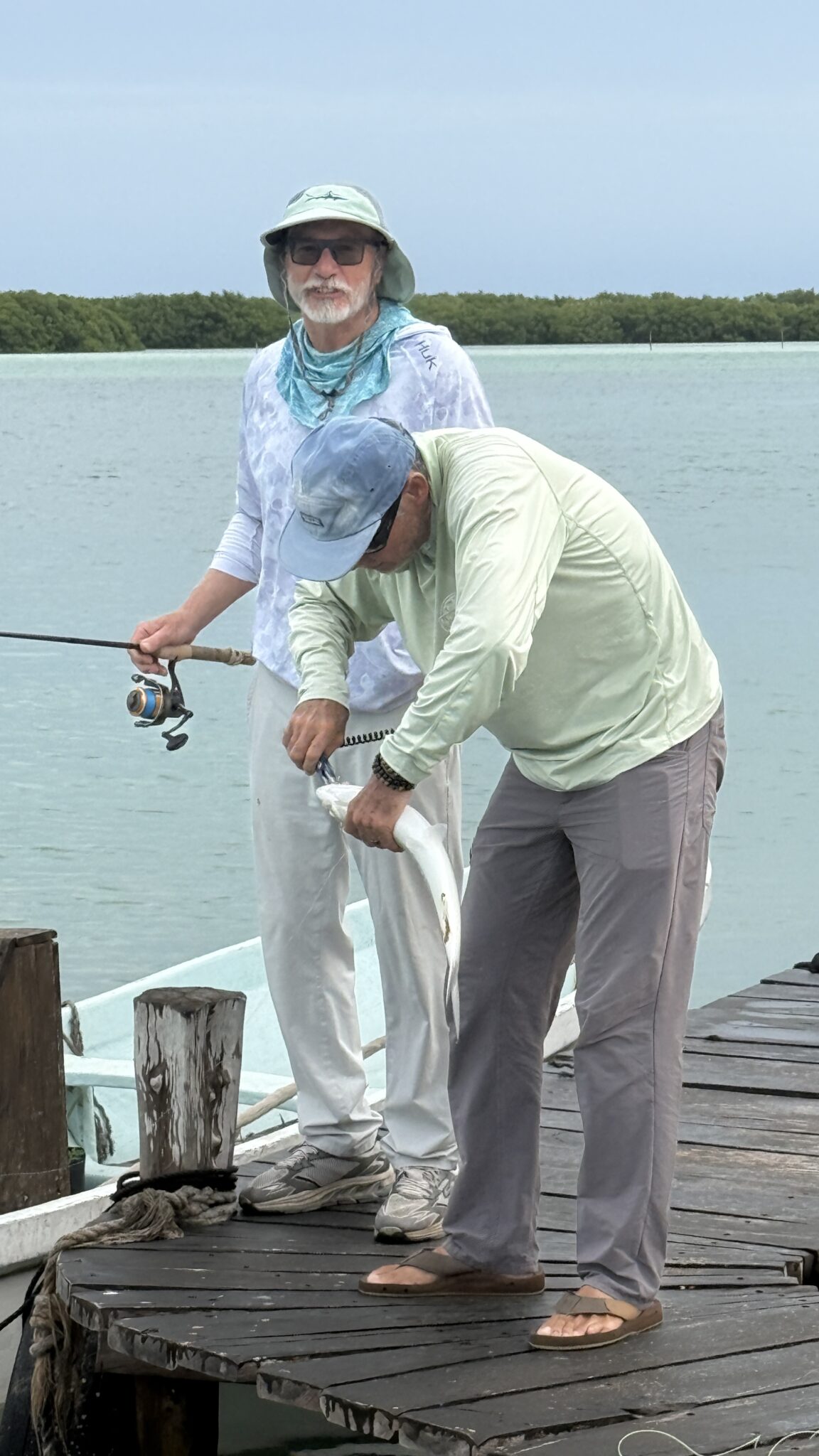
So instead of fishing, we hung around the lodge talking about gear, flies, and casting. Eventually we grabbed a few rods and headed down to the dock for a little casting practice. I tied a piece of plastic tubing to the end of my fly line—no hook, just plastic—and started demonstrating a double haul. Mid-demonstration, a big ladyfish absolutely hammered the piece of plastic and refused to let go.
Well… so much for casting class.
Within minutes, the dock went from a casting lesson to an opening-day feeding frenzy. Everybody grabbed rods, and we started catching ladyfish on everything we could throw at them—gurglers, flies, bass plugs, you name it. What was supposed to be a completely washed-out morning turned into one of the funniest fishing sessions of the trip. Who knew we could’ve been catching fish off the dock every morning? And just to rub it in, while we were standing there catching ladyfish like idiots, a tarpon rolled right in front of us.

Today was my turn to fish with Bryan, and I was looking forward to watching and filming him. Bryan is a fascinating guy—a generational Hawaiian who fishes for giant bonefish from his flats boat on Oahu a couple times a week. He’s also a freediver, hunter, bowhunter and world traveler. Basically, while the rest of us were collecting hobbies, Brian apparently decided to collect ways of obtaining his own food. He’s also an excellent caster. And he has developed perhaps the most advanced unconventional tarpon hook-setting technique I’ve ever witnessed: He turns his heas away from the fish as it stats eating his fly like daring it to eat with the back of his head. I had heard about it. Now I got to film it. Fish eats. Bryan turns his head lookin backwards. Strip-set. Fish attached. It sounds ridiculous until you think about it. Not looking prevents his visual reflexes from taking over. He can’t see the tarpon jump, can’t panic and can’t trout-set it. I’ve spent years trying to overcome decades of muscle memory. Brian apparently solved the problem by simply turning off the video feed.
The morning storms had pushed huge mats of weeds against the shoreline, and when the weather finally settled down, the tarpon came up with it. They started rolling along the edges and feeding through little openings buried deep inside the mats. Now it became target shooting. You’d spot a hole thirty feet back in the weeds, wait for a tarpon to show itself, drop the fly into the opening, and hope for the grab. Then came the hard part: somehow dragging an angry tarpon through thirty feet of vegetation without turning the whole operation into a tossed salad. Nothing quite like landing a tarpon with enough garnish to serve four.
Lee fishing single with Martin had one of the best days ever fishing with Martine. Im glad he got the chance to fish as a single. As a group leader, Thats a very rare event.
We put a lot of fish in hand that afternoon. More importantly, Brian and I clicked. There are people you meet late in life and immediately realize that, had you met thirty years earlier, you probably would have spent a lot of time fishing together. Bryan was one of those guys.
Day 5
Lee woke up sick and wisely decided to stay in bed. That left me alone with Cresp, and the conditions looked good enough to make the long run in search of the big migratory tarpon. Now things were getting serious.
It takes about an hour and a half to reach the area, and normally you’d dedicate the entire day to it. We were trying to squeeze it into our five-hour morning session, which meant I’d have only a couple hours to actually catch one. No problem, I thought. This is generally the point in a fishing story where things begin going wrong. I probably had ten shots at tarpon over fifty pounds. Three were Hail Mary casts at fish already going away. Three were long-lead shots, two of which produced a jack and a snapper instead—which is a little like asking out the prom queen and accidentally coming home with two of her cousins. Four were legitimate opportunities. I had three eats. Two hook-setting mistakes. One fish jumped. And none came home for pictures.
Suddenly I discovered that setting the hook on a fifty-pound tarpon is not remotely the same experience as setting on a ten-pound juvenile. Man, I need practice.
Cresp also changed my leader. I’d been fishing about five feet of 30-pound followed by two feet of 50-pound bite tippet. He switched me to roughly fifteen feet of straight 50. I actually liked it. I’ve always preferred that kind of simple “suicide leader,” particularly with knots intentionally designed as fuses. It also turns over beautifully. Some tarpon fishermen dislike that setup because if you can’t break the leader, theoretically the fish can take your entire fly line. I understand the concern. I also understand that if a tarpon takes my entire fly line, I’ve probably already made several other poor decisions.

Cresp taught me something else that day about fighting jumping tarpon. I’ve always enjoyed flying them like kites. Fish jumps, rod high, pressure on, watch the tarpon twist through the air. Great fun. Apparently I’ve been doing that wrong too. Cresp explained that he has watched flies change position in a tarpon’s mouth during a jump. A fish initially hooked deeper can shake the hook loose and then, with continued downward pressure, sometimes become hooked again near the jaw or lip. His point was that keeping the rod low and maintaining pressure during the jump gives you a better chance of maintaining contact. I’d barely finished processing this information when I watched it happen. There’s nothing quite like having a guide explain why you’re wrong and then having a tarpon immediately provide the PowerPoint presentation.
Day 6
Lee had recovered enough to fish our final day, so we were back together with Cresp. We’d hoped to make another run for the big migratory fish, but the wind was relentless and the tides were low. Cresp said making the long run would be futile. When a guide who’s spent his life on the water says futile, I’ve finally learned not to interpret that as challenge accepted. So we stayed closer and worked the mangrove edges. The fishing was still good. I only wanted one more tarpon and was happy to let Lee make up for the day he’d lost being sick. I spent much of the morning watching and filming him. Eventually we found one mangrove shoreline loaded with active fish. In a relatively small area we hooked, jumped or landed at least half a dozen tarpon.
Then Brian stole the show. Fishing alone again with Elisio, he found another school of permit. And this time he landed one. Suddenly Lee and I became far more excited about Brian’s afternoon than Brian was. He now had the permit portion of a potential tarpon-bonefish-permit slam. There was only one problem. Brian didn’t know what a slam was. We explained it to him, and he asked Elisio to spend the afternoon looking for bonefish—his specialty back home in Hawaii. Naturally, they never saw one. So he finished with another two-thirds slam, just like I had managed the previous year.
Our final afternoon was windy and difficult. We went back to fishing the weed edges. I caught the one last tarpon I’d wanted, Lee picked up a couple more, and eventually there were no more casts to make.












Going Home
I found myself surprisingly sad about leaving. Over six days Brian, Kathy, Doug and Roger had gone from people I barely knew to people I’d genuinely enjoyed sharing a fishing trip with. The ride back gave us another few hours to talk before everybody scattered toward different airplanes and different parts of the country.
Then my phone buzzed. It was Mauro, who hadn’t been able to make our trip and had decided to go to the Florida Keys and try tarpon fishing for the first time. Attached was a photograph. Forty-pound tarpon. His first one. Of course.
I’d just spent a week studying tides, analyzing hook sets, experimenting with rod angles, changing leaders, chasing fifty-pound migratory fish and conducting what amounted to a graduate-level research project in tarpon fishing. Mauro showed up day one and caught a forty-pounder. Which may be the final lesson of the trip. There are lots of places to catch tarpon, and fishermen can spend a lifetime obsessing over numbers, tides, flies, leaders and technique. But eventually the fish you remember aren’t always the biggest ones, and the best trips aren’t necessarily the ones where you caught the most. They’re the ones where you meet people you’d like to fish with again.
Although, for the record, meeting great people AND catching a forty-pound tarpon would be preferable.
Click Image for Photo Album


Sounds incredible! I’ve always wanted to fish for tarpon, it seems like a really unique experience.