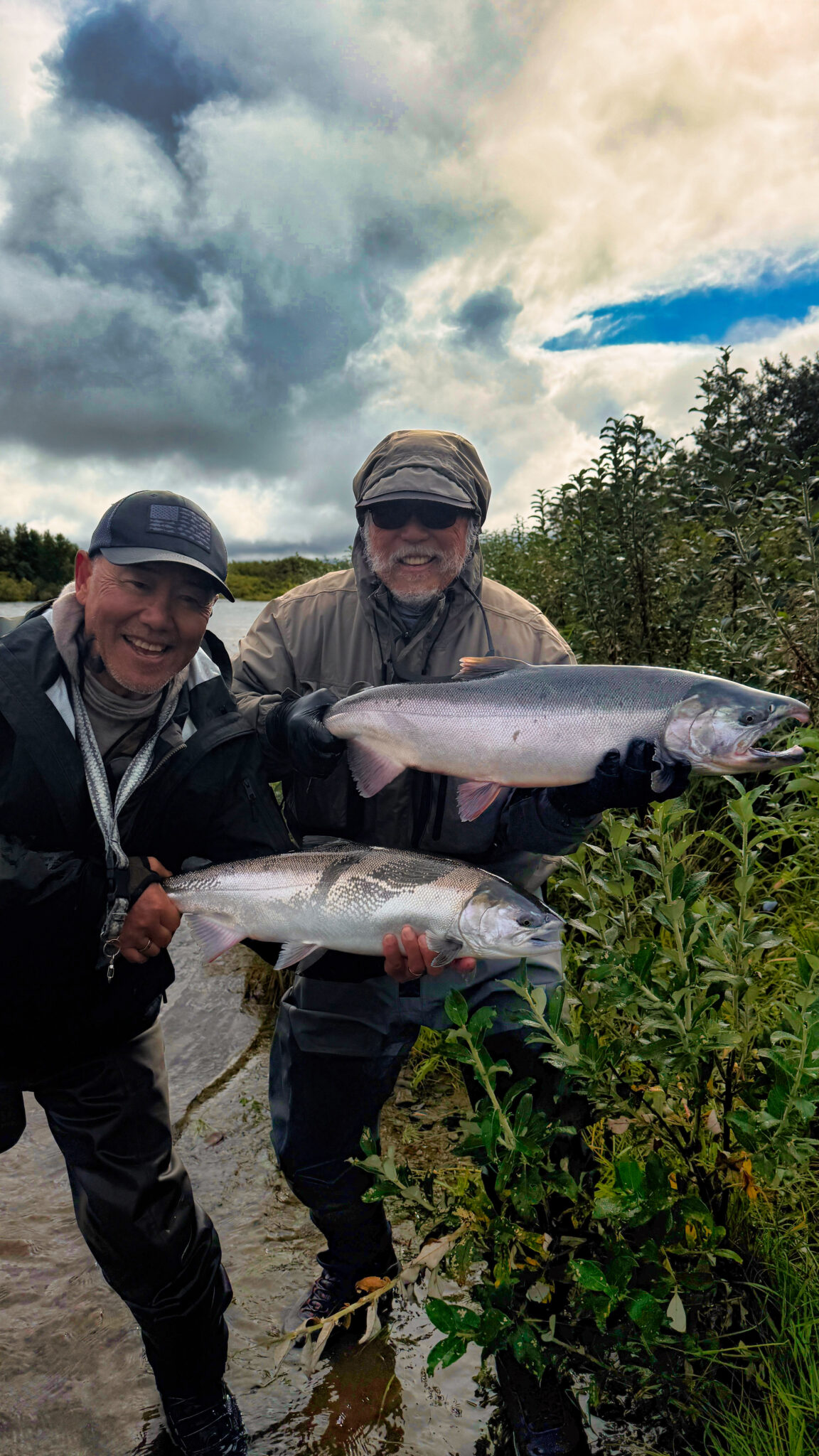
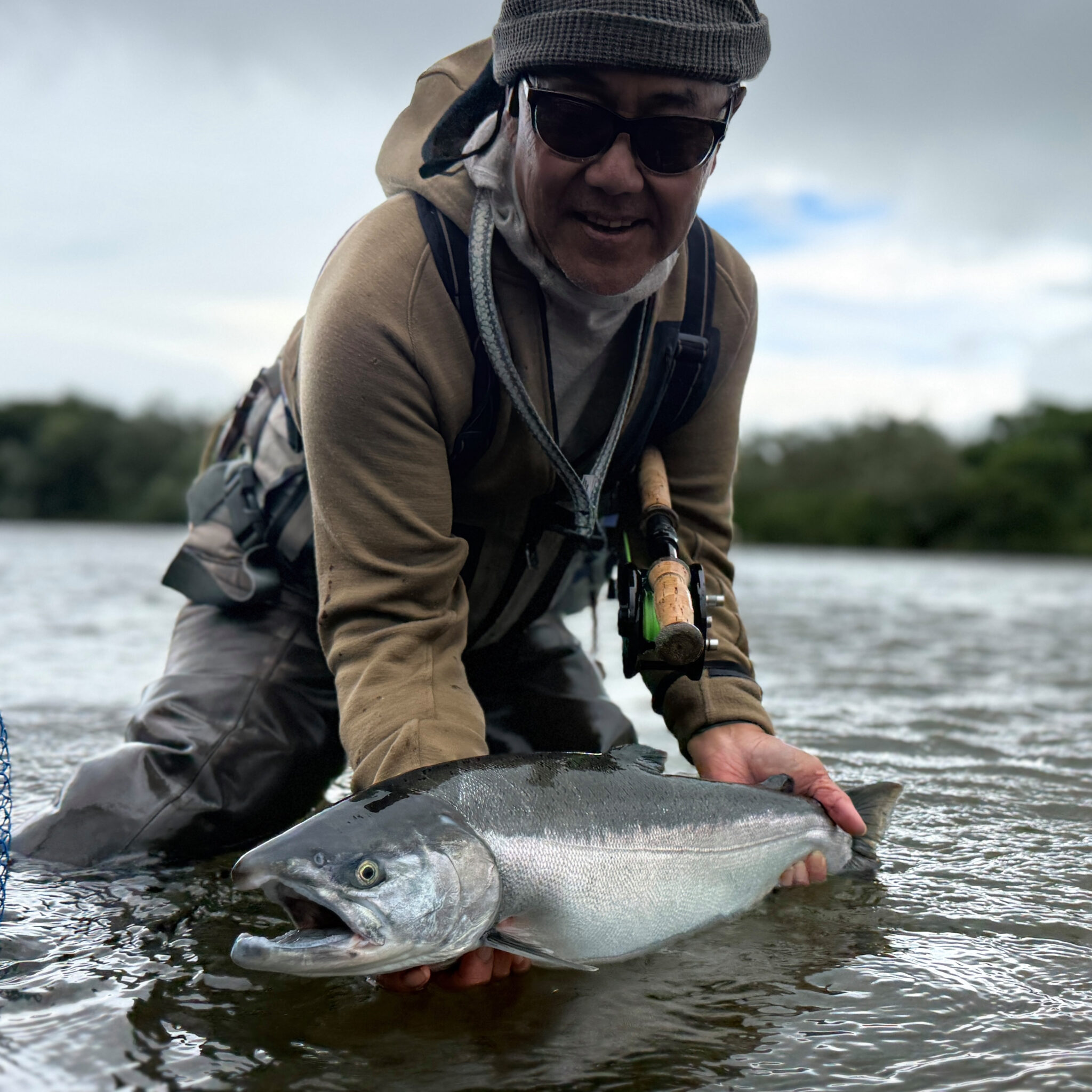
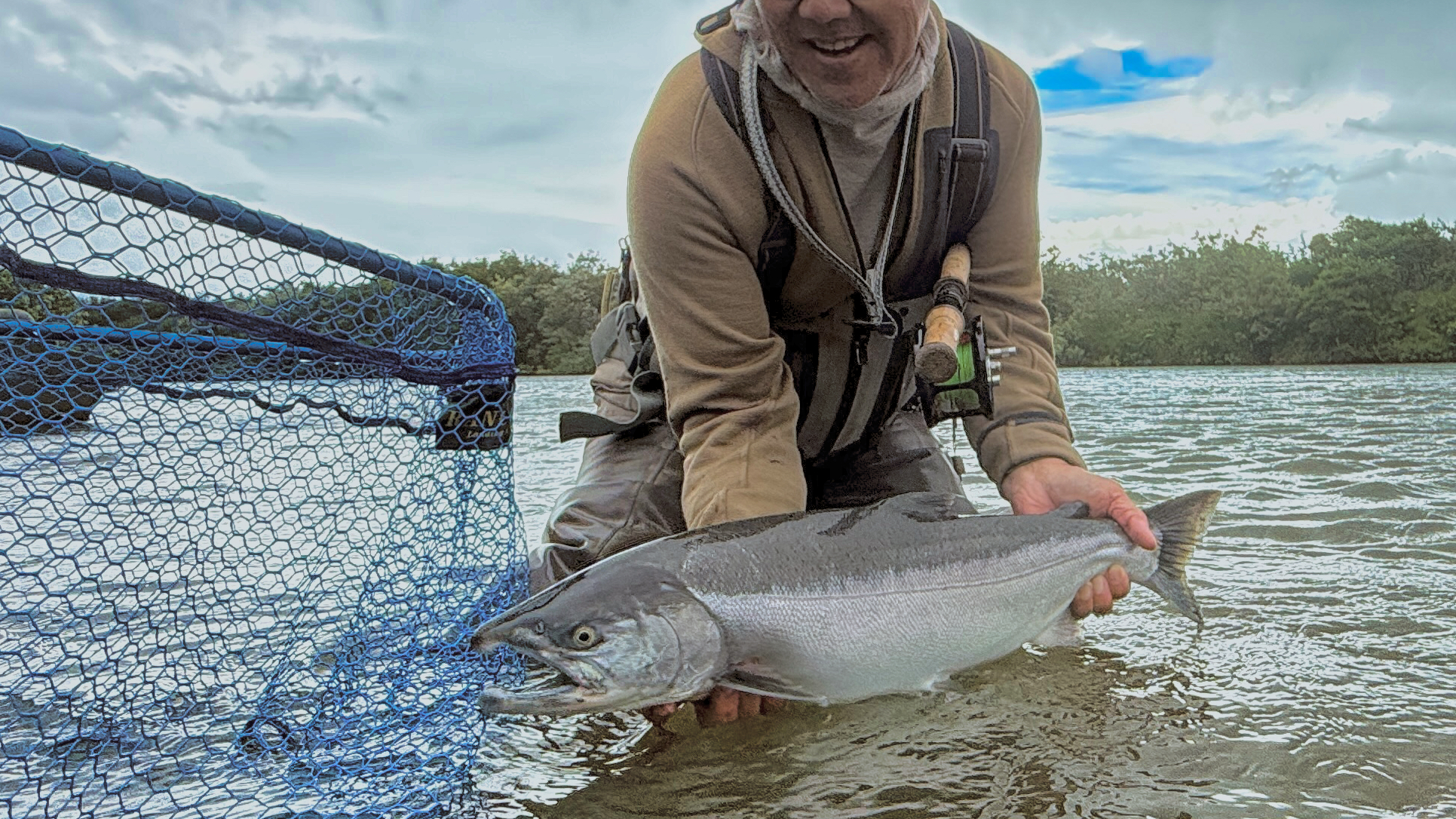
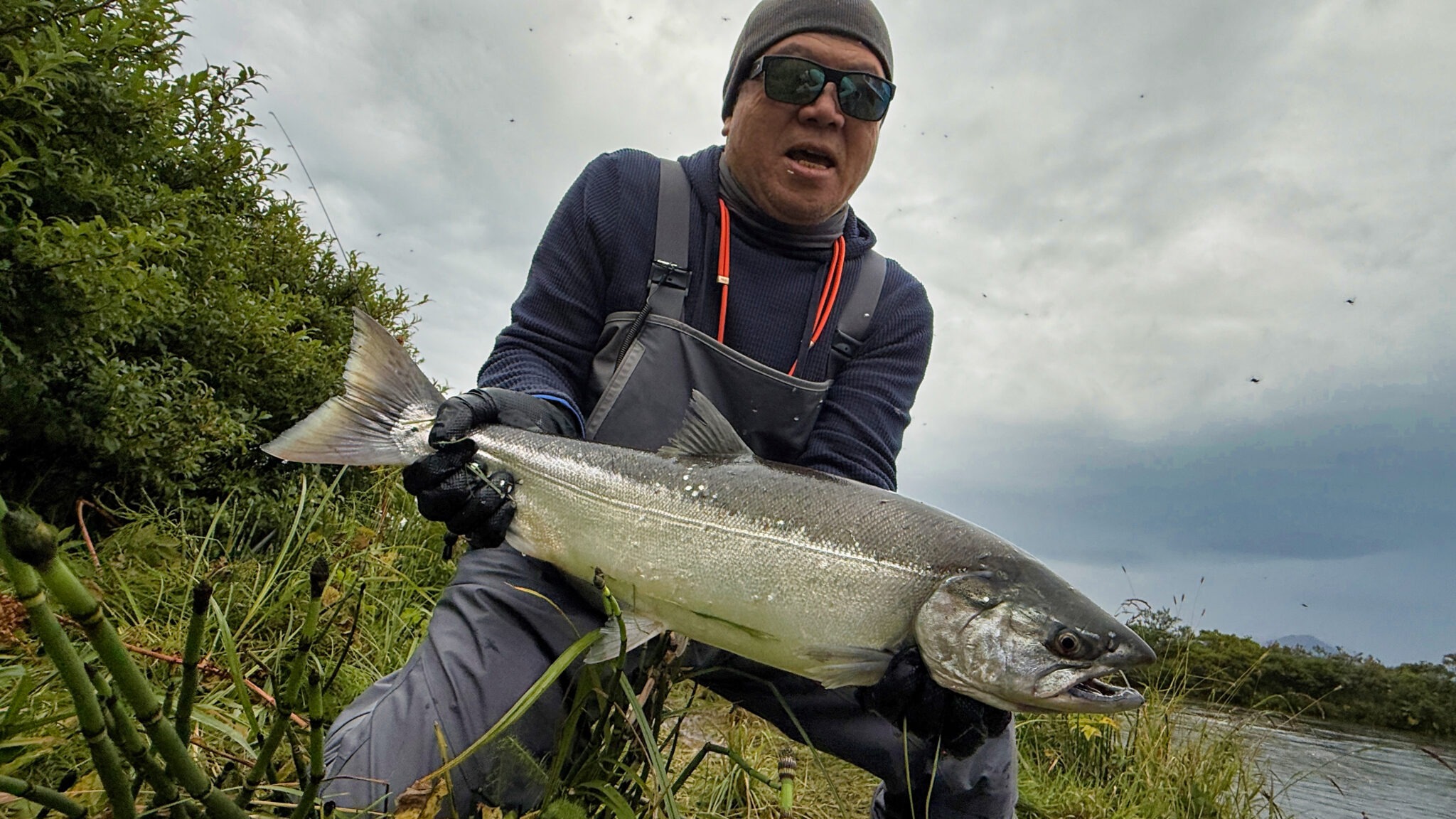
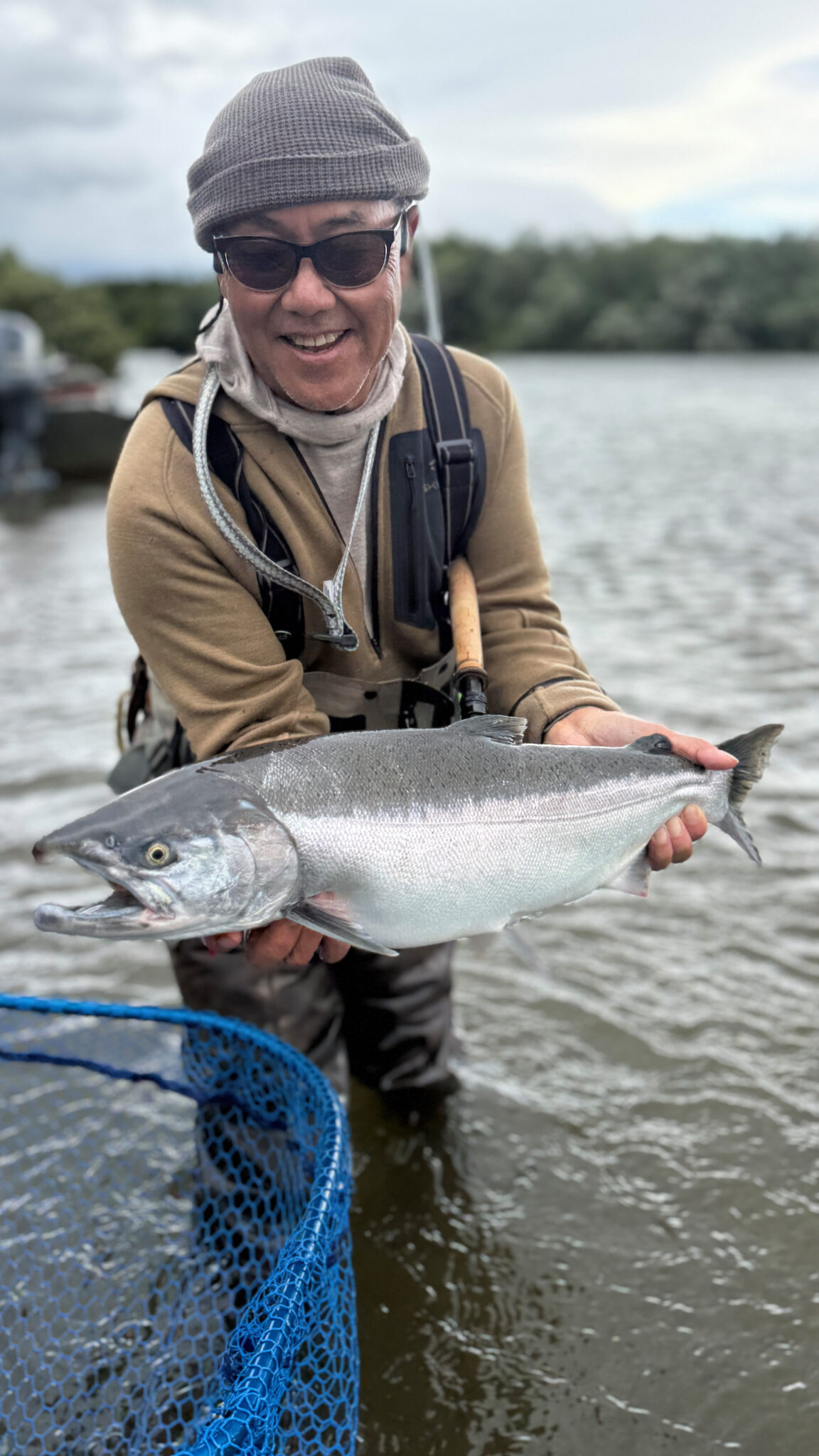
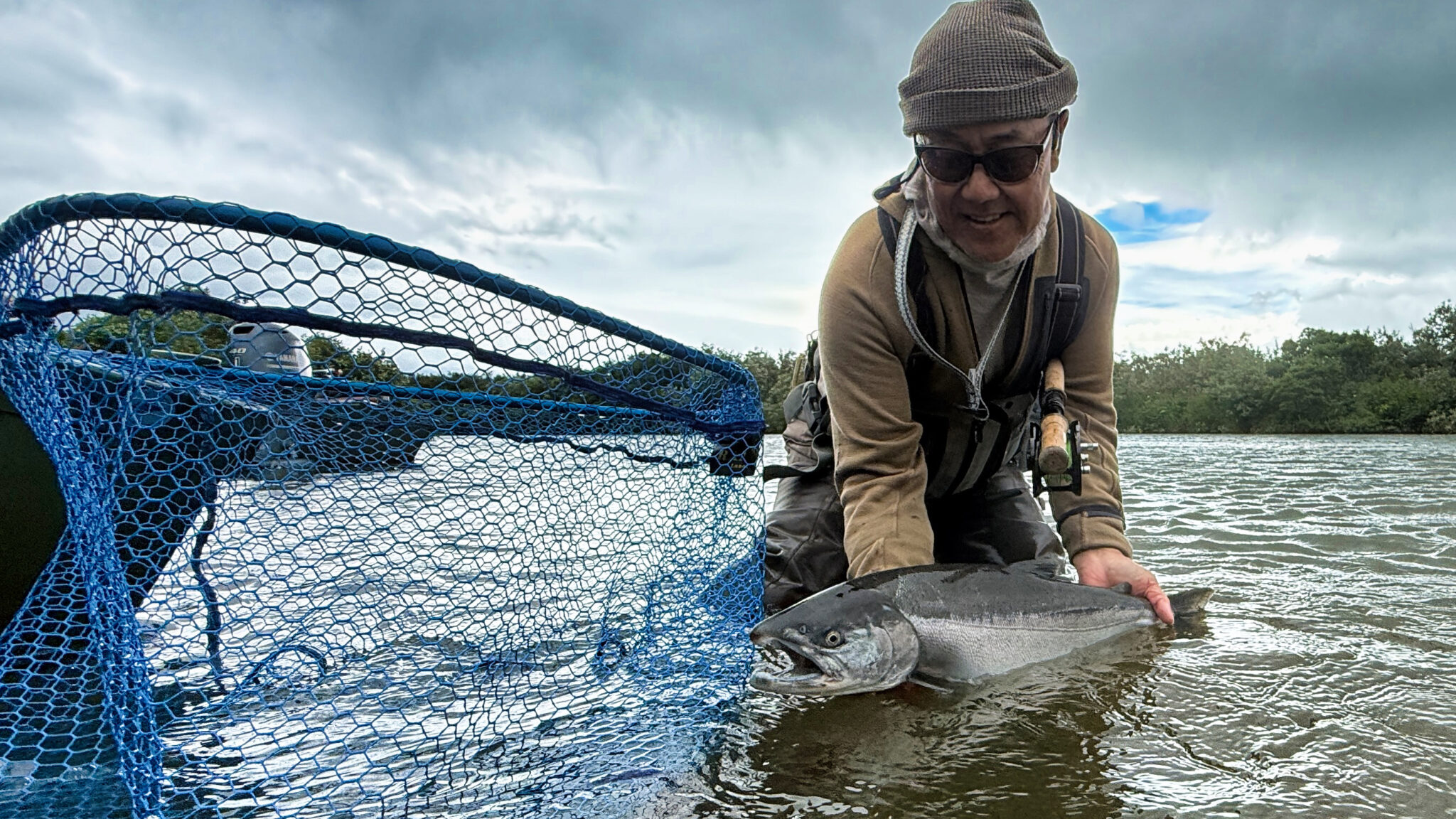
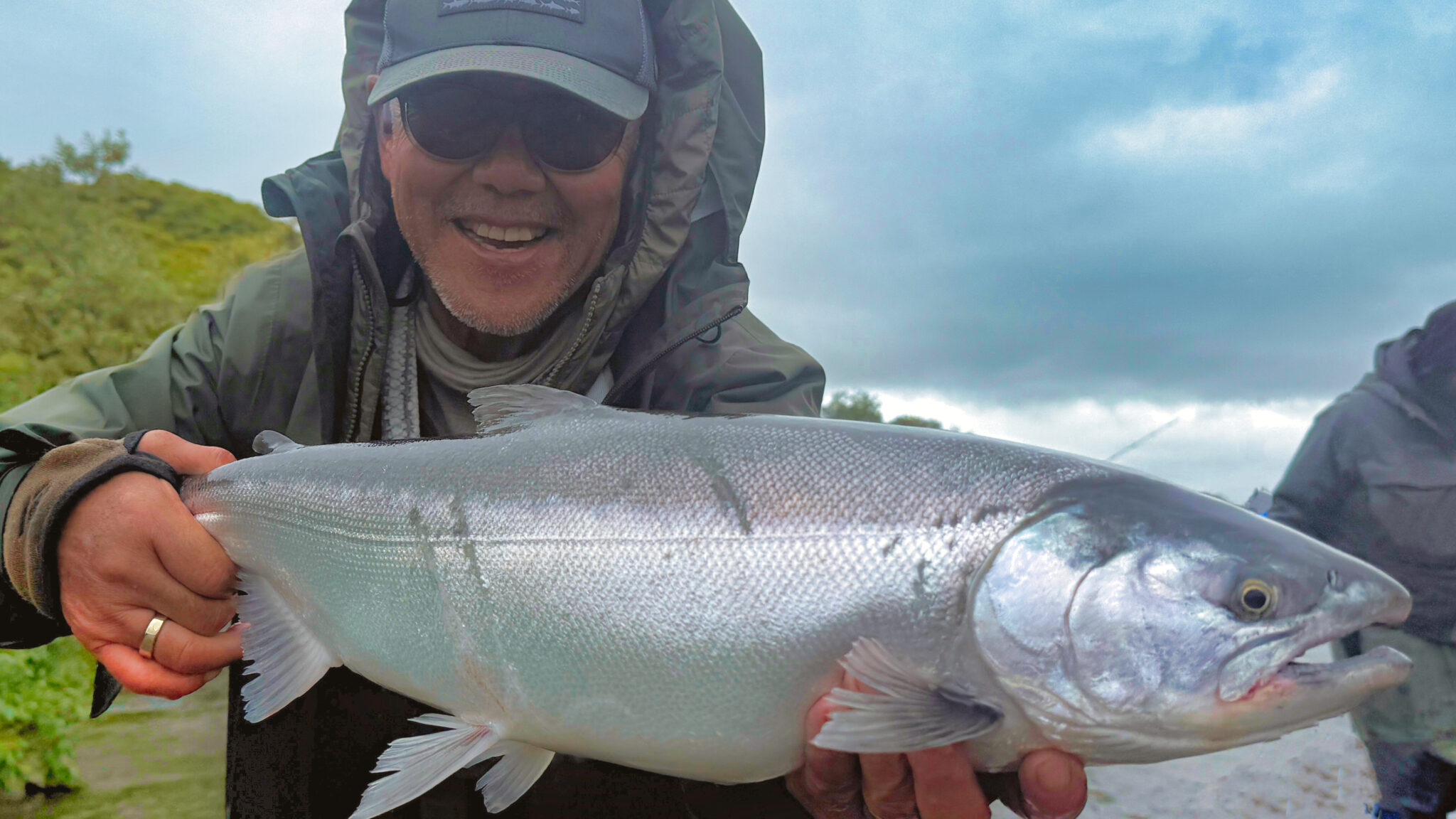
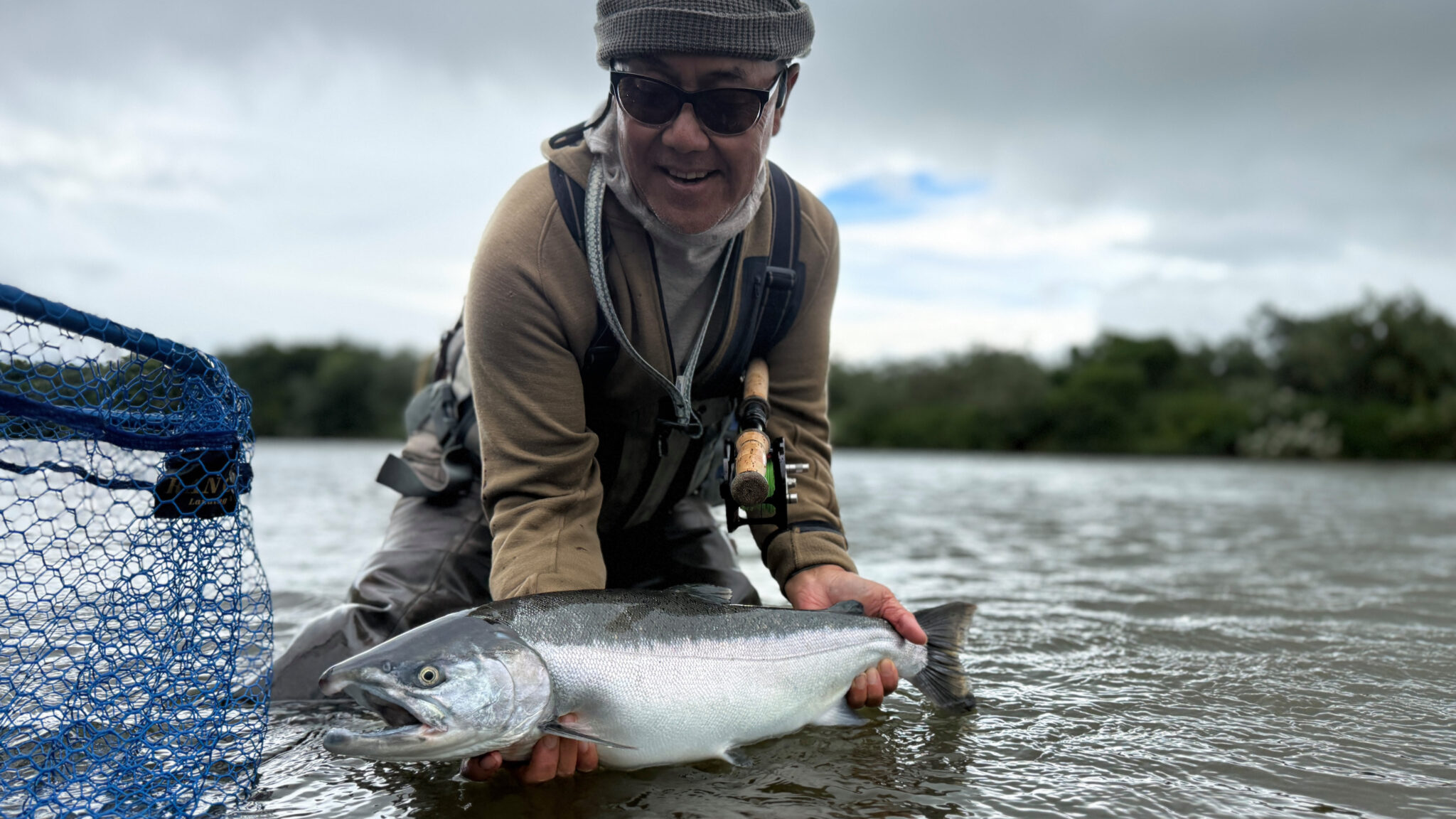
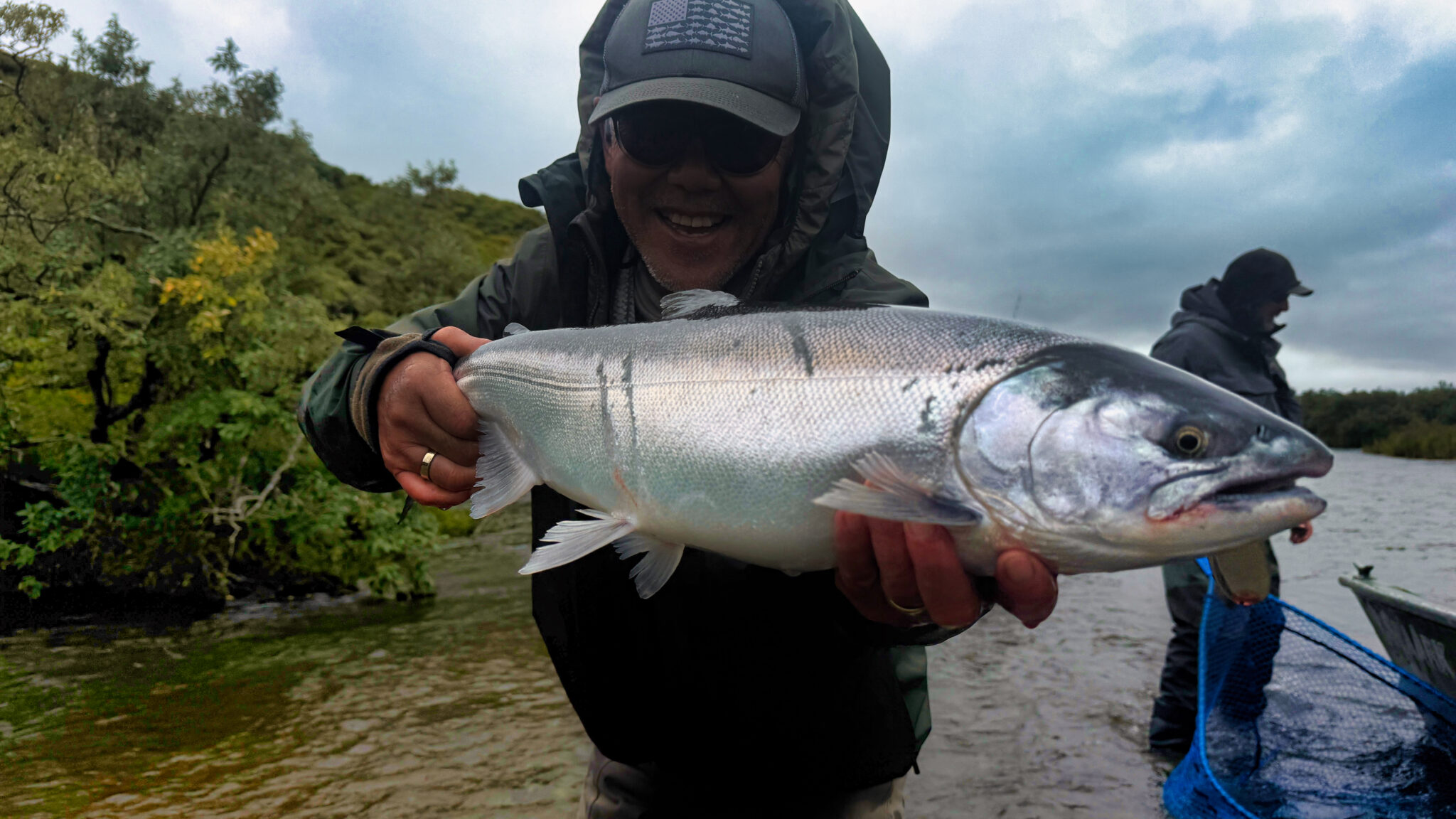
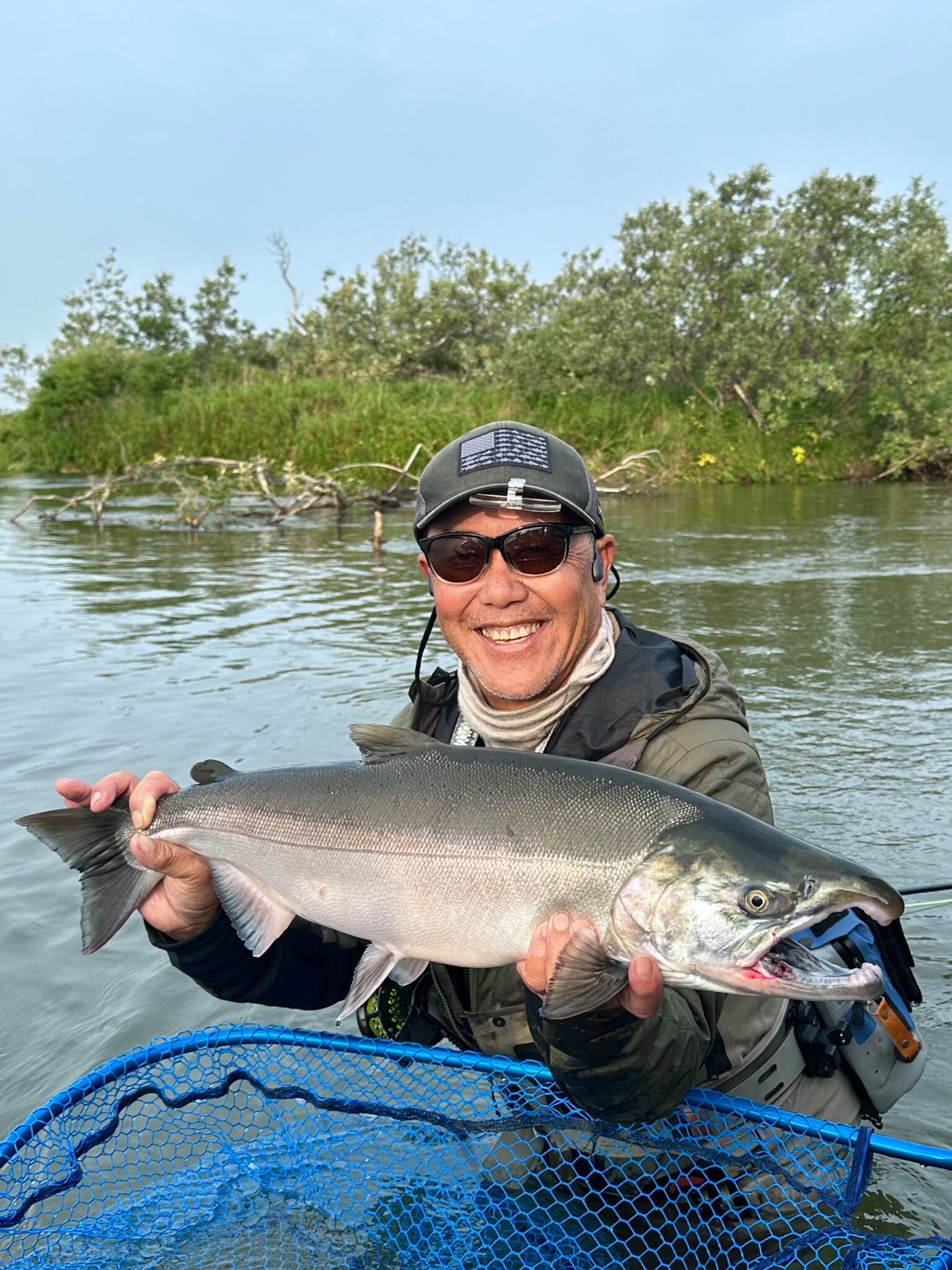
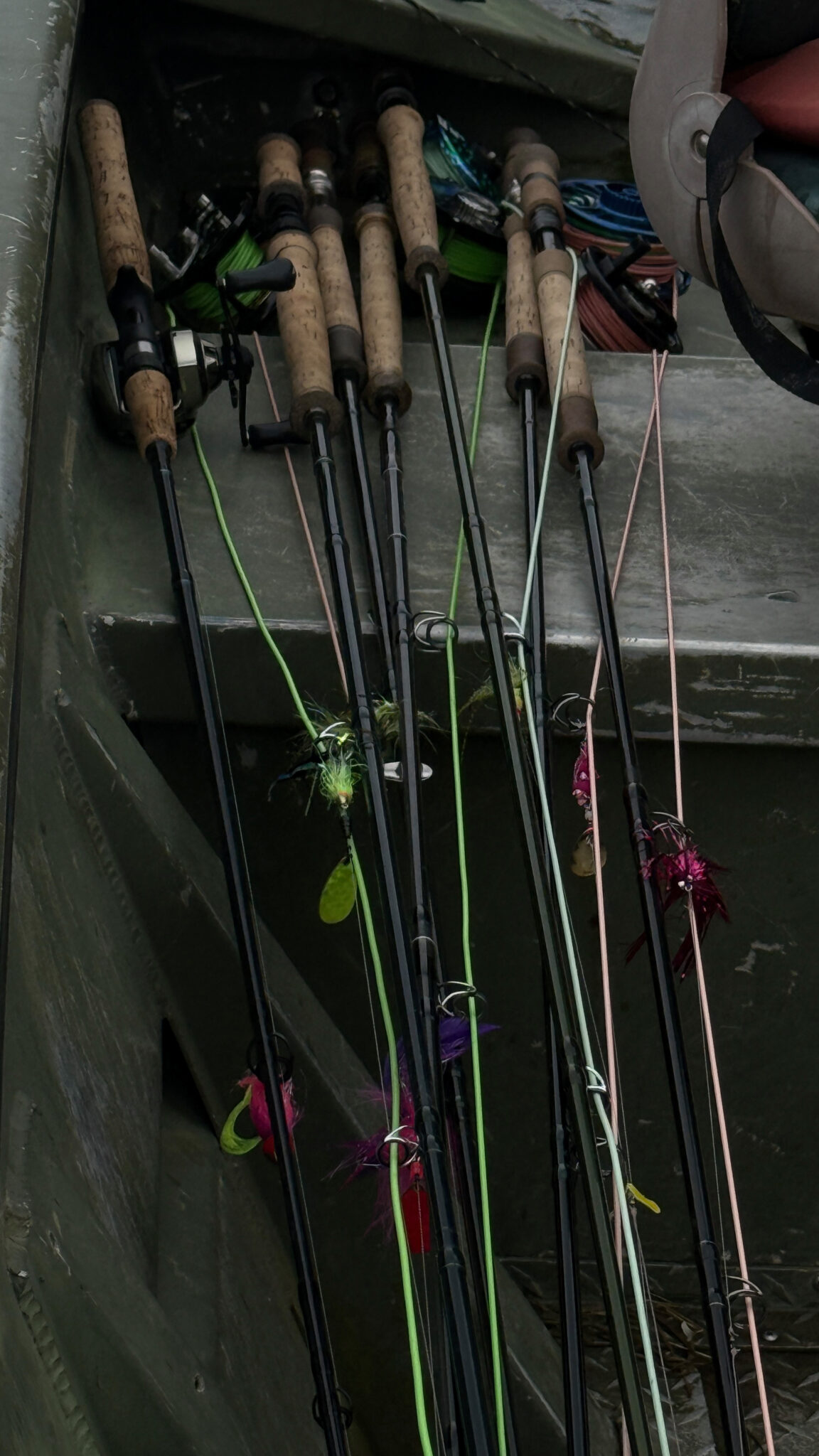
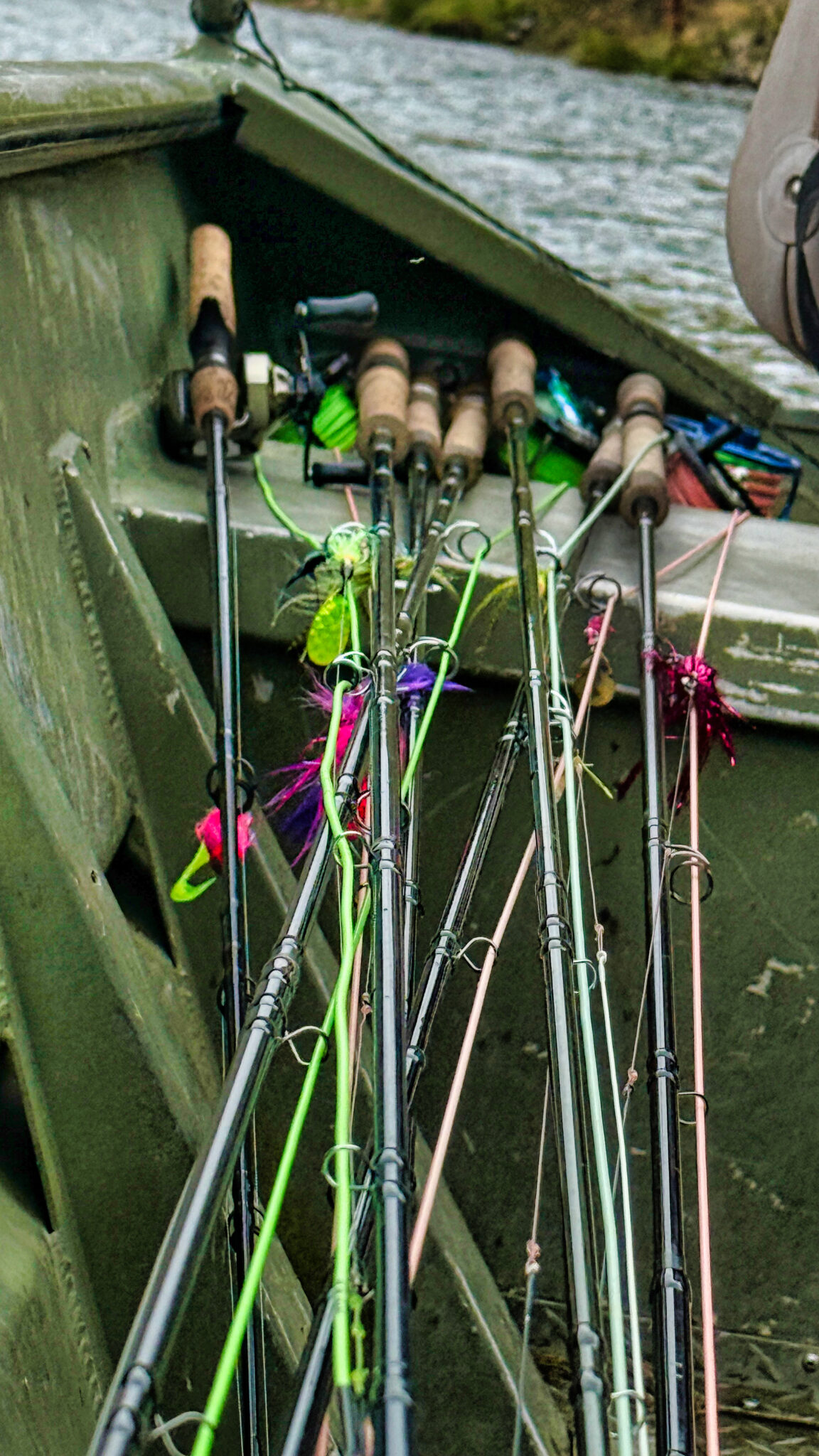
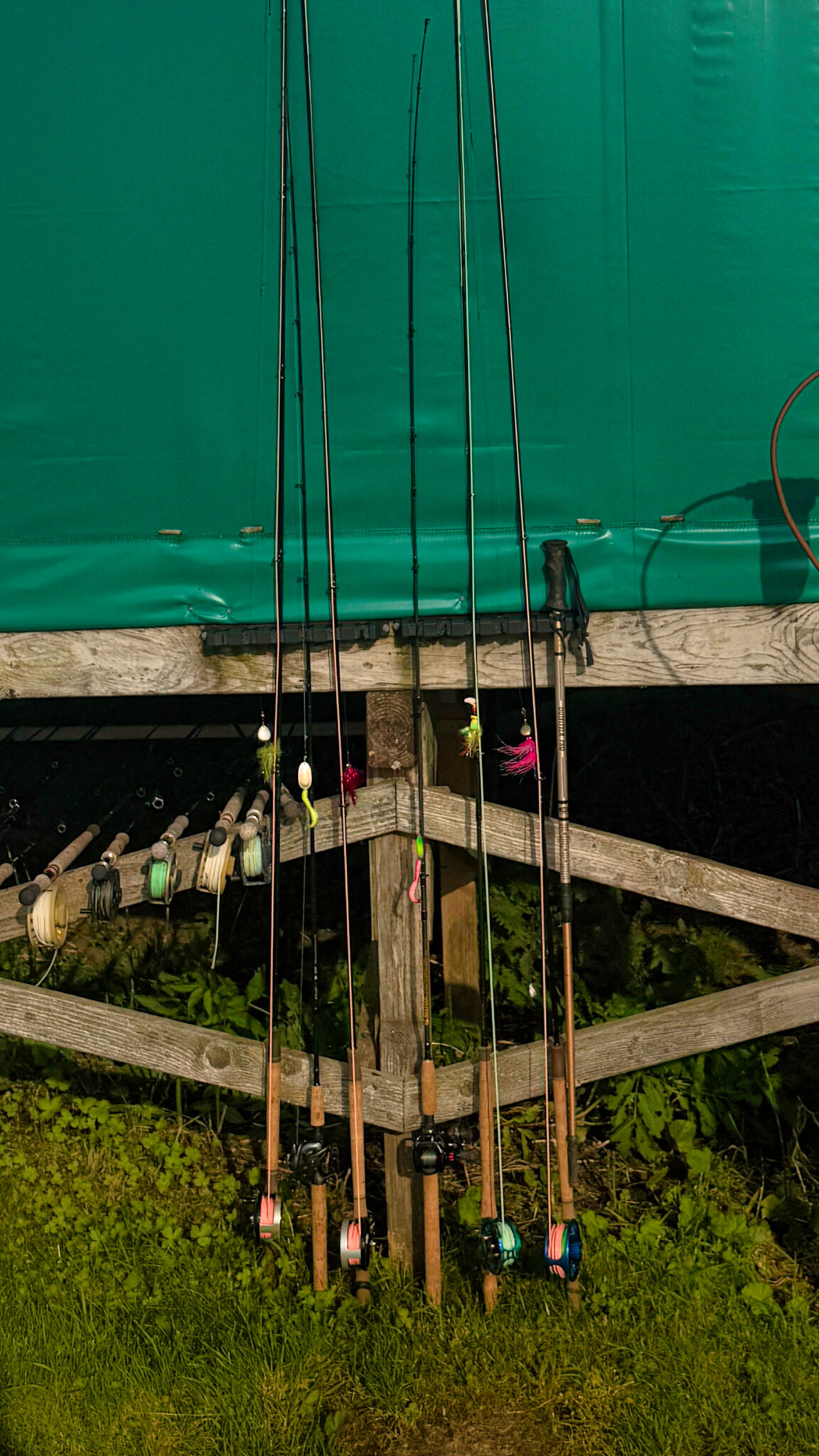
I’m happy to announce that the Sapsuk fished better for us this year than it did last year—which, as fishing reports go, is already a pretty low-risk opening statement. Week One, which had been phenomenal last year, got absolutely washed out by storms. My friend Dave, who fished with our group four years ago, managed only eight fish for the entire week. Eight. On the Sapsuk. That’s normally what you catch while waiting for breakfast.
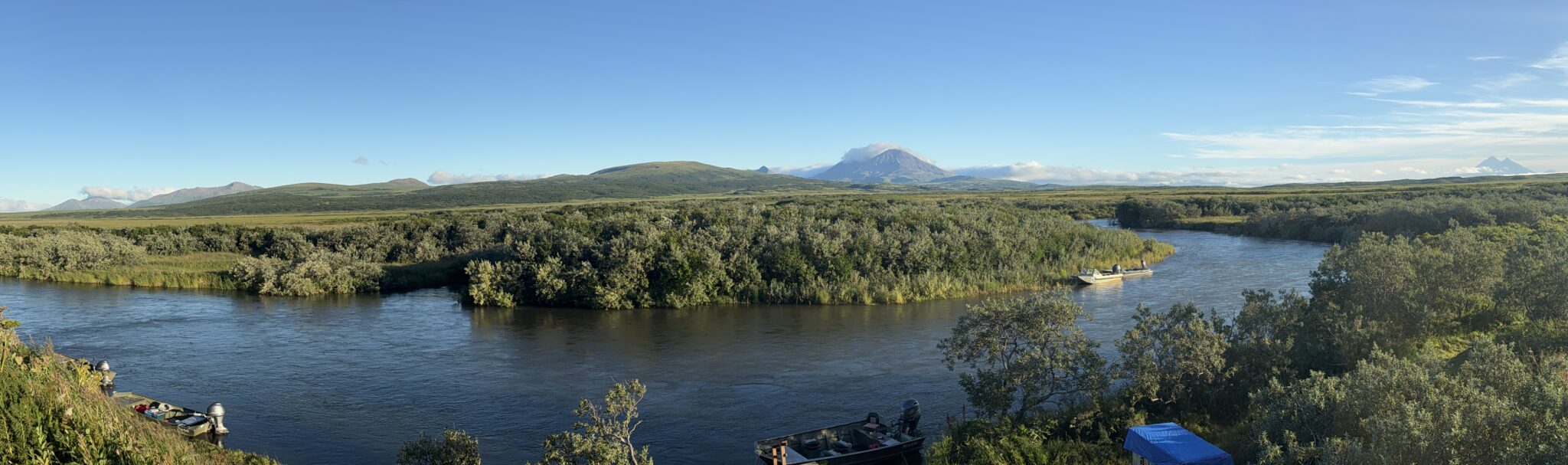
So we arrived in Nelson Lagoon with a certain amount of apprehension. The area had just endured a week of torrential rain, high tides, and generally biblical weather. But when we landed, the skies were clear, and things were finally looking up.
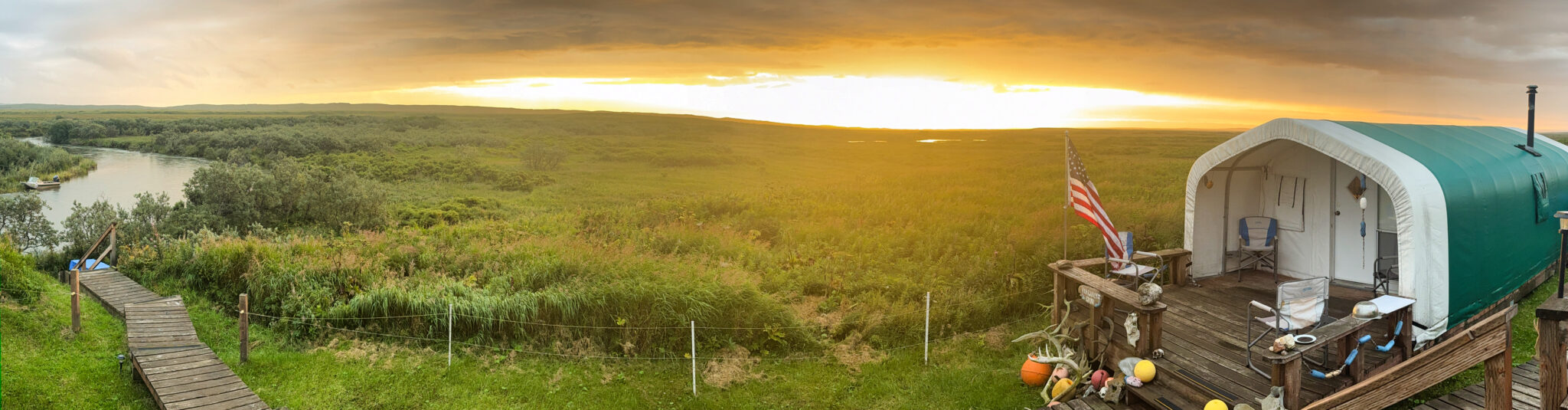
Aleutian Adventures had also seriously upgraded the Nelson program. They now have a big eight-person boat that shuttles everyone directly from Nelson Lagoon to camp. No more transferring boats at the river mouth while juggling rods, luggage, rain gear, and whatever dignity you have left. We climbed aboard in Nelson and about an hour later stepped off at camp. Civilization! Well, Sapsuk civilization.
Waiting for the Push
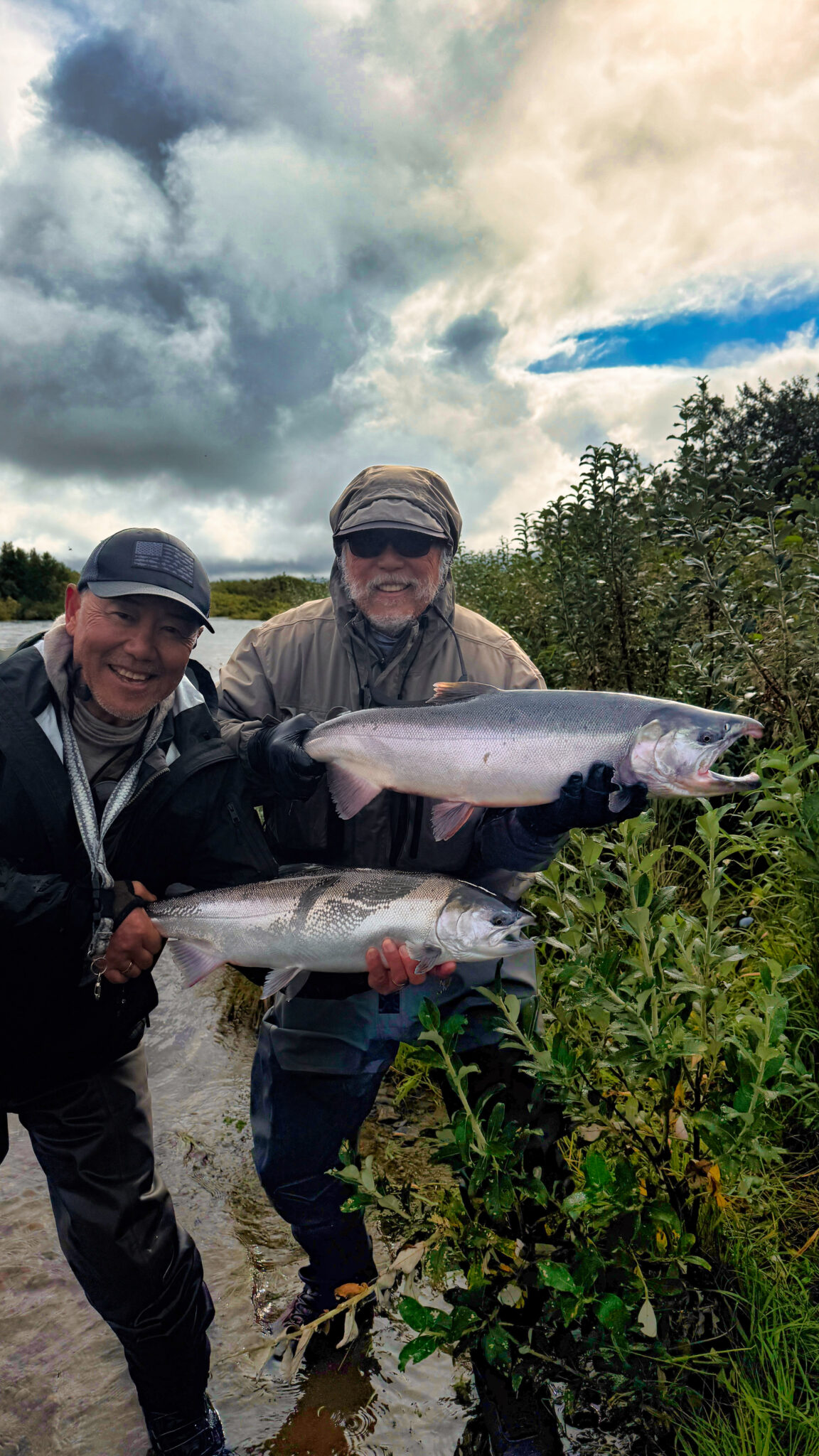
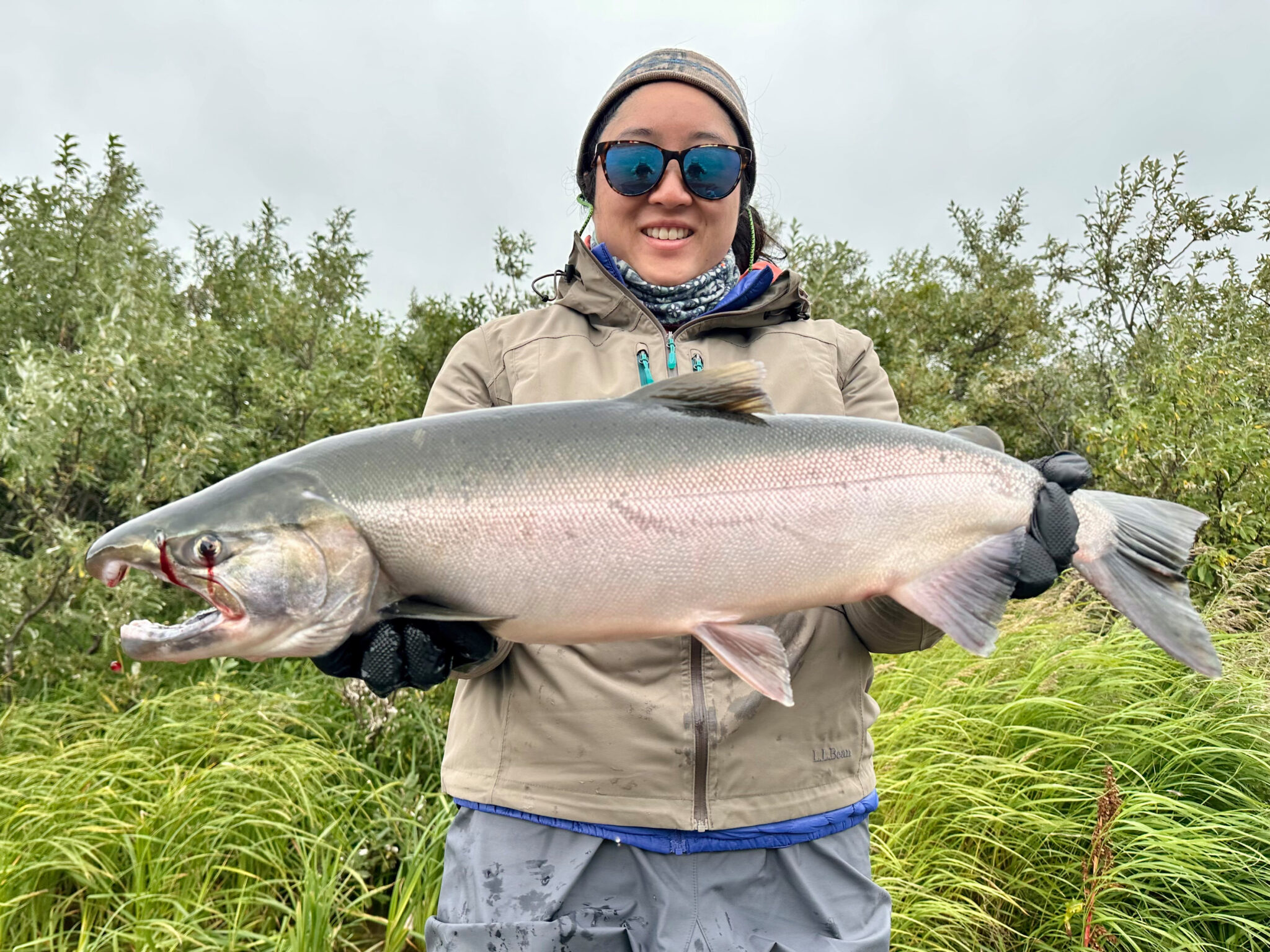
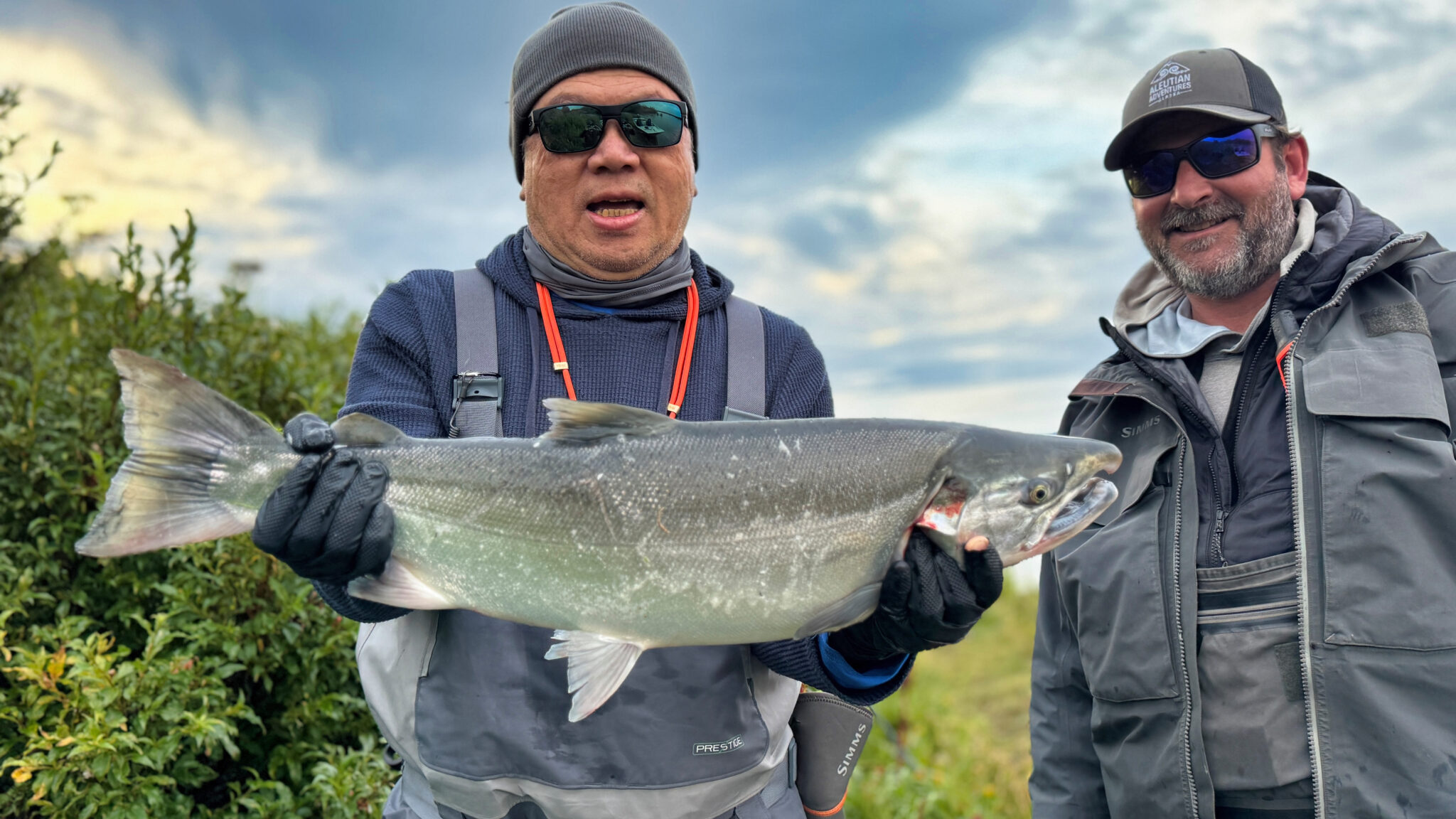
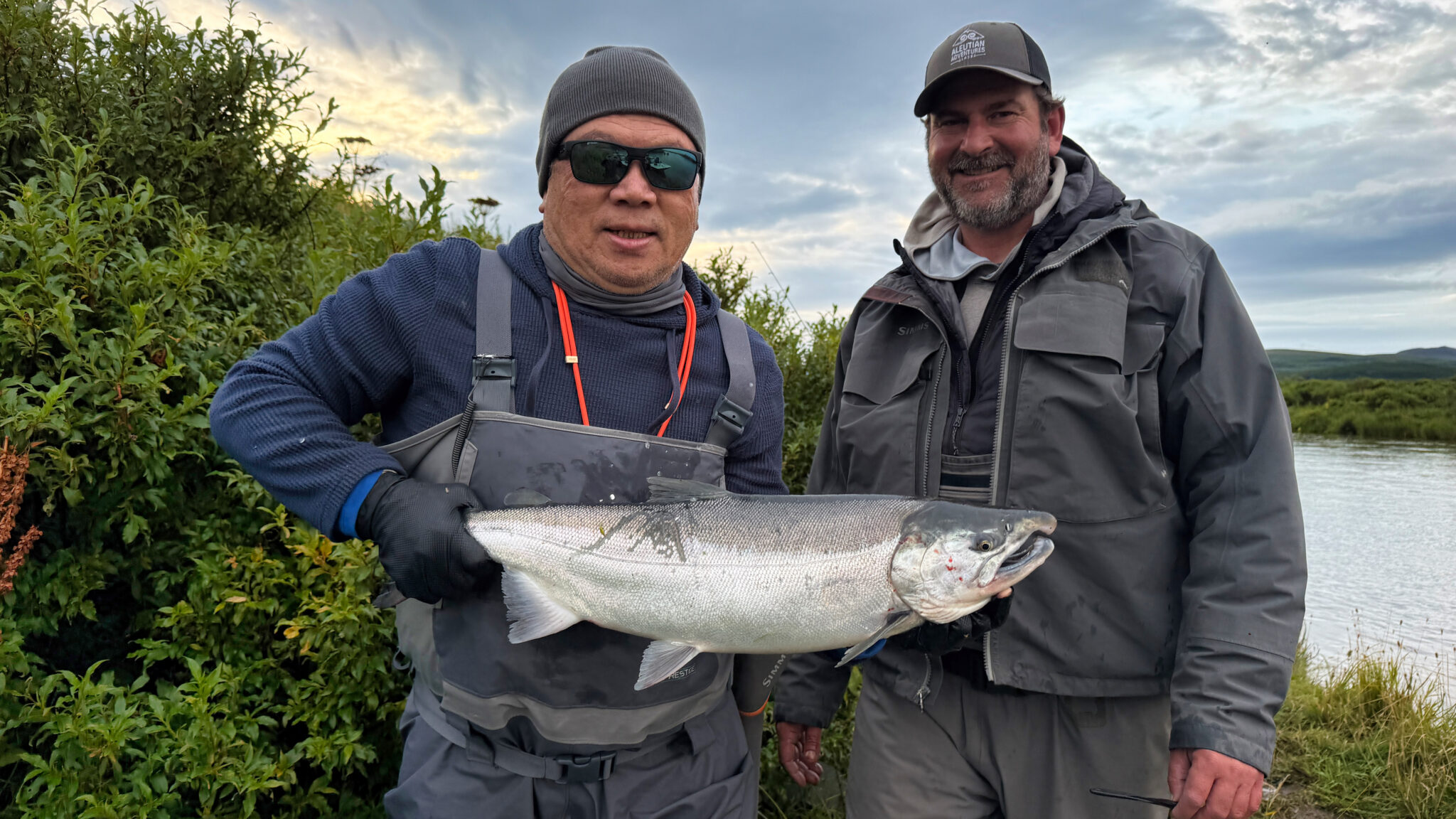
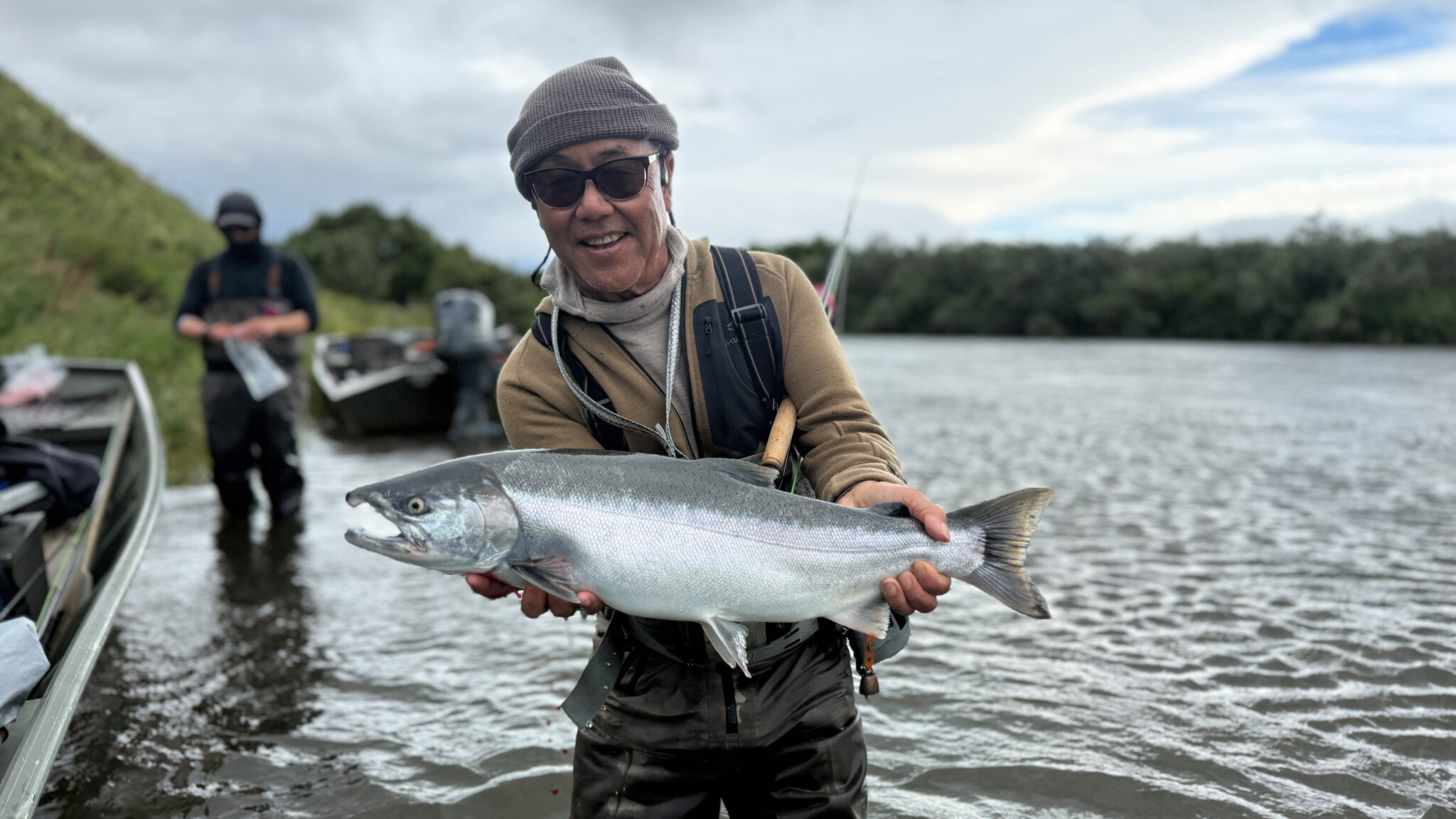
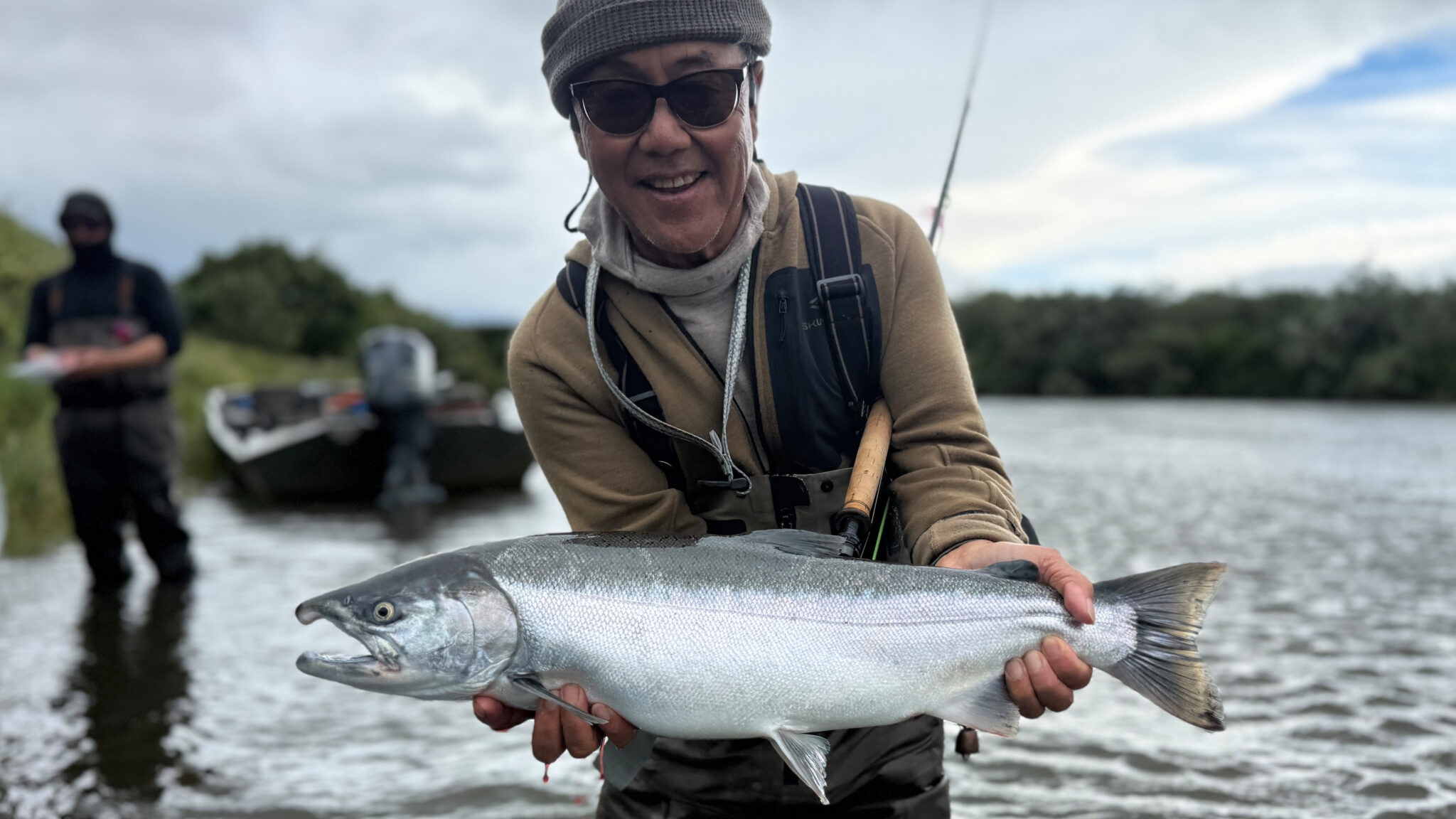
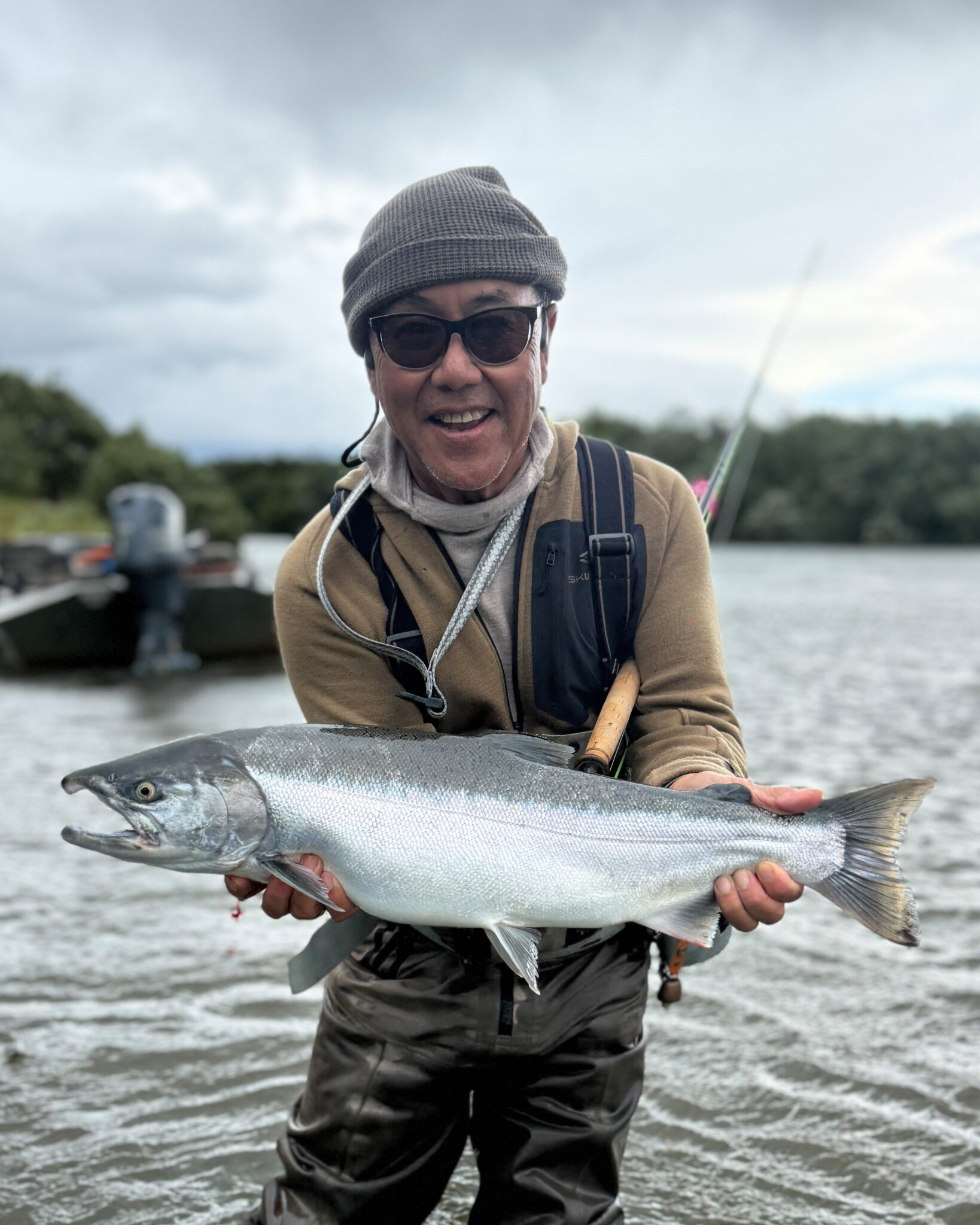
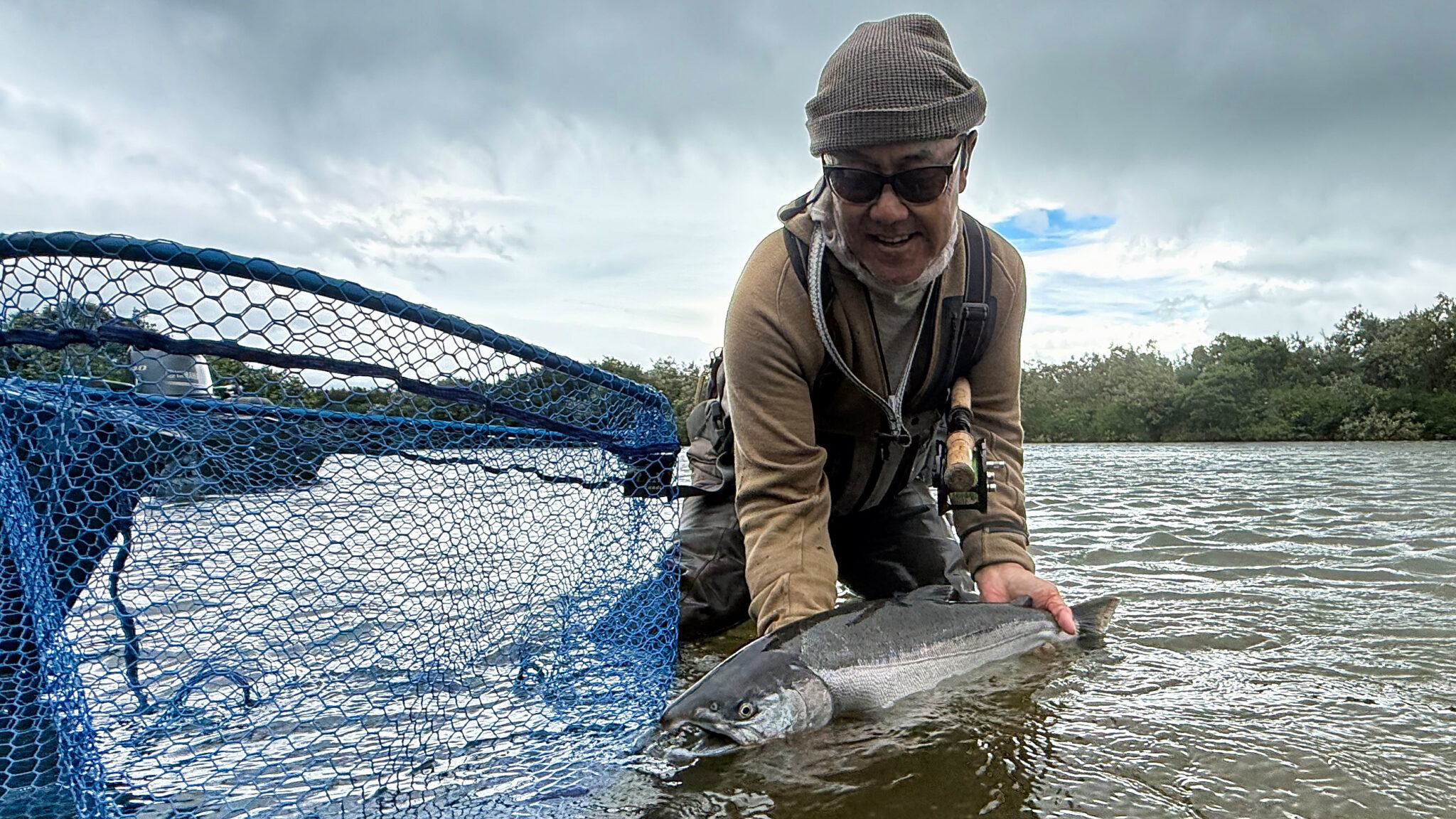
We were hoping all that bad weather had held some fish offshore and that a big push of silvers would arrive with us. It did. Not the massive schools we remember from three to six years ago, when there seemed to be salmon everywhere, but there were enough fish around for six anglers to have very good fishing—as long as everyone respected one another and understood that we were sharing a finite number of good opportunities.
For the first couple of days the river remained high and muddy. Plenty of fish were holding in predictable places: the end of the weir, Upper Twofer, Silvertree near camp and a few other favorite spots. But they weren’t hanging around very long. If I could actually spot a fish holding, getting it to bite was usually pretty easy. What was missing were those schools of hundreds of salmon we remember from years past that were in the holes all week. The fish were moving through, and you had to make your opportunities count.
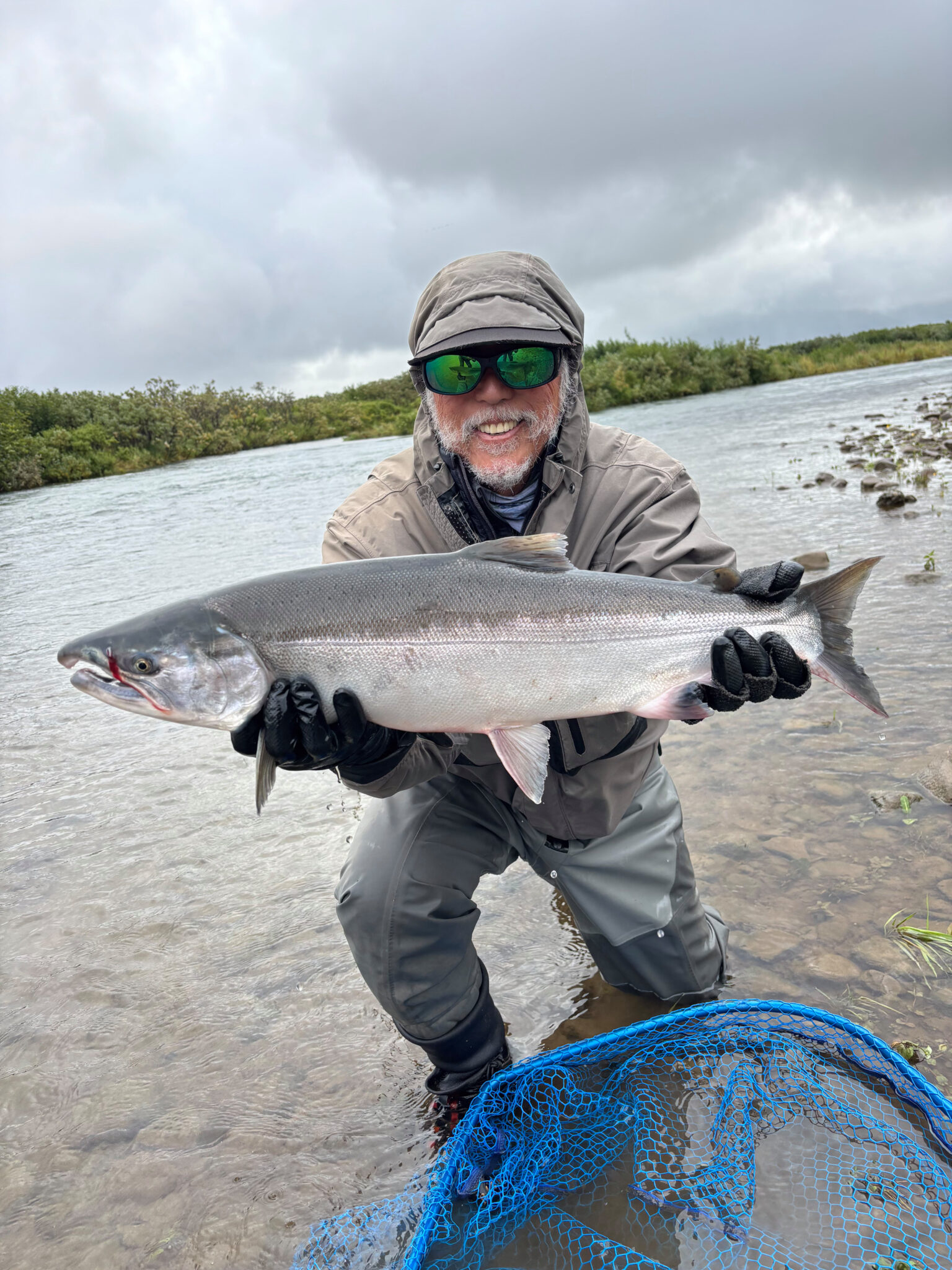
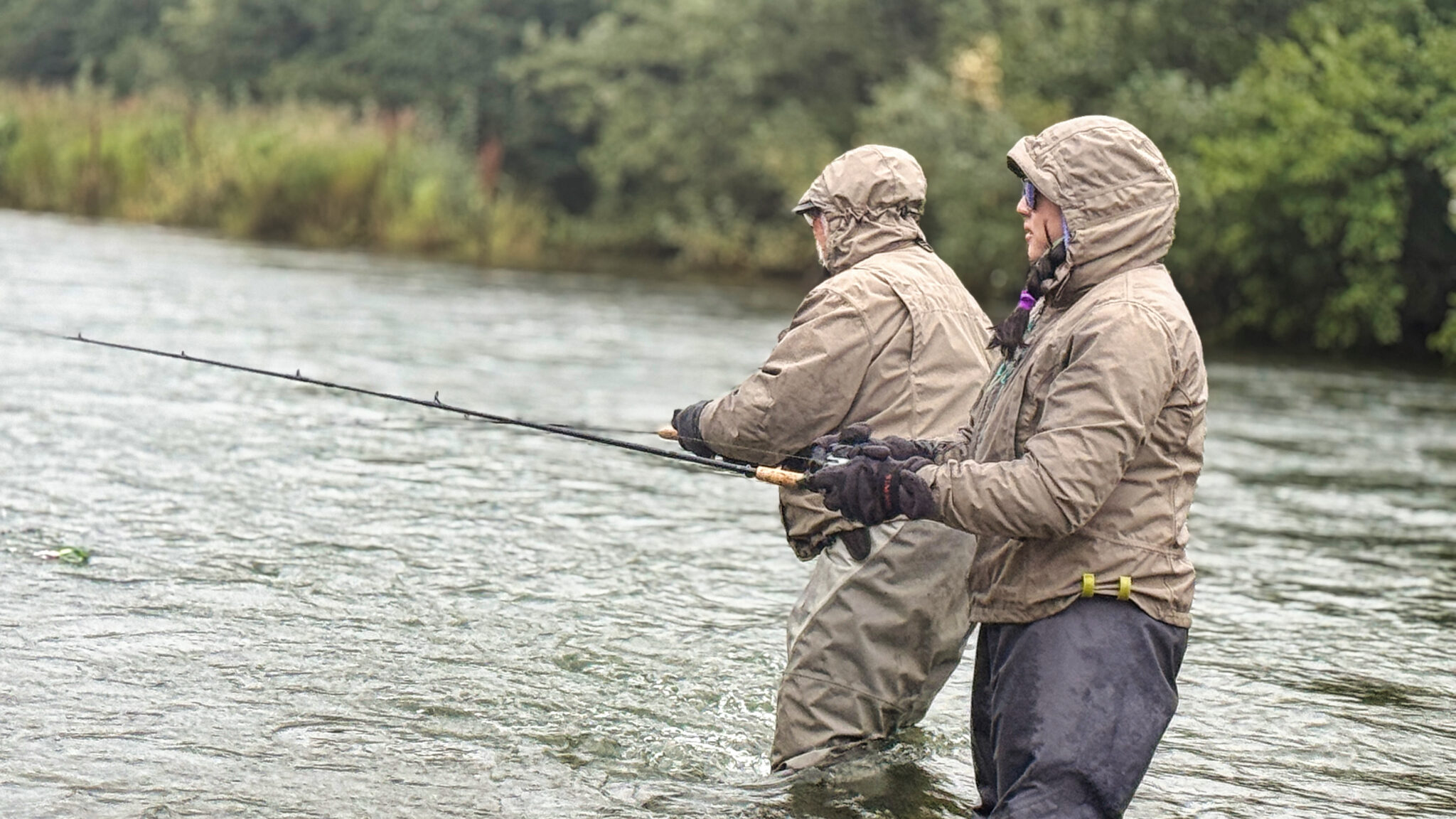
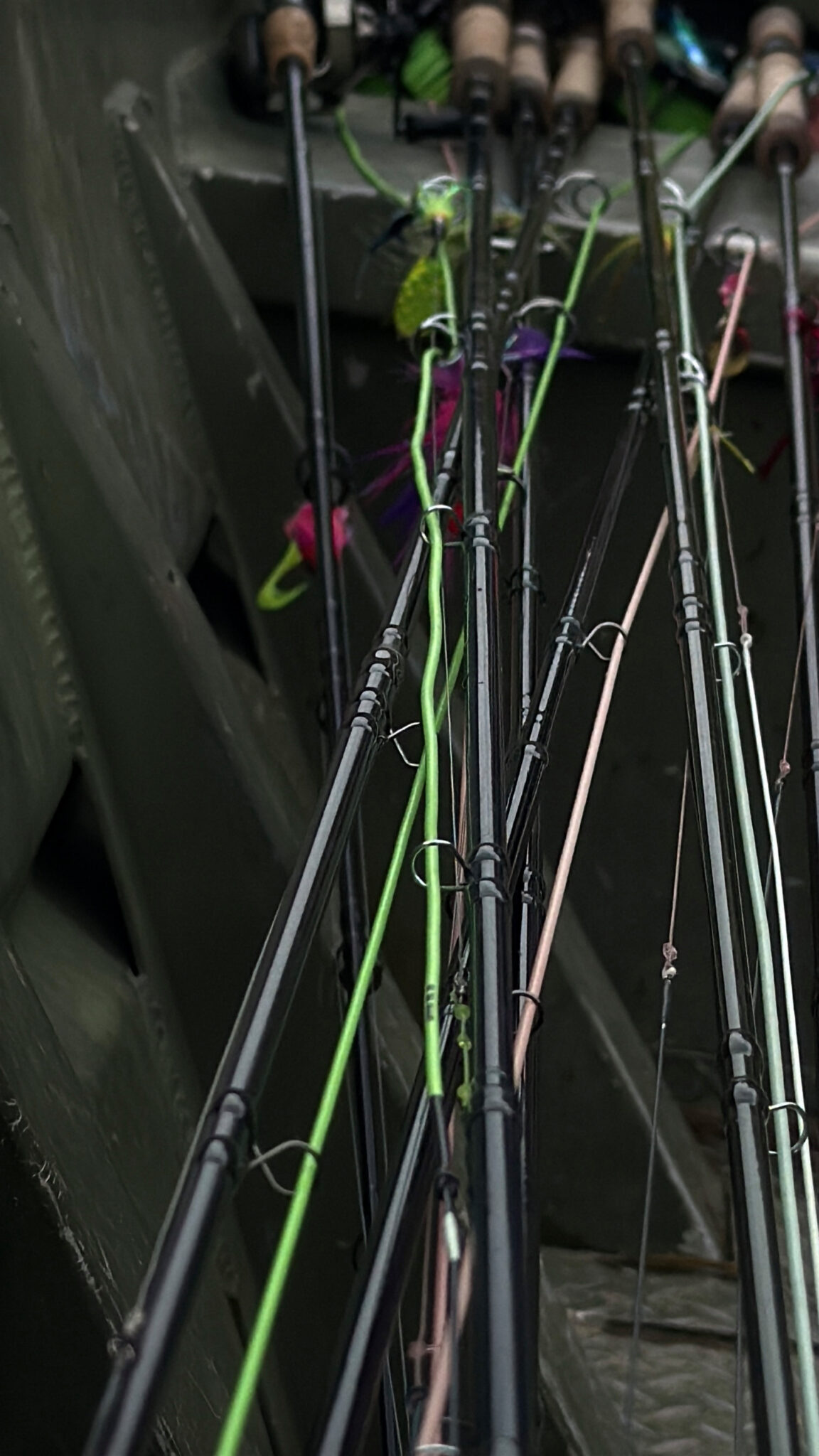
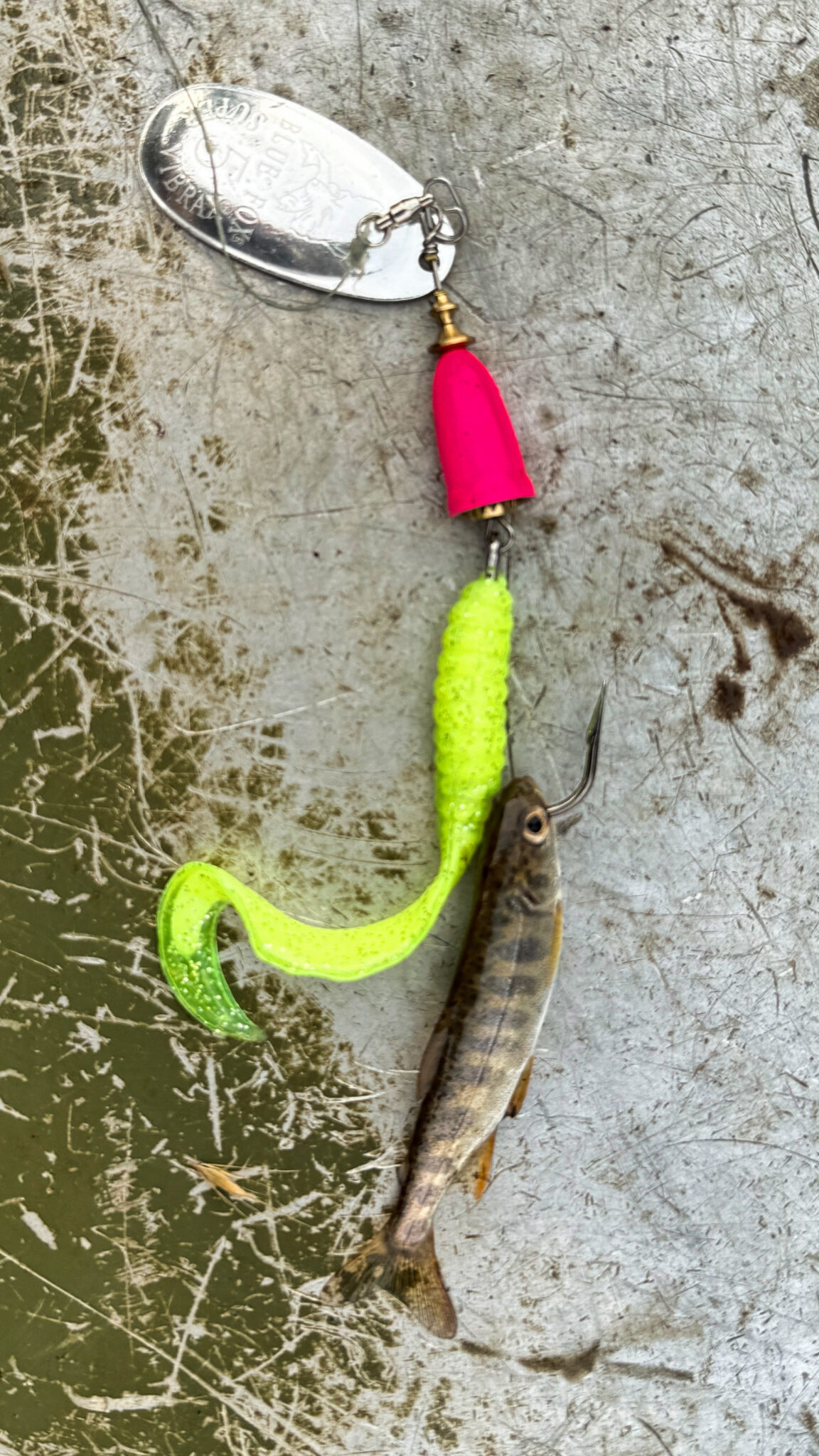
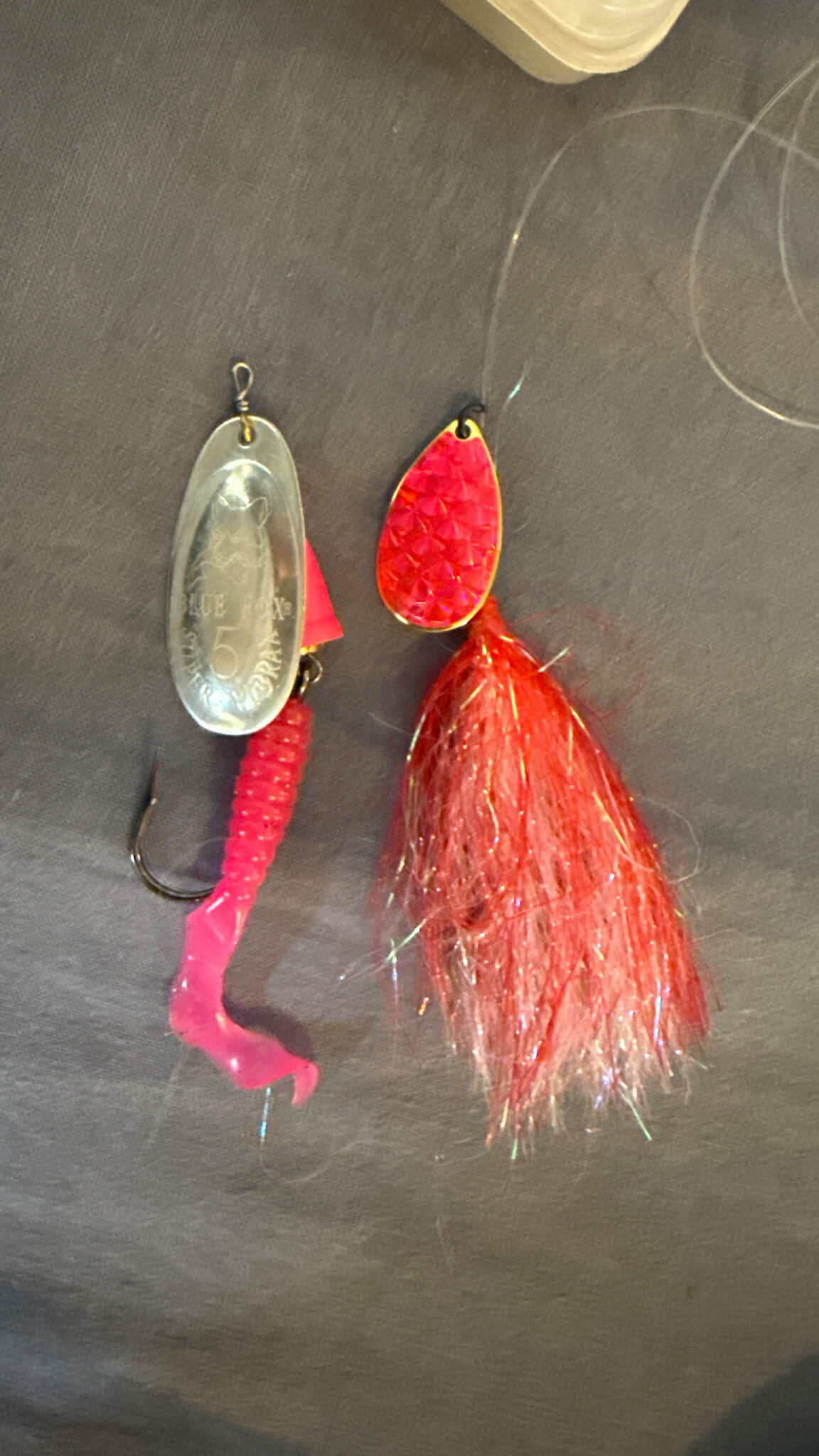
I spent much of the first few days giving the first shots at the best holes to the anglers having the hardest time hooking fish. Everyone still averaged roughly a dozen salmon a day on flies and Vibrax. When I fished alone or with another experienced angler, I was generally getting 12 to 20 fish a day. Which is apparently what we now call “slow fishing.” Some of us have become spoiled.
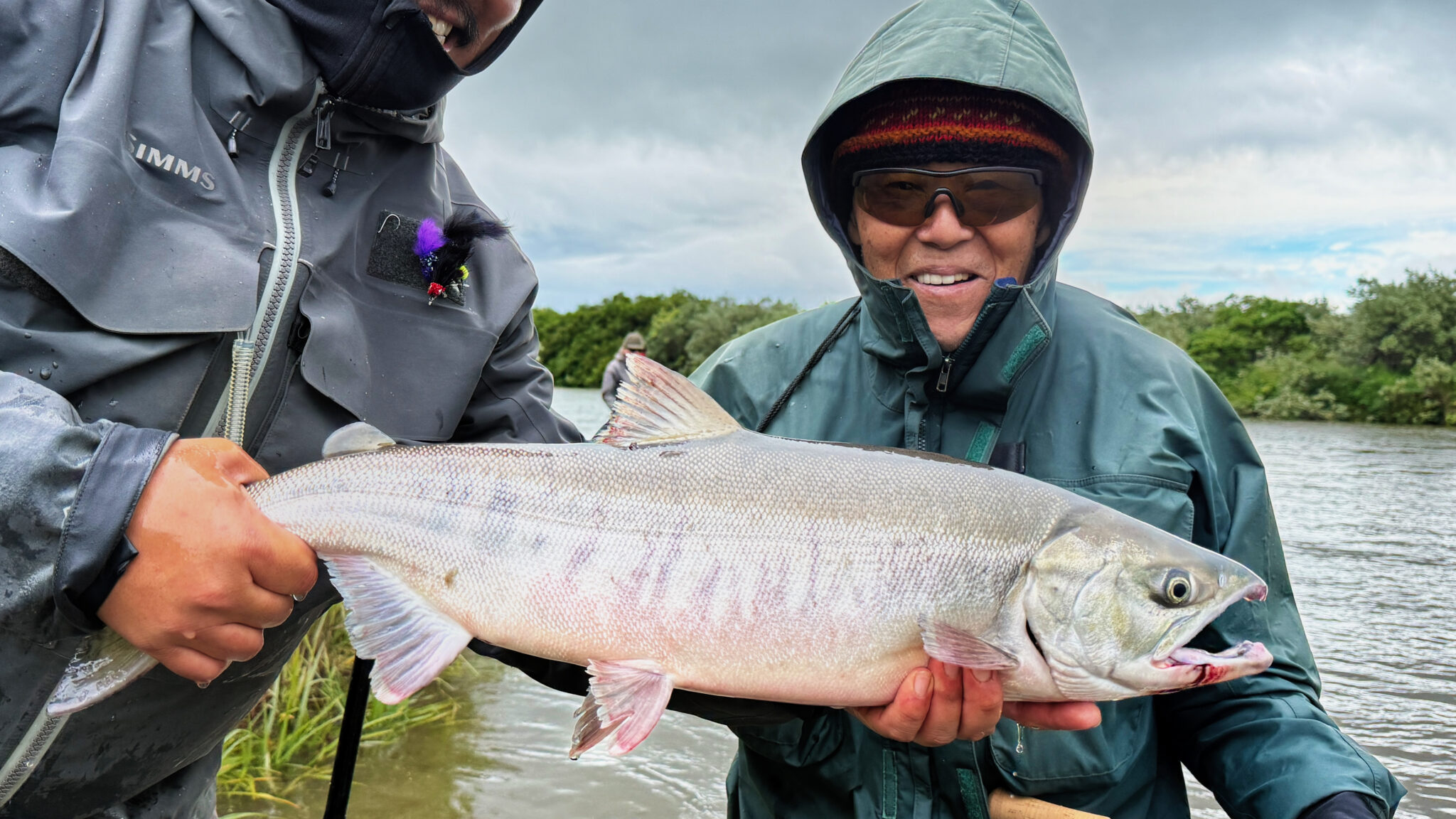
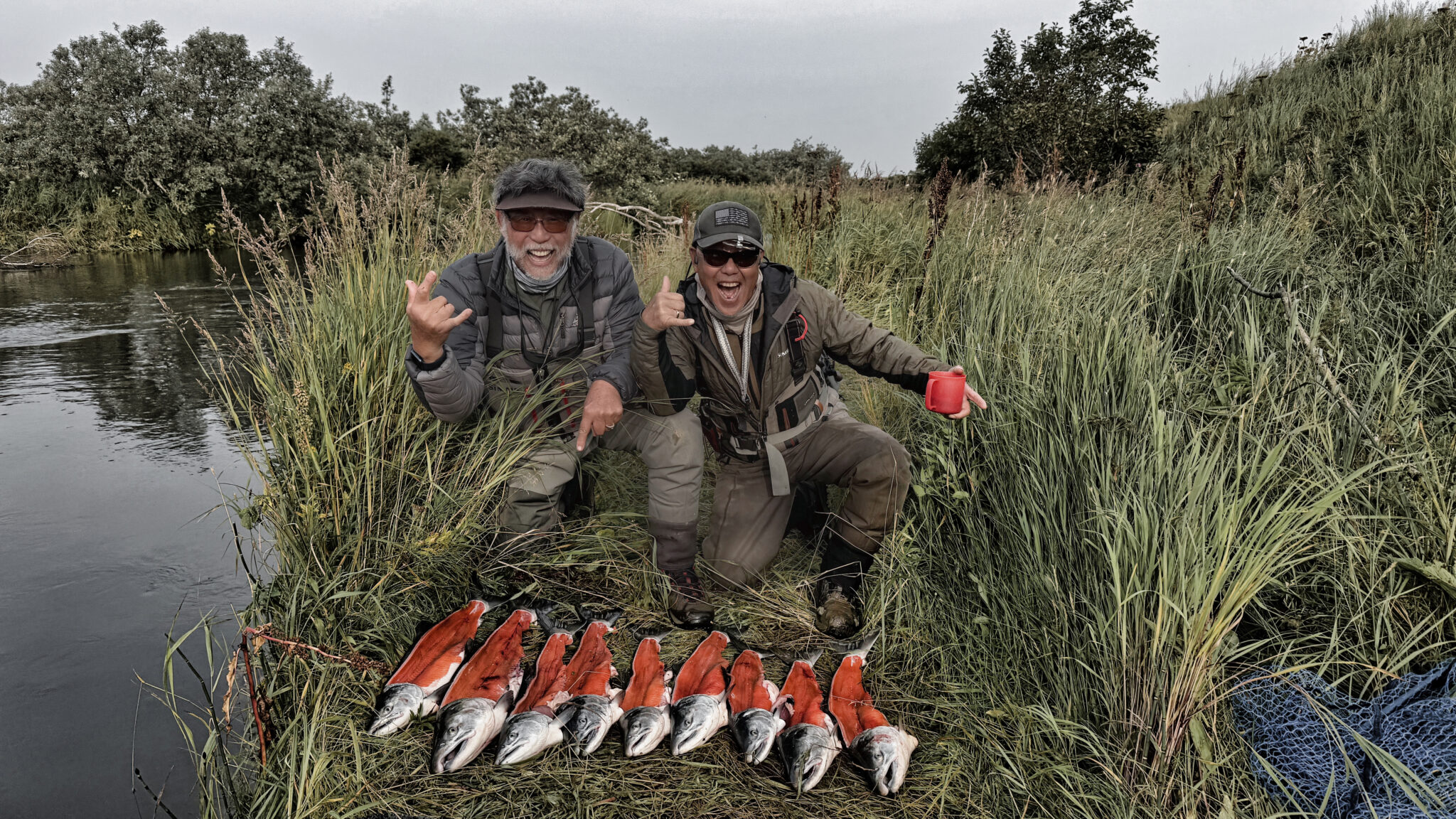
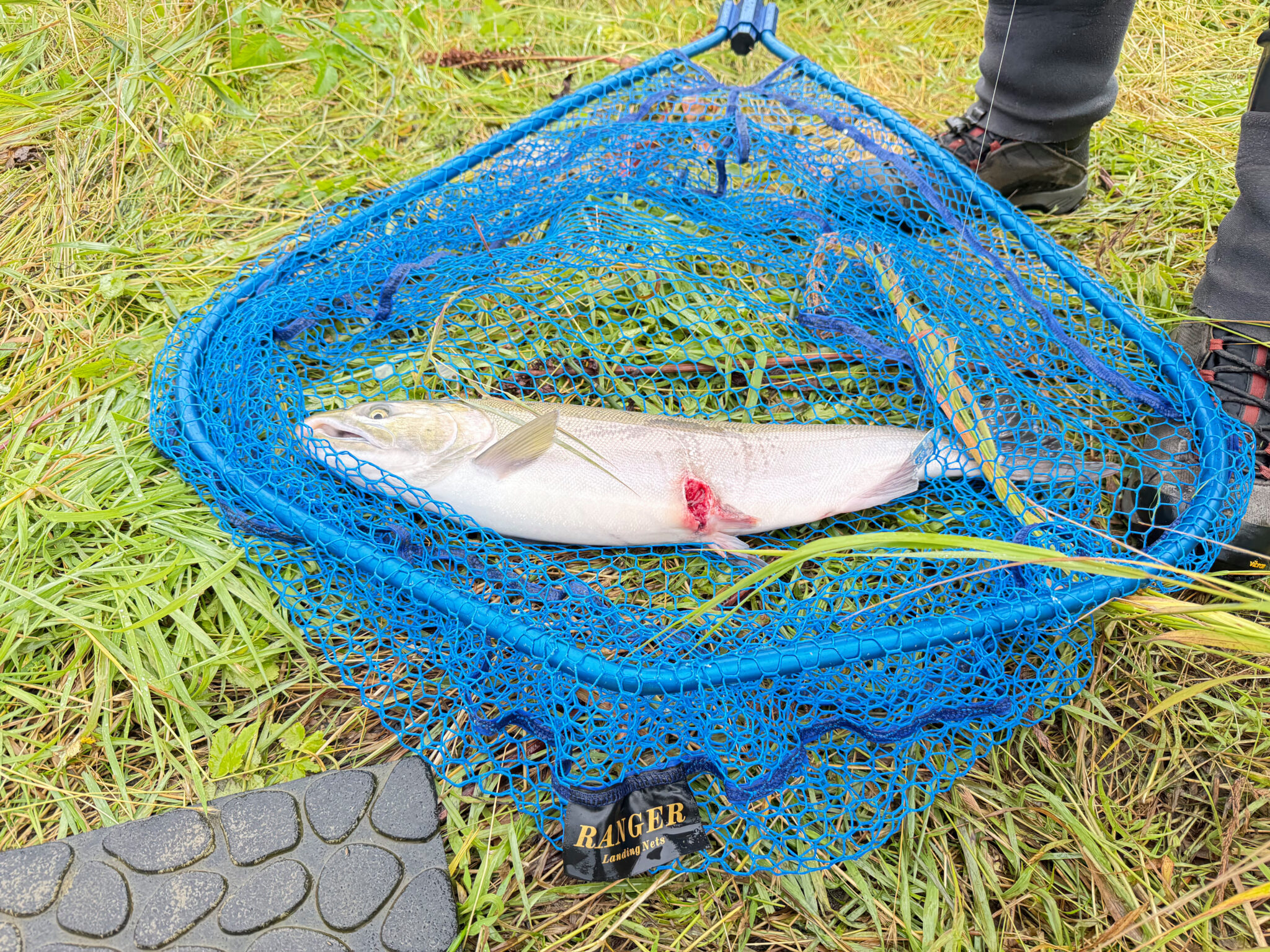
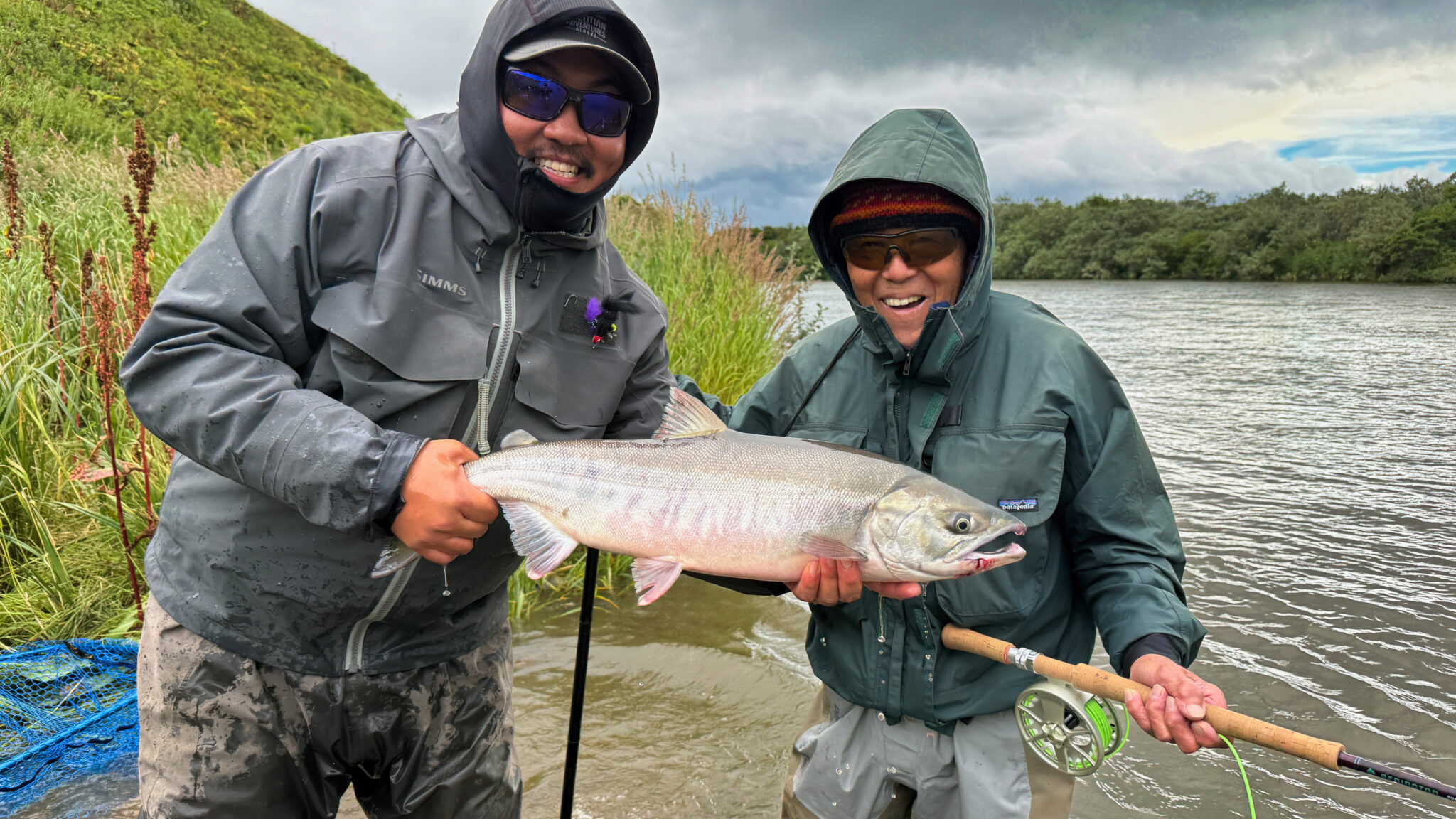
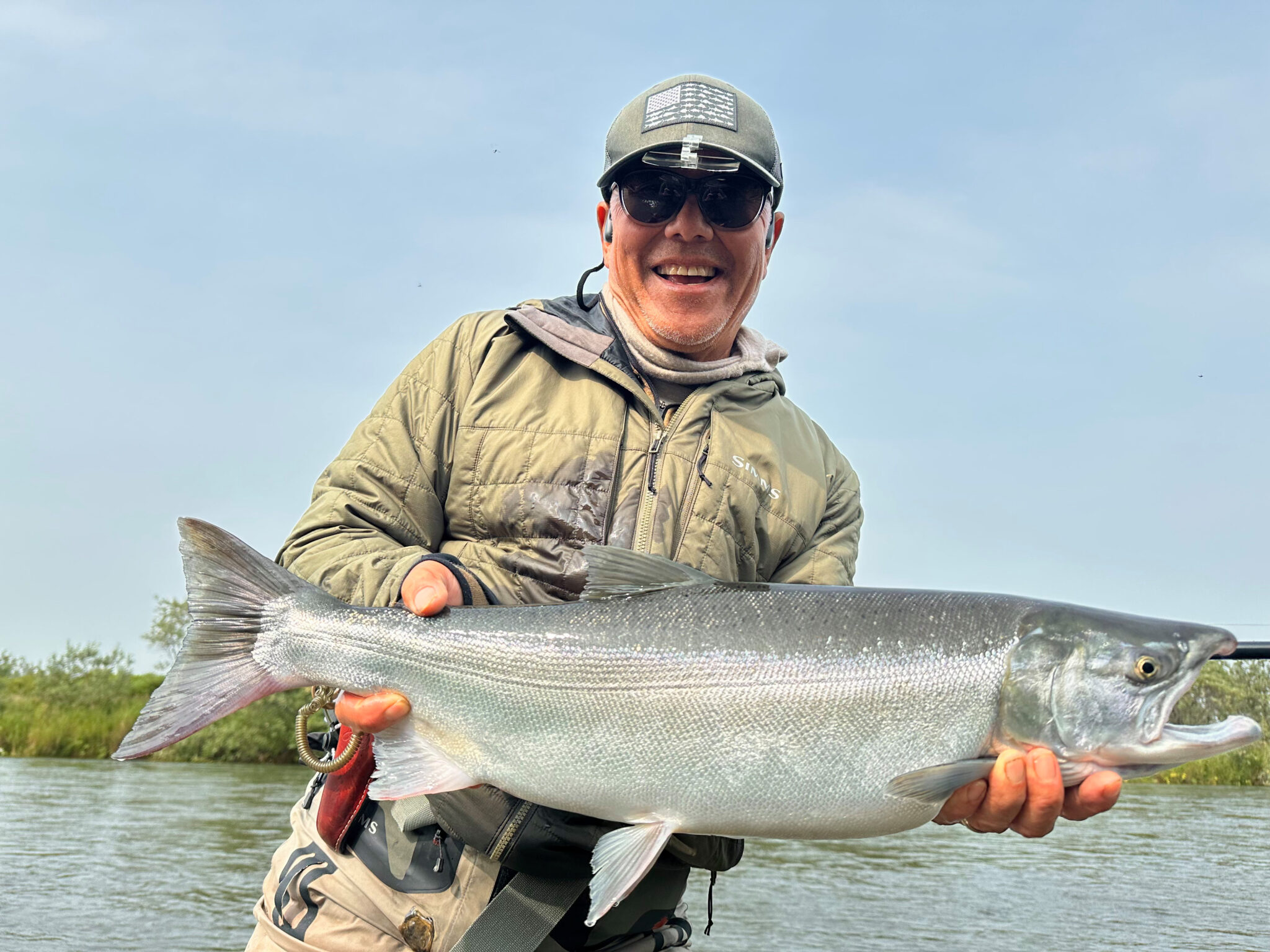
By Day Four, we had filled all our fish boxes, and it was also a particularly good year for salmon roe, with plenty of hens in the mix. Jerry and I have spent years pretending to be sophisticated catch-and-release fly fishermen, but apparently the Asian meat-fisherman gene is still alive and well. There’s something embarrassingly satisfying about staring at a completely full fish box and thinking, Yep, we did good. We can talk conservation, selective harvest, and the spiritual rewards of releasing wild fish all day long—but put a legal limit of bright coho and a pile of beautiful salmon roe in front of us, and suddenly our ancestors start whispering. Can’t lie. It still feels pretty damn good.
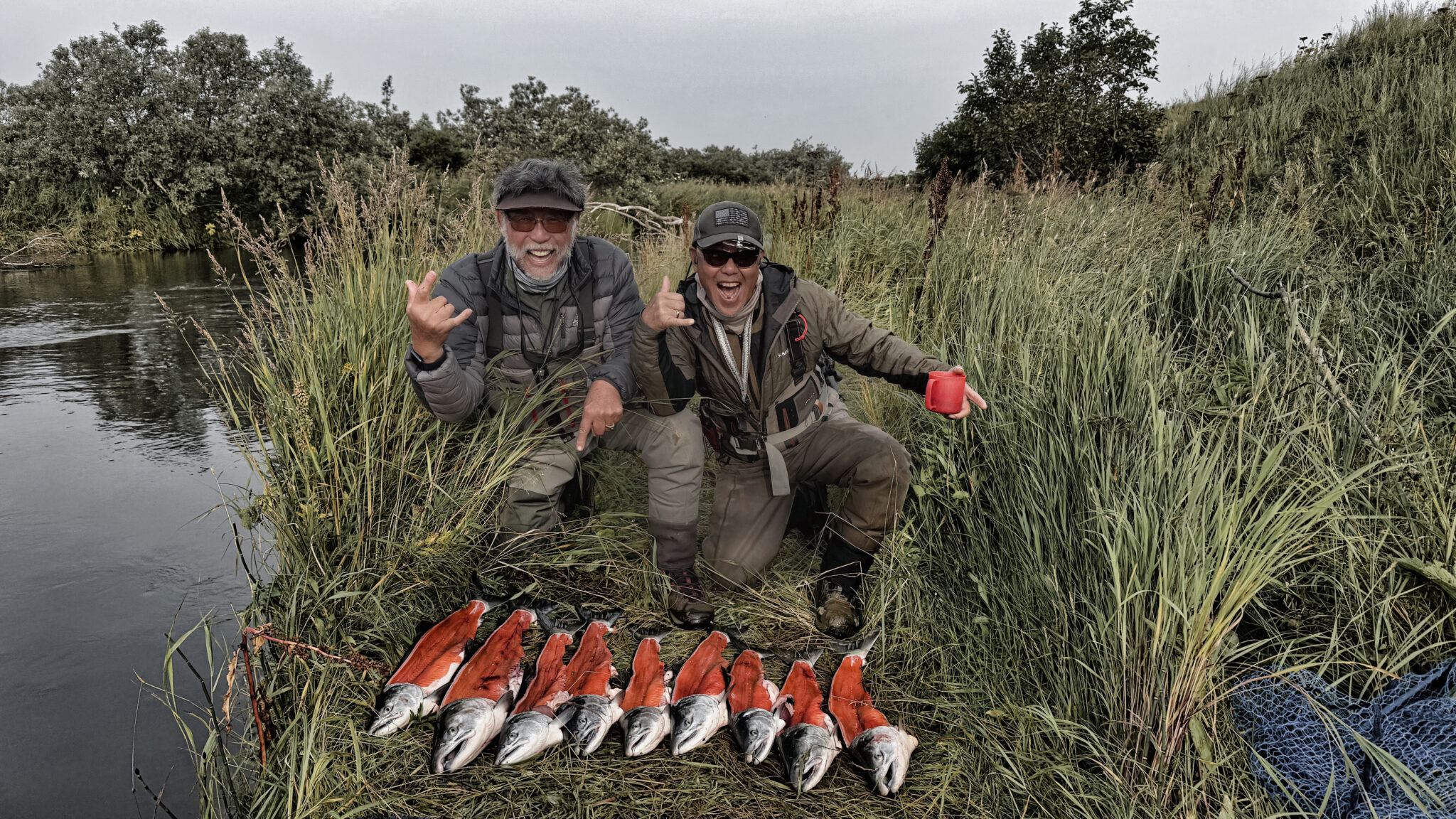
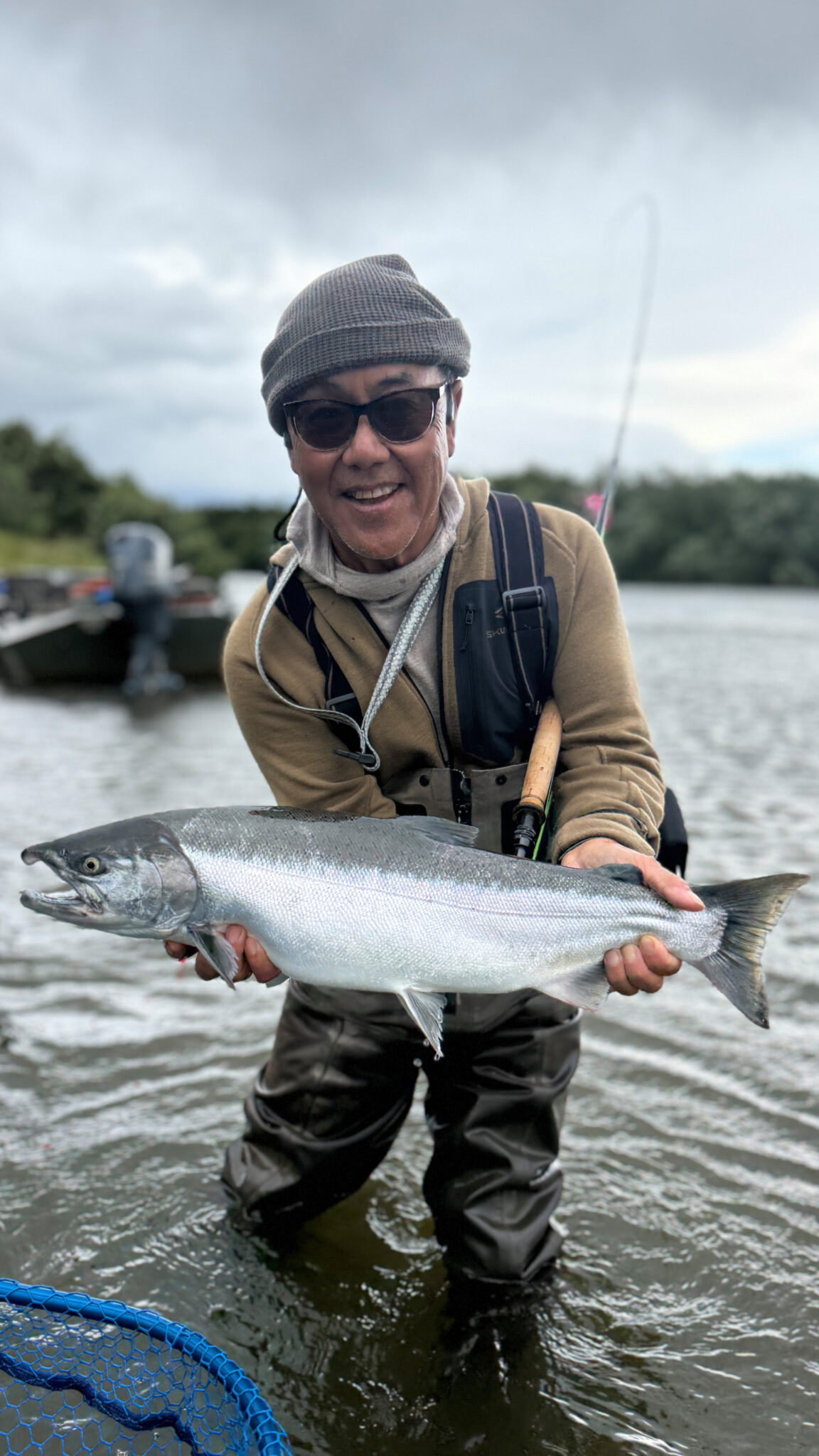
I had some terrific topwater sessions as well—not with traditional poppers, but with subsurface flies swung so high through the holes that they waked across the surface. The silvers would follow, track them for a few feet, and then casually sip them down. Very civilized takes from decidedly uncivilized fish.
Jennifer took the concept one step further and perfected the art of turning a Vibrax just under the surface film. The results were spectacular. Silvers would chase it down and absolutely detonate on it. She is now officially a surface-Vibrax addict, and I’m pretty sure there’s no treatment.
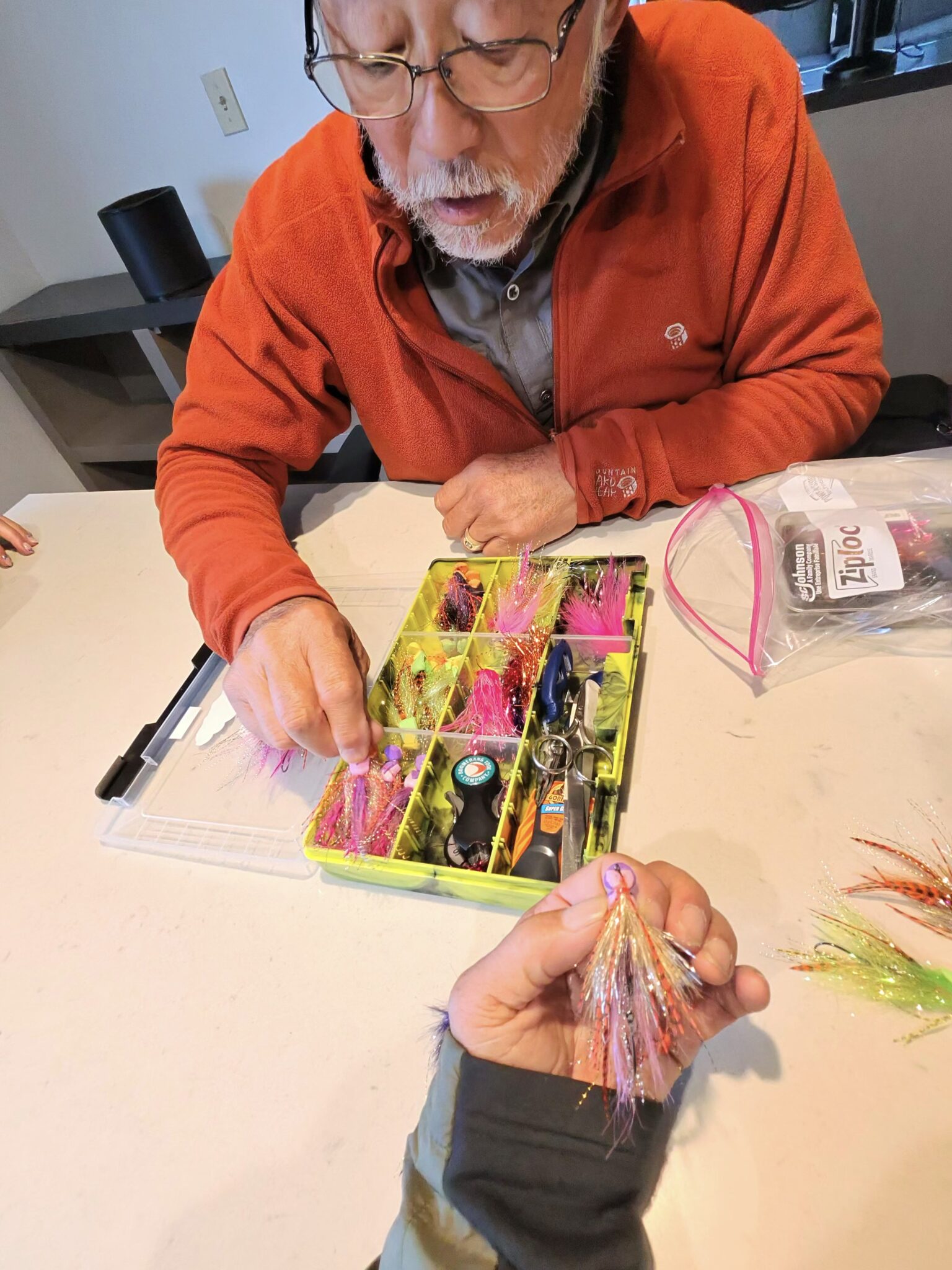
Jerry, meanwhile, had spent the better part of the last year engineering his custom Smiley Blade Gurgler, a fly that looked like it had tremendous promise for the Sapsuk. On Day One, he had an epiphany: reverse the blade. Suddenly the thing produced considerably more surface buzz and looked even more irresistible. At least to us. I devoted an entire morning session to giving the salmon every possible opportunity to appreciate Jerry’s engineering achievement. They declined. The flies are beautiful. They gurgle. They buzz. They wake. They smile. The salmon don’t care. Apparently, after millions of years of evolution, wild Alaskan silver salmon have developed a sophisticated aesthetic preference for a five-dollar piece of metal spinning violently through the water. Back to the drawing board, Jerry.
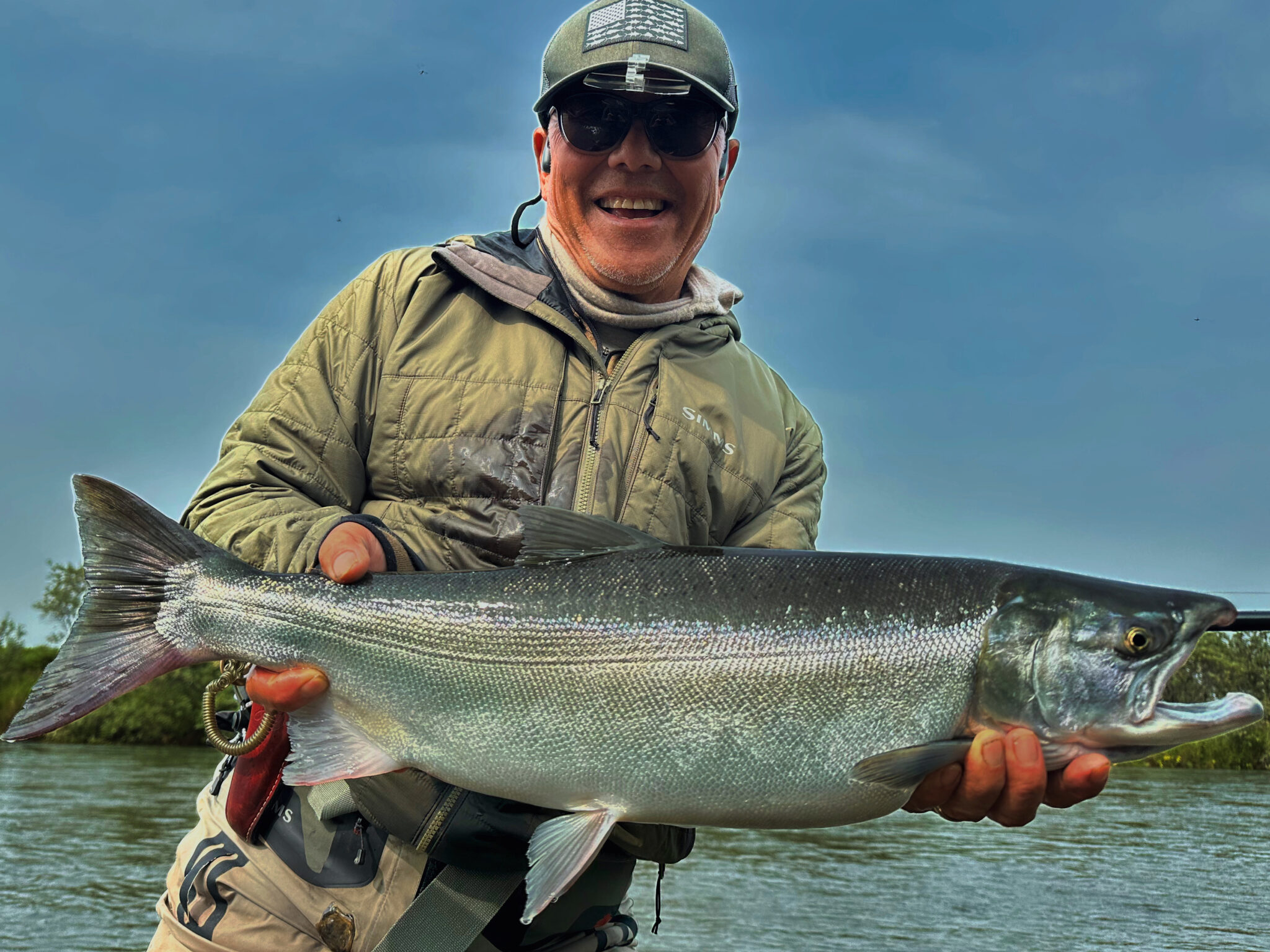
Toward the end of the week the salmon also seemed to be getting larger, and we started joking that maybe the “B run” had arrived. Of course, technically you can’t have a B run unless you first have an A run. Apparently the A run had sneaked past us while nobody was looking.
Chasing Them Upriver
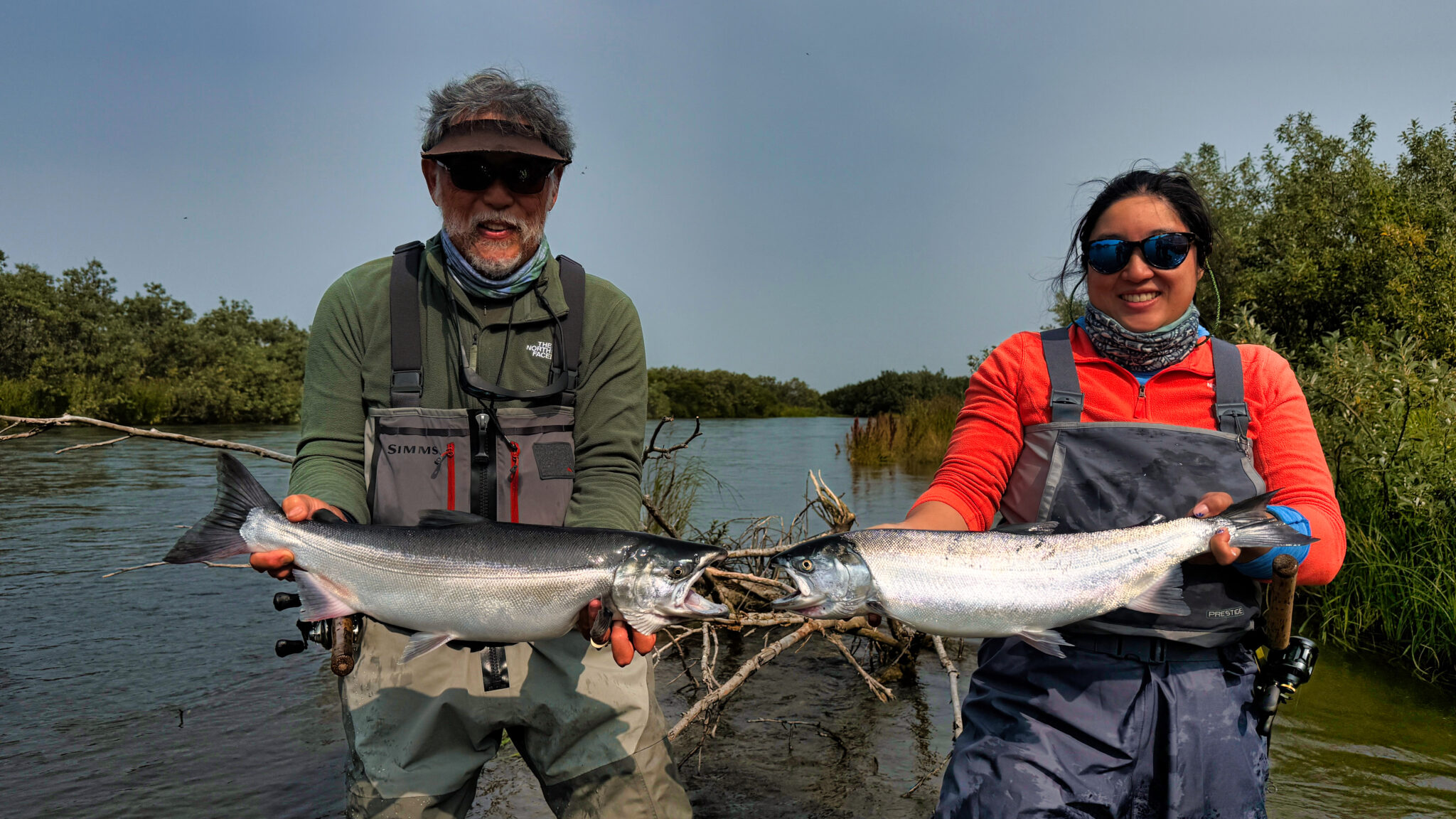
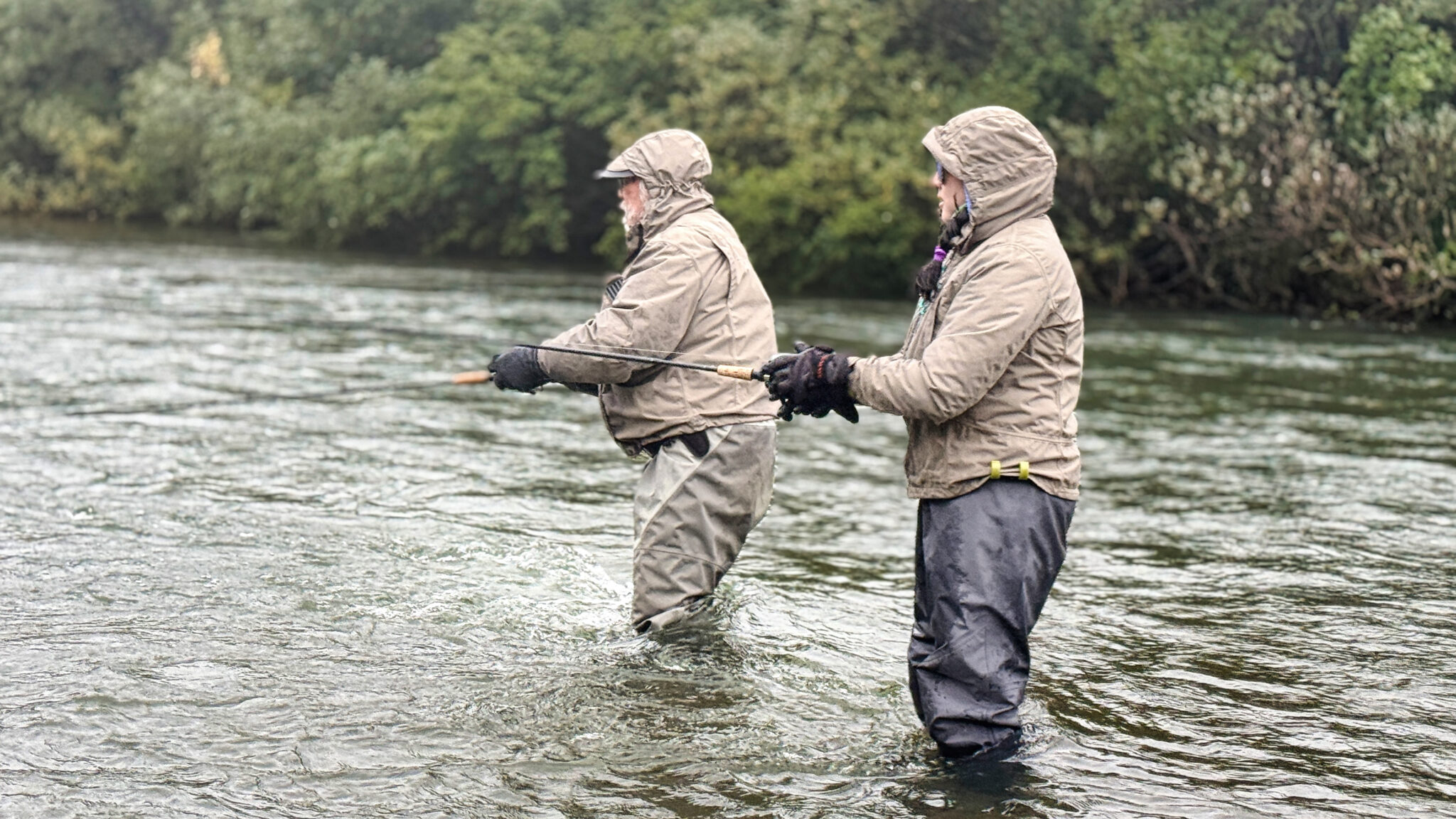
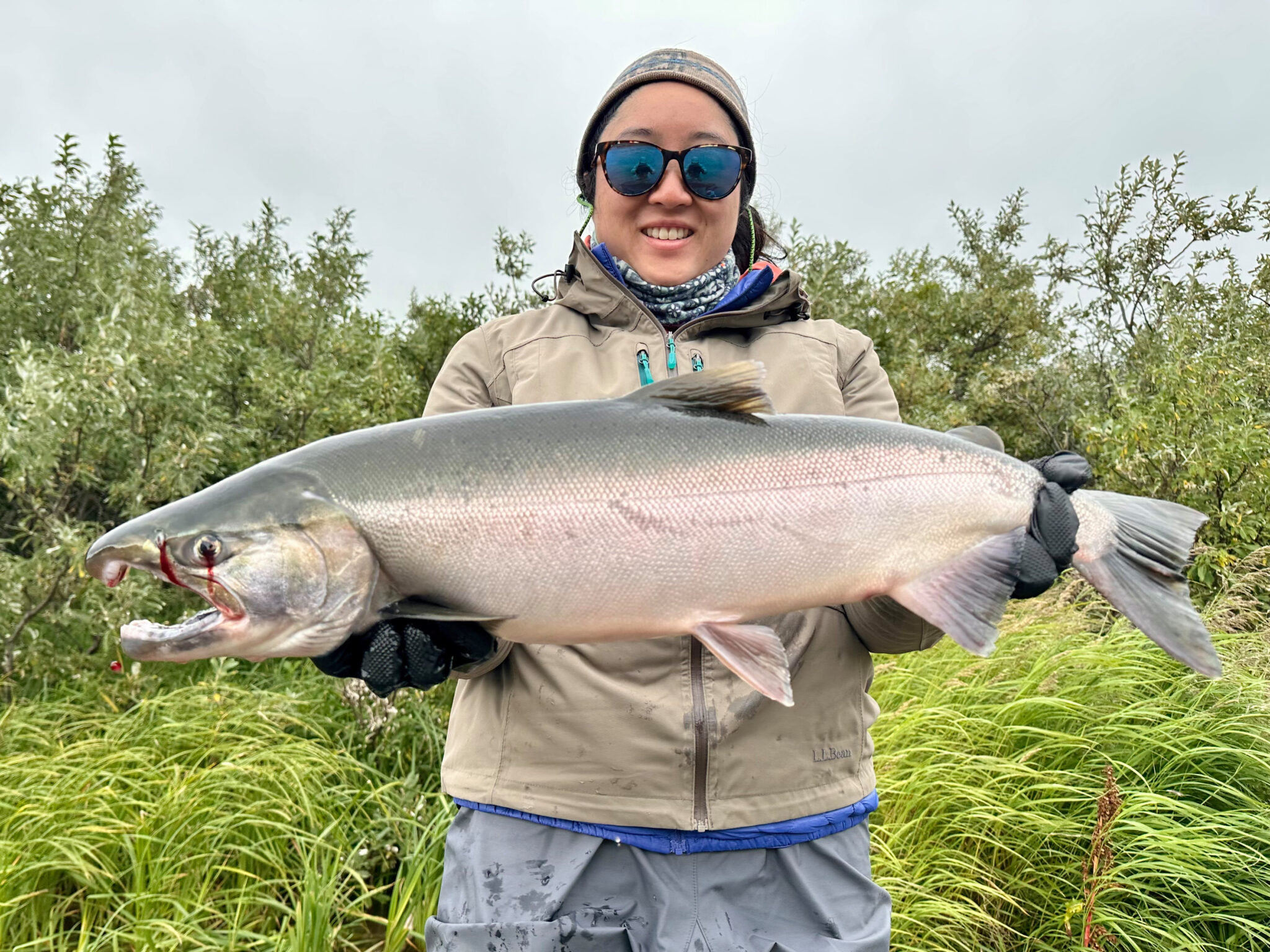
By late in the week the river had dropped back toward normal, the water cleared dramatically—and many of the salmon seemed to have moved on. So we went looking for them. We chased fish miles beyond the Braids and eventually found them again with some very good results. On the final day, Mike had a 25-fish day fishing with Allen and Jerry. Jennifer and I counted more than 30 between us, with many more hooked and lost. Steve had his best day of the trip with six fish and came back to camp early. “Limited out.” Steve was fishing Spey only. He is 94 years old. What a stud.
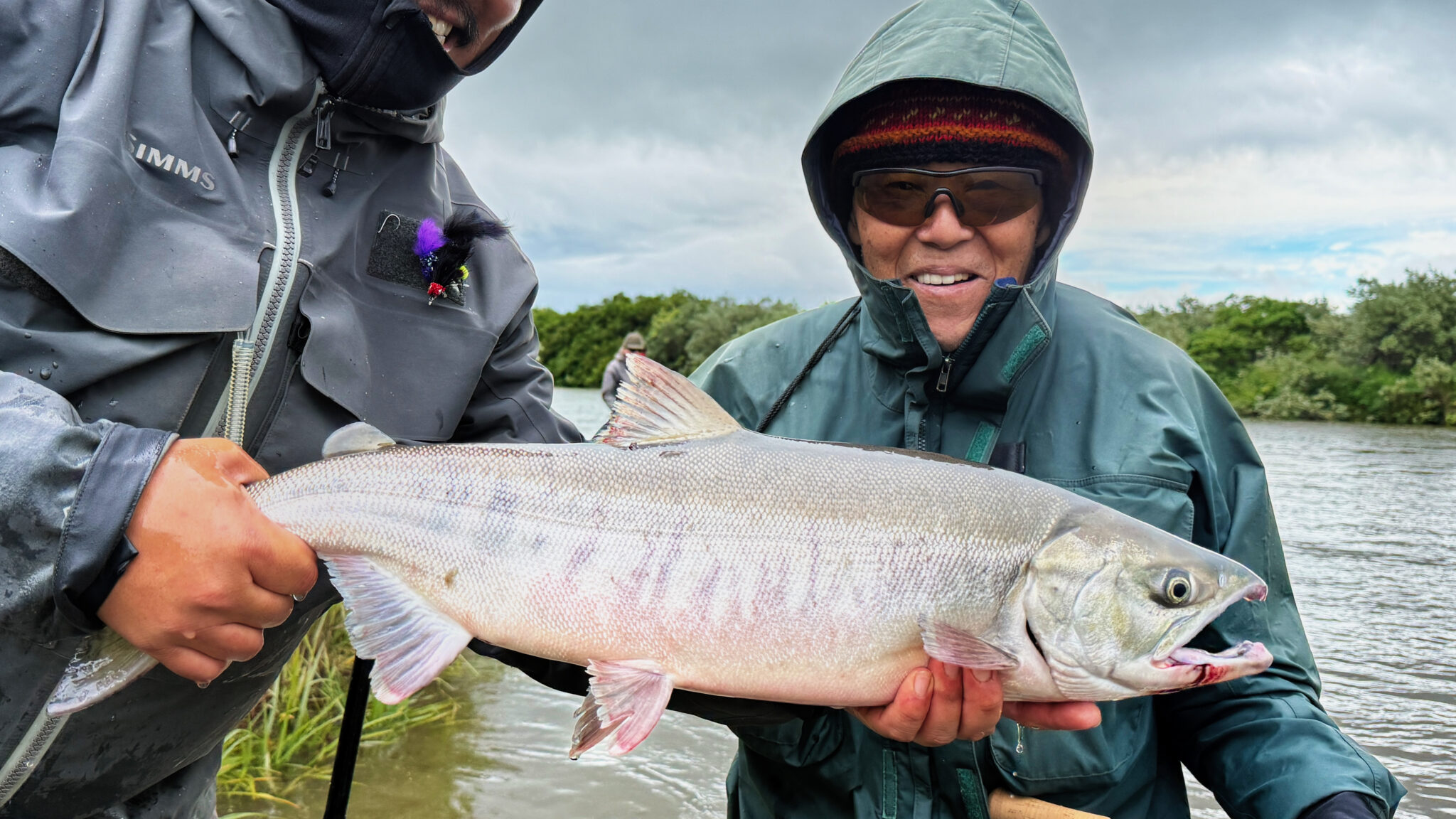
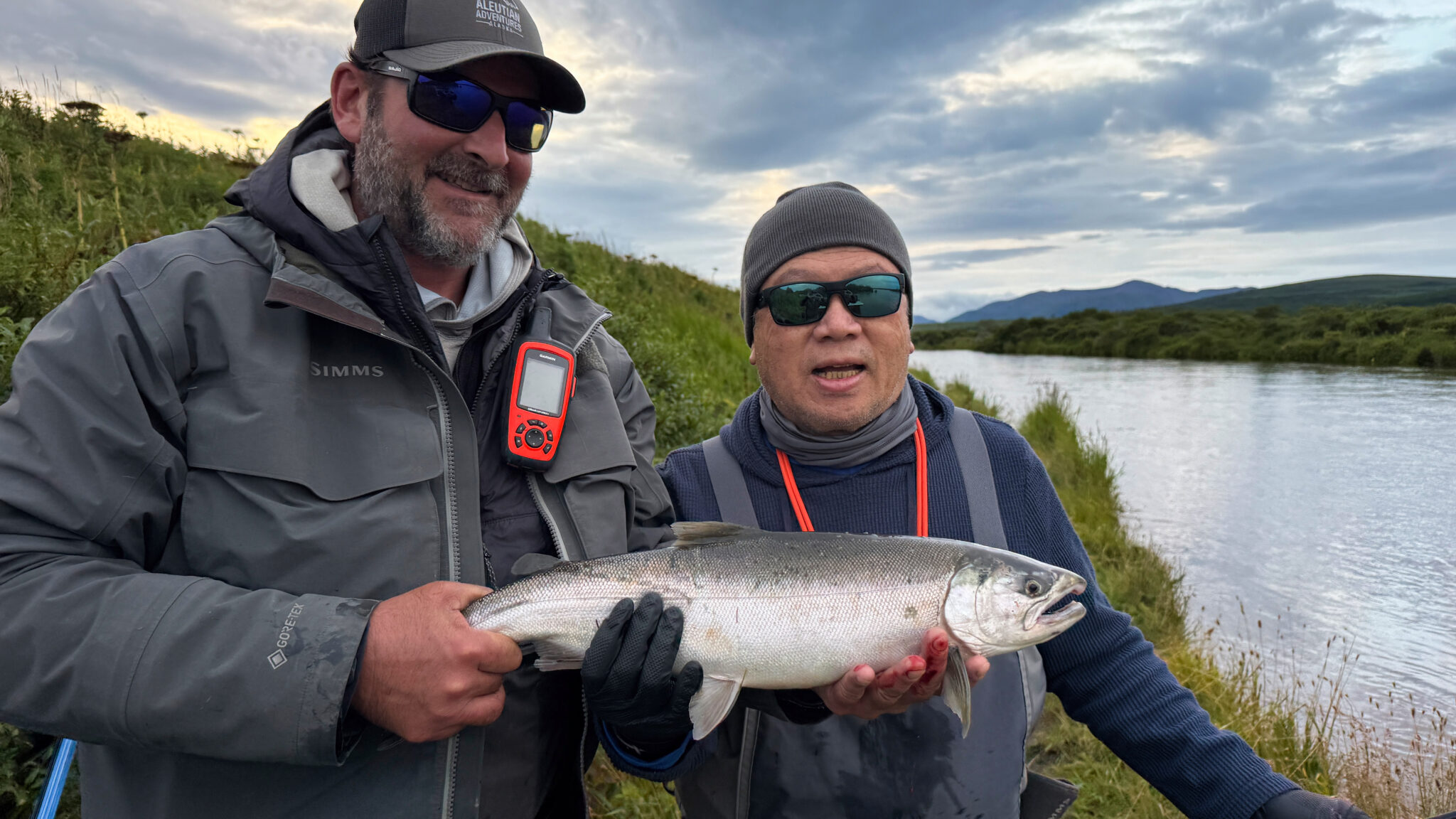
In general, the newcomers had the fishing trip of their lives, while Jerry, Mike and I caught plenty of salmon but couldn’t stop ourselves from comparing it with years when there seemed to be ten times as many fish in the river. That’s the curse of having seen the Sapsuk at its very best. But even under these conditions, I still don’t know a better place to fish for silvers. There is something unique about the Sapsuk. It is simultaneously desolate, beautiful, comfortable and strangely civilized and getting better every year. You’re sitting in the middle of the Alaska Peninsula wilderness, yet somehow eating a great dinner, sleeping in a warm cabin and bringing home boxes of salmon. No matter how “slow” the fishing gets, we always seem to bring home the meat and catch memoriable big fish.
I Don’t Really Count Fish Anymore
There’s an old saying in fishing: you don’t really remember all the fish you catch. You remember the ones you worked for—and especially the ones you lost. Counting fish has a way of making me compare every trip to the best day I’ve ever had on that particular river. On the Sapsuk, that’s an awfully high bar. It’s easy to fall into the trap of thinking a trip was somehow inferior simply because the numbers didn’t match those extraordinary years of the past.
But I only get one week a year to pull on wild coho with a Spey rod, and I’m increasingly aware of how precious that week has become. Salmon and steelhead runs have always been cyclical, but there are troubling signs that many runs are declining—and that trend may continue for the rest of my fishing life.
Maybe that’s one of the things you learn as an old-timer. At some point, you stop measuring a trip by how many fish you caught. The numbers become less important. You begin measuring it by the fish you remember, the people you shared them with, the river you were lucky enough to stand in, and the fact that you were still there to experience it.
Quality, eventually, becomes far more important than quantity.
That has become increasingly true for me. I find myself searching for a particular fish or a particular situation that requires my A game. Those are the fish I want to record. Those are the fish I remember. I’m not much of a quantity guy anymore. Steve at 94 has taught me that. When your happy and tired, thats the time to call it. I’m looking for the fish that defies the averages. That also means I can slow down. I can wait for my opportunity. I can spend more time talking with my buddies and watching other people fish and appreciating the rare opportunity to be where I am in that moment of time. Take in a Spey lesson from Marty. I need that. Spey castinig is much like my golf stroke- You can always get better, There is an enormous amount to learn simply by watching. I love fishing with the guides.
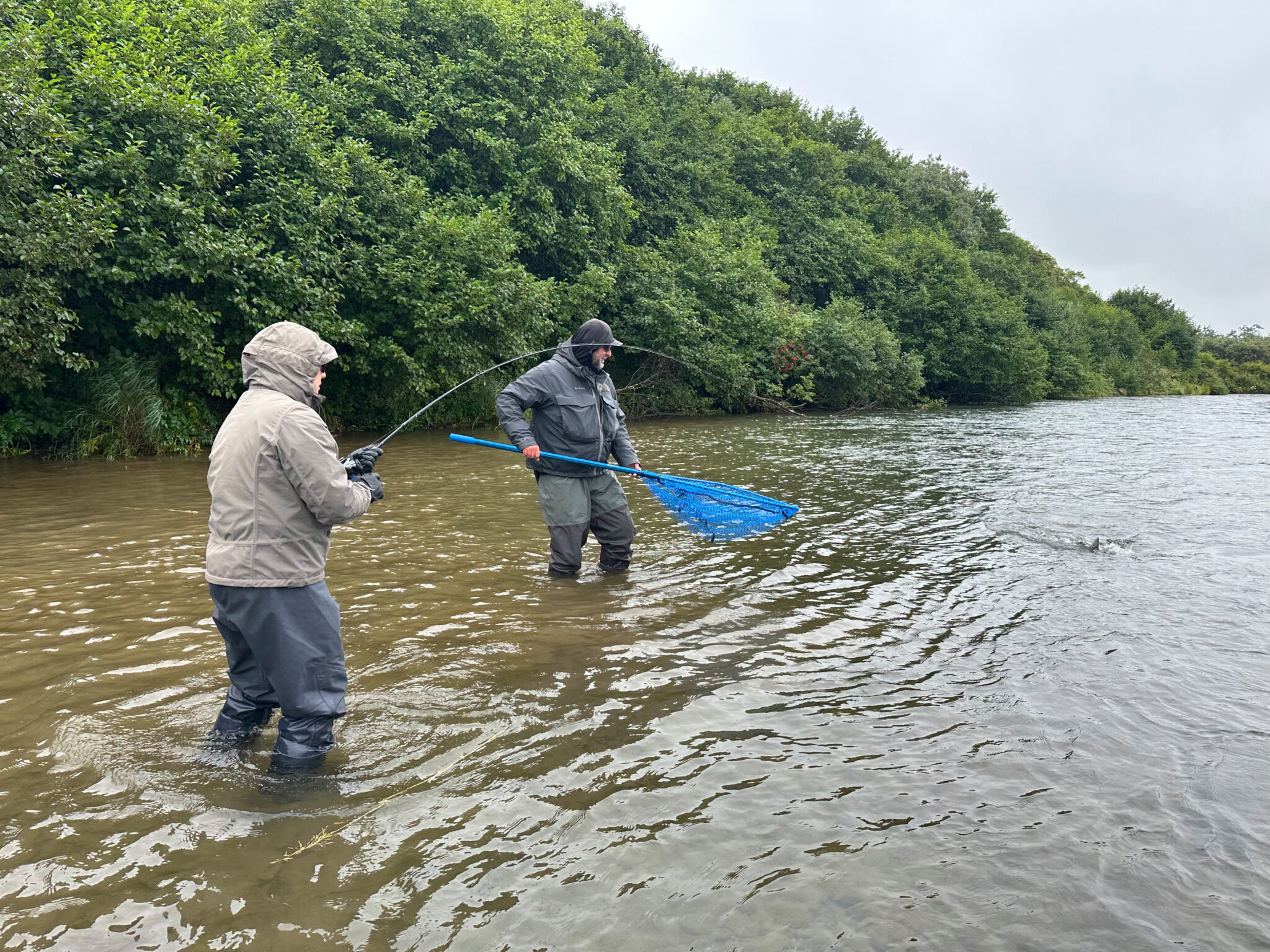
One of my favorite experiences of the entire week wasn’t catching a salmon myself. It was helping Allen catch his first salmon ever on a Spey rod. Along the way, I also tried to teach him something that becomes increasingly important when there aren’t huge numbers of fish around: fishing etiquette.
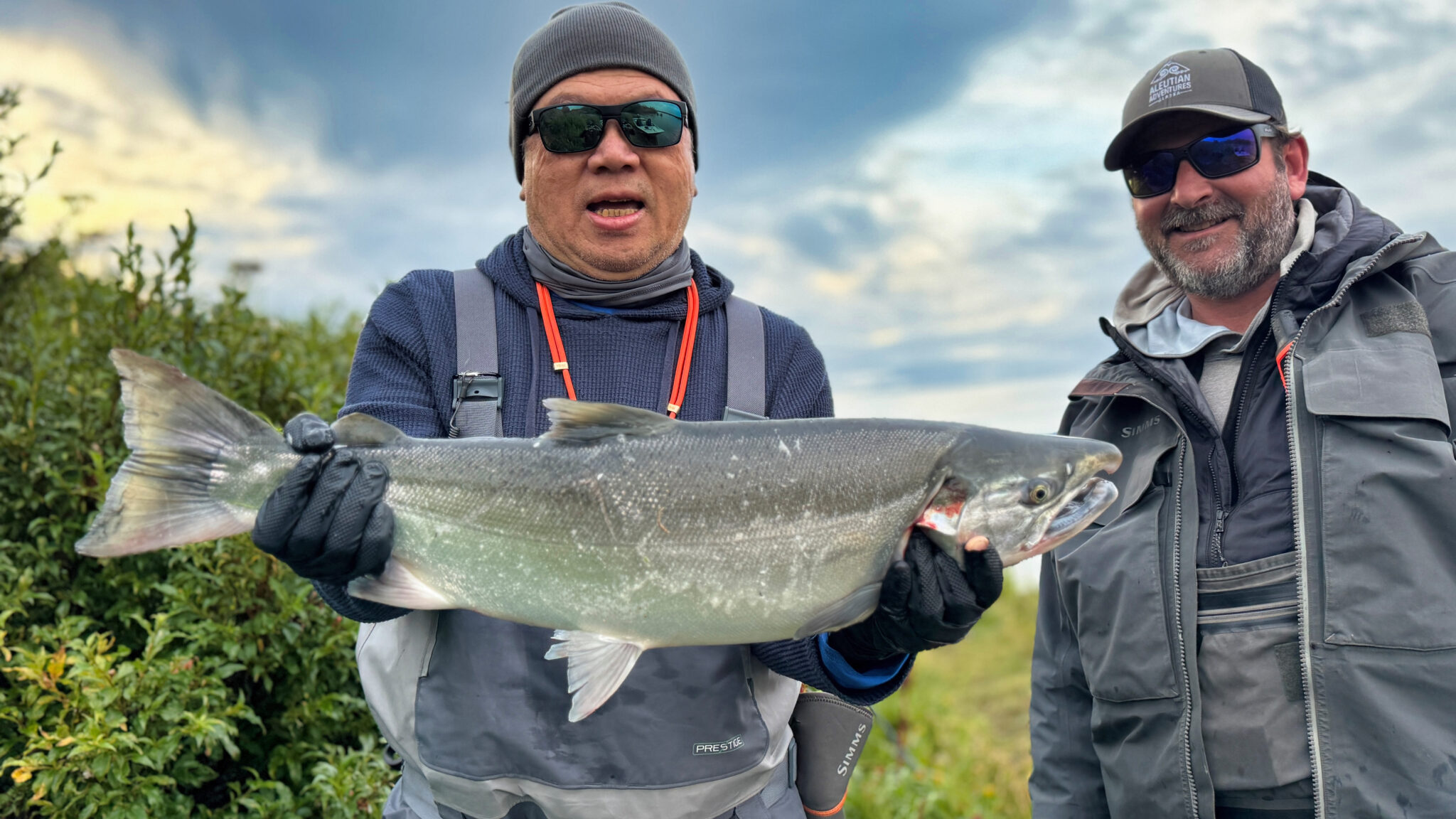
Experienced fishermen understand that positioning and timing can be every bit as important as casting. The first angler into a productive hole in the morning has an enormous advantage. If the hole is approached carefully and fished surgically, that first rotation can sometimes produce half a dozen salmon. But the trick is to pick the fish off without blowing up the school. You don’t practice your casting over the fish. Every grab, every missed strike, every jumped salmon and every fish dragged through the school changes that hole for the next angler. With age, I’ve become much more willing to give the first shot at a fish to a beginner. There’s something more satisfying now about helping someone else hook a fish than always needing to be the one who catches it. And along the way, I try to teach the etiquette of sharing the river—taking turns, giving others a chance, and realizing that a good day of fishing doesn’t have to be measured by how many fish you personally catch.
Among experienced fishermen, there’s an unwritten rule: after you hook, jump or land a fish, voluntarily step out and let the next guy have his opportunity. When fish are everywhere, none of this matters much. When opportunities are limited, it matters a lot. For someone new to salmon fishing, though, the idea can be completely incomprehensible until you review it on Drone footage and see how many fish hit your fly without you knowing it. “You mean I finally figured out where the fish are, I finally caught one…and now you want me to step off?” Yes. Welcome to fishing.
The Sapsuk is a unique river, and with that comes its own rhythm for catching fish—one that’s different from most other rivers and estuaries in Alaska. Success can change dramatically depending on the strength of the run, the weather, water levels, and clarity. When conditions get challenging, like they did this year, understanding that rhythm becomes even more important. There are little things you can learn and adjustments you can make that can easily double your odds of finding and catching plenty of fish. One of my favorite articles on the subject is the Aleutian Adventures blog post, Five Mistakes Silver Salmon Anglers Make (and How to Avoid Them). It does a great job of explaining some of those small details that can make a very big difference on the Sapsuk.
The Camp Keeps Getting Better
One of the remarkable things about the Sapsuk camp is that it keeps improving. The staff at Aleutian Adventures seems to find something to upgrade every year. Besides the new shuttle boat—which eliminates the boat transfer at the river mouth—they upgraded the life jackets. They’re warmer, more comfortable and considerably nicer to wear .
The guides also began running three boats with two anglers in each boat. Our group actually asked them to mix it up: one triple, one double and one single, rotating anglers every day. For six close friends, it worked beautifully. Everyone got to fish with everyone else during the week. and people got a chance to fish with a guide alone all day. If you wanted numbers….thats the ticket.
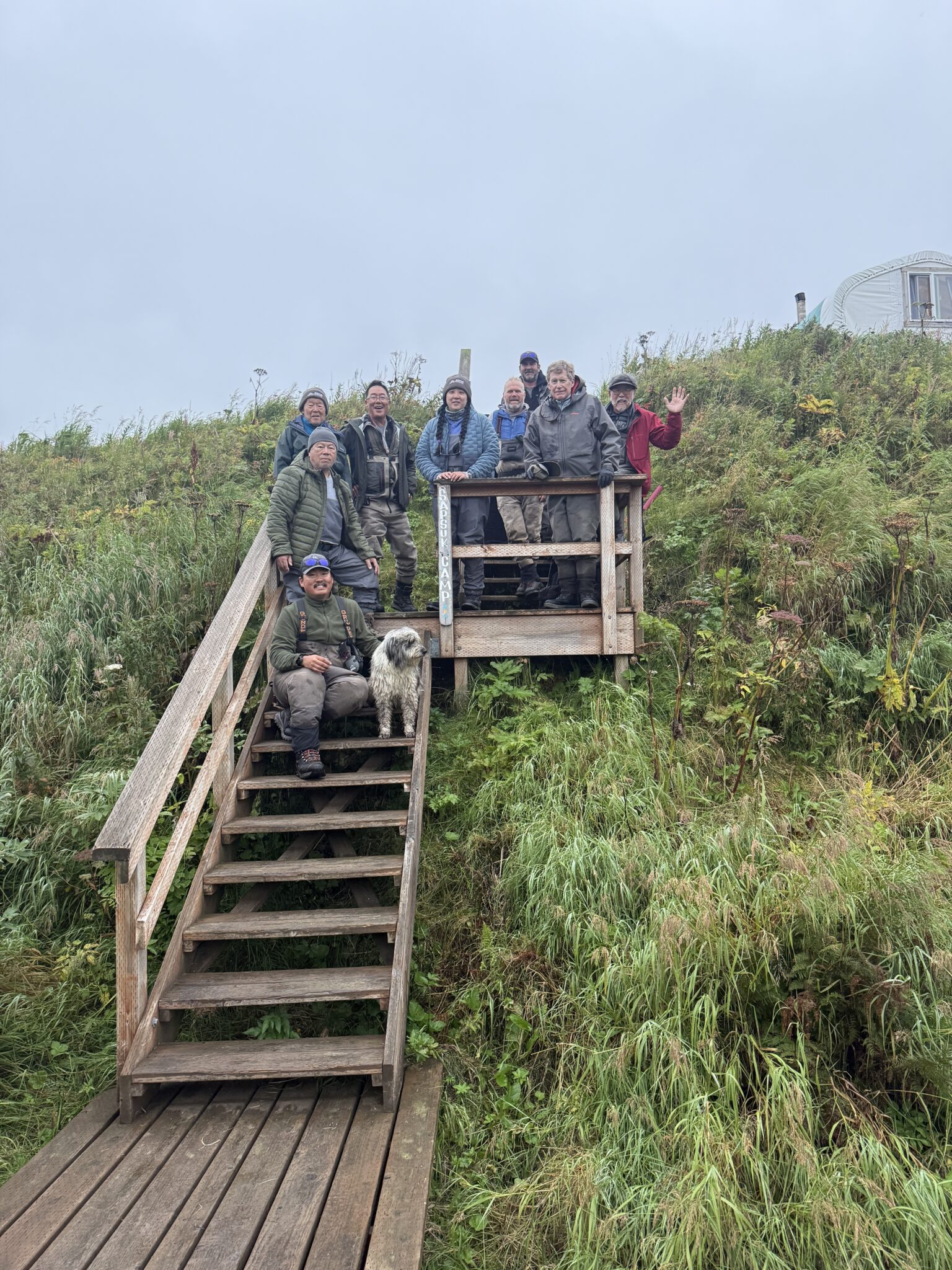
The camp has also entered the 21st century, although thankfully only partially. Several EcoFlow-type solar power stations now provide 24/7 freezer power, overnight electricity for CPAP machines and, amazingly, continuous Wi-Fi all night. Yes, the Sapsuk has 24/7 Wi-Fi now. Civilization has officially reached the Bering Sea. A Blessing for some and a curse for others. Fortunately, the salmon still don’t have Instagram.
The kitchen tent has also been upgraded with a big wooden dining table that comfortably seats ten. It has become the heart of camp—a place to eat, tell stories, lie about the size of our fish, and enjoy Aubrey’s meals, which somehow become more refined every year. Dinner here is more than just a meal; it’s a social event and the absolute best way to end a full day of fishing. I especially love that the staff eats with us. Meals simply wouldn’t be the same without Chris, Marty, and Tom sitting around the table, swapping stories, joining in the laughter, and probably correcting some of those fish stories before they get too far out of hand.
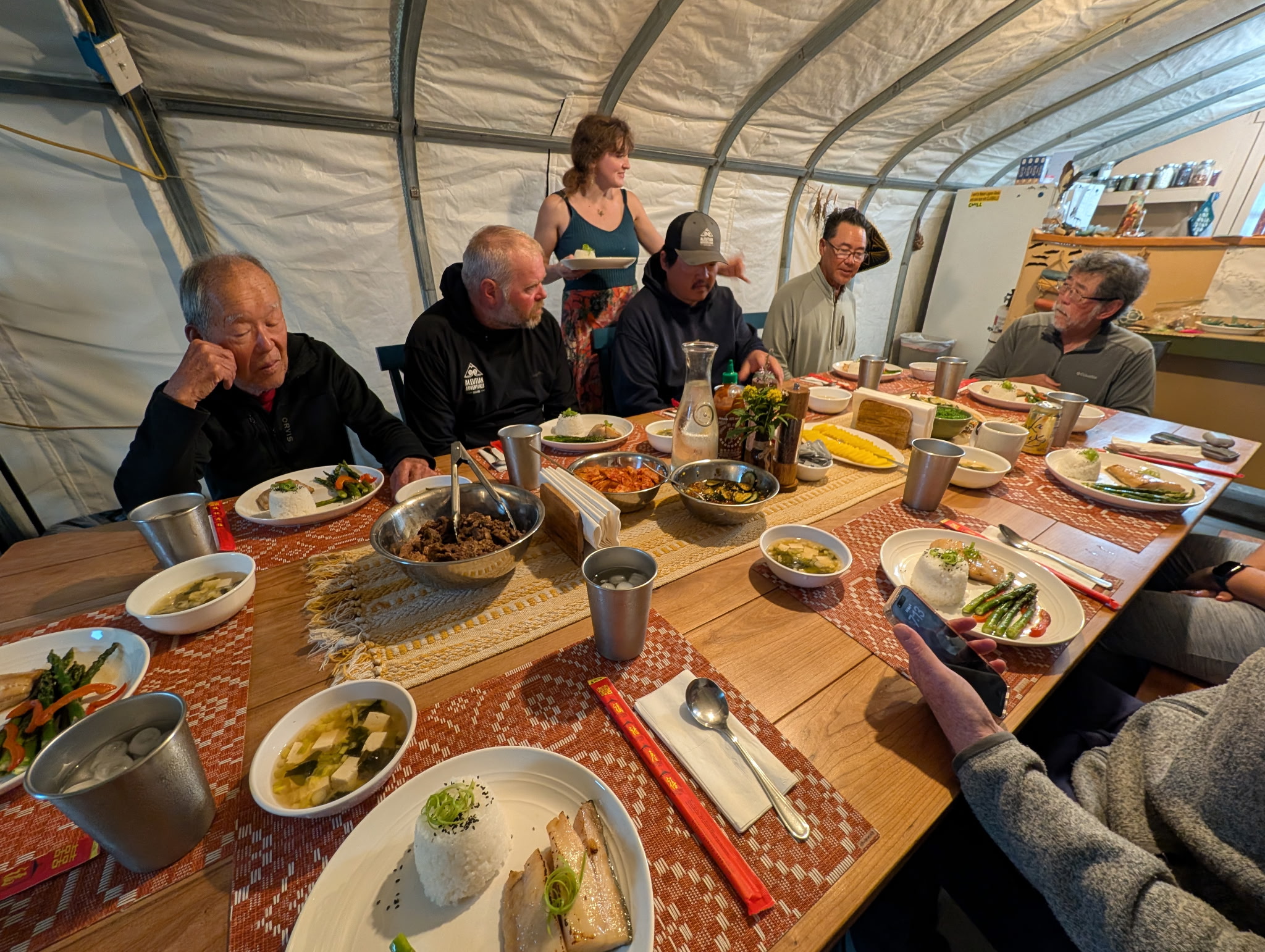
At Allen and Steve’s request, I even helped Aubrey make nigiri and salmon rolls using salmon I’d asked them to freeze the week before we arrived. Fresh Alaska salmon sushi in a tent on the Sapsuk River. Ridiculous. Aubrey has also continued putting her personal touches everywhere—from decorations in the cabins to, yes, decorating the outhouses. Nothing says wilderness luxury quite like sitting in an outhouse and thinking, “You know, somebody really put some thought into this.” The camp increasingly reflects her creativity and passion as camp chef and queen of hospitality.
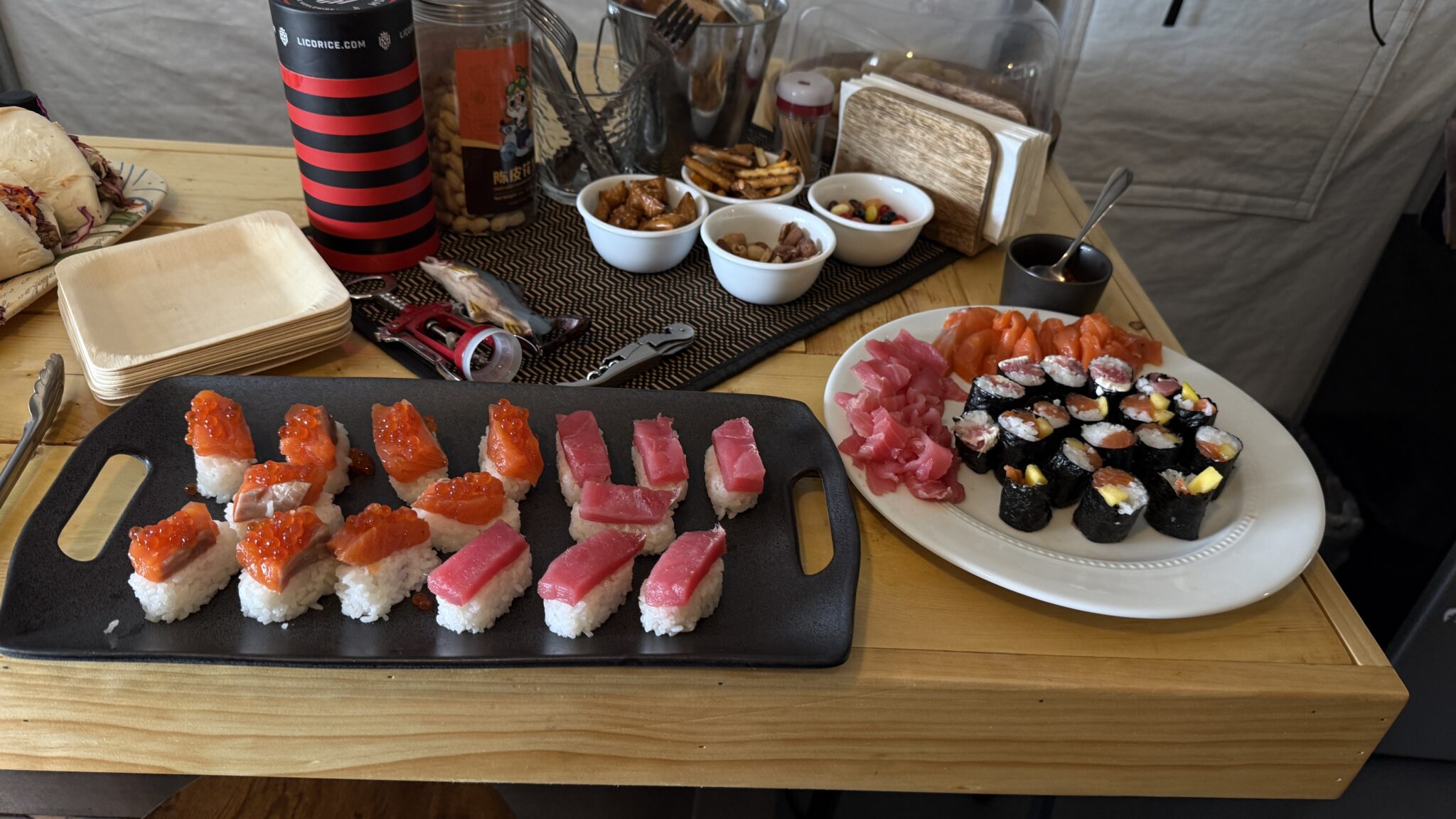
And then there is Huck, Aubrey’s Idaho Shag sheepdog, who has become an official—or at least self-appointed—member of the staff. When Marty guides, Huck often fishes with us. Ive grown very fond of Huck over the years as have all of us. Smartest dog Ive ever met. I’m still not entirely sure what his job description is, but he takes it very seriously.
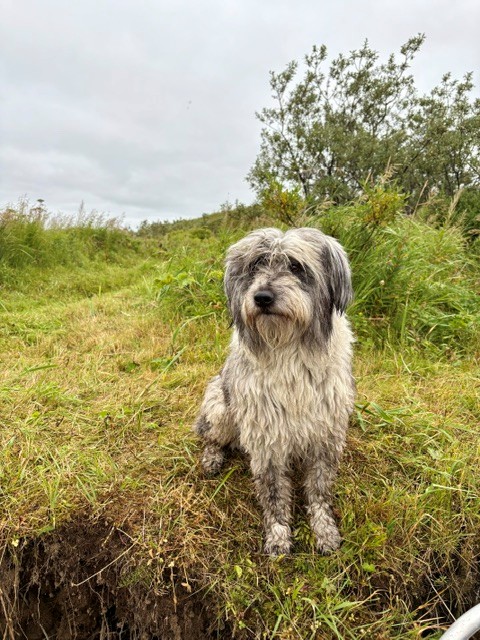
Marty, Chris and Tom have the guiding operation down to a science. More importantly, they made all six of us feel like family. I’ll admit that after the staff changes last year, I wondered what the future of the camp would look like. After this trip, I’m not worried anymore. In fact, I don’t think the Sapsuk camp has ever been as well organized, comfortable and friendly as it is now.
We originally came here because of the salmon.
We keep coming back because of the people.
And fortunately, there are still enough salmon around to give us an excuse.
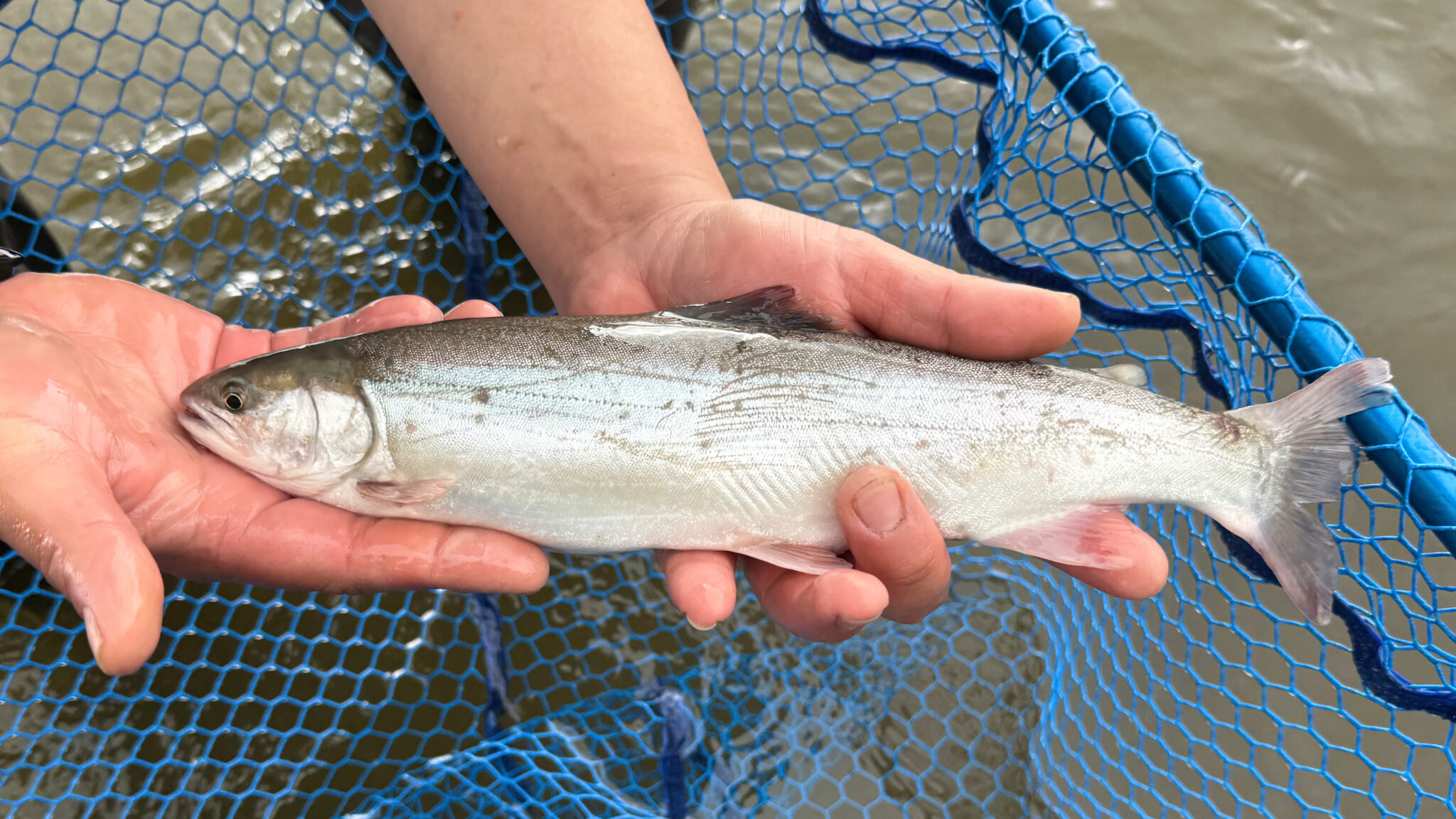
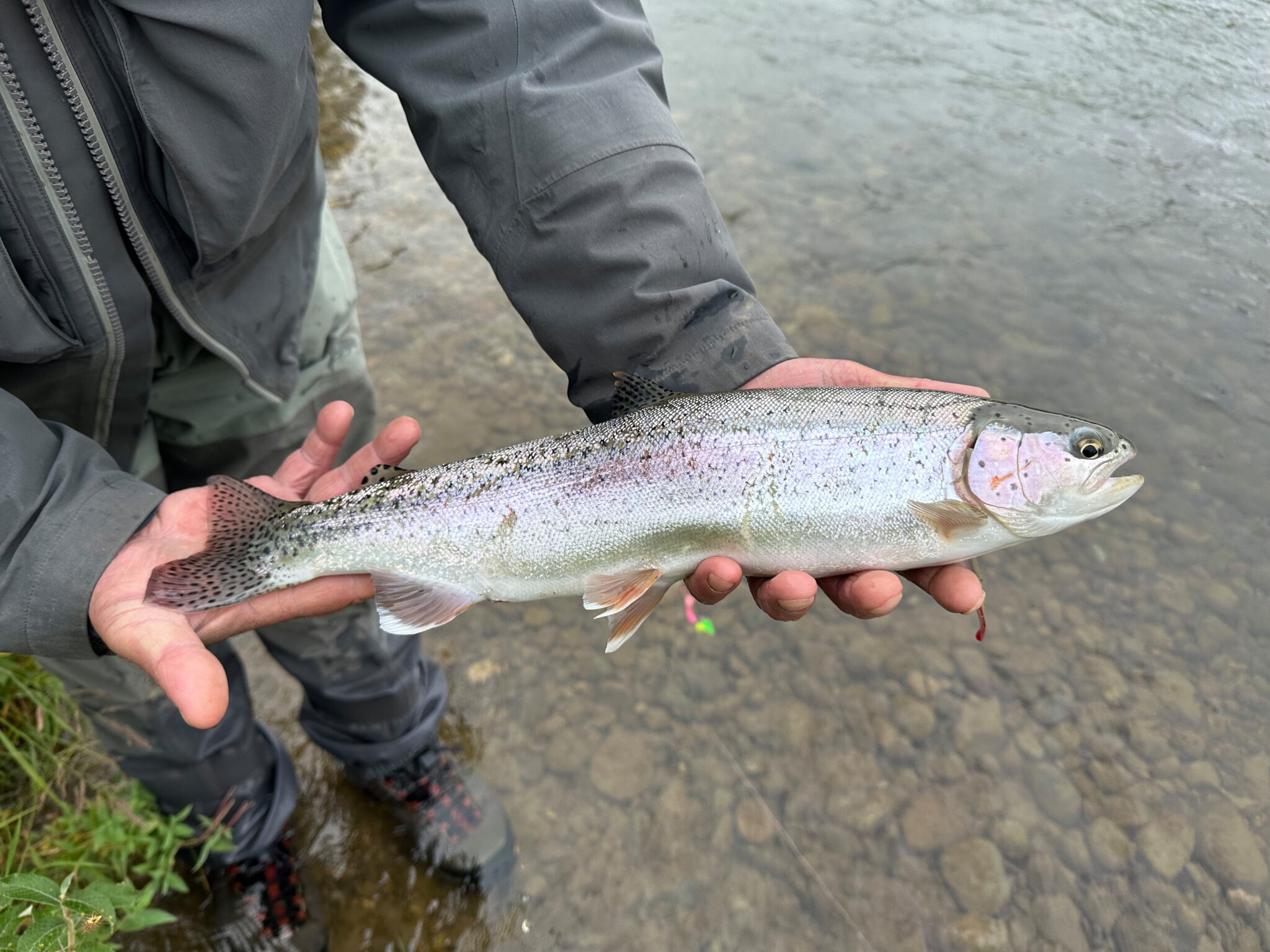
The Fish