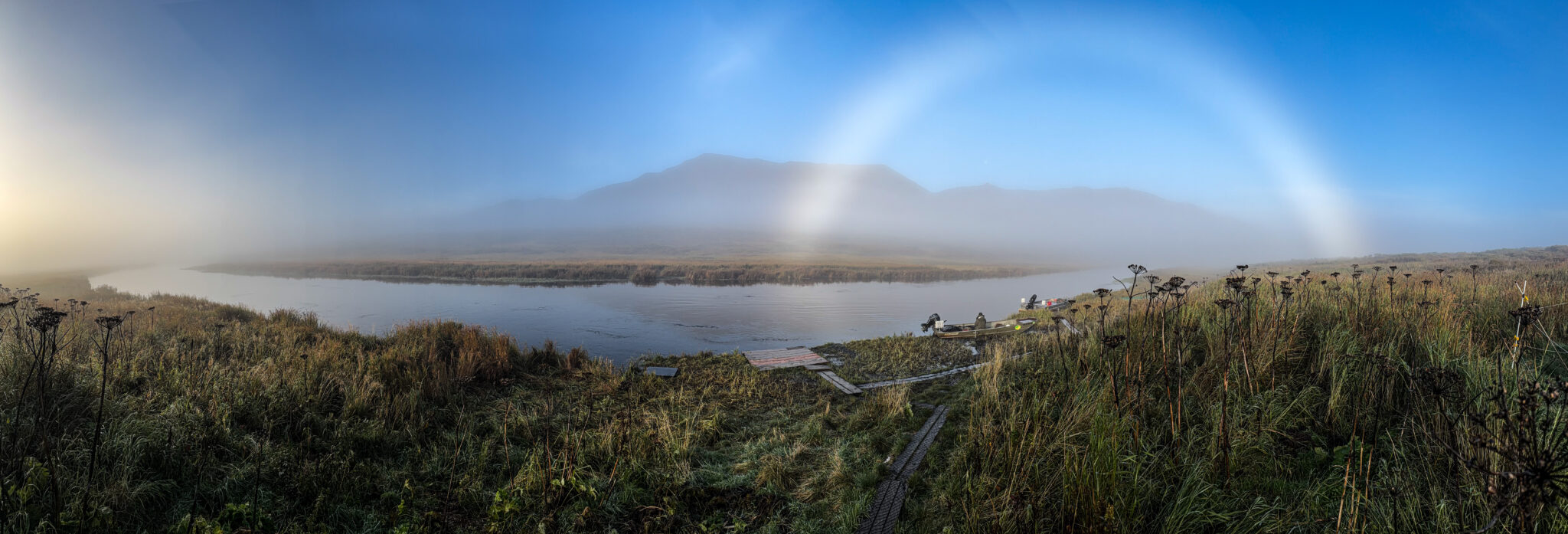
There is a strange cult living along the steelhead rivers of the Pacific Northwest and Alaska. Its members can usually be identified by absurdly long fly rods, wallets full of flies that don’t look much like anything, and an almost pathological willingness to stand waist-deep in freezing water casting to fish that may or may not exist.
They are Spey fishermen.
More specifically, they are swingers. And somewhere along the way, these otherwise intelligent people have reached a peculiar conclusion: catching a steelhead is not enough. It must be caught correctly. Put a bead under an indicator in front of them and they may recoil as though you’ve offered them a nightcrawler. Never mind that the bead works. That’s actually part of the problem. The bead fisherman may catch three steelhead while the swinger methodically works through the same run without touching a fish. Everyone knows it. Most importantly, the swinger knows it. And tomorrow morning he’ll pick up the thirteen-foot rod and do it all over again.
Why?
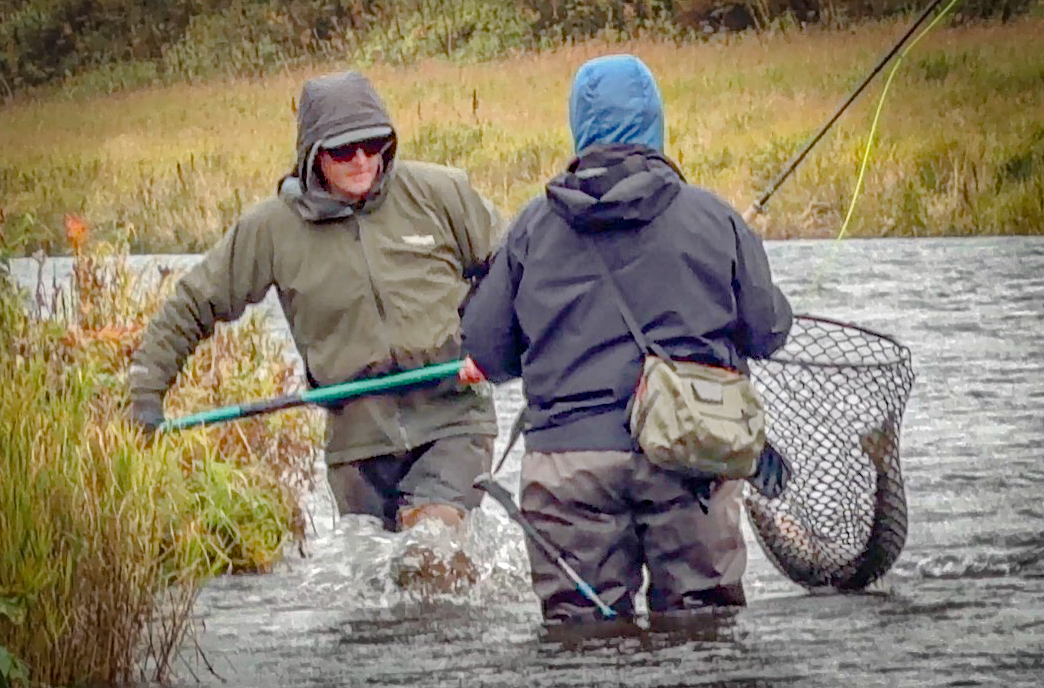
Bob’s Big One
Because somewhere in the evolution of steelhead fishing, a small group of anglers decided that the moment a steelhead grabs a swung fly is worth an extraordinary amount of failure. And once you’ve felt that grab, their madness begins to make a little more sense.
So much preparation, blood, sweat, tears—and money—goes into catching just one steelhead on Spey. Steelhead are like Bitcoin: the fewer there are, the more valuable they become. And somehow, the harder they are to get, the more you’re willing to invest chasing them. Nobody ever said addiction had to make financial sense. A week on the Sandy is 15K and you might catch only a couple steelhead. Or you might find Steelhead Nirvana. Stig and Eric had mentioned to me they have had 100 steelhead days for 6 anglers on the week we picked to try. Never say ‘Prime Time”- its a Jinx.
I met Glen at the legendary Millpond Fly Shop where I worked, during the summer of 1976, just before he went to high school and before I went to Chicago for Dental School. His parents were in Europe that summer, And he was with his grandparents He would take the public buses from his house to downtown Saratoga and then to Los Gatos on Sundays, it took about 1.5 hours each way. I’m only 6 years his senior. Eventually he took a job at the Millpond Over the years, he became an accomplished Spey fisherman, mastering the art of swinging flies for steelhead, and ultimately turned that passion into a remarkable career. Today, Glenn is recognized as an authority on Alaska’s steelhead and fisheries—a scientist and dedicated angler whose knowledge of these wild fish and the rivers they inhabit runs as deep as his love for fishing them. He’s written numerous articles for Magazines such as Swing the Fly – a niche publication/community devoted to two-handed fly fishing and swinging flies for steelhead and salmon. It’s aimed squarely at the Spey-fishing world—the culture, history, rivers, flies, techniques, photography, and especially the almost philosophical attraction of catching steelhead on the swing.
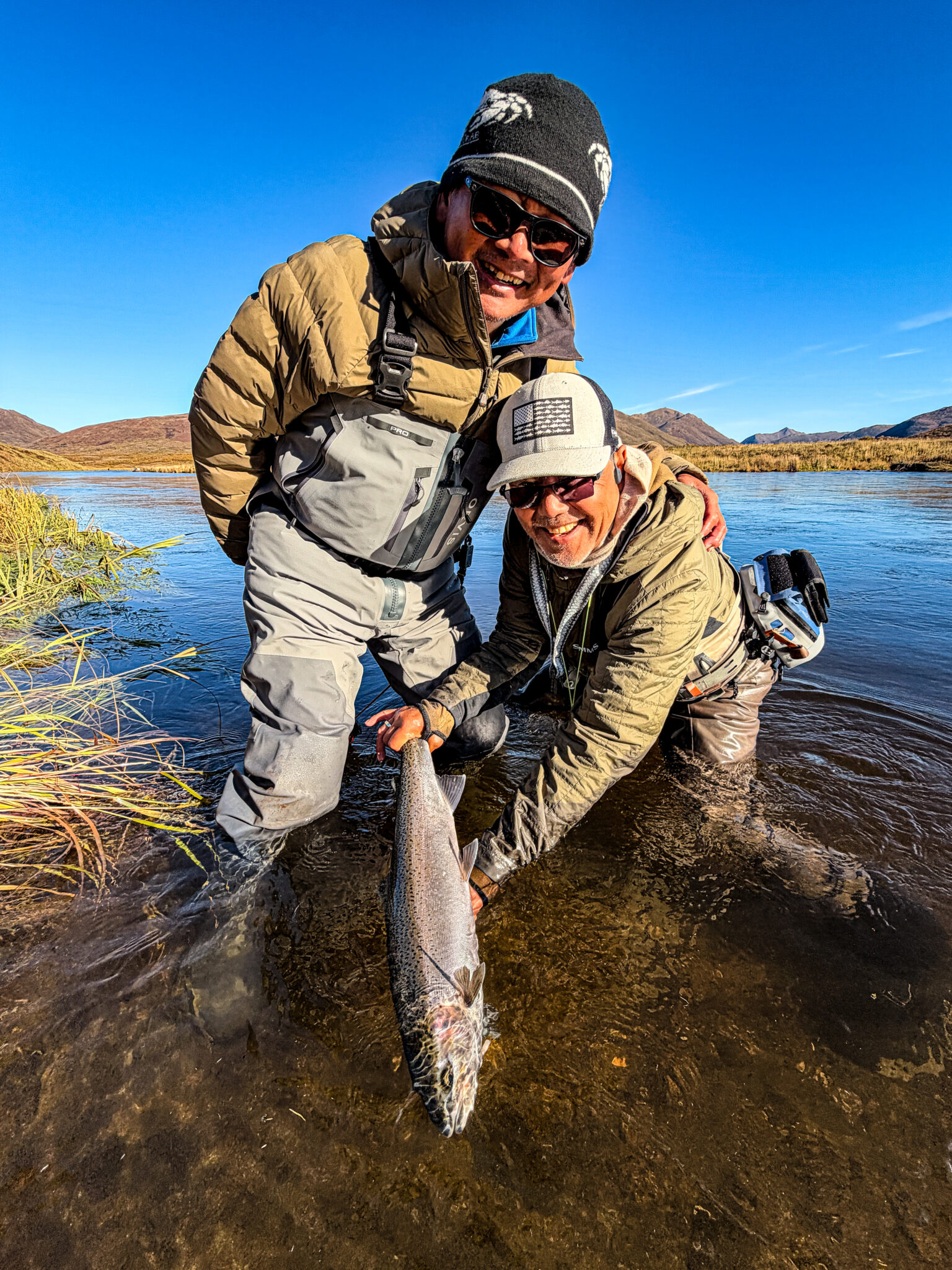
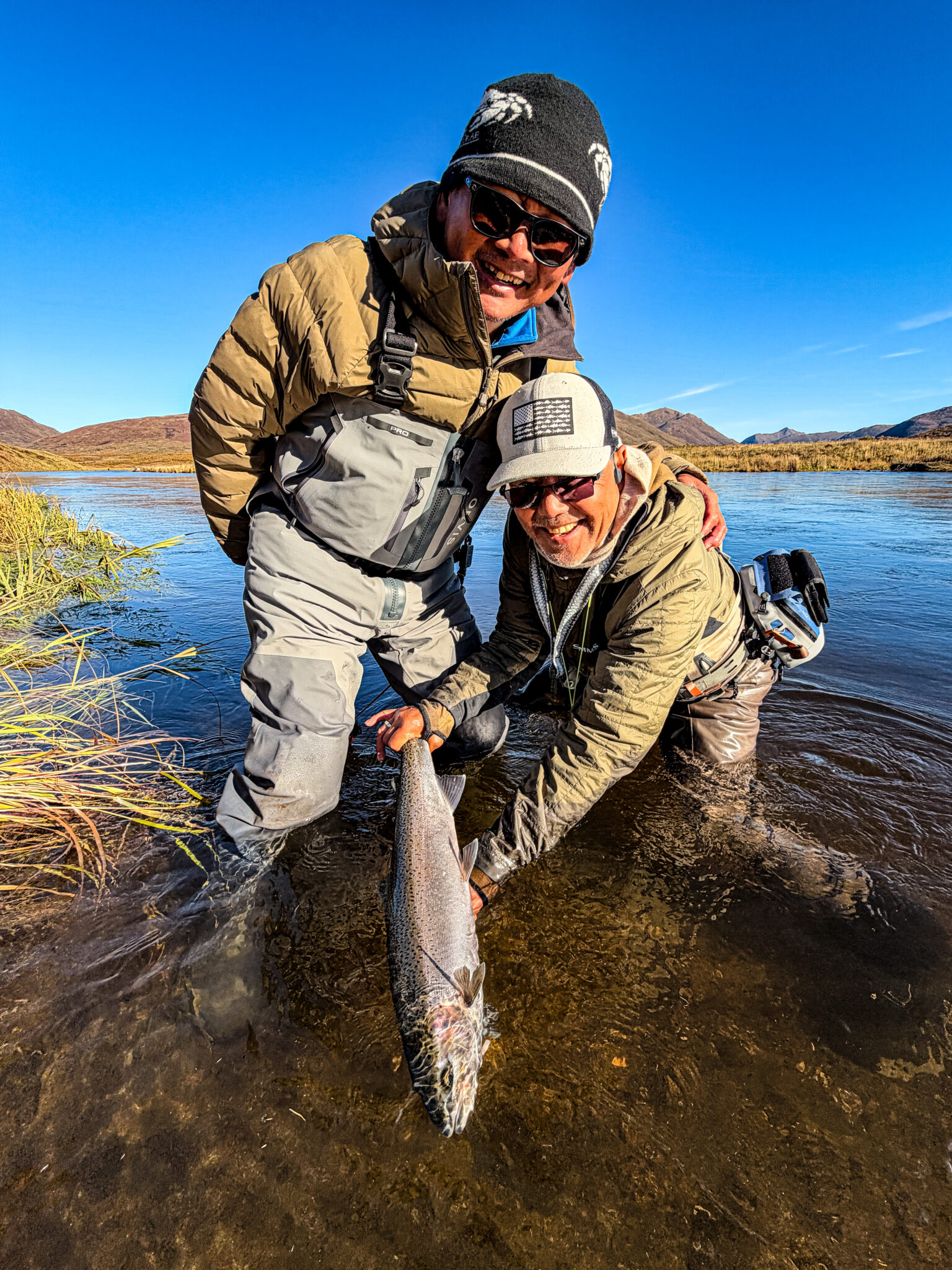
Over the years, Glen and I often talked about fishing for steelhead together again. So when we finally made plans to meet on Kodiak Island for a week on the Ayakulik, I was all in. Joining us was another of Glen’s longtime fishing buddies, Bob, a retired OB-GYN from Seattle and an accomplished Spey fisherman who knew Glen from fishing the Sandy River in the Aleutian Islands. Our destination was Wild Ayakulik Steelhead Camp, deep in the Kodiak wilderness, and our quarry was one of Alaska’s legendary runs of wild steelhead. Remote, untamed, and arguably one of the finest coastal steelhead rivers on Earth, the Ayakulik seemed like the perfect place for three dedicated swing fishermen to test our skills—and our patience—against some of the wildest steelhead left on the planet.
Getting There
Glen warned me that flying in and out of the Alaska bush can be a little hit or miss. I quickly learned that “hit or miss” is Alaskan for you’ll get there when you get there. The safest strategy is to build overnight stays into Kodiak on both ends of the trip, which gives you a little insurance—but not much, because getting between Kodiak and Anchorage is also completely at the mercy of the weather. Kodiak weather is funky. Even stranger, the weather on the other side of the island, barely a hundred miles away, can be completely different. It can be beautiful in Kodiak while the Ayakulik is socked in, or vice versa. Apparently, weather fronts on Kodiak have not agreed to communicate with each other.
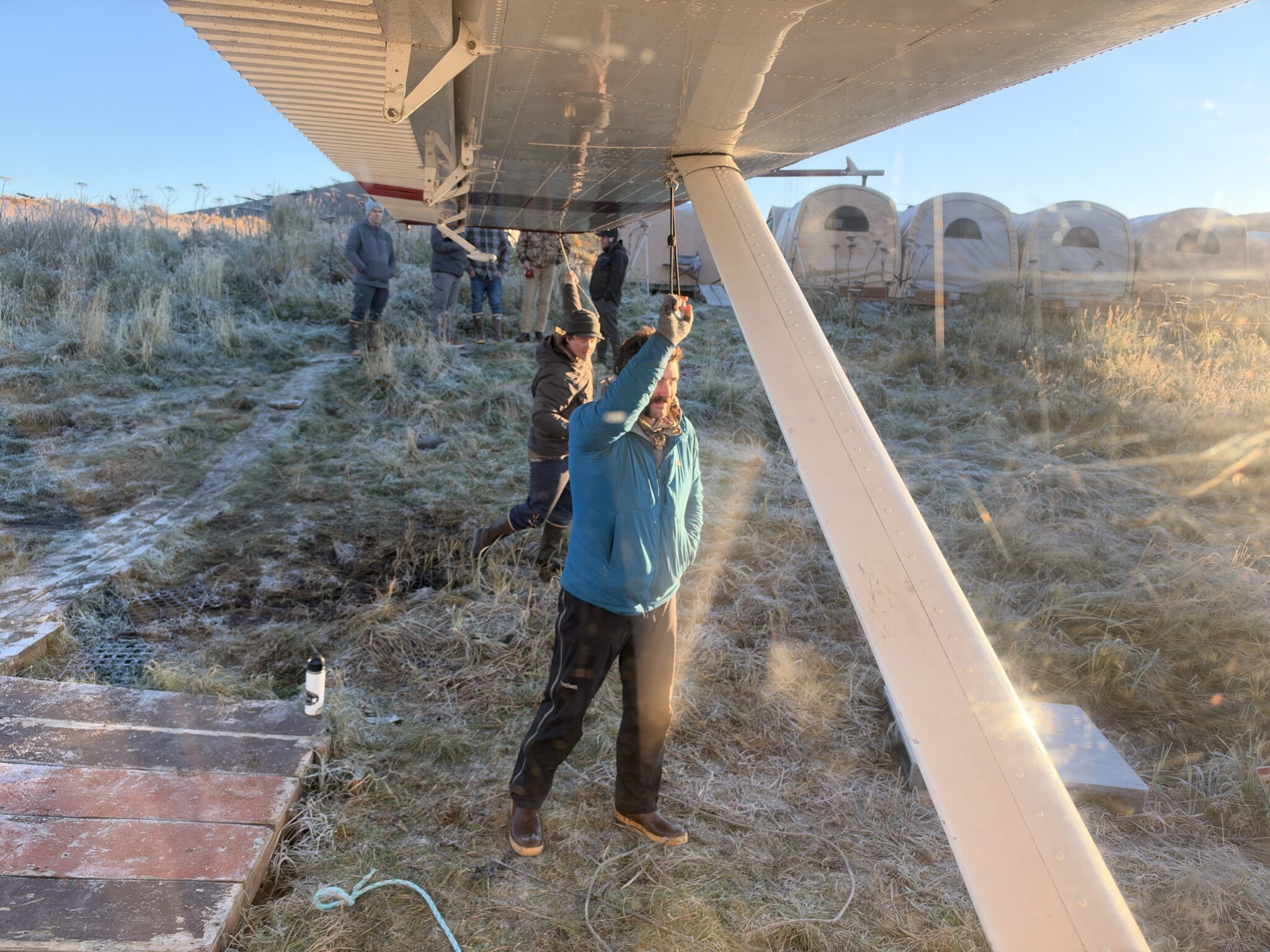
Getting from San Jose to camp requires four separate flights: San Jose to Seattle, Seattle to Anchorage, Anchorage to Kodiak, and finally a floatplane from Kodiak to the Ayakulik. That last leg is aboard a De Havilland Beaver, an aircraft so perfectly suited to Alaska bush camps that they stopped building them in 1967—and Alaska apparently responded, “Fine, we’ll just keep flying the old ones forever.” Apparently the newer replacements are too big, too expensive. Why nobody has come out with a modern six passenger turbine powered float plane at a reasonable cost is a mystery. We landed right on the river in front of camp, which is about as cool an arrival as you can have anywhere.
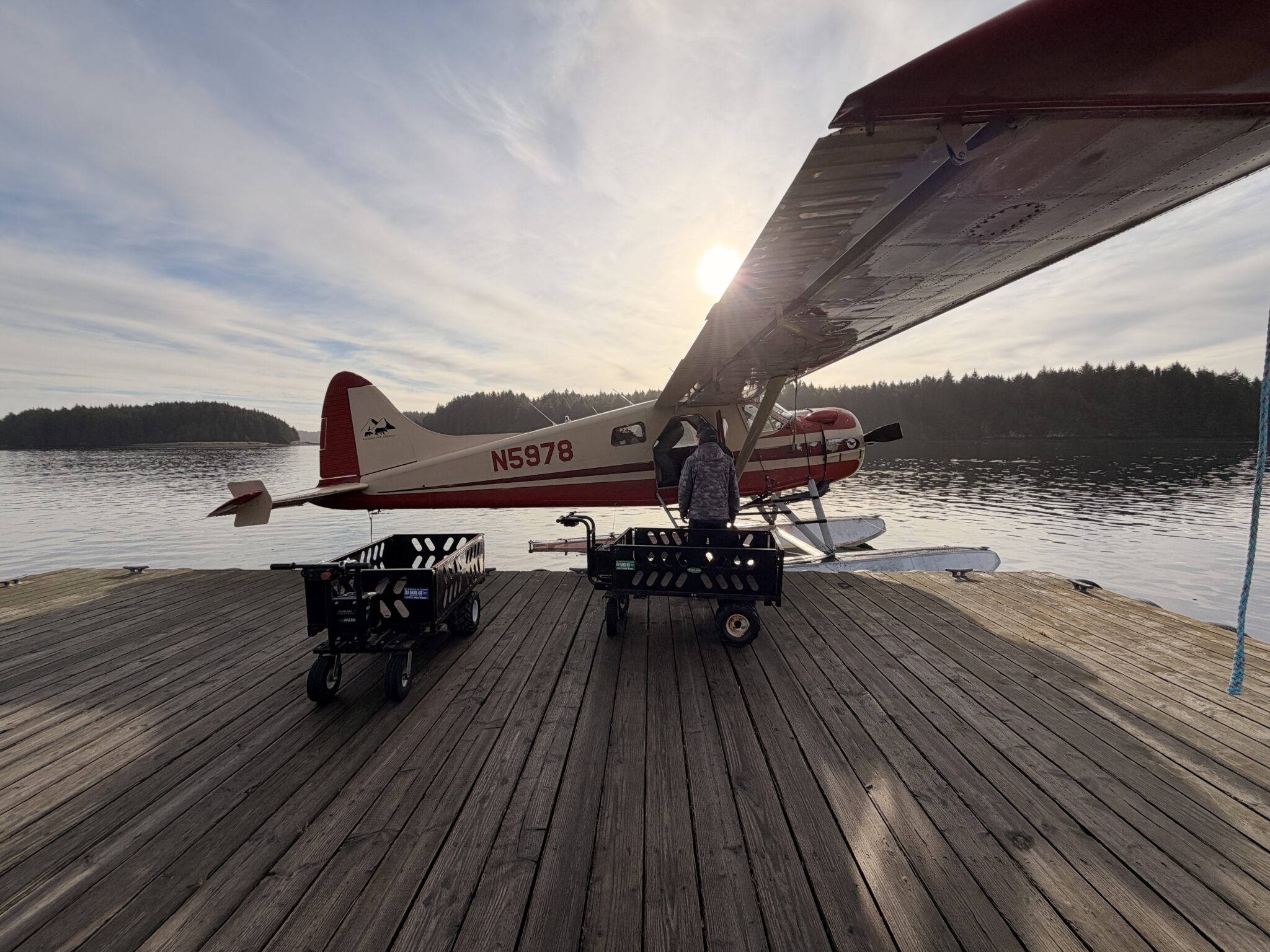
On the way in, we were warned that a weather front had already backed up three flights from the previous day and that we should expect to spend an extra day in Kodiak. Then, early the next morning, the phone rang: “Get over here by eight. We’re flying.” Suddenly everyone was throwing gear into bags and racing for the airplane. Somehow, we made it.
Coming home was the same movie played backward. Low ceilings threatened to keep us at camp an extra day, but as departure day approached, the bad weather politely postponed itself long enough for our Beaver to get us back to Kodiak. I had wisely booked a night at the Compass Suites before continuing home. The weather finally arrived the following day and delayed our Kodiak-to-Anchorage flight by about an hour. Fortunately, I had left at least two hours between every connection, because with four flights strung together, one missed connection can bring down the entire house of cards.
In the end, everything worked. We got into camp on schedule and made it home despite the delays. But I came away with one important lesson about fishing remote Alaska: Catching a wild steelhead may be the objective, but successfully getting yourself, your luggage, and four airplanes to the same places at roughly the intended times is the first fish you have to land.
The Camp
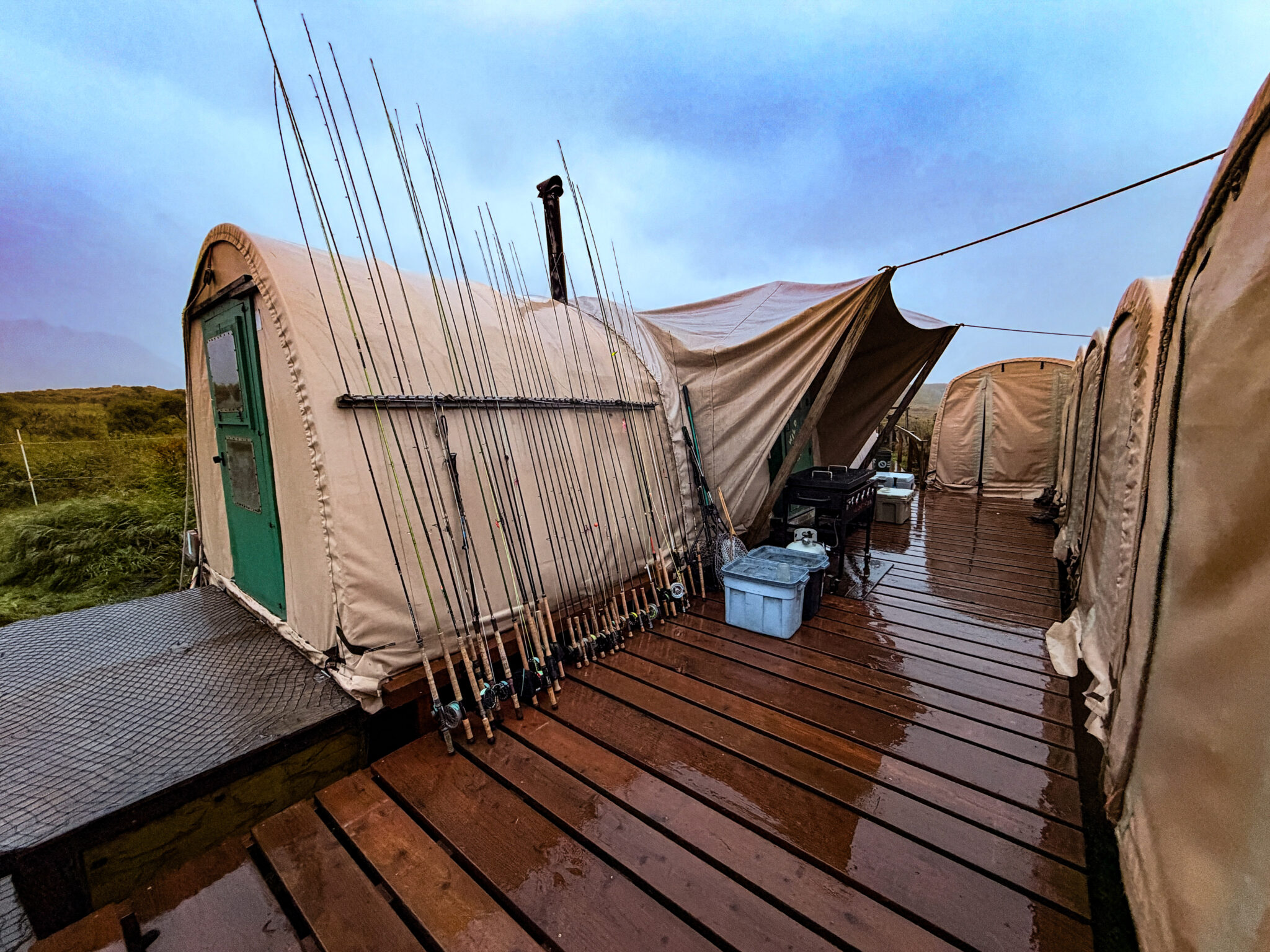
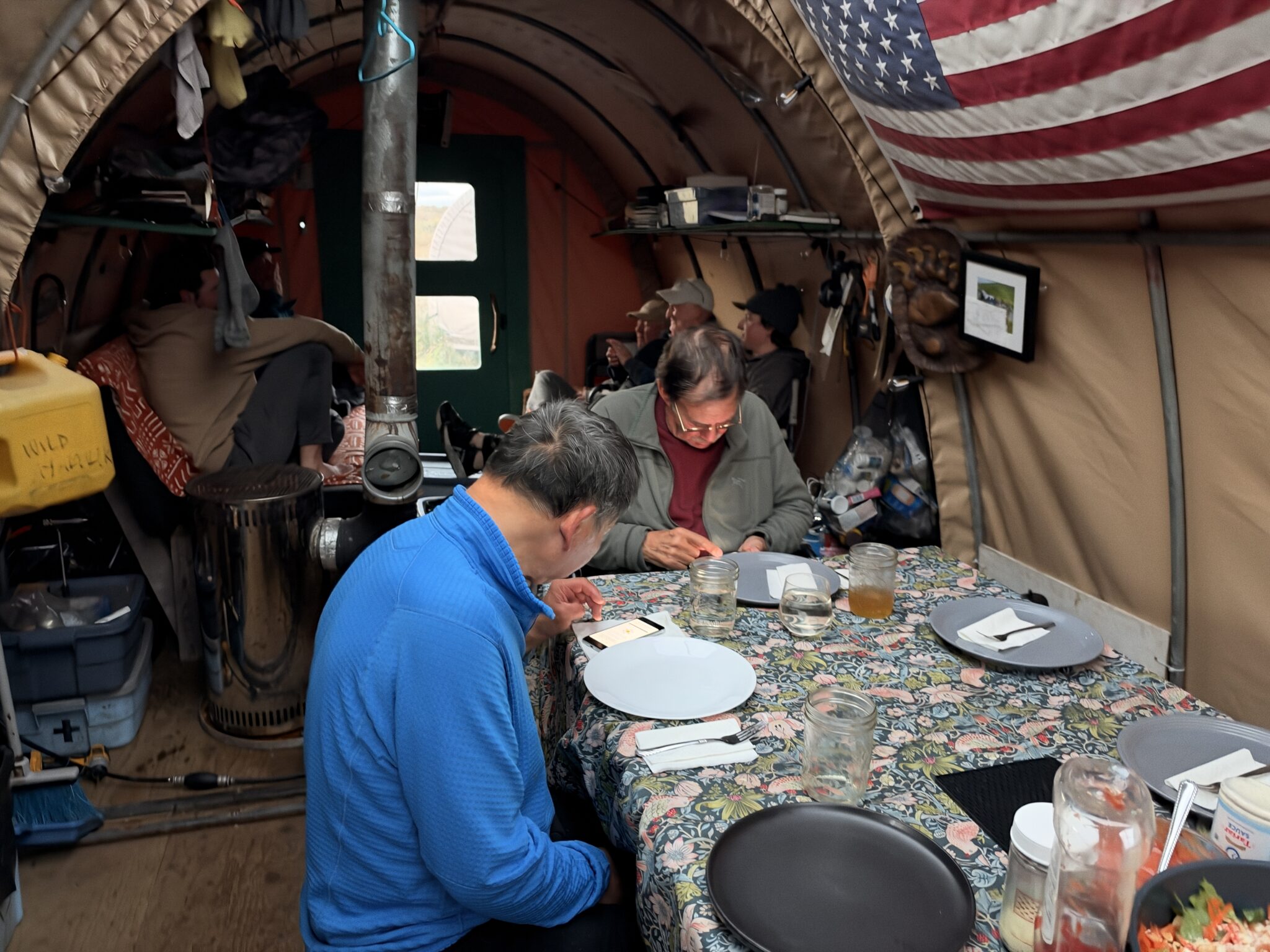
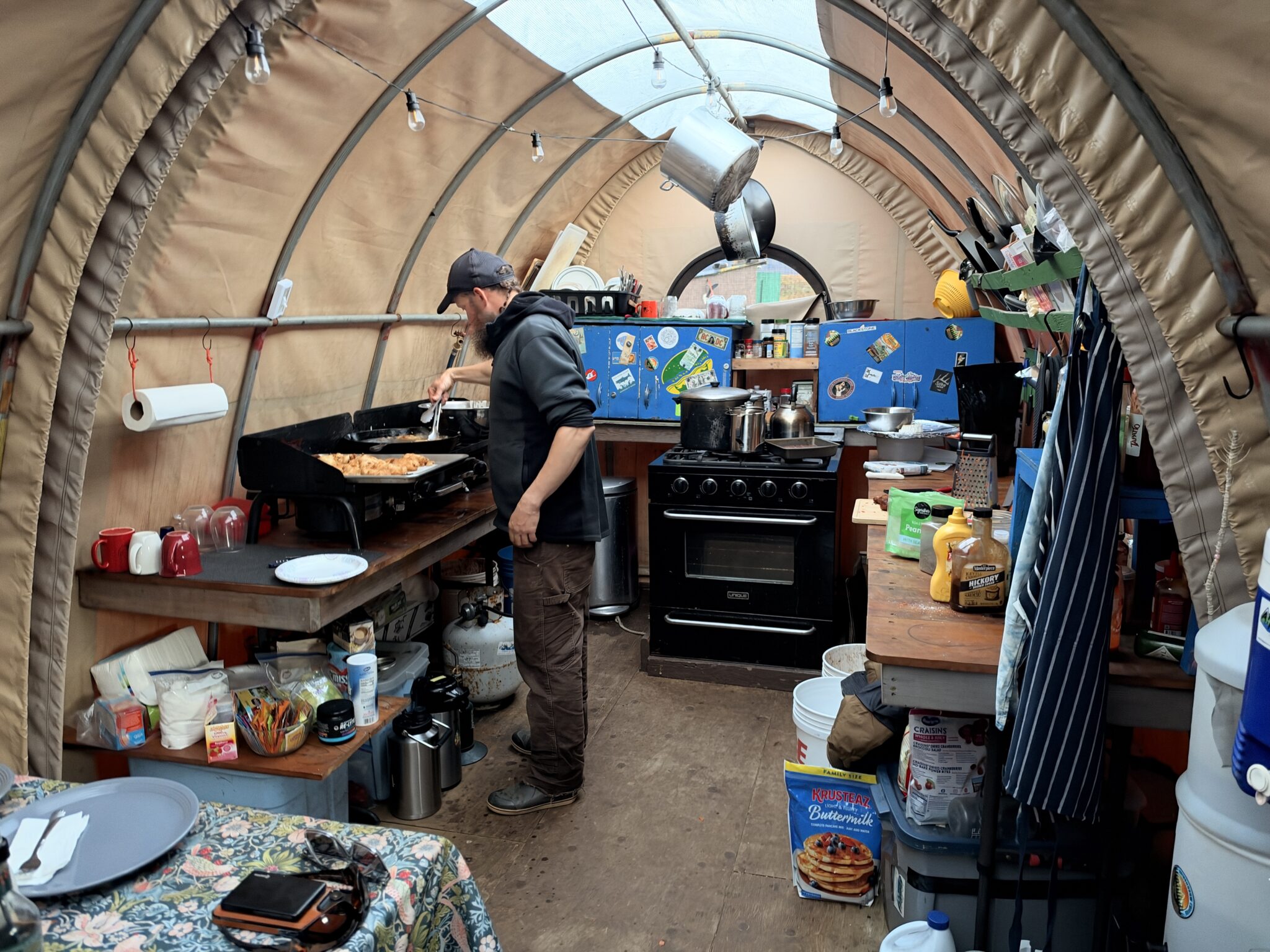
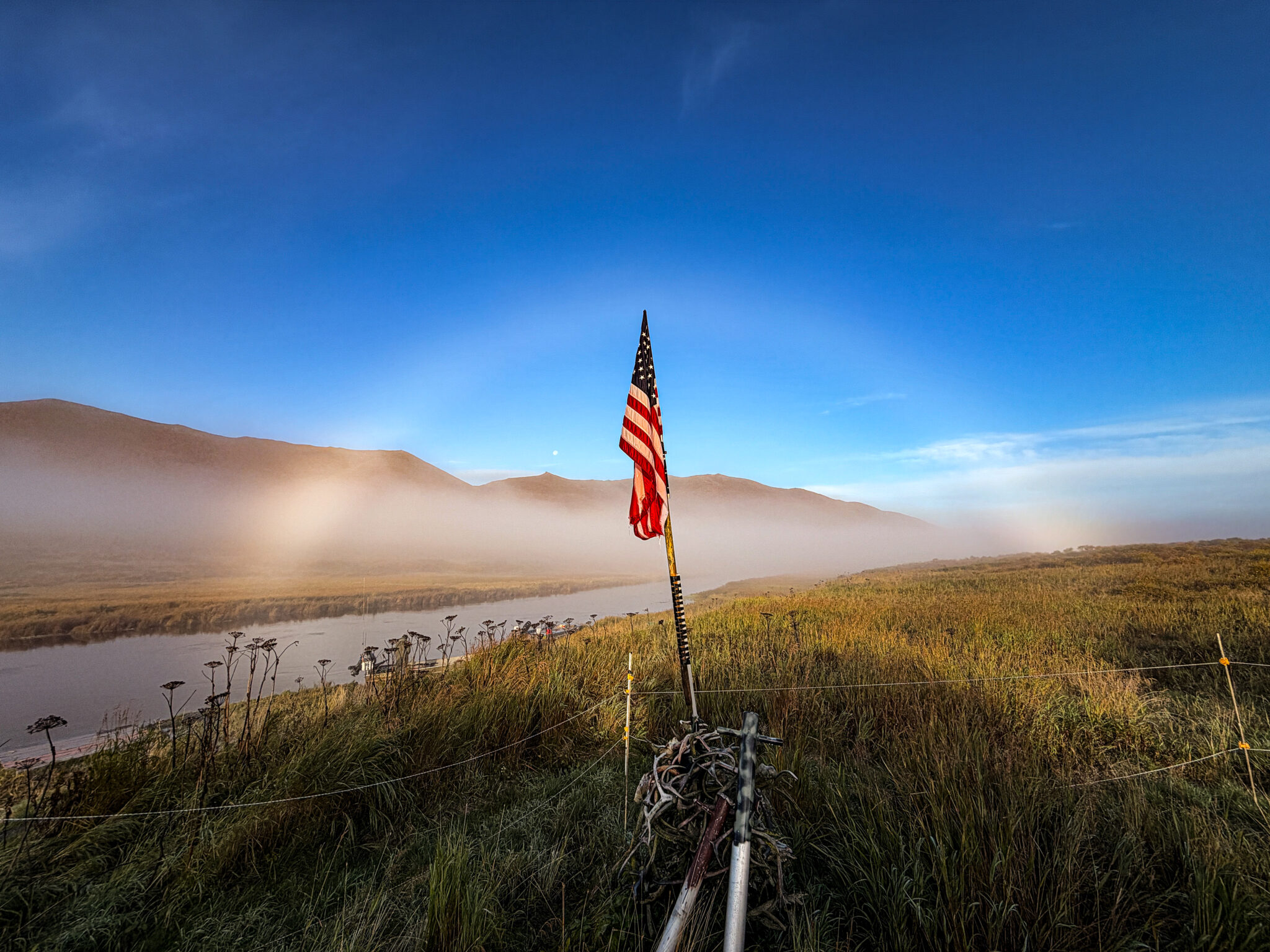
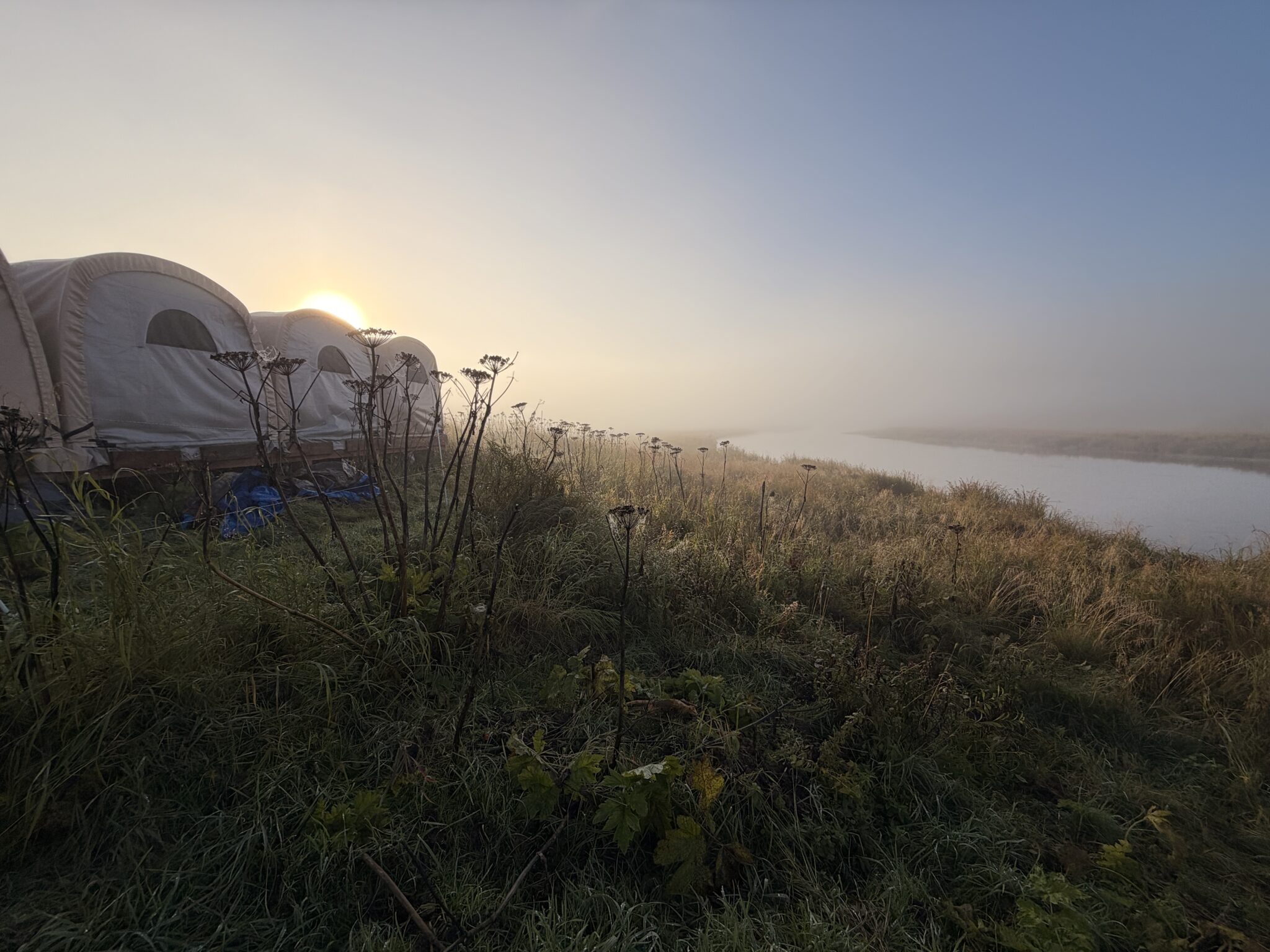
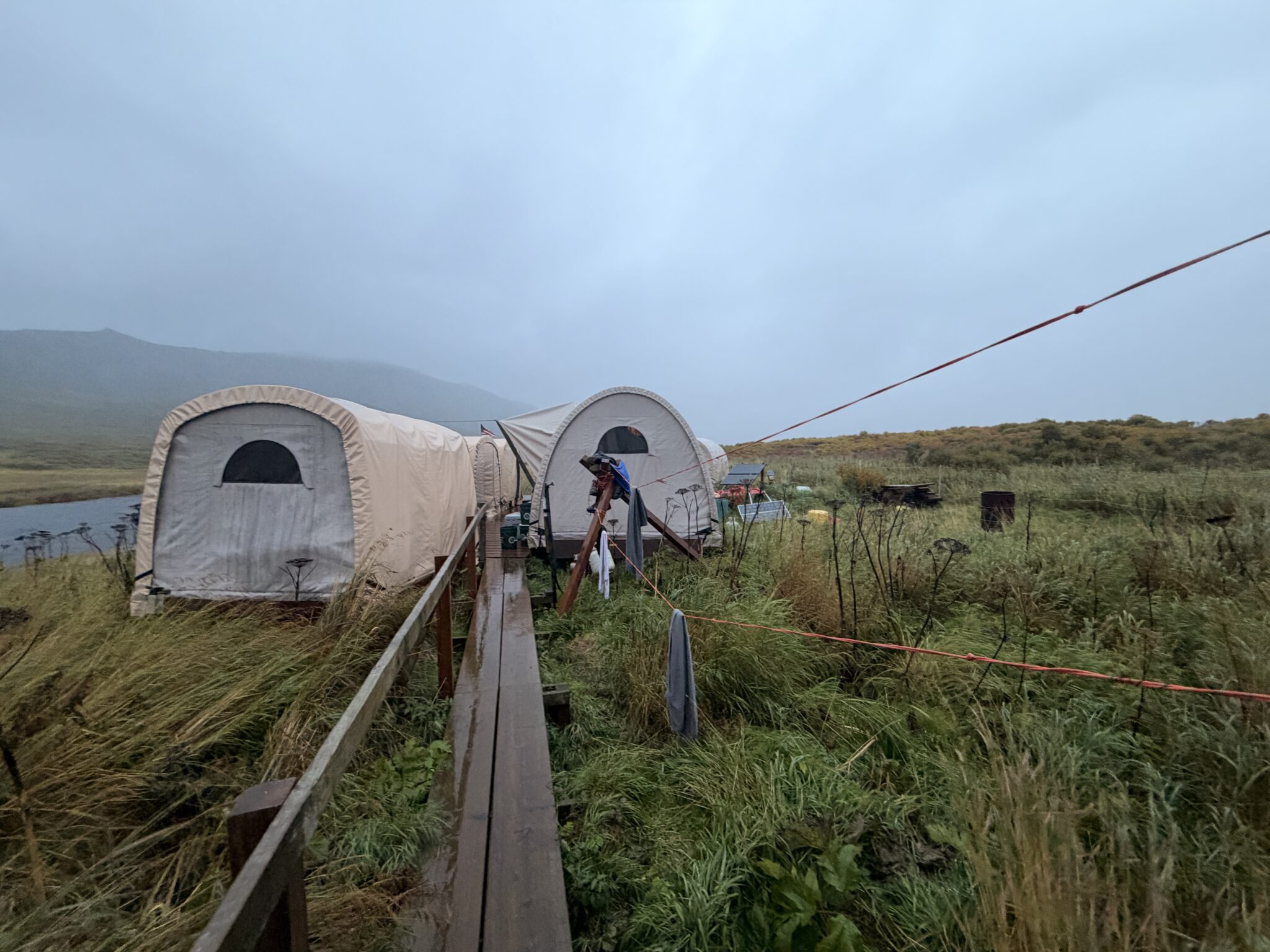
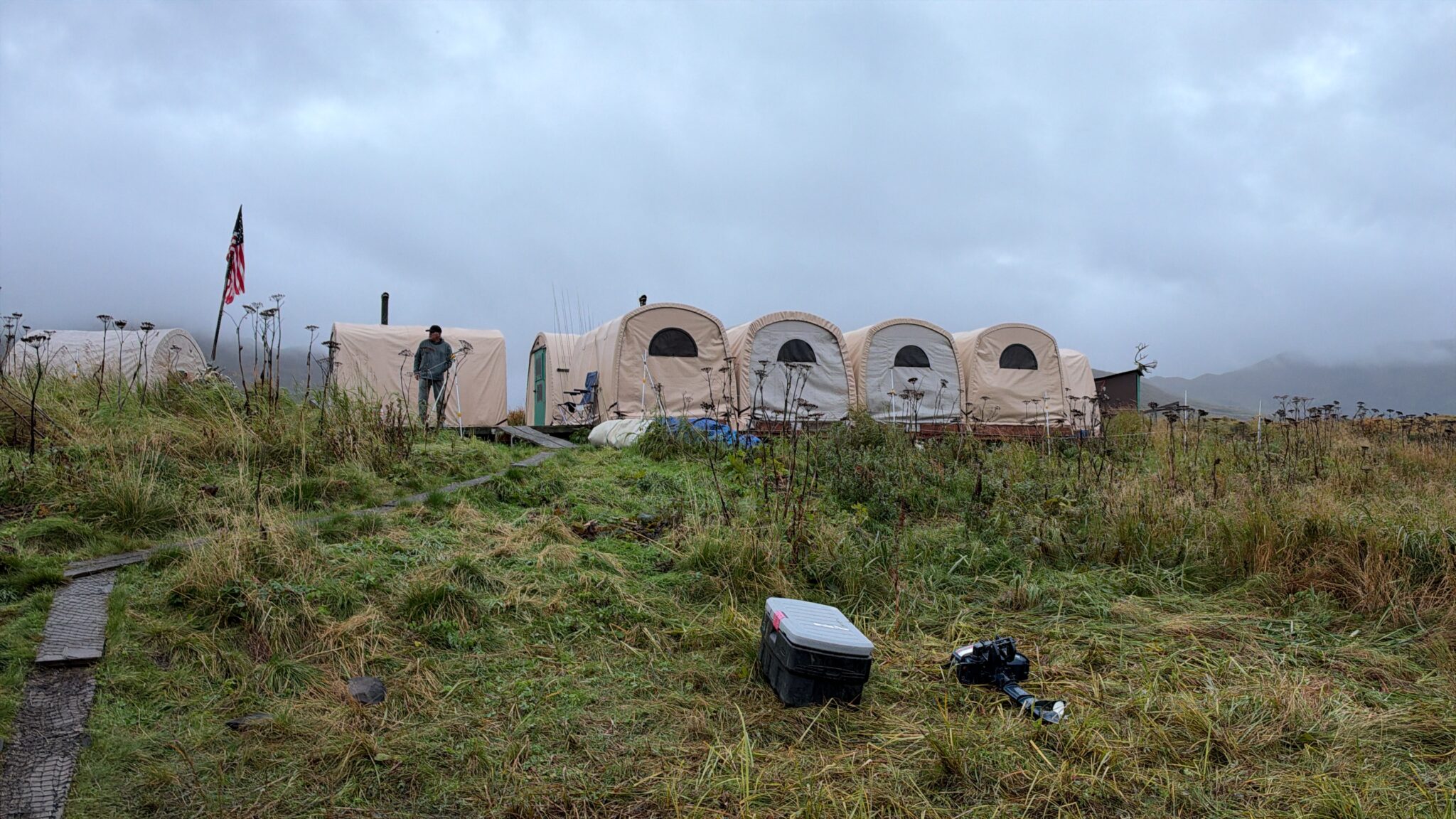
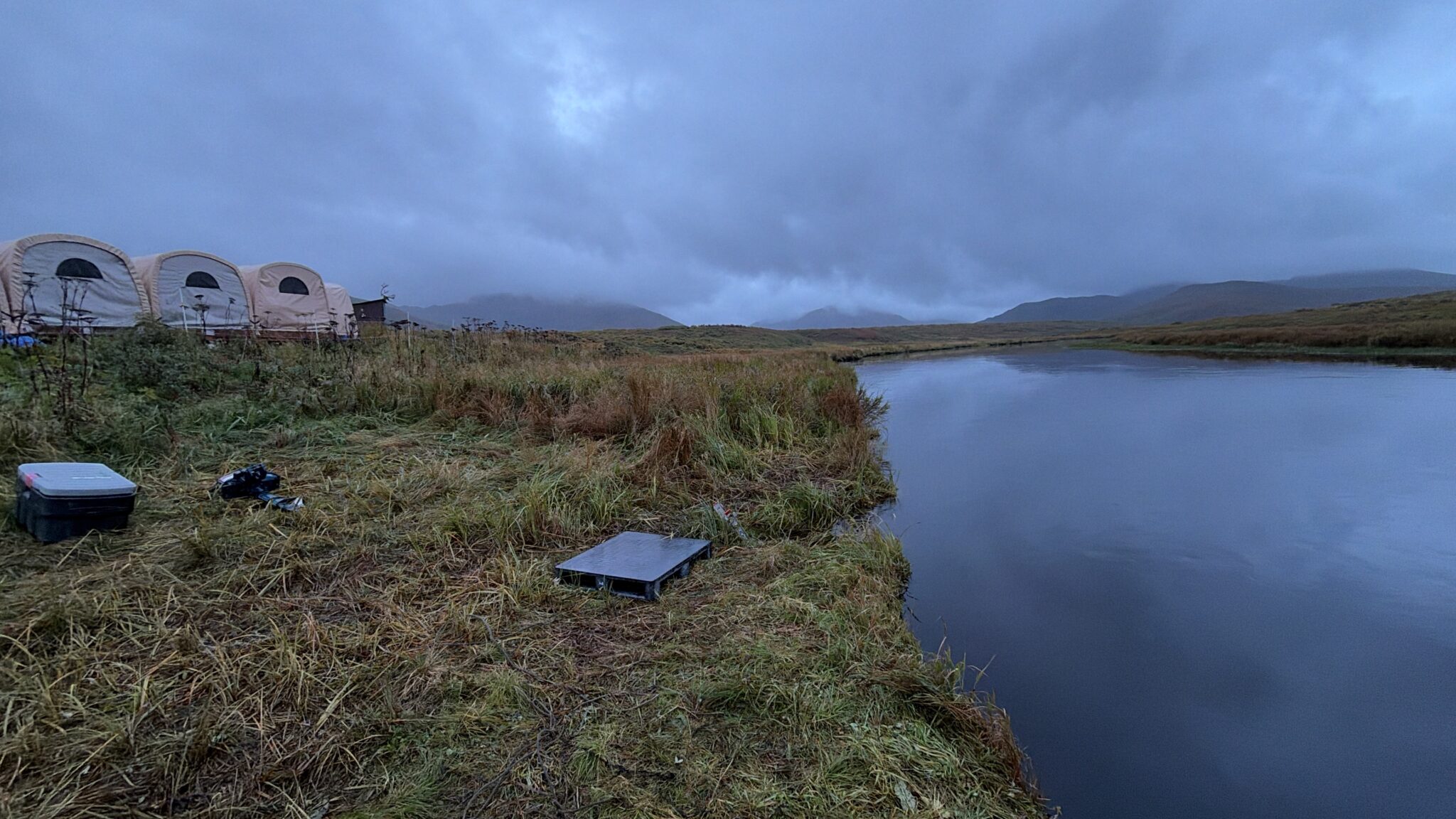
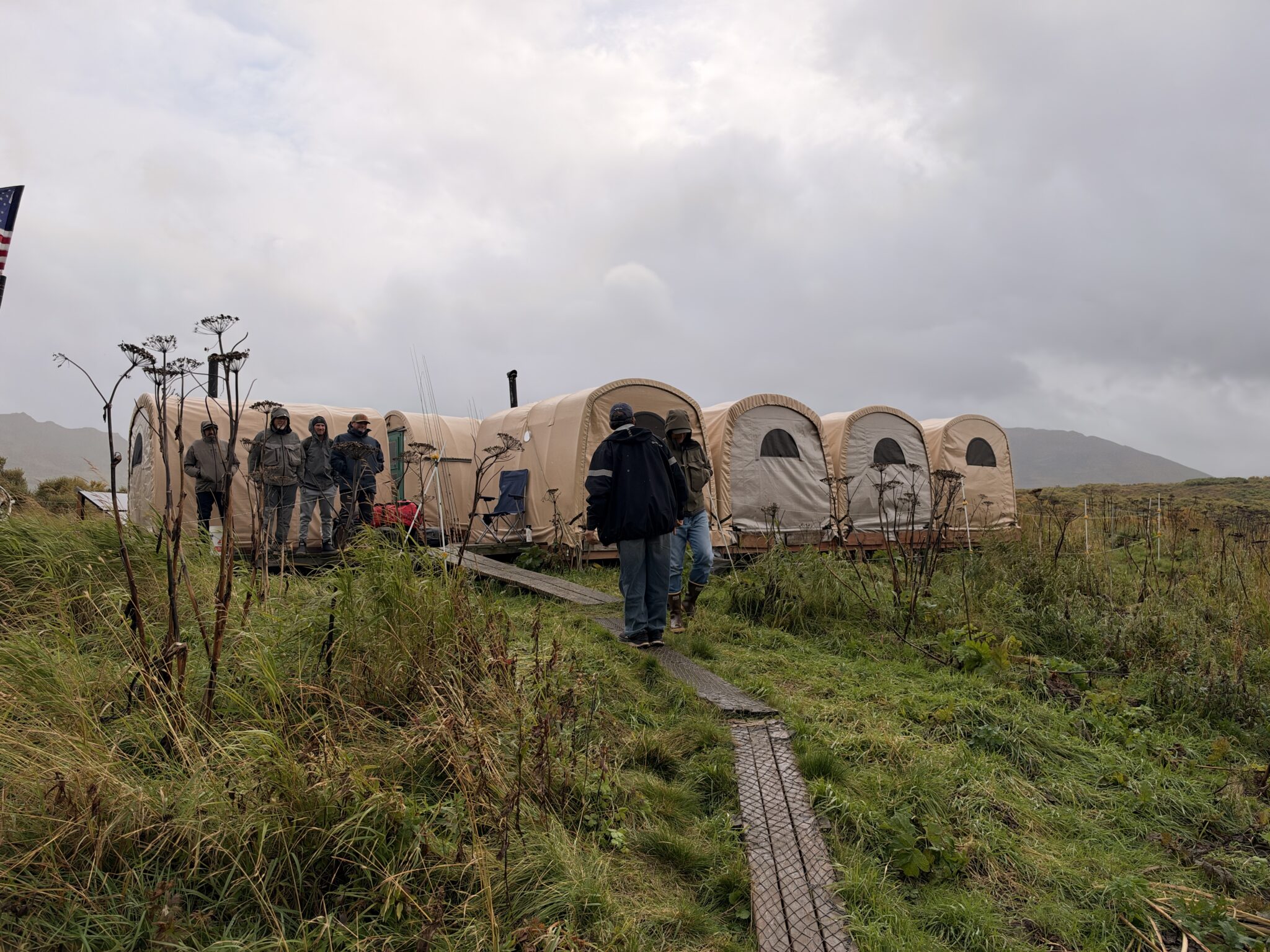
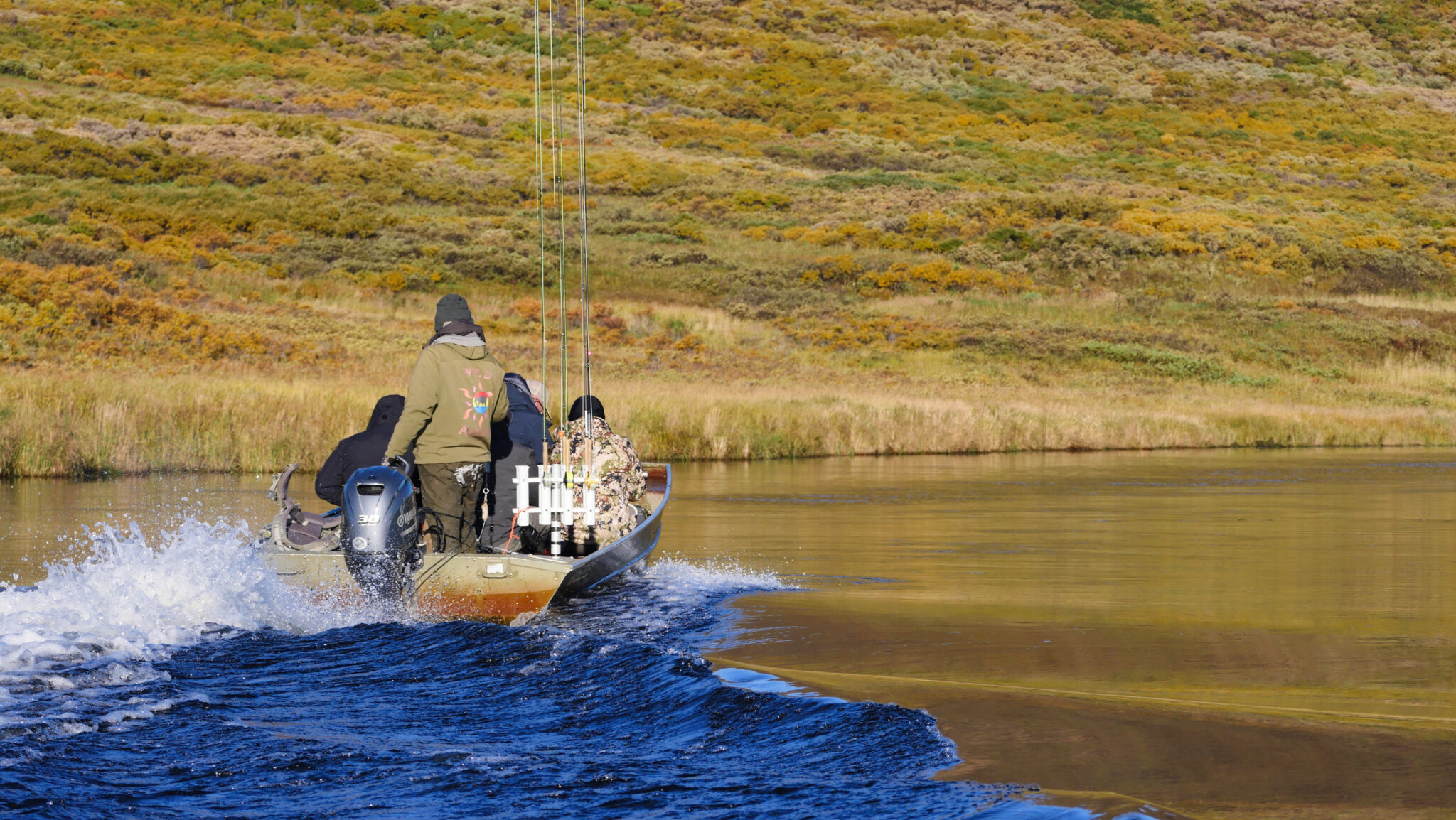
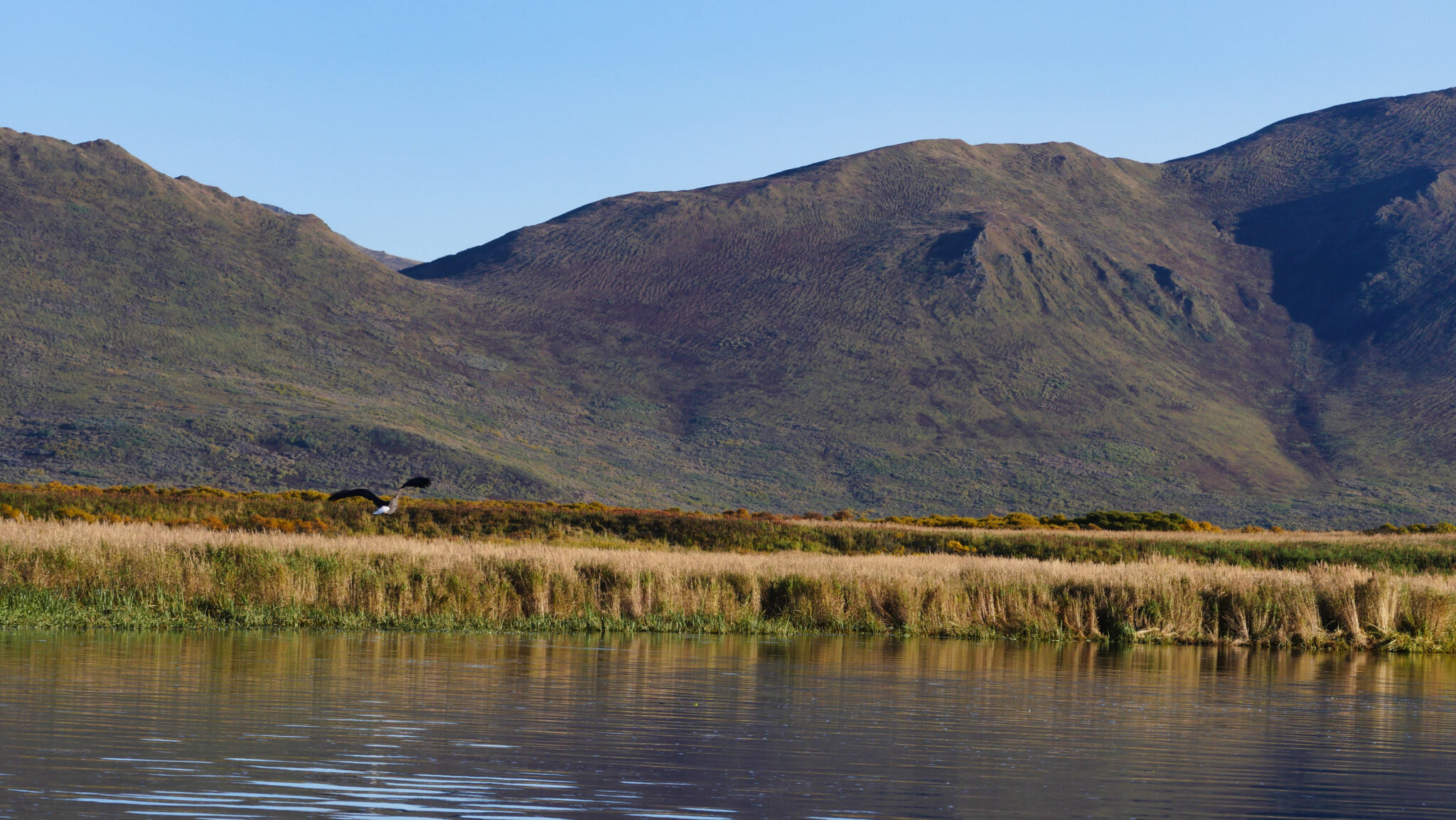
Wild Ayakulik Camp sits deep in the roadless wilderness of southwestern Kodiak Island, accessible only by bush plane and surrounded by tundra, mountains, bears, and miles of wild river. It is a wonderfully primitive place built around one purpose—fishing the Ayakulik for its legendary wild steelhead. Far from roads, towns, and cell service, the camp offers the rare chance to live beside the river for a week and experience Alaska steelheading in one of its purest forms. The Owner Guides – Stig and Eric along with Ceder hosted our group of 6 for the week.
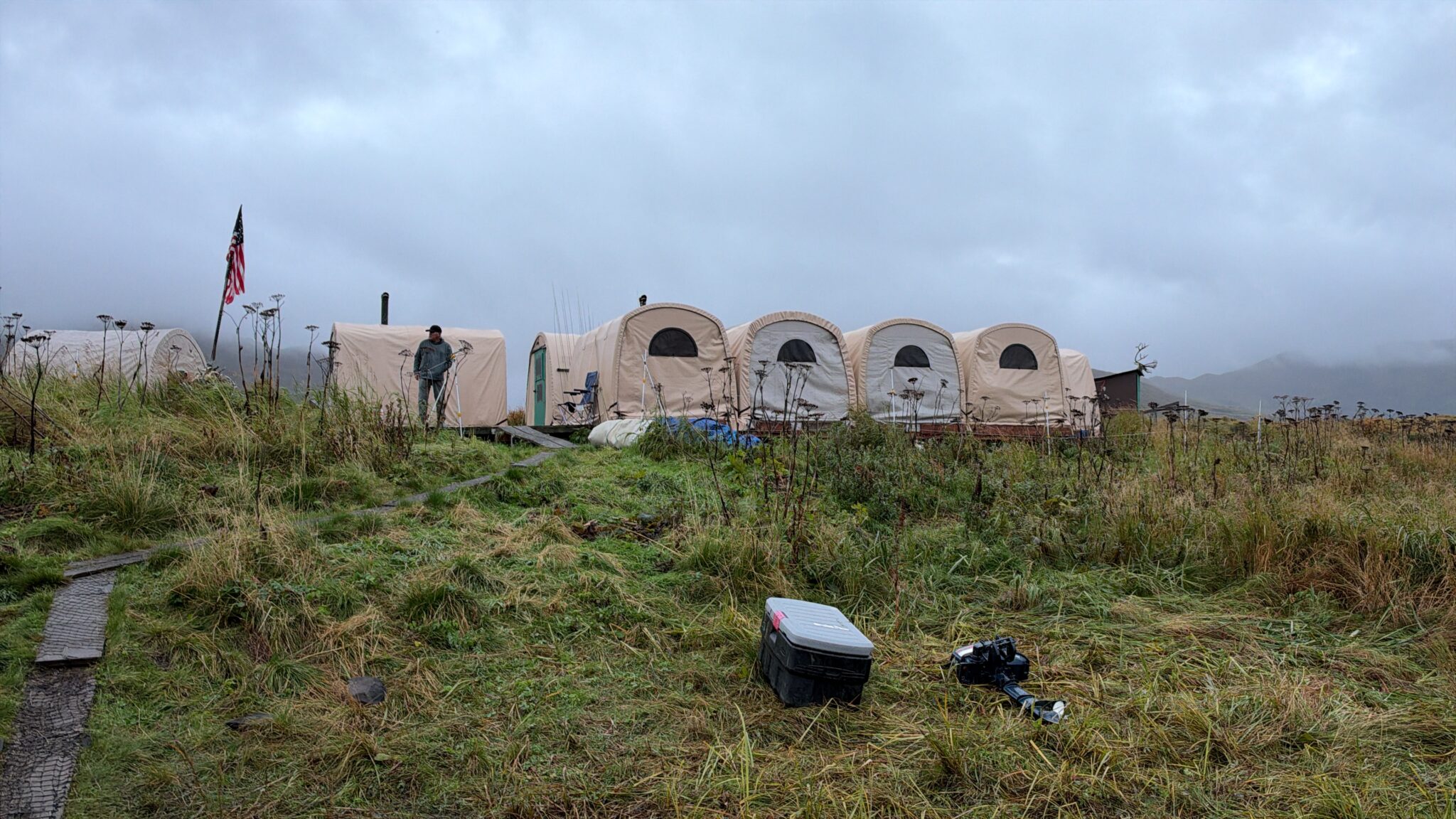
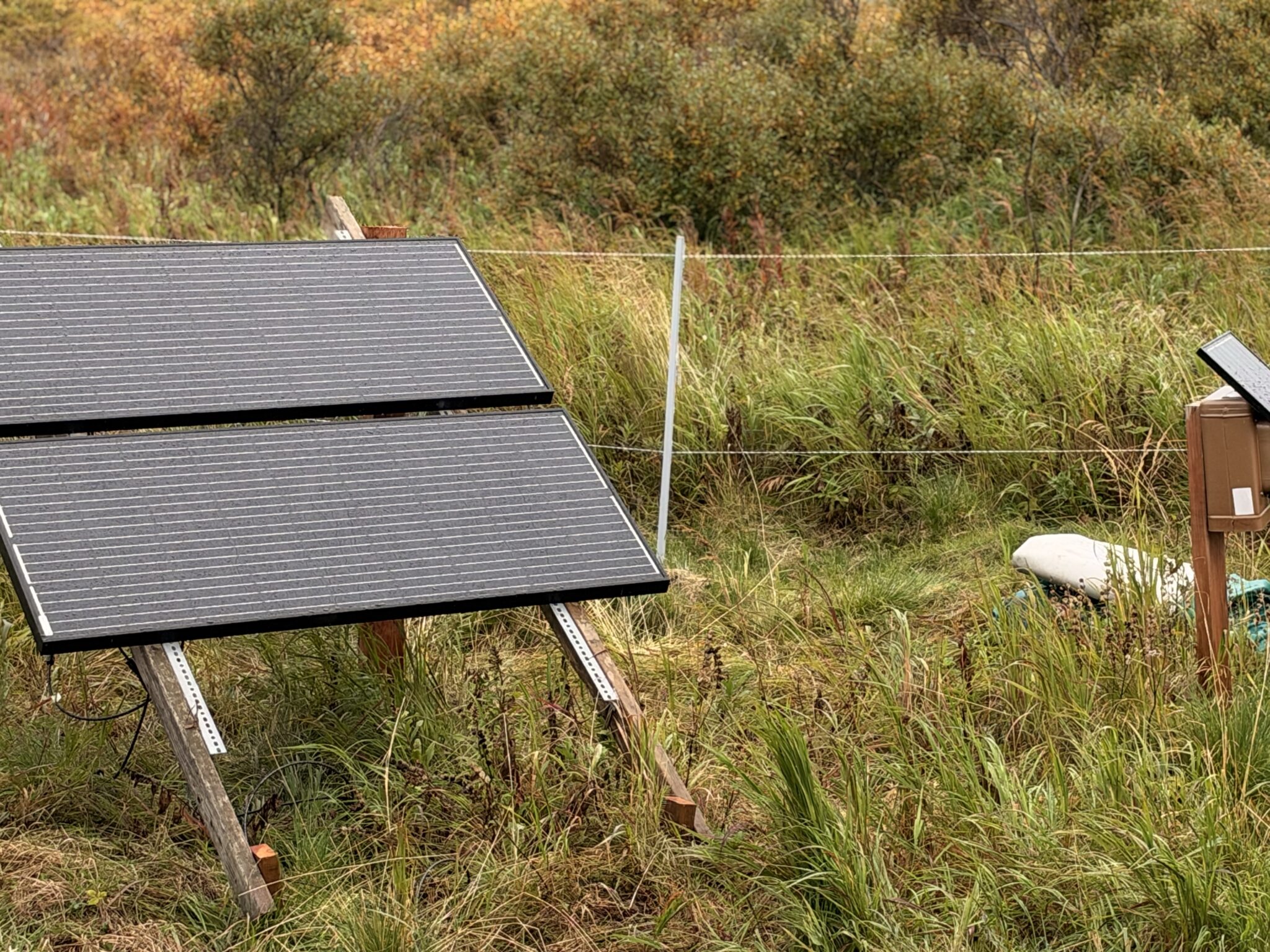
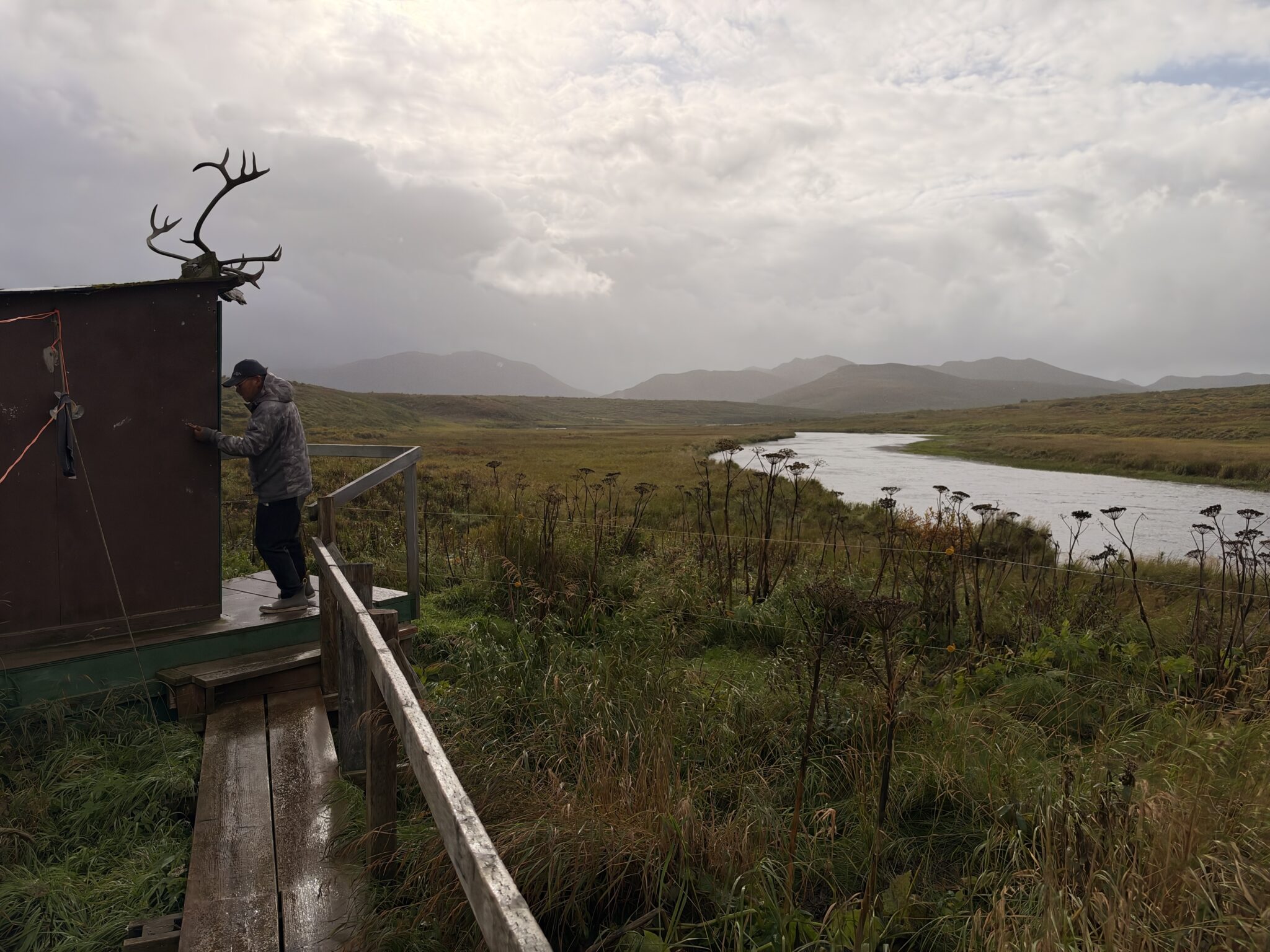
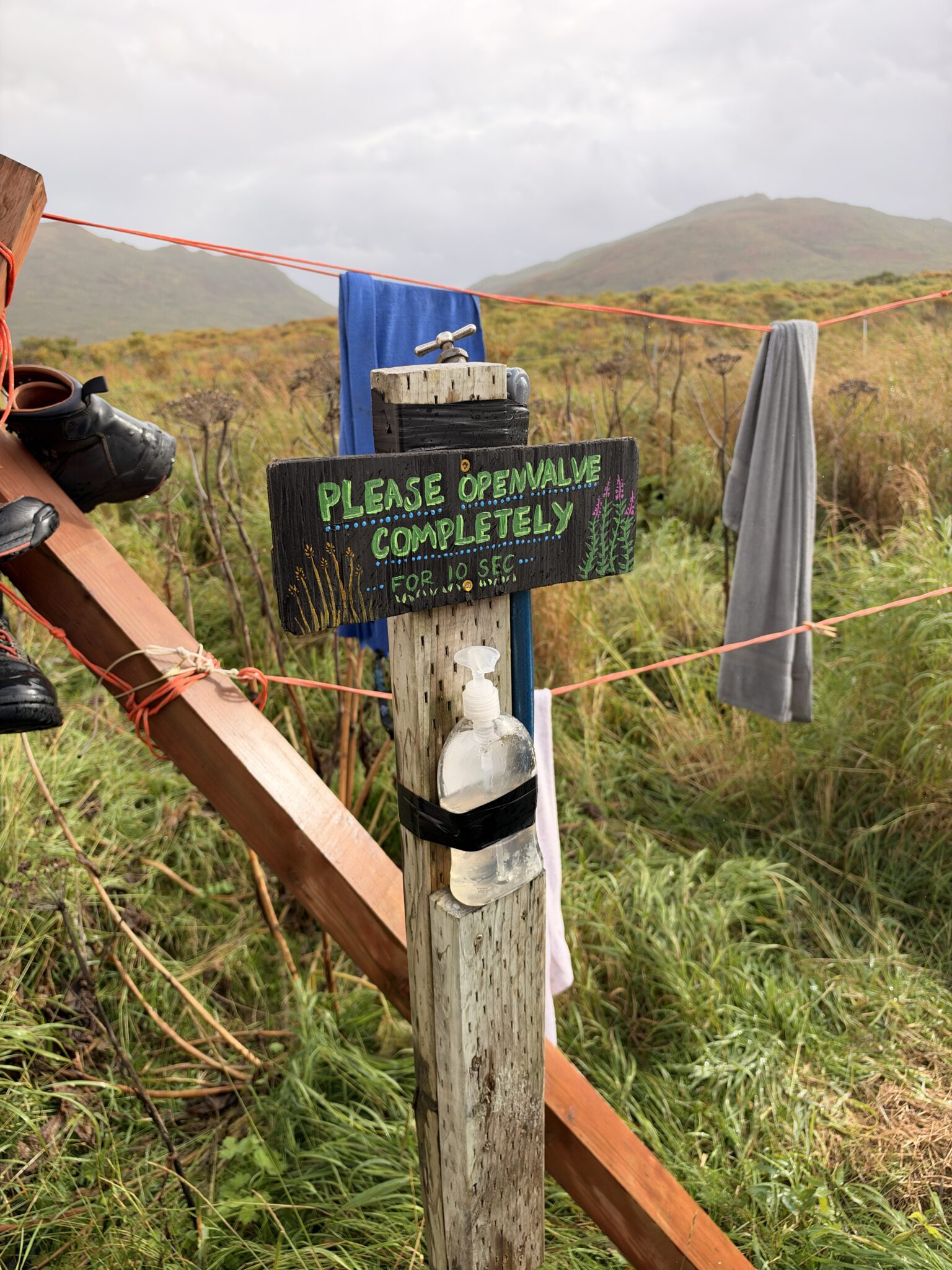
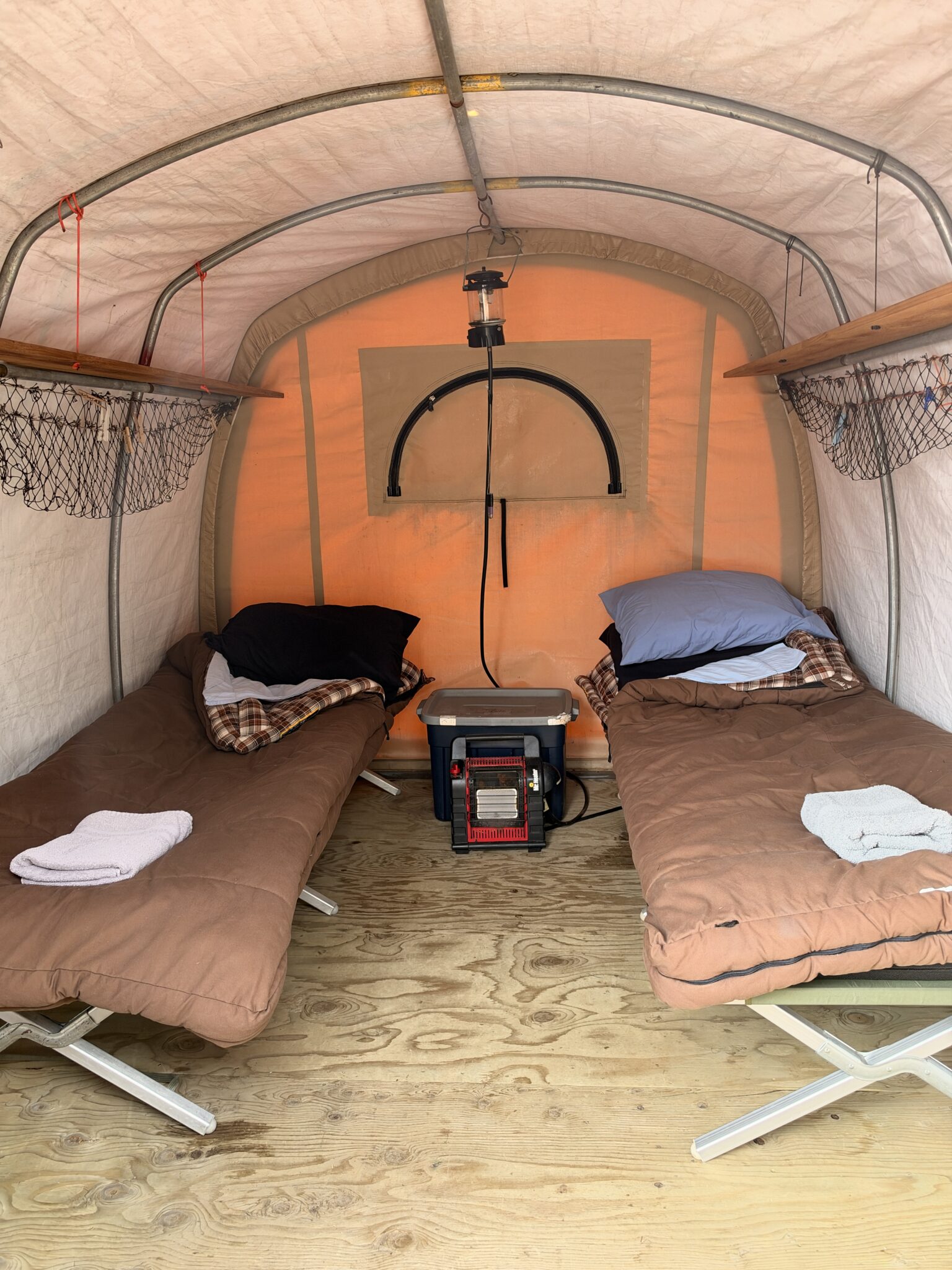
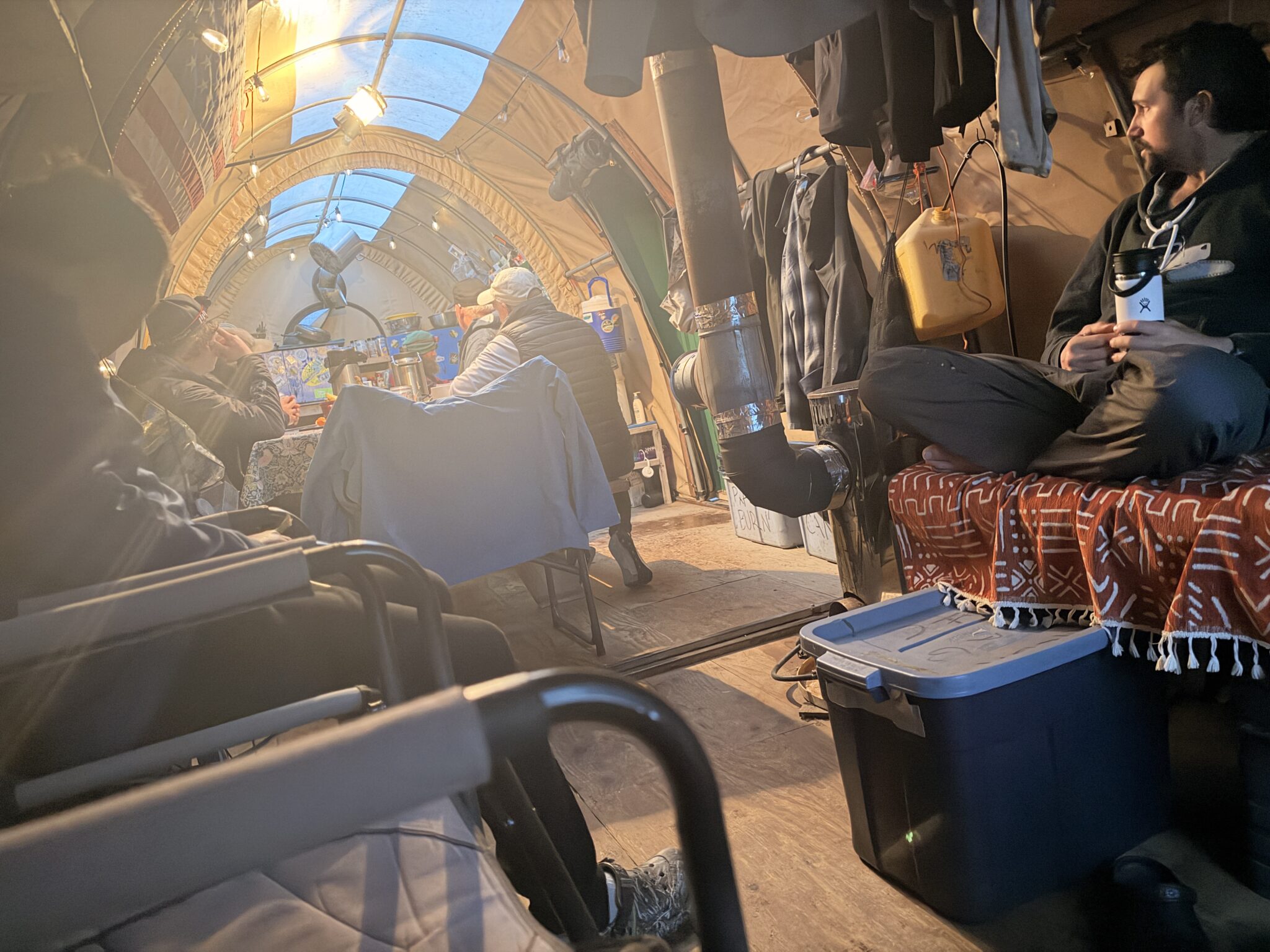
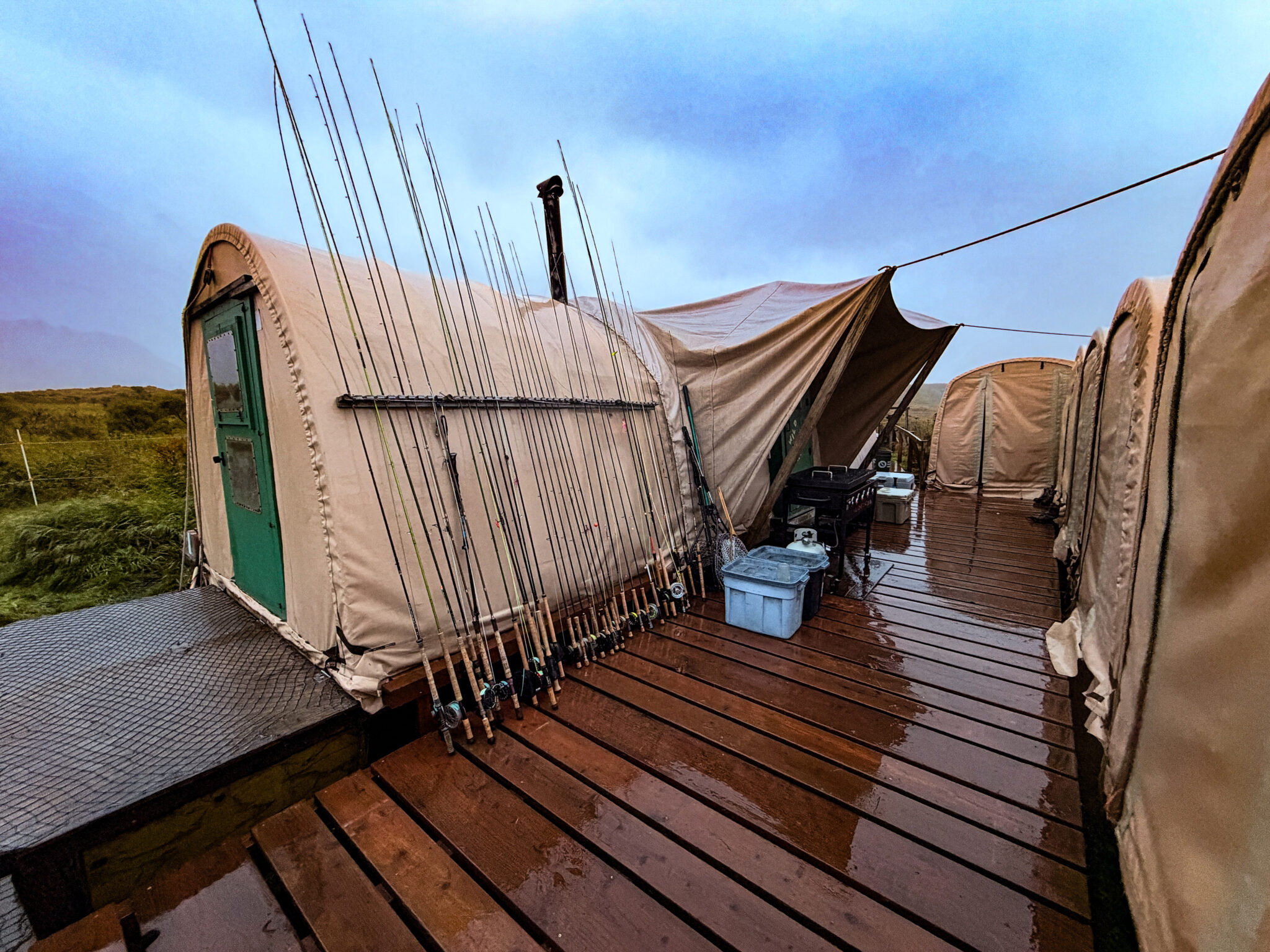
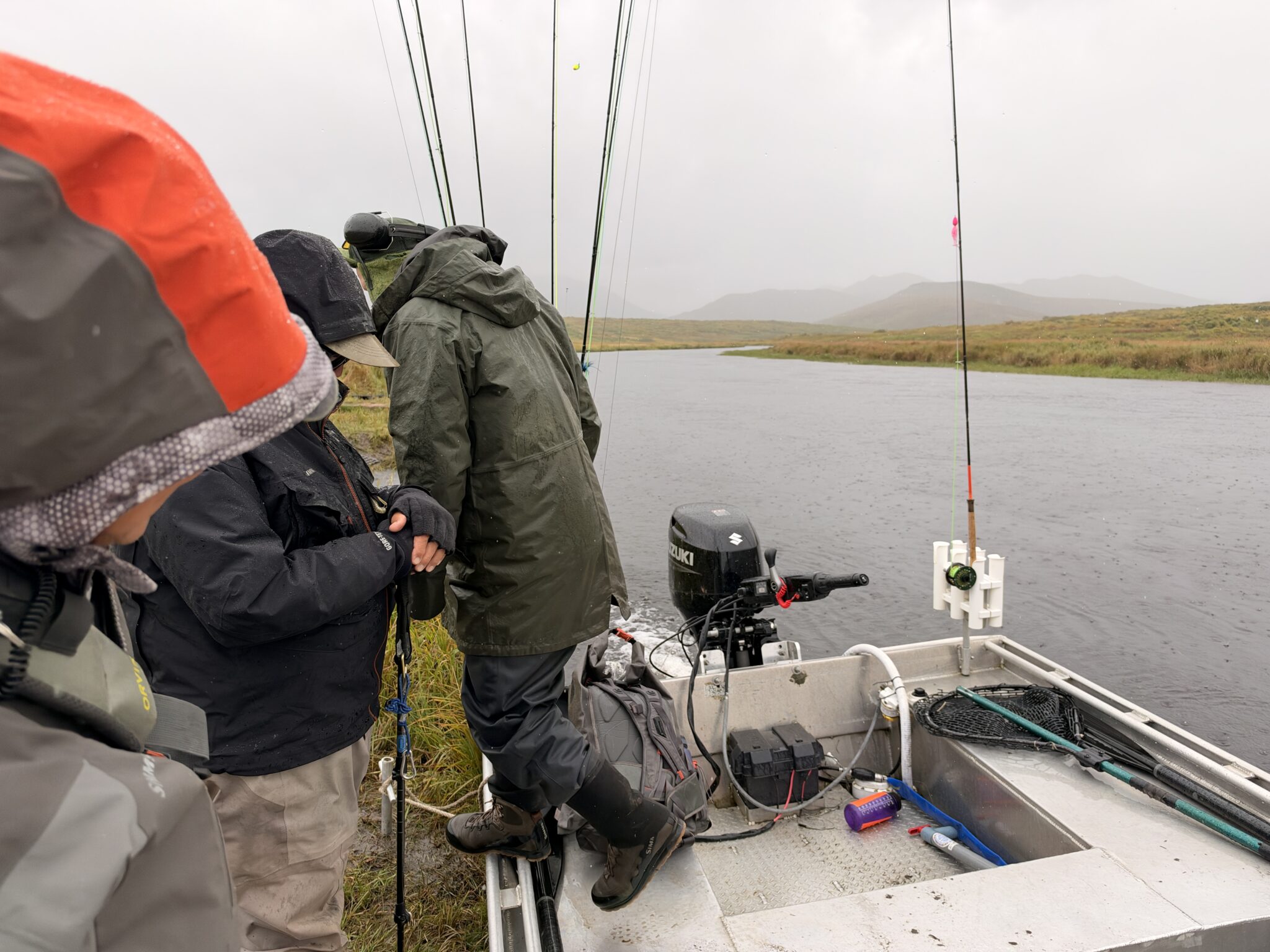
The camp consists of three double occupancy tents with cots and sleeping bags. Each tent has a propane heater and lantern. Two Cots with heavy Sleeping bags and a couple pillows. A main lounge, kitchen, dinning room tent fully equiped with deisel heater. Its a place to get coffee at 7:0 aim and talk fishing till your eyes close. The camp has a solar power array with an Ecoflow Delta unit and two car batteries which allow you to charge phones, camera or and CPAP batteries. Although there is no starlink interenet new com options exist (thank you Elon). I subscibed to T-Mobiles Starink Sat Cell service which allowed me to text from camp and on the river, Its an amazing service that you can add to your phone for ten bucks a month with the right phone and even if your primary carrier is not TMobile. There are a couple tents for the staff and a Banya – a traditional russian steam sauna bath. They run two boats with three anglers daily from 8:00 to 5:30. Every other day is Banya day.
Banya Day
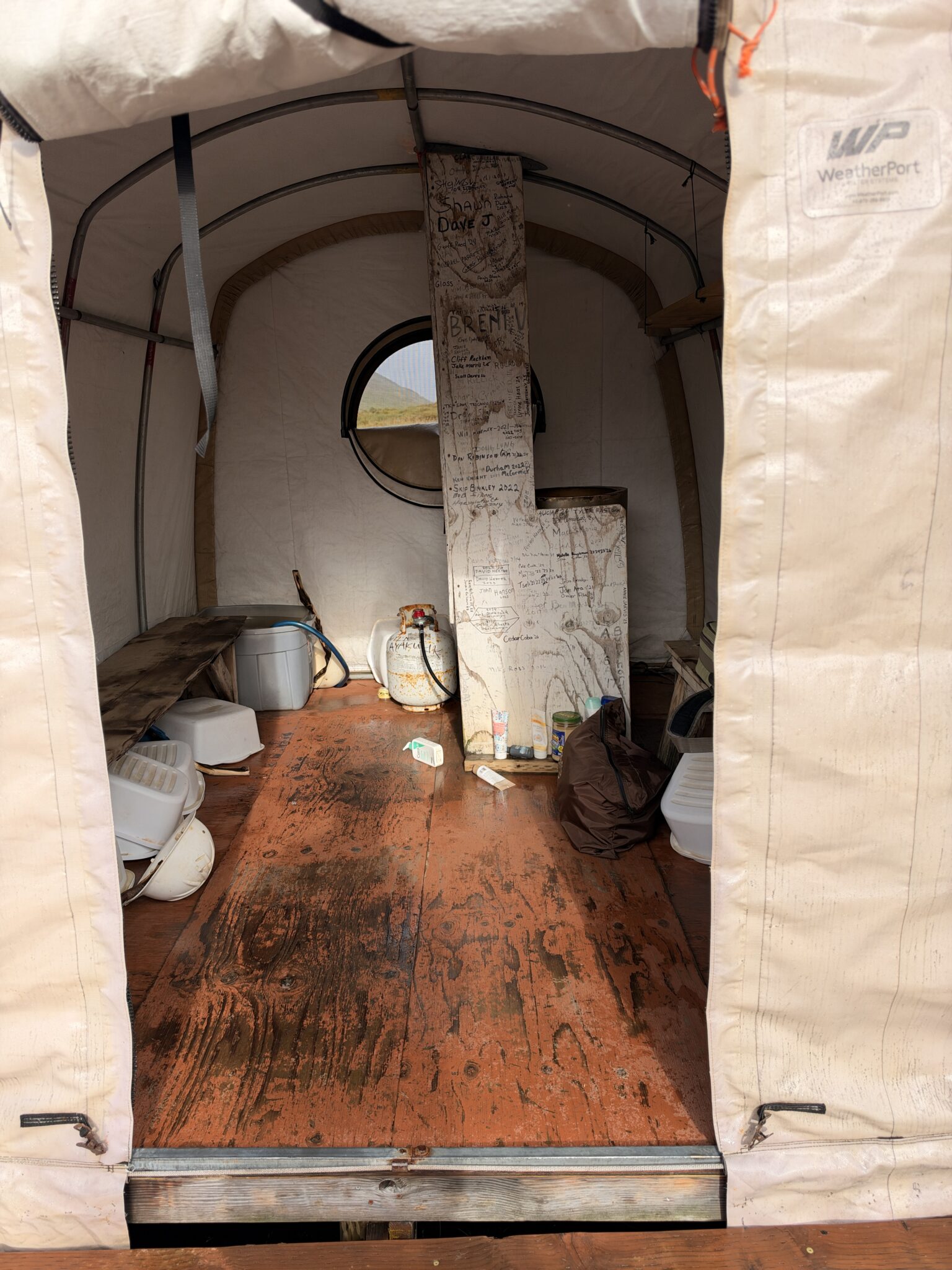
One of the unexpected luxuries at camp was the banya. The crew had converted a small tent into a makeshift Russian-style steam bath, complete with a propane powered double sided alluminum water boiler\heater that filled the tent with thick, glorious steam. After a long, cold day standing in the river, there was nothing better than sitting in that heat, scrubbing away a day’s worth of rain, mud, and fish slime, then stepping outside and plunging straight into the icy Ayakulik. The shock of that cold water takes your breath away and the afterglow leaves you feeling unbelievably clean, warm, and alive. Primitive perhaps—but out there, it felt like a five-star spa. I have to get me one of these.
The People
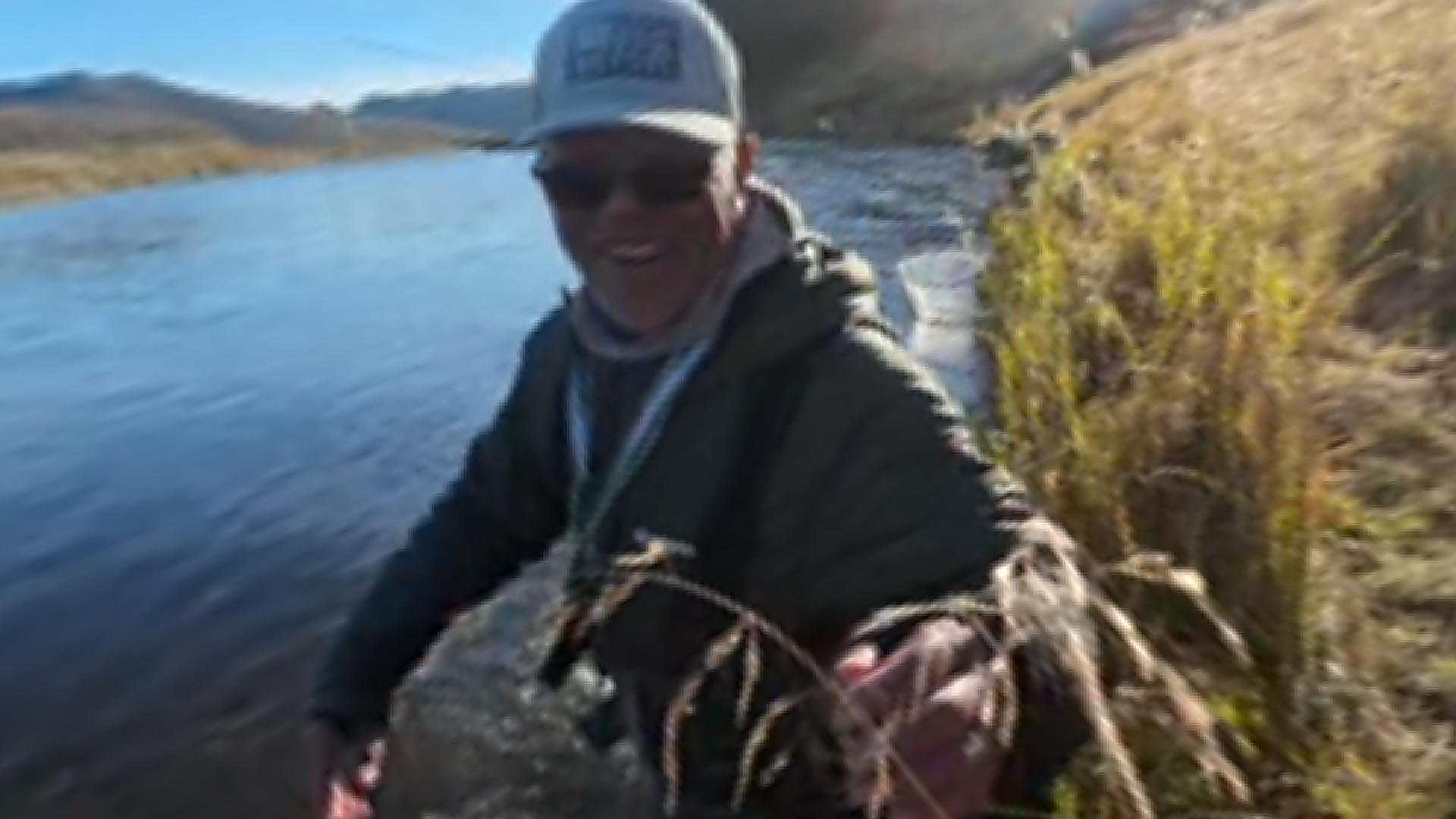
Bob and I came into the trip with Glen as our common connection, and I’ll admit I was a little apprehensive about meeting him. He’s a retired physician, an accomplished Spey fisherman, and has traveled with Glen to fish more legendary steelhead rivers than I’ve probably even heard of. But within a day, all of that disappeared. Bob is not only a terrific fisherman, he’s one of those rare people you meet and immediately feel like you’ve known your entire life. Easygoing, funny, and a great companion on the river, he quickly became someone I knew I wanted to fish with again.
We even discovered that we shared a mutual acquaintance in Dr. Peter Brandon—Mia’s godfather, who is also an OB-GYN in Seattle. It amazes me how intertwined our lives have become, even far beyond our fishing circles. I’m already hoping I can convince him to join our Sapsuk crew—because the best thing you can bring home from a fishing trip, besides a few good fish stories, is another fishing buddy.
Stig Yngve is Kodiak through and through—a born-and-raised islander, former Alaska Fish and Game salmon and steelhead scientist, registered brown-bear hunting guide, and a man who has spent much of his adult life in the remote Ayakulik country. He knows this river not simply as a fishing guide, but as a biologist, hunter and lifelong outdoorsman who has lived among its salmon, steelhead and giant Kodiak bears. If there is such a thing as a modern-day Viking of the Kodiak wilderness, Stig certainly looks the part. Stig ranks among my top ten fishing guides of all time, and that’s saying something after more than 50 years of fishing around the world. The guy is an absolute legend. I honestly struggle to find words that do him justice. He’s not just a great guide—he’s a bucket-list experience, the kind of guide every serious angler should have the privilege of fishing with at least once in their lifetime.
Erik Heeter is the other half of the Wild Ayakulik team—a Washington-born steelhead fanatic whose obsession with fly fishing eventually carried him north to Kodiak Island. After college he began guiding under legendary Ayakulik outfitter Dave Jones, learning the river and its fish before eventually partnering with Stig Yngve to take over the camp. Erik is a serious Spey fisherman himself, and when he isn’t guiding guests on the Ayakulik, chances are he’s somewhere else swinging a fly for steelhead.
Cedar, the third member of the team, was filling in for Clare, who was expecting a baby and away on maternity leave. When he’s not guiding, Ceder works in construction and has a real passion for custom woodworking. Although this was his first—and possibly only—season on the Ayakulik, you would never have known it from watching him on the river. He guided with the confidence and instincts of someone who had been there for years. Incredibly kind, hardworking, and naturally talented, Ceder was simply a pleasure to fish with.
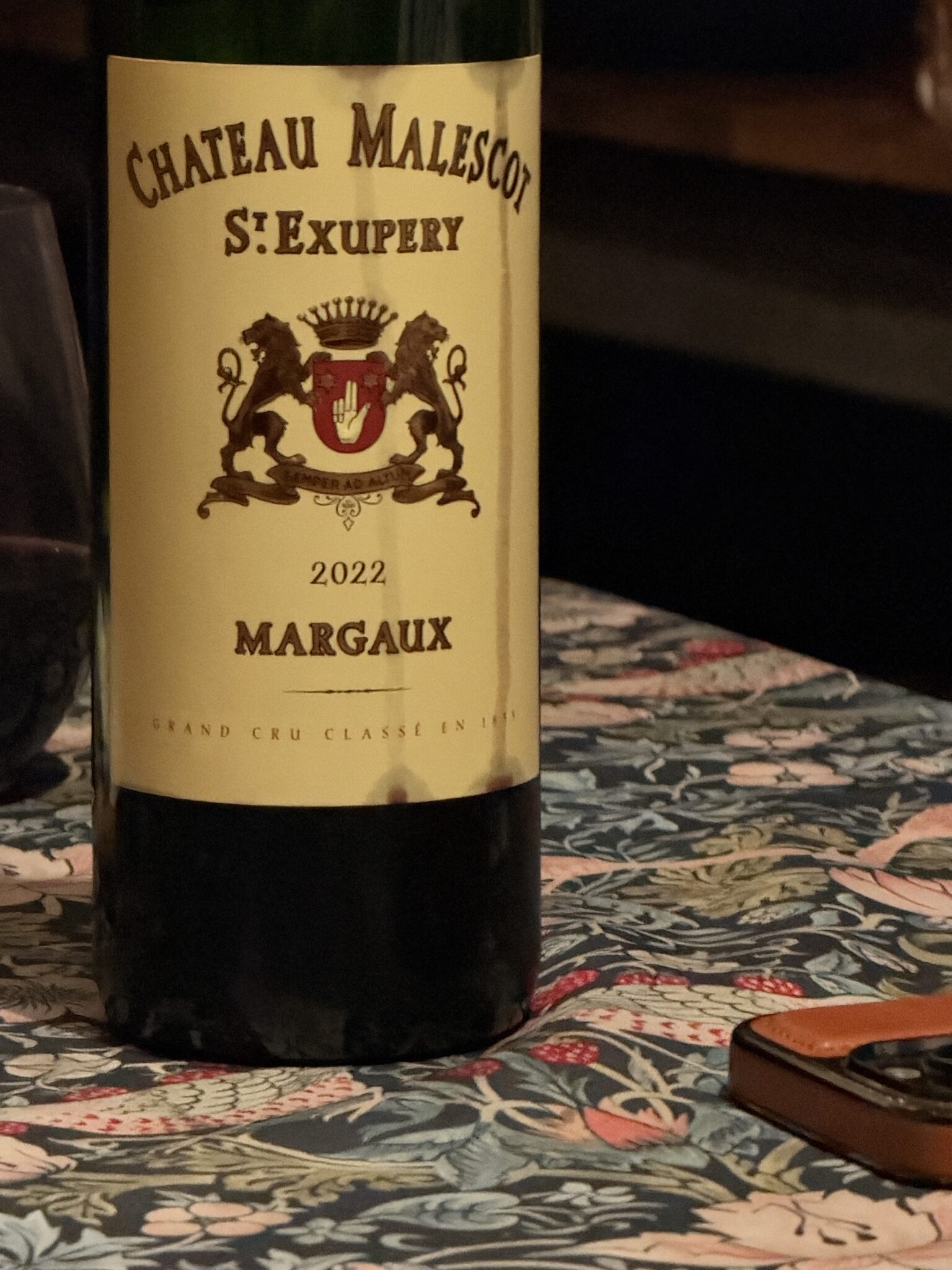
Sean, Allen, and Boyd turned out to be one of the great surprises of the trip. They were already good friends when they arrived, but they immediately made us feel like part of the group. We shared the same love of fly fishing, and conversations around camp wandered from fishing to golf to AI, usually finding their way right back to fishing again. Sean and I immedietly bonded when I found out he was a low handicap golfer and noticed a Starlink Mini in his wilderness luggage. They were great guys, accomplished fishermen, and men with excellent taste in wine, cigars and adventure—all of which made evenings at camp nearly as enjoyable as the days on the river.
They also had the means and the imagination to turn a slow week of fishing into an opportunity. When the Ayakulik wasn’t producing the way they had hoped, they didn’t sit around complaining about it—they hired a plane to take the three of them to the mouth of Red Lake and went looking for fish somewhere else. I loved that attitude. Sometimes the difference between a disappointing fishing trip and a great adventure is simply having the curiosity, resources, and willingness to say, “Hell, let’s get a plane, cost is no object, and go see what’s over there.” Add some good wine, a few cigars, and plenty of laughs, and even a tough steelhead week becomes a trip uniquely worth remembering.
The Fishing
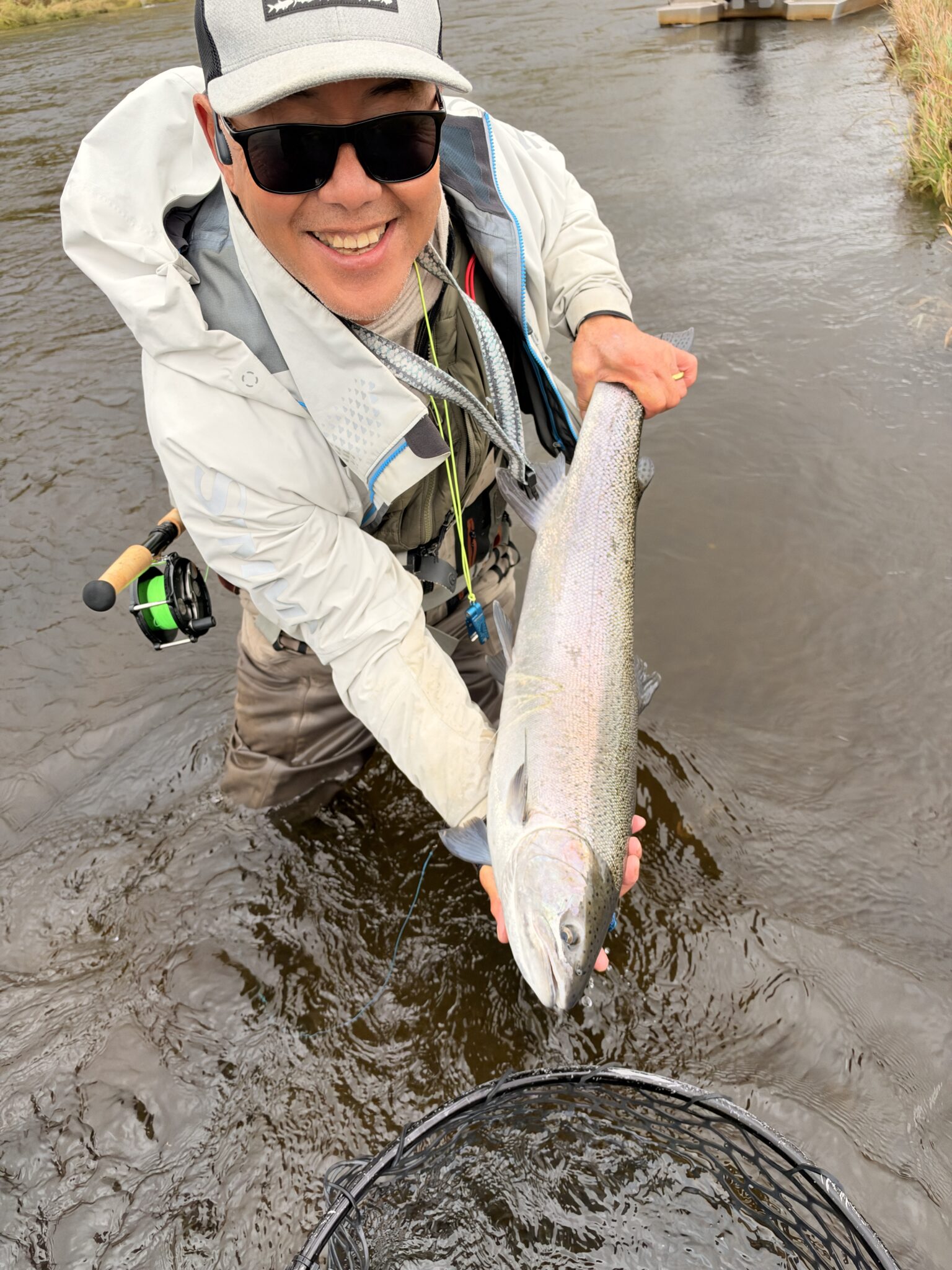
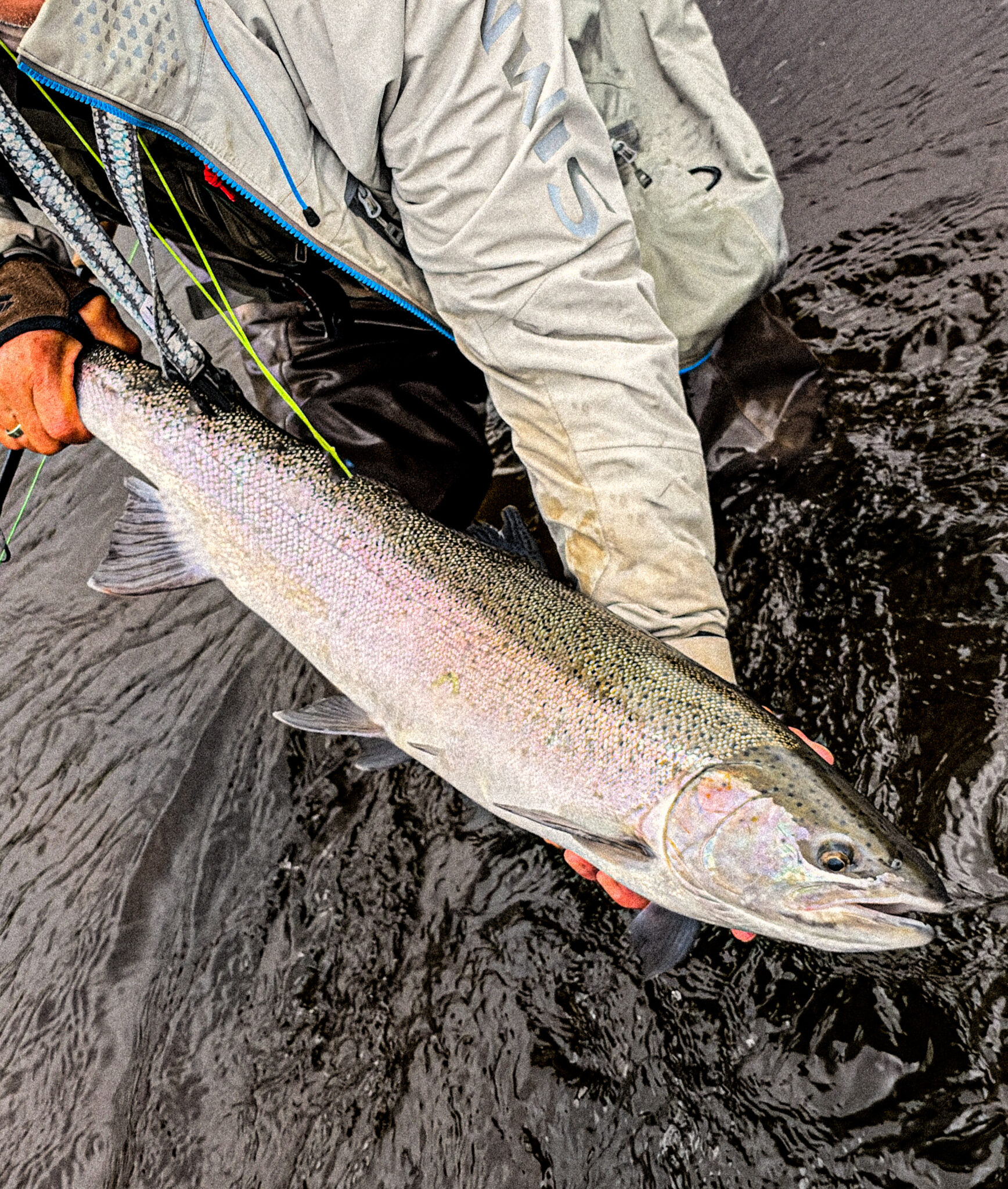
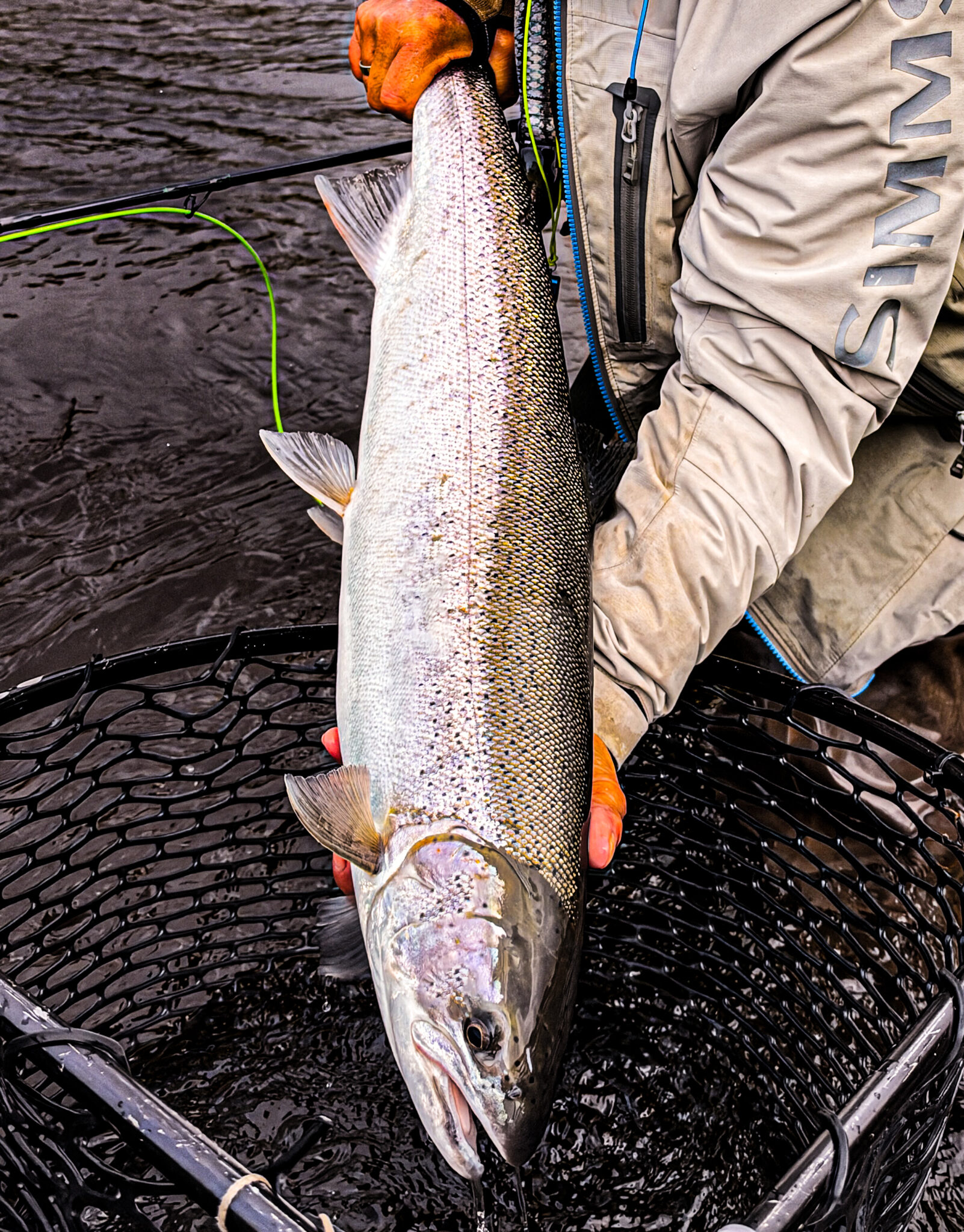
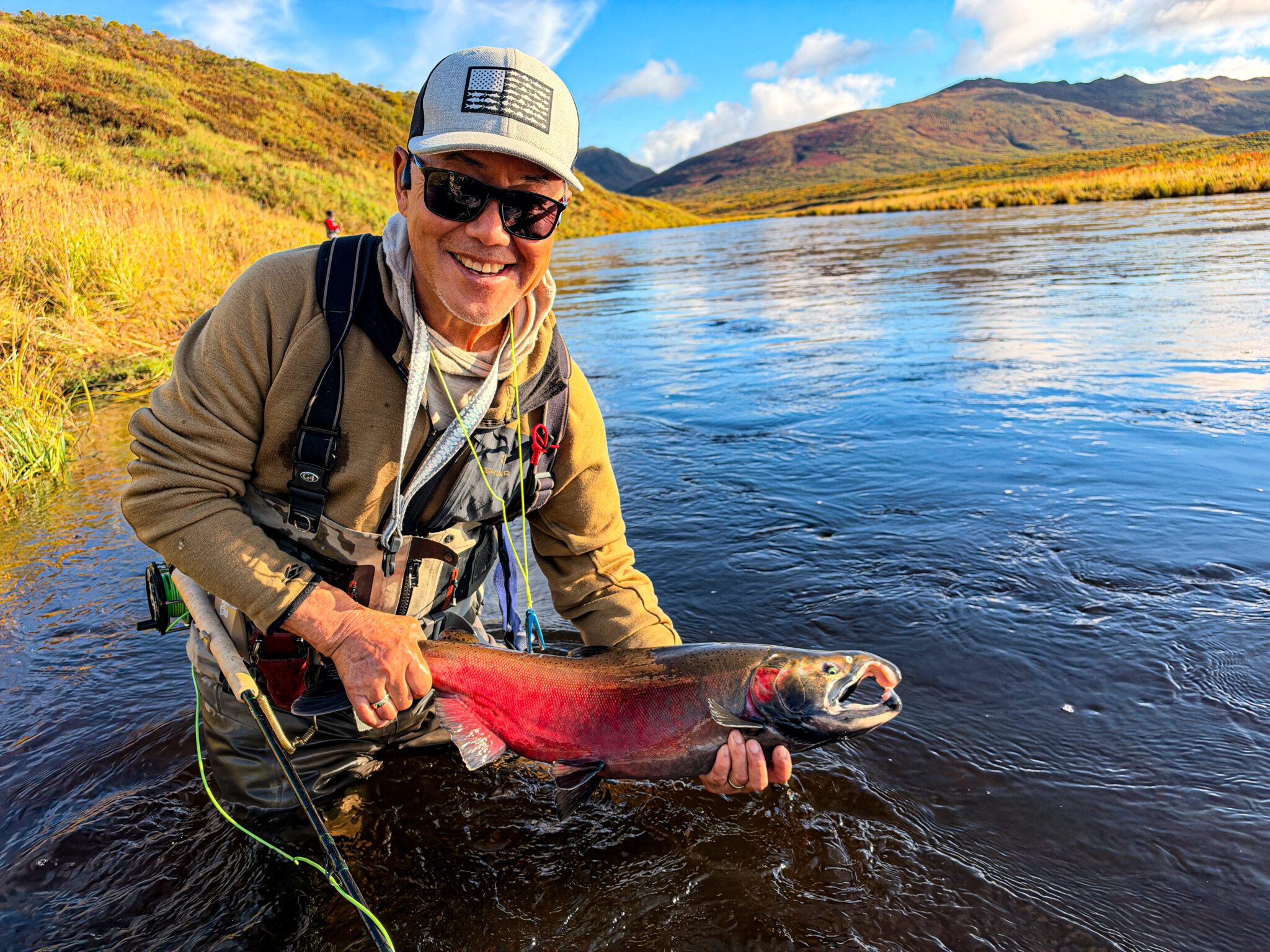
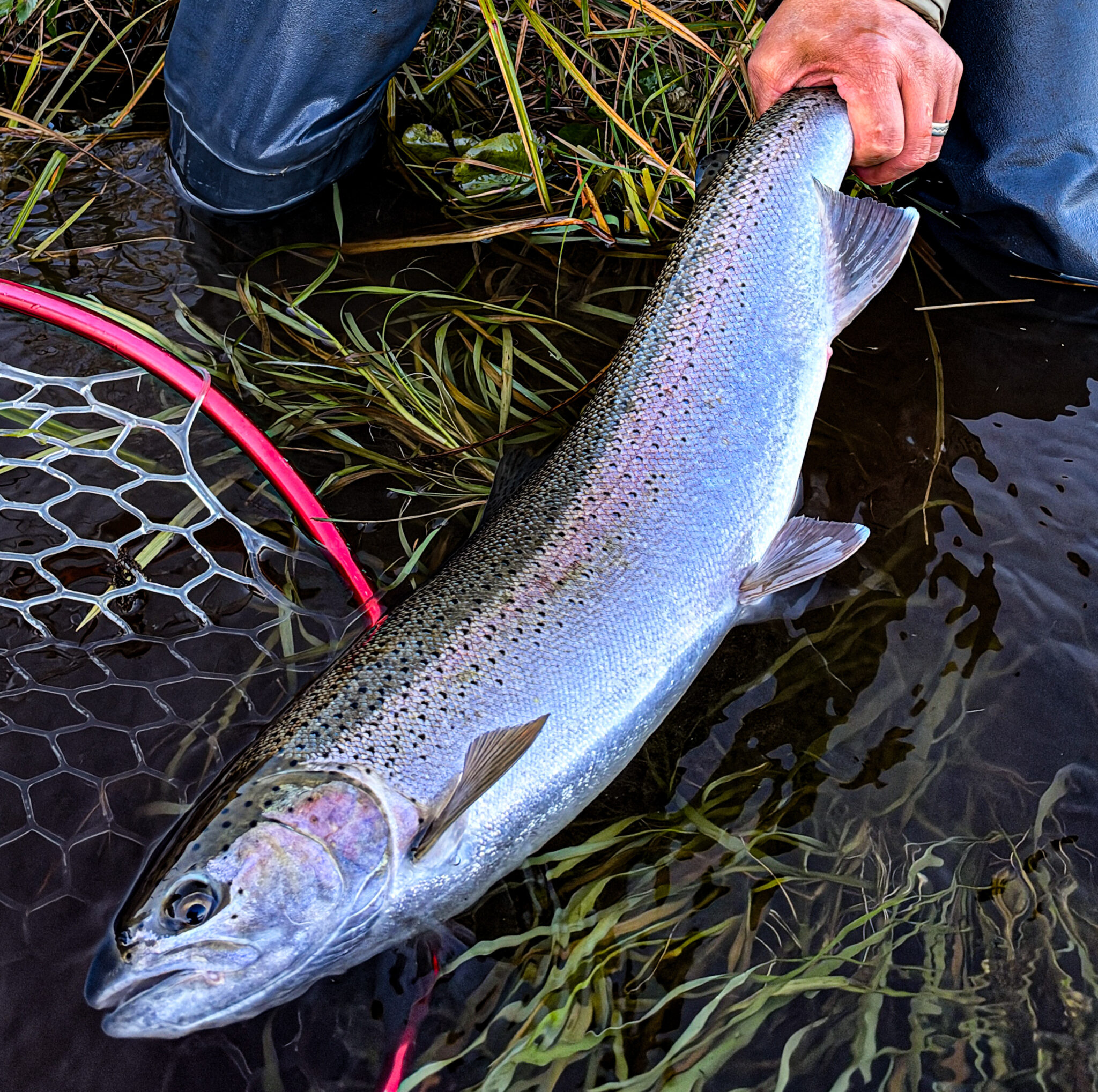
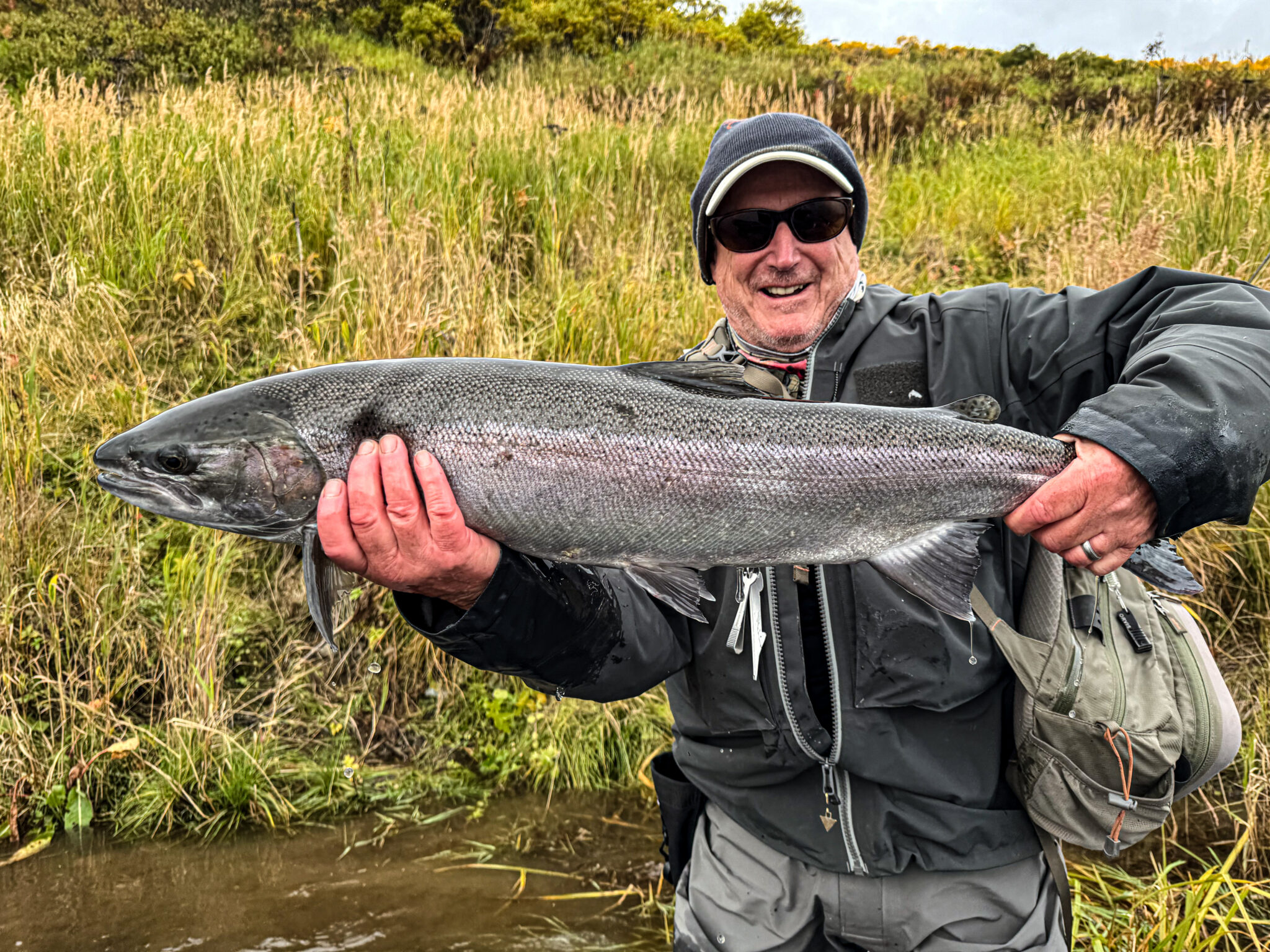
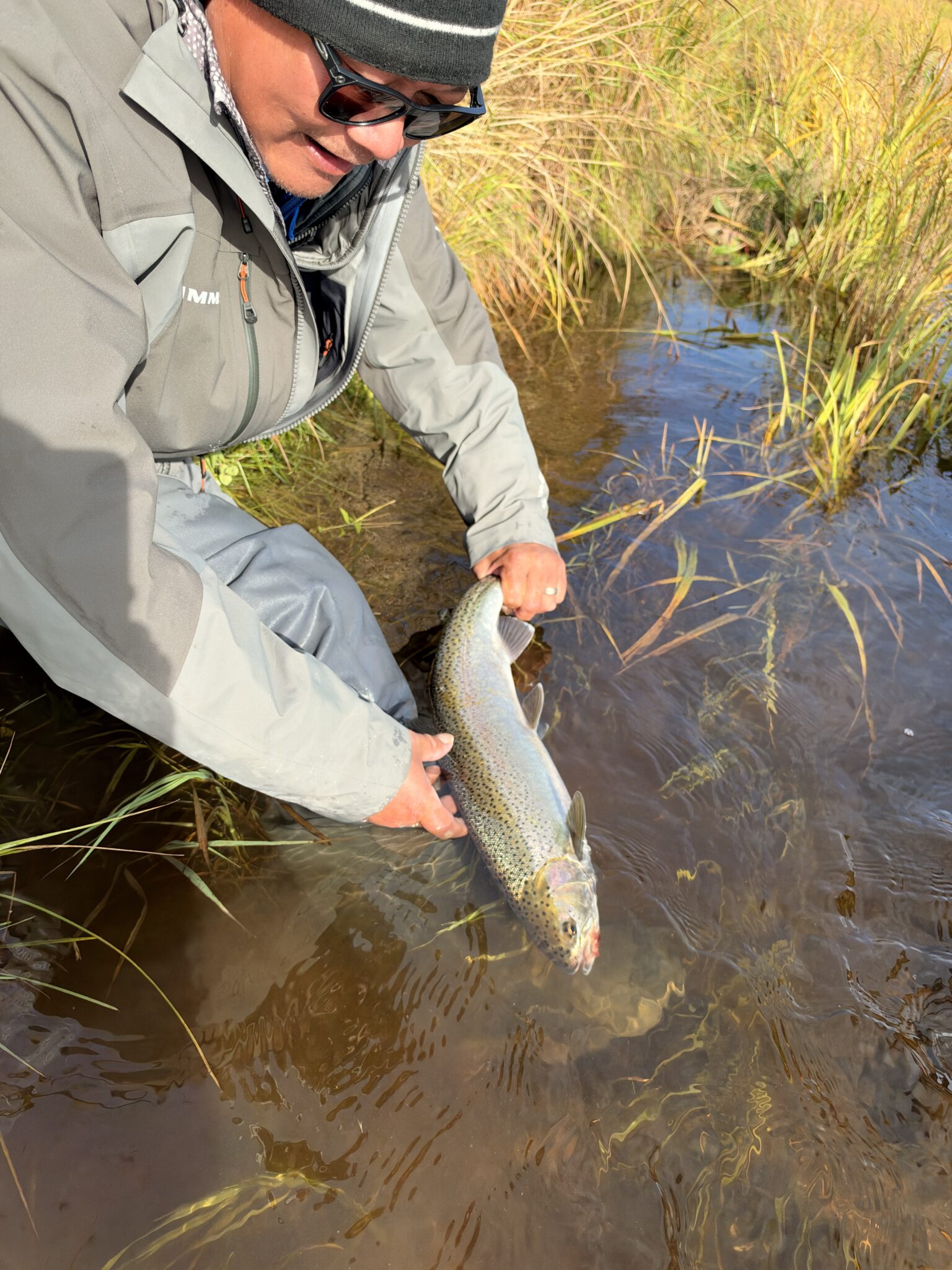
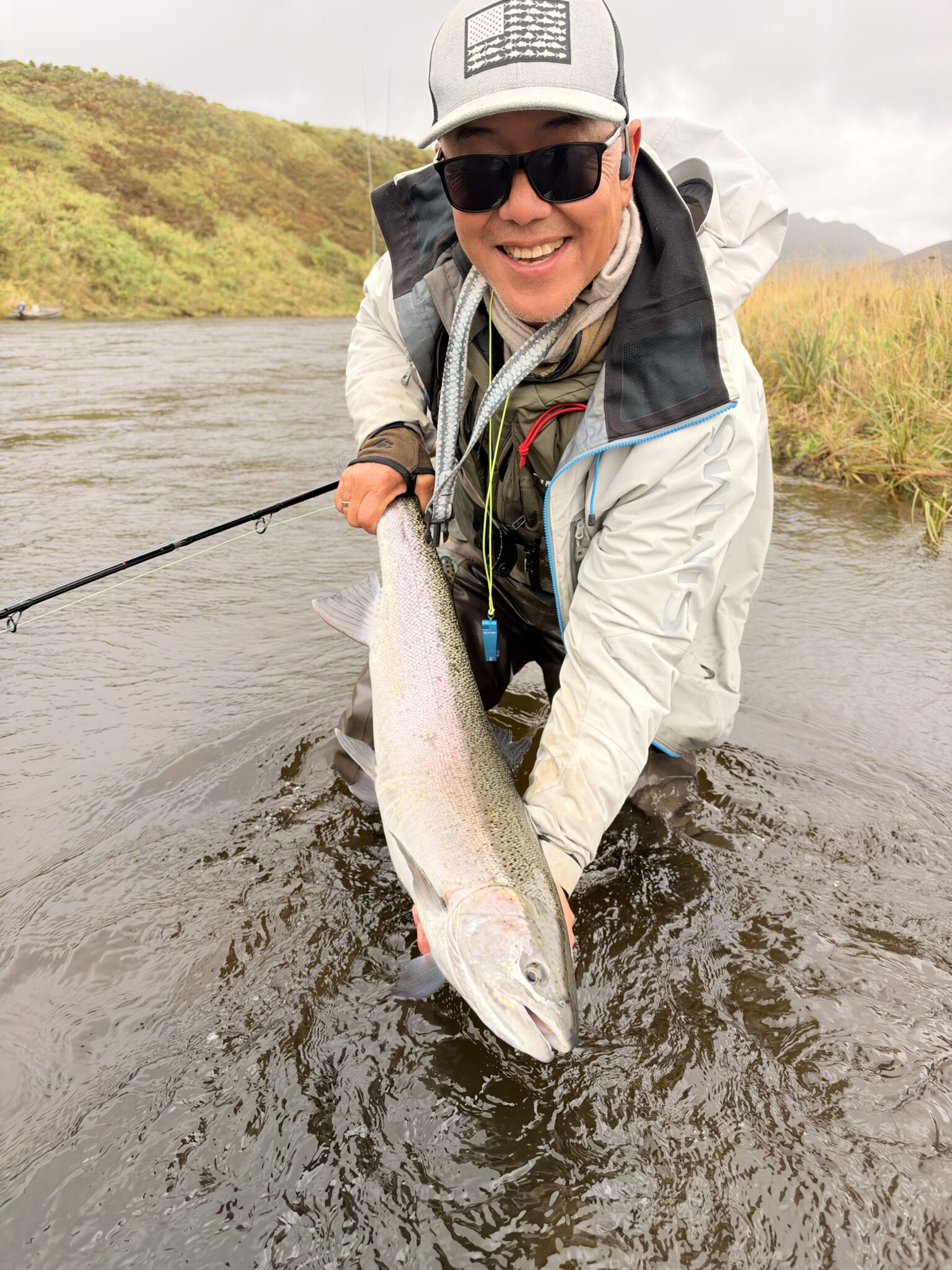
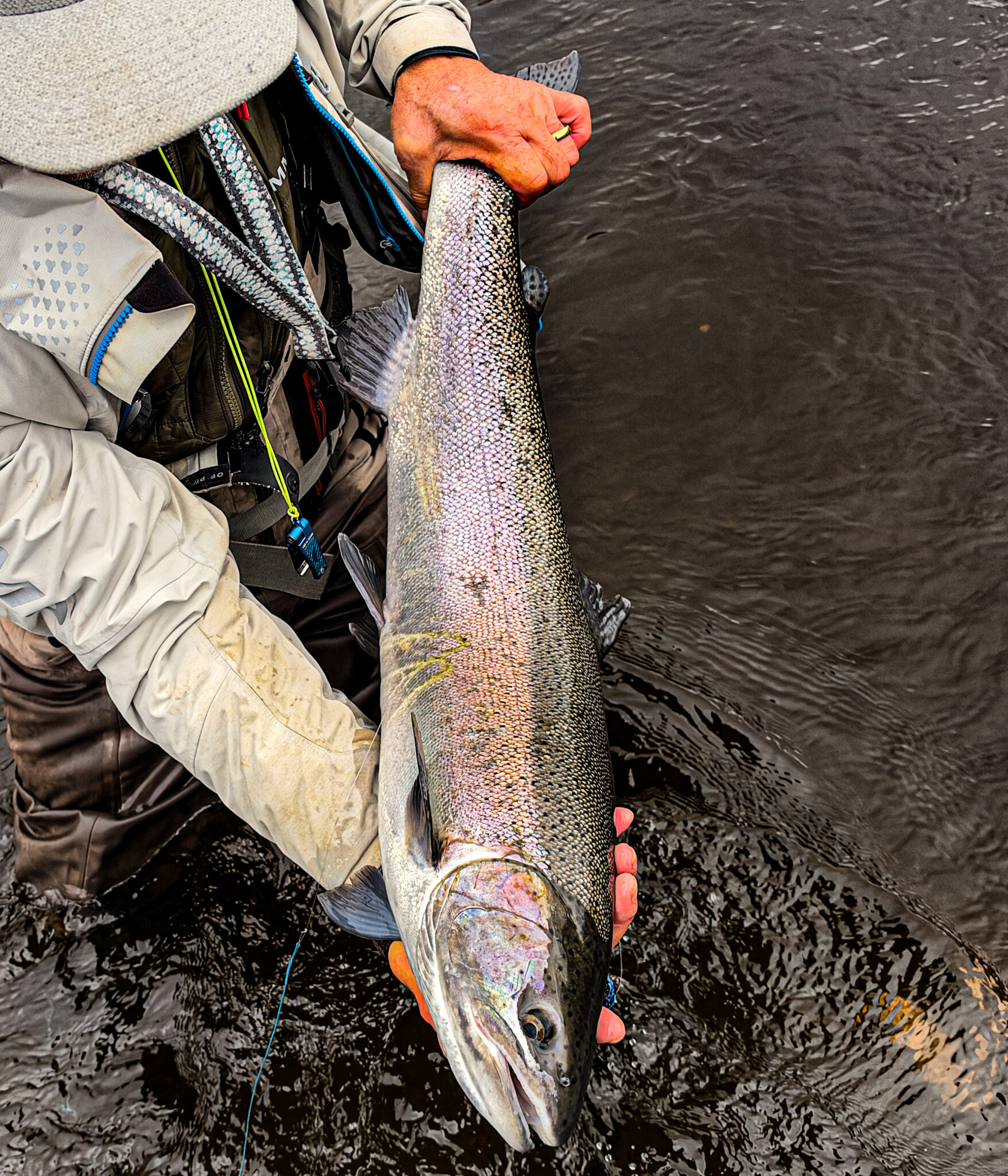
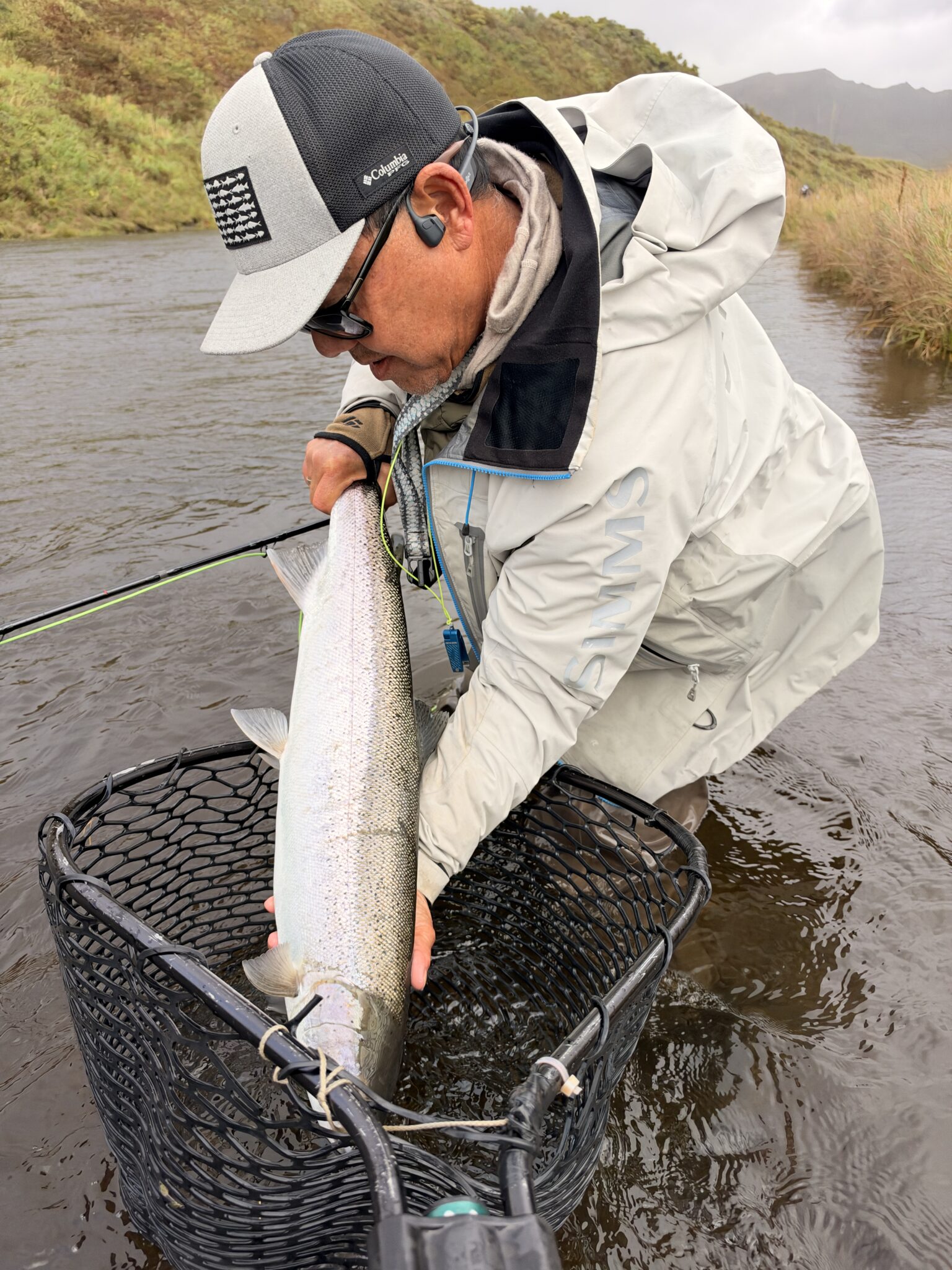
Unfortunately, the week before our arrival brought a tremendous rainstorm that blew out the river and, according to Stig and Erik, may have contributed to the toughest prime-time steelhead week they had seen on the Ayakulik in six years. Still, we made the best of it. Glen, Bob, and I managed to average a couple of fish a day between us on the swing—not exactly numbers that jump off the page, but I had to remind myself that on most coastal steelhead rivers, swinging up even one wild steelhead in a day is considered a very good day. The bead fishermen, meanwhile, hooked roughly twice as many. I suspect next year they may return with spey rods in hand instead of bead rods.
There are steelhead camps where fishing a bead isn’t merely discouraged—it simply isn’t allowed. Wild Ayakulik gives anglers the choice; you can swing flies, fish beads, or do a little of both. But other destinations, including the Sandy River in the Aleutians, are strictly swing-only. These are places built around the belief that how you catch a steelhead matters as much as catching one at all. You accept fewer hookups, sometimes dramatically fewer, in exchange for that singular moment when a wild steelhead turns on a swung fly and the line suddenly comes alive in your hands. It is part tradition, part discipline, and perhaps a little madness. Nobody chooses the swing because it is the easiest way to catch a steelhead. You choose it because of the crazy amount of practice and preperation when everything finally comes together—the cast, the swing, the hang, and that violent pull—it makes all those empty casts worthwhile and earned.
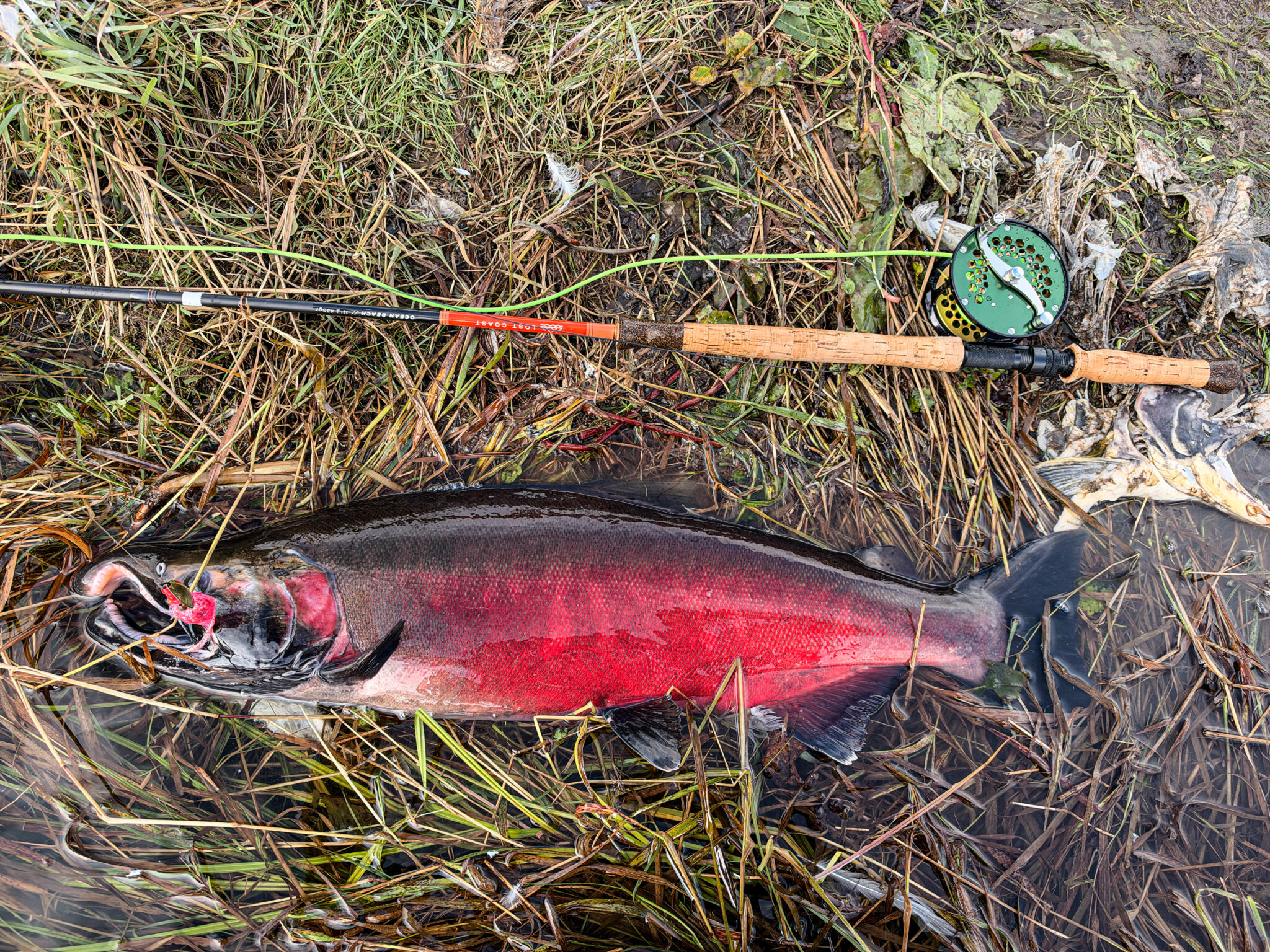
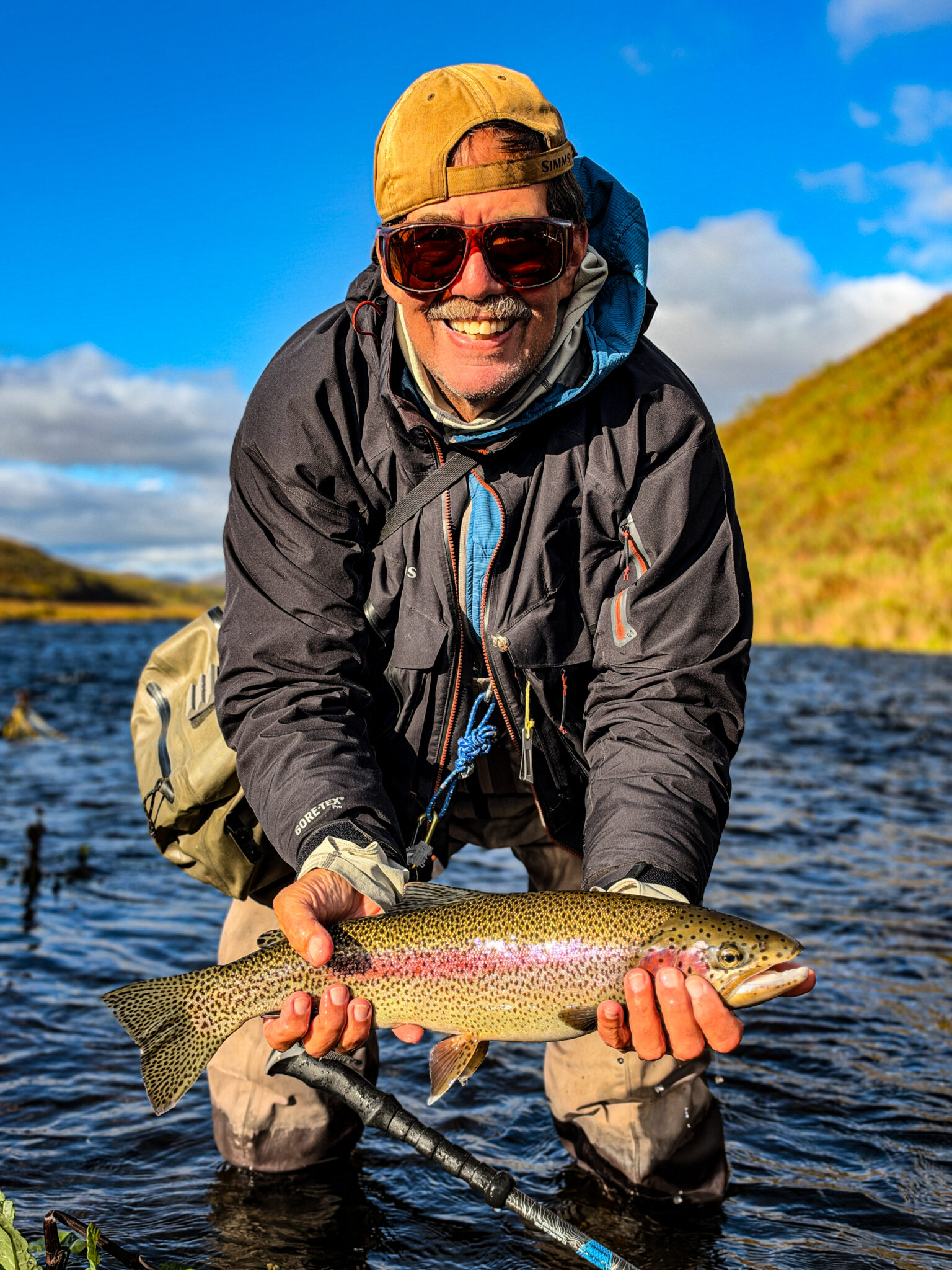
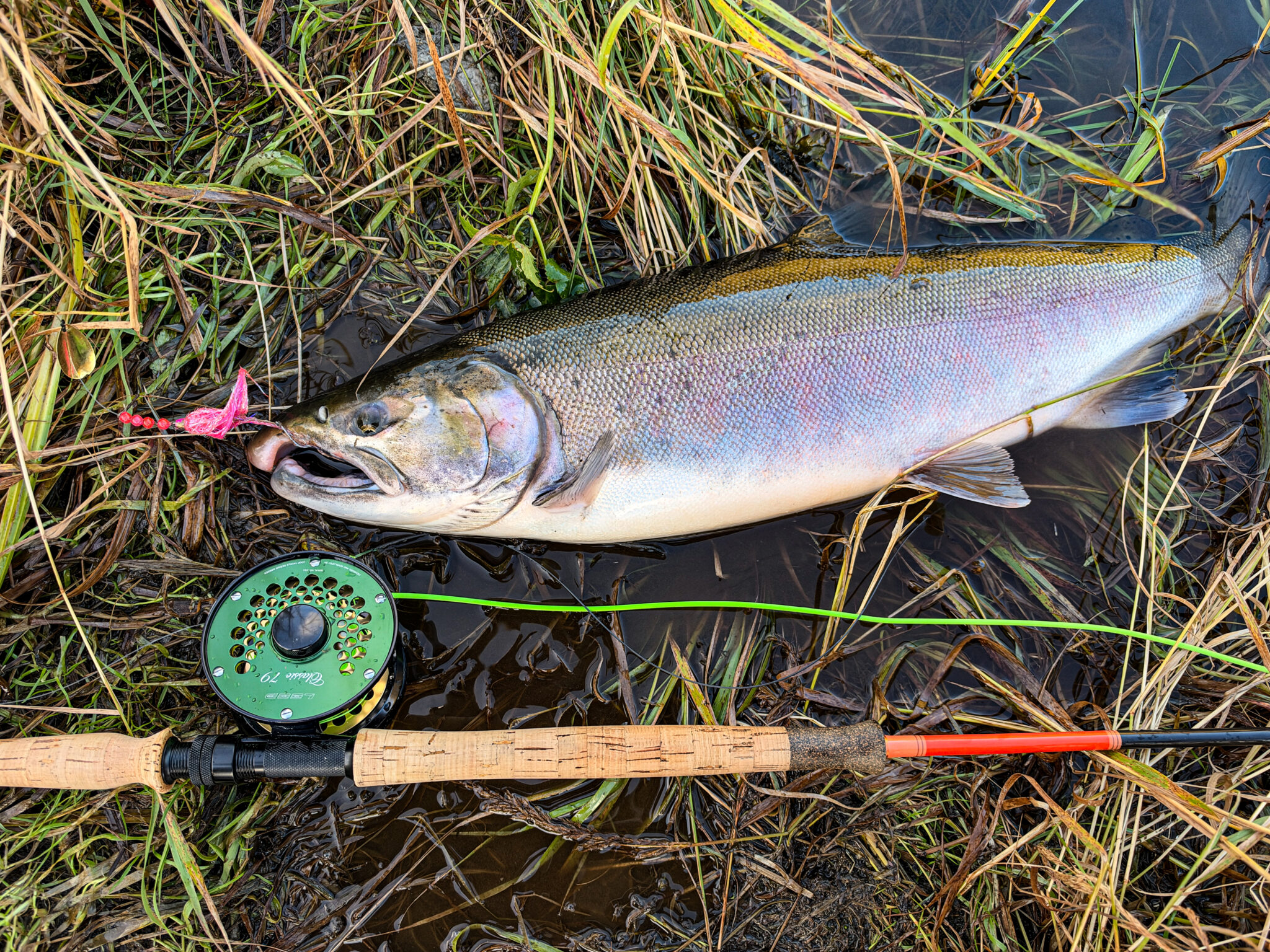
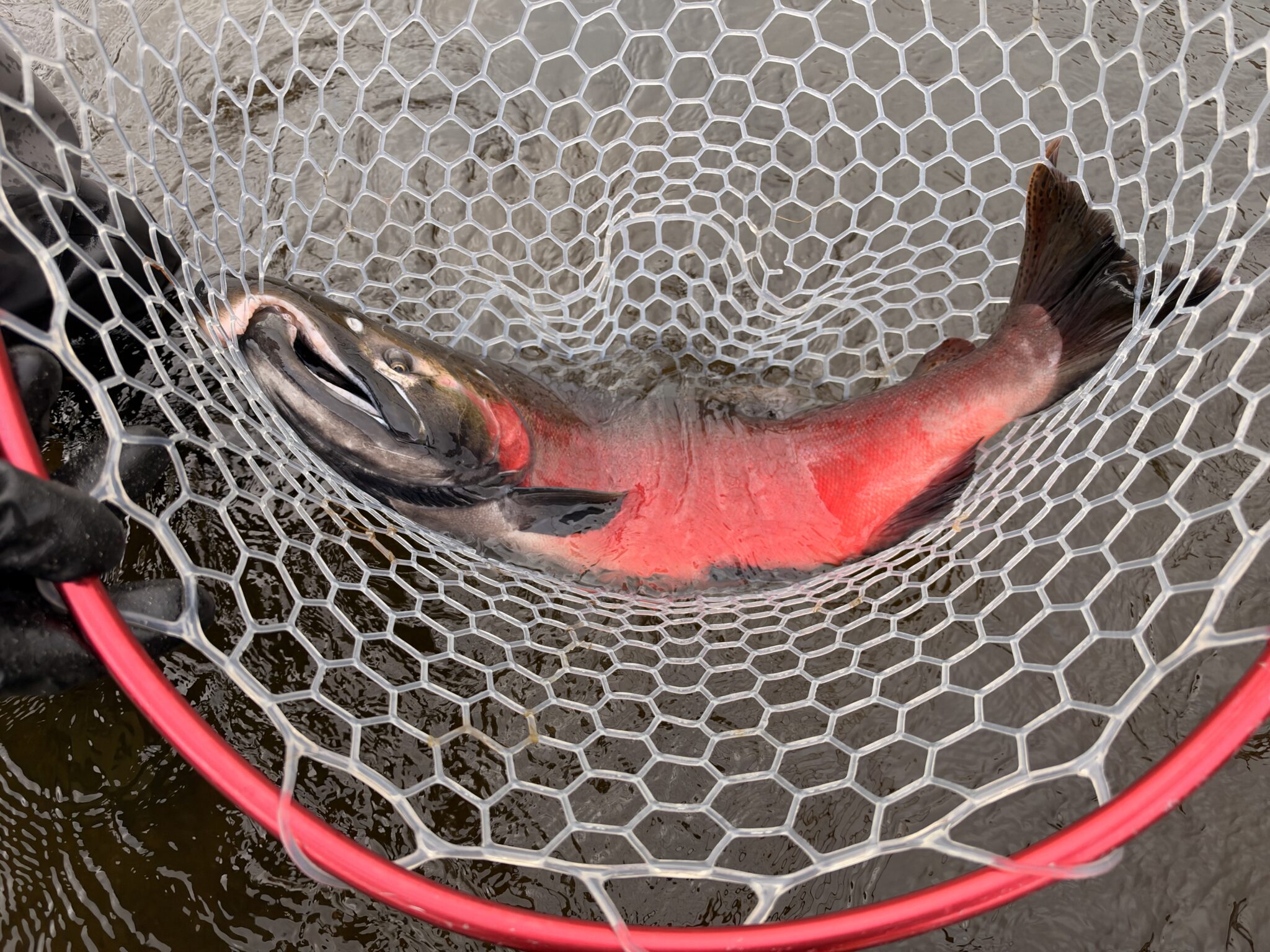
I brought three rods on the river every day, A Bead rod, a Flybrex rod and a Spey Swinging Rod. I figured I would stay busy if it got impossible to catch a fish on the swing. I swung flies 90 percent of the time. Ten percent of the time I purposely targetted trout and silvers, I managed to catch fish every attempt including one small steelhead, lots of large coho and some very decent trout and dollys.
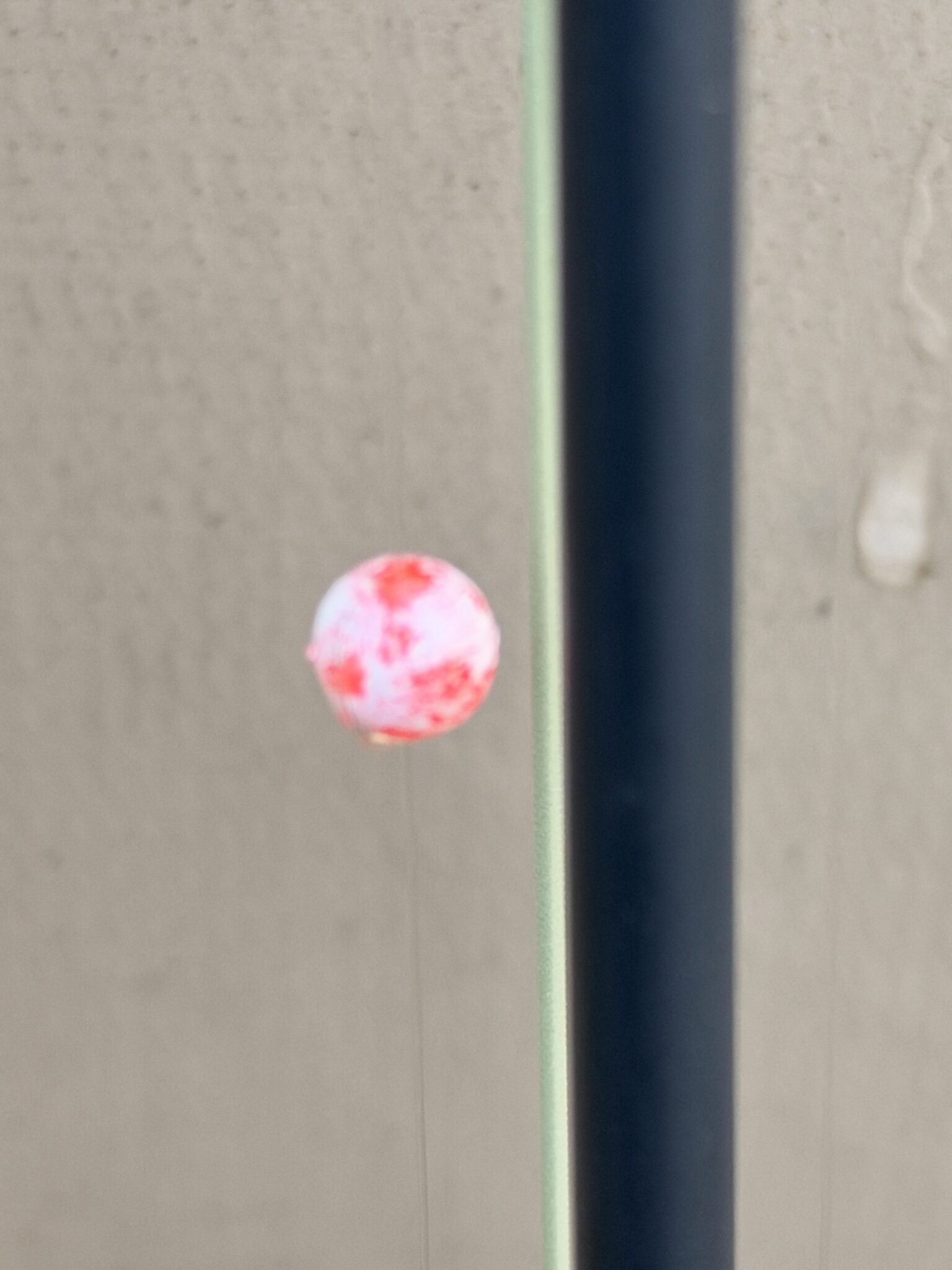
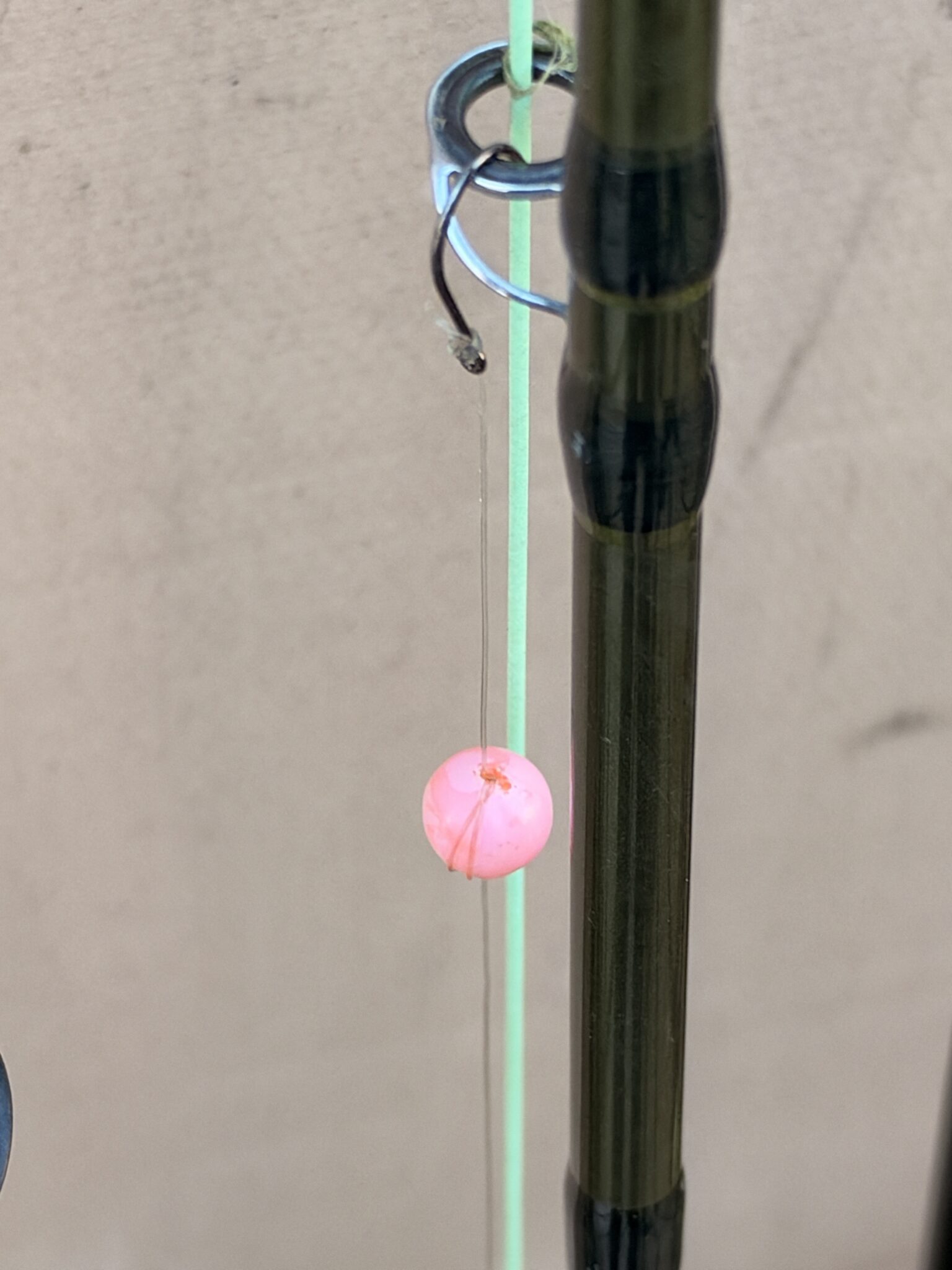
The beads I had researched for the Ayakulik were mostly 10–12 mm, already a little larger than the roughly 7 mm eggs naturally found in the river. But once we got there, I learned that some serious bead fishermen recommended going much bigger—up to 18–20 mm—which, of course, I didn’t have. A quick emergency order to FishUSA solved that problem, along with a package of the new Gamakatsu bead hooks. The hooks looked almost too fine for big Alaska steelhead, but they were wickedly sharp and penetrated beautifully. Glen thought they were the bomb, which was good enough for me. Ironically, after all the research, experimenting, and expedited shipping, the most productive beads turned out to be simple 7–10 mm mottled pink and orange patterns. Already have tons of those. Lesson learned. Next year, that’s pretty much all I’m bringing.
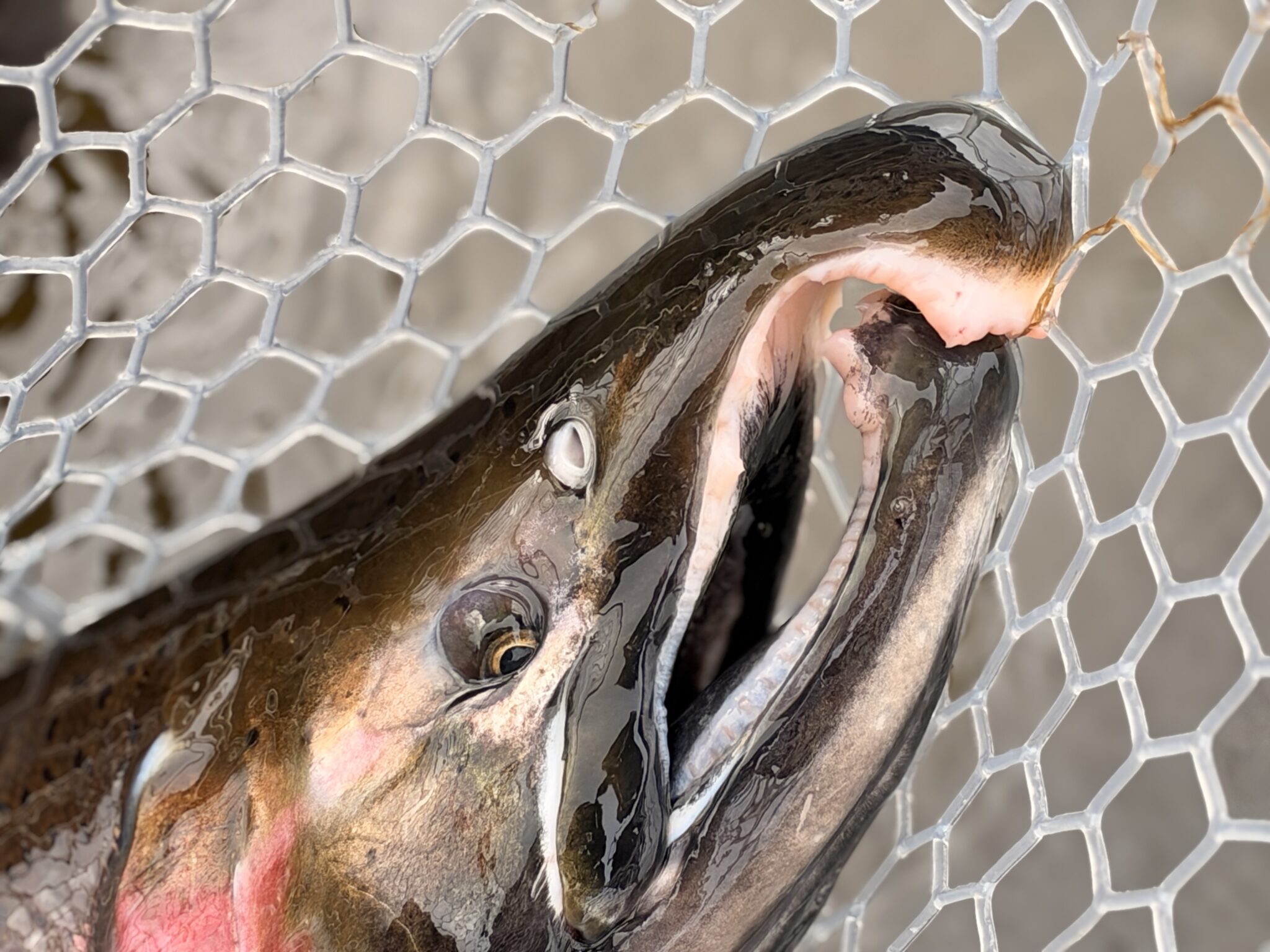
It was fun to finally test the FlyBrax on coho in a river other than the Sapsuk. As I suspected, the FlyBrax is Coho Crack on the Ayakulik too. Whenever the steelhead fishing slowed and I spotted a coho holding or rolling, I’d slow-roll a FlyBrax in front of it, and the response was almost automatic. Most of the coho were already deep spawning red, but I managed to catch a few surprisingly bright fish with barely a hint of blush. After seeing it work on two very different Alaska rivers, I’m becoming convinced the FlyBrax will catch coho just about anywhere they swim.
Glen, however, remains unconvinced. He thinks a traditionally retrieved Vibrax will outfish a FlyBrax. I told him I’ll happily take that bet. Same water, same fish, side by side—FlyBrax versus Vibrax. Loser buys the wine.
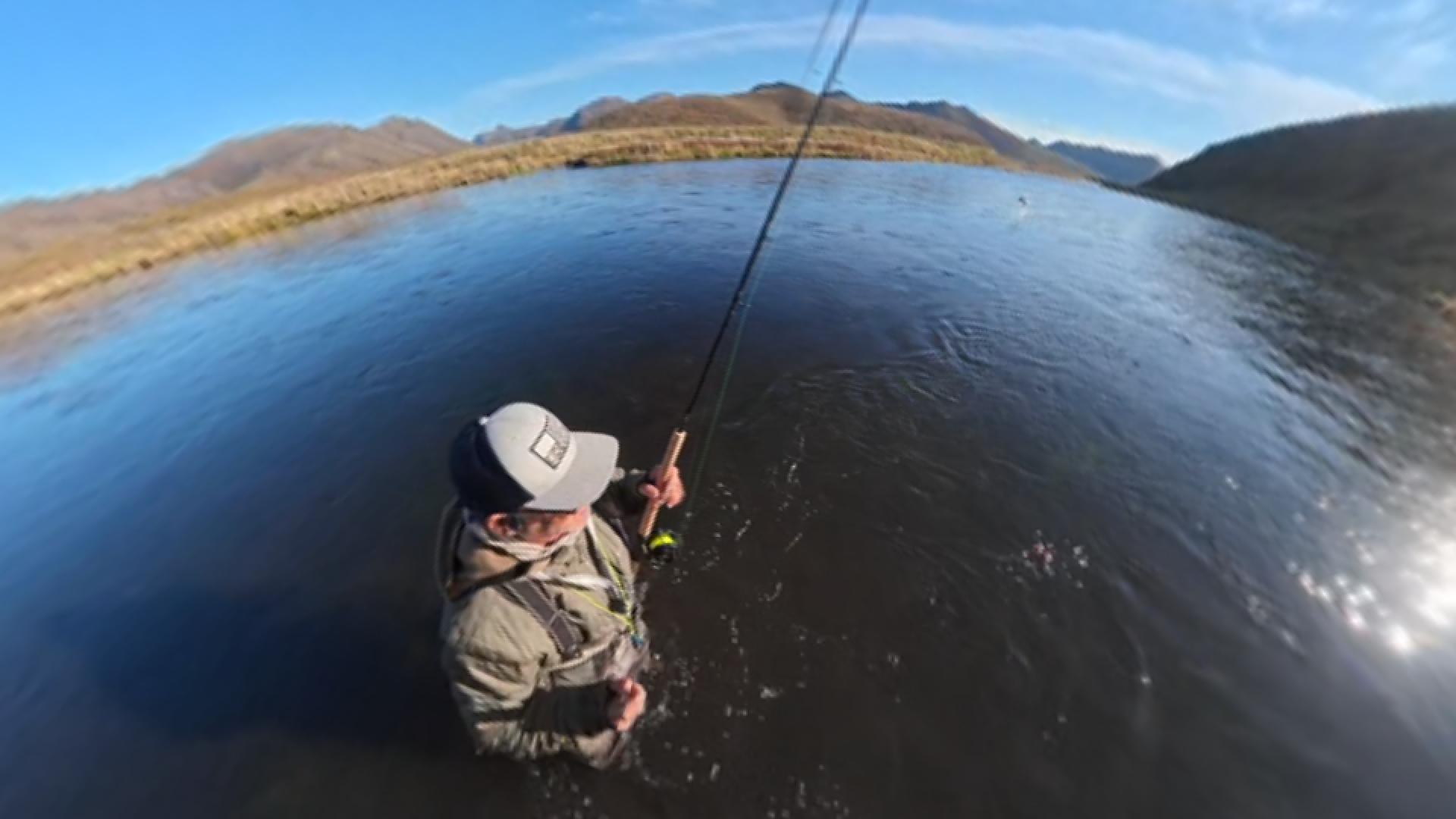
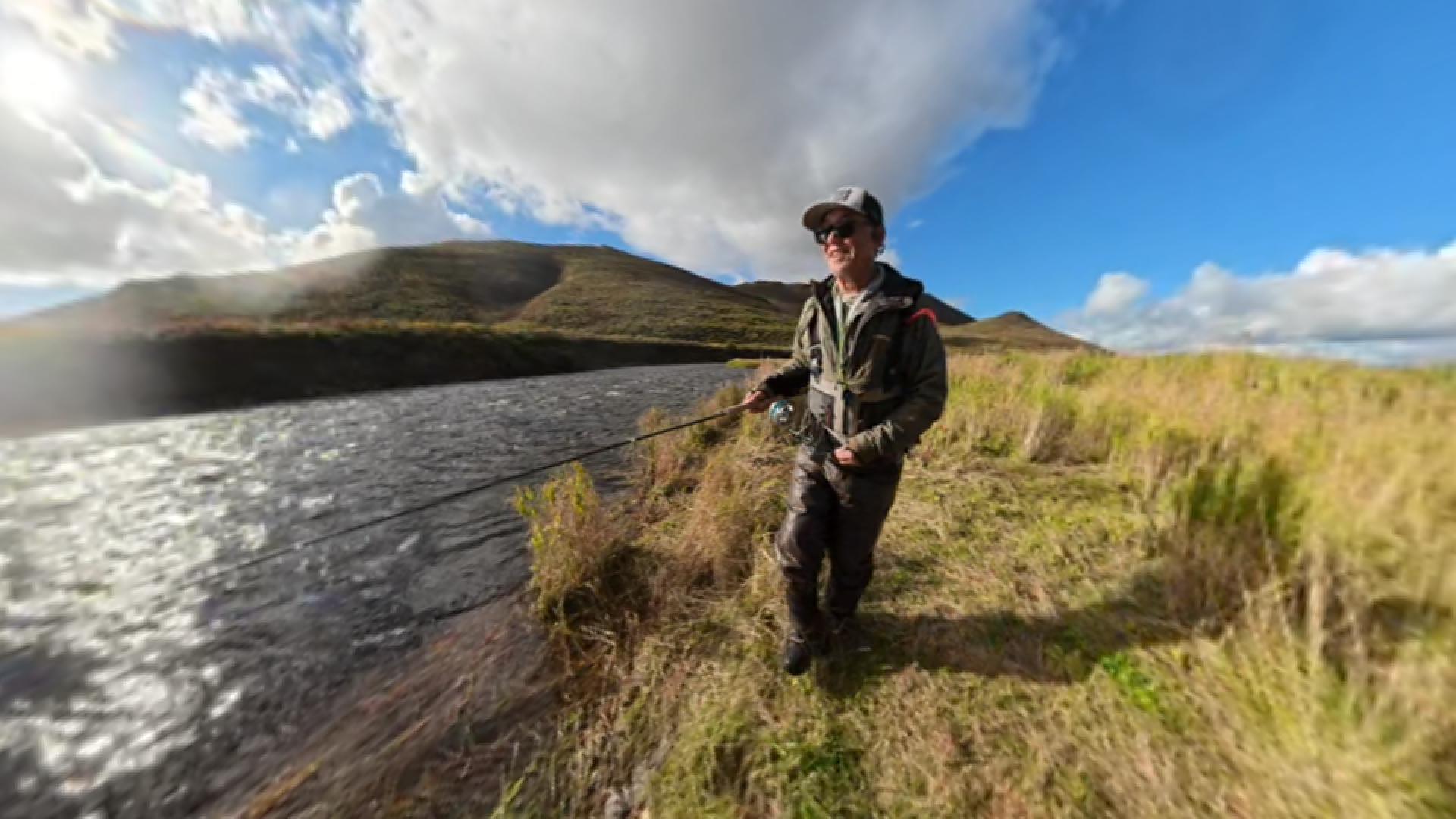
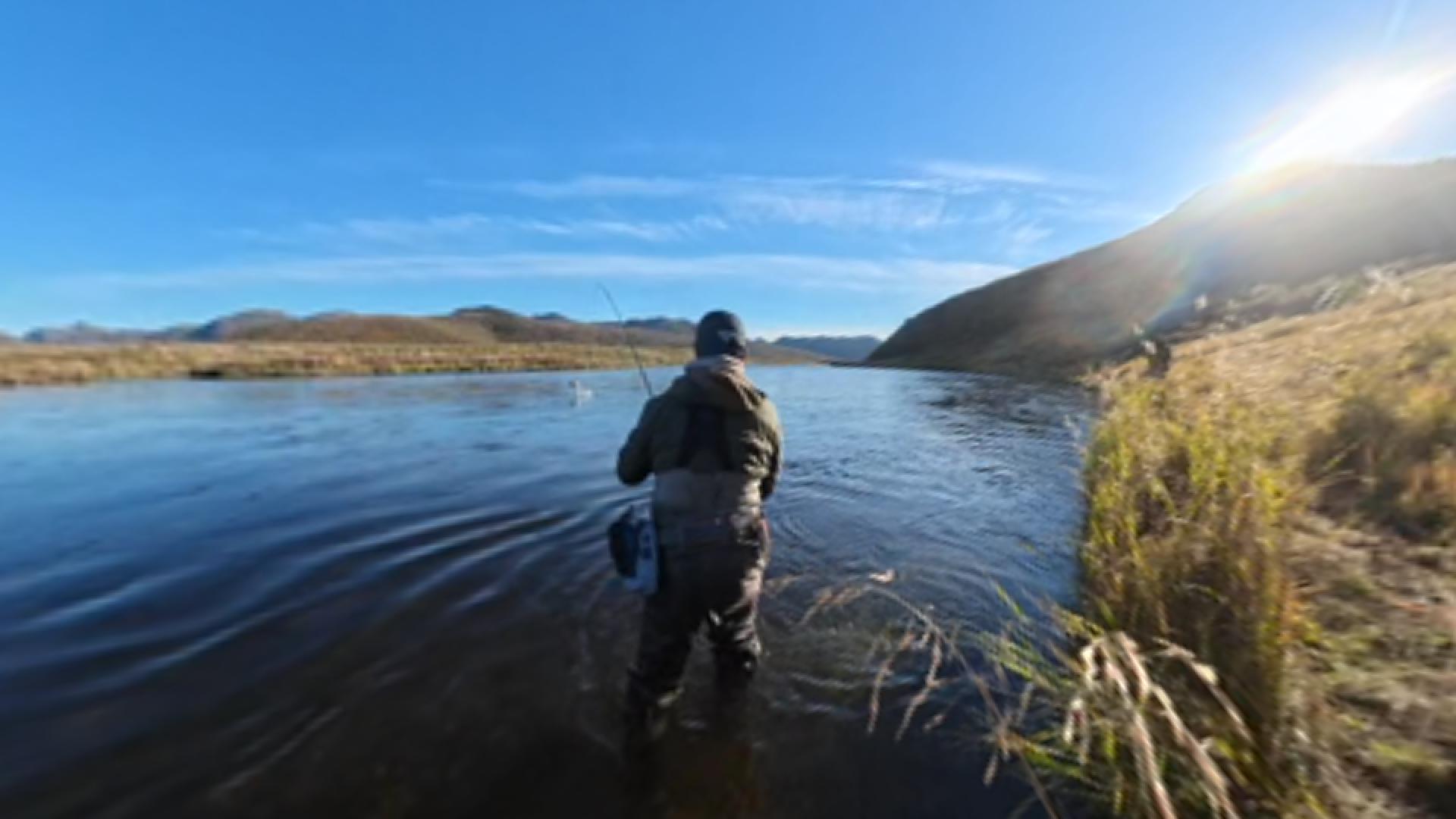
But somewhere during the week, I fell even deeper in love with the swing. There is simply something about sending a fly across the river, feeling it come tight, and waiting for that unmistakable grab that makes catching fewer fish completely worthwhile. I could feel my spey casting improving through brute force repetition, fatique and increasing rotator cuff pain which forced me to improve technique over strength, If the steelhead fishing is even a little better next year, I’m not sure I’ll touch a bead at all. I’d rather make a thousand casts waiting for that one electric pull on a swung fly..
The guides seemed to favor steelhead flies built around black and blue, usually with a little flash and one bright fluorescent trigger point. Nothing too complicated—maybe a hot conehead or a small blob of fluorescent Crystal Dub tucked behind the hackle or just ahead of the tail. Dark, contrasty, and easy for a steelhead to find in the often tanic stained Ayakulik water, with just enough color and sparkle to get its attention.
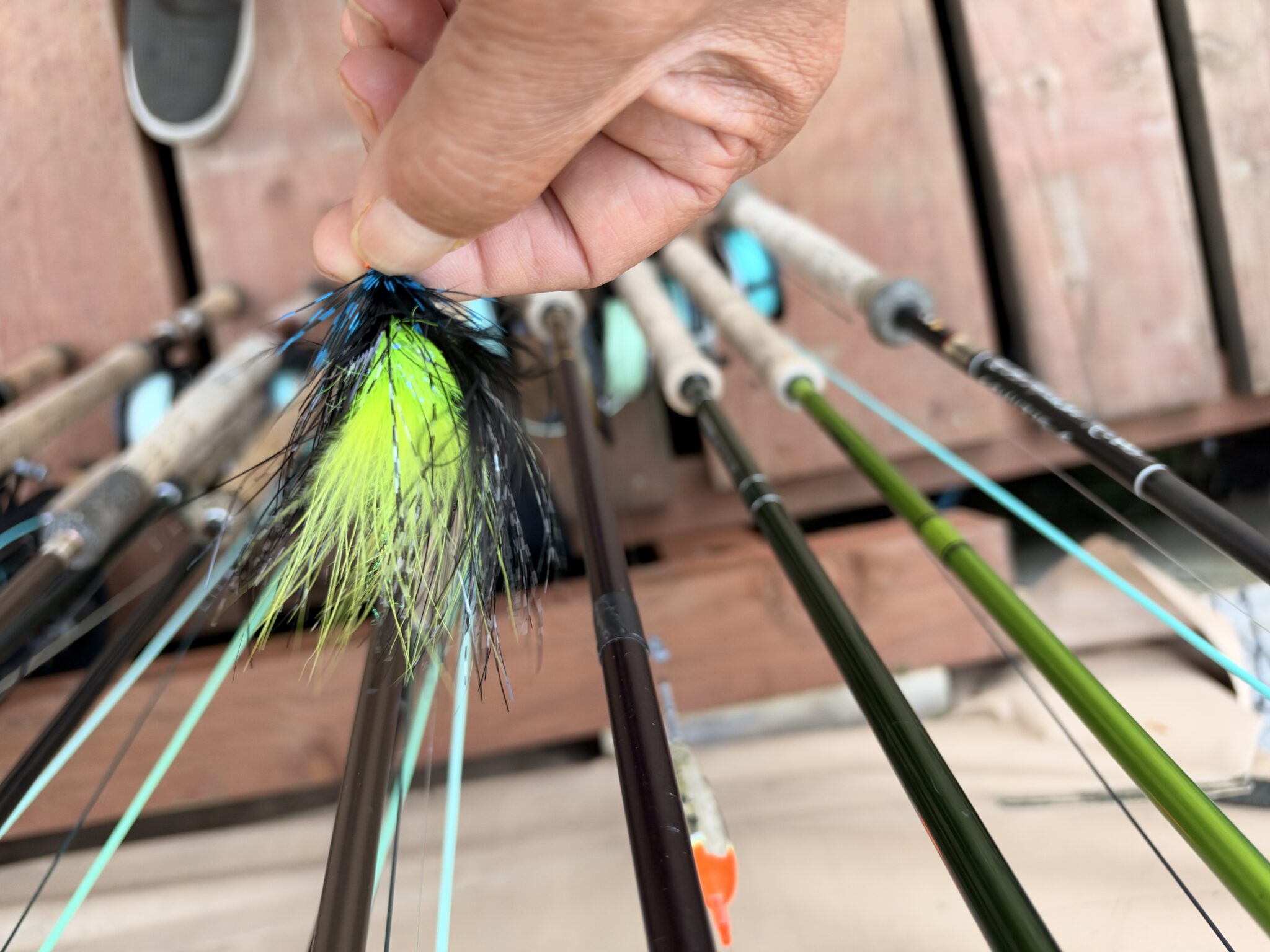
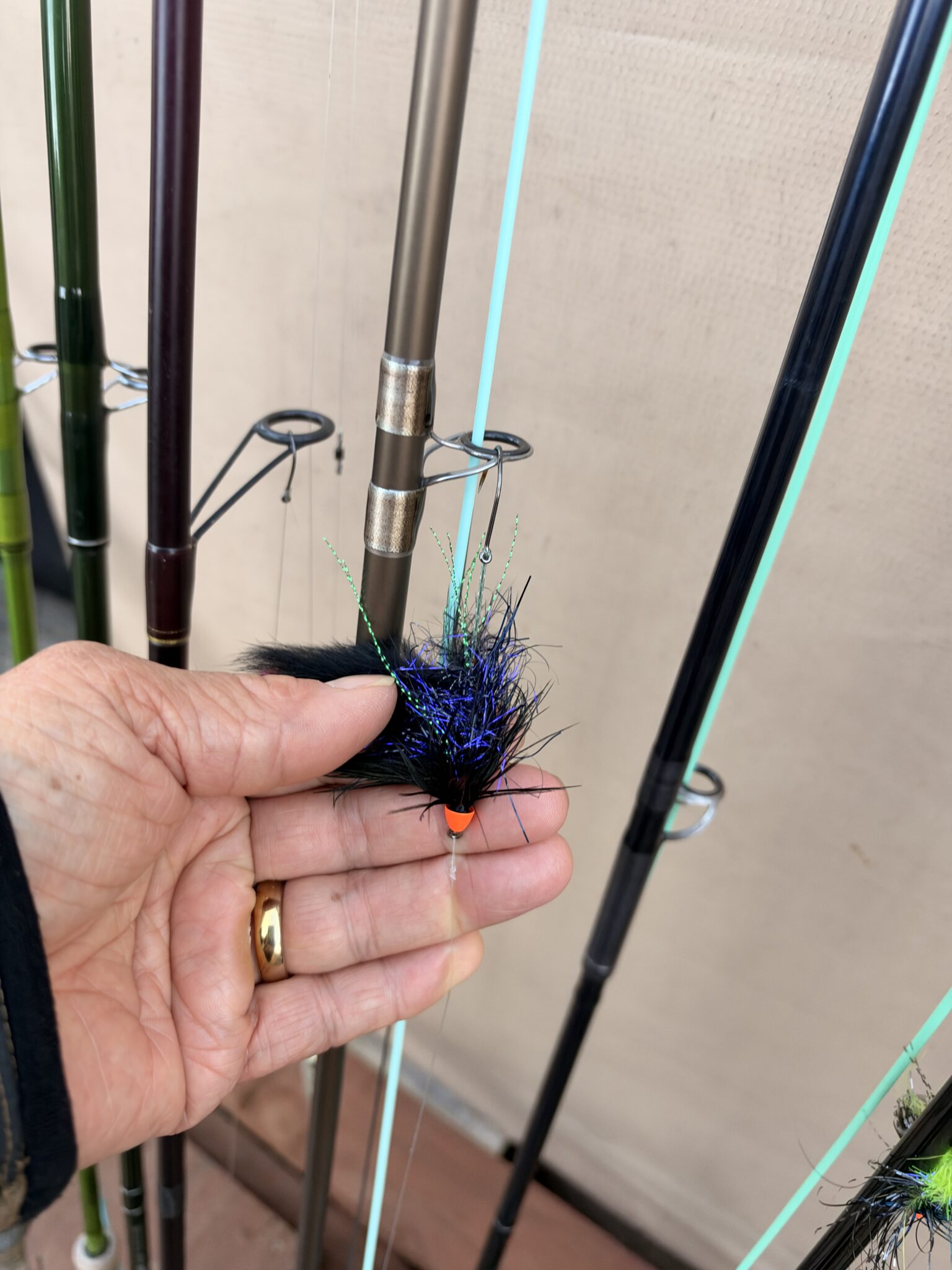
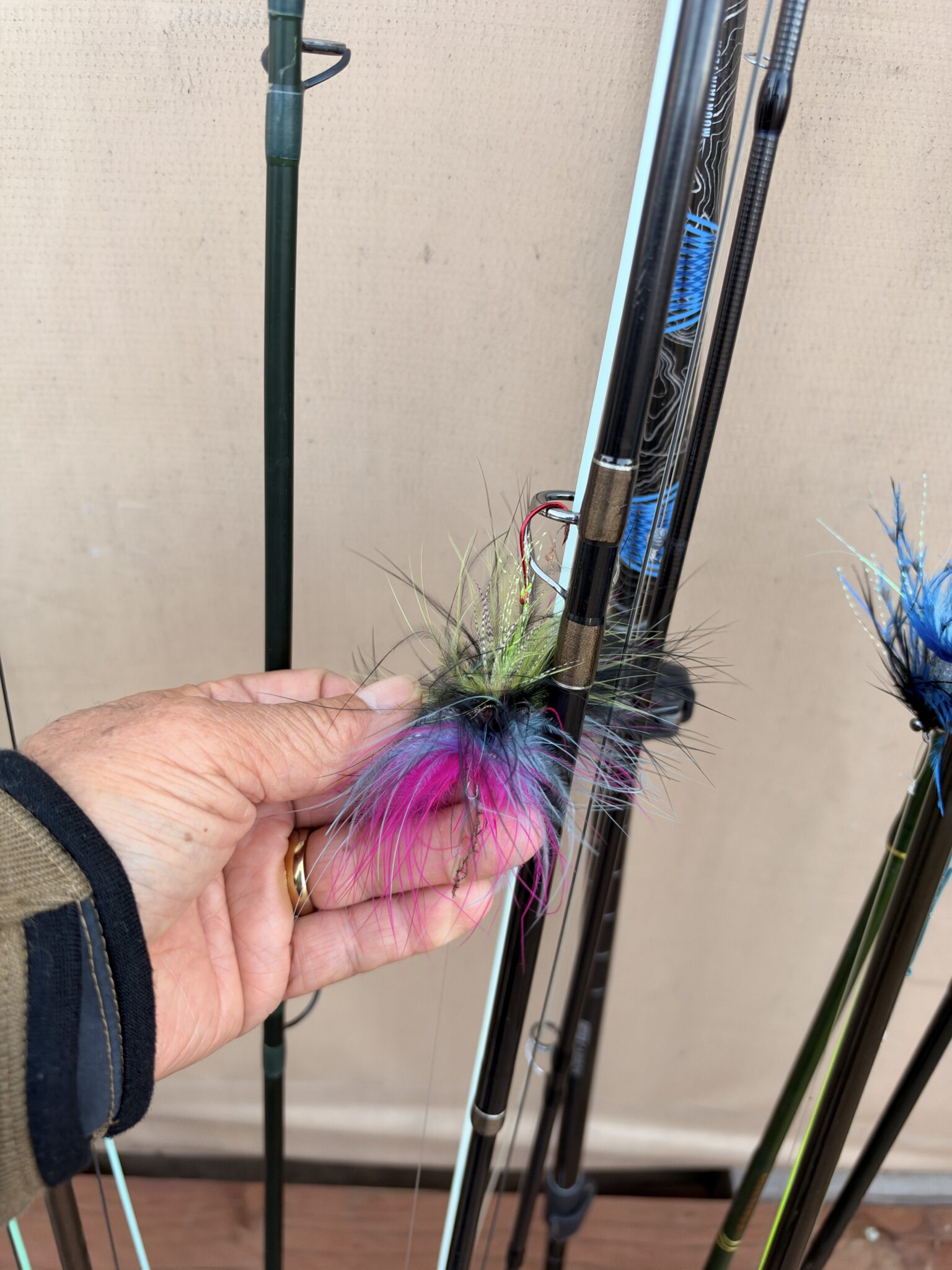
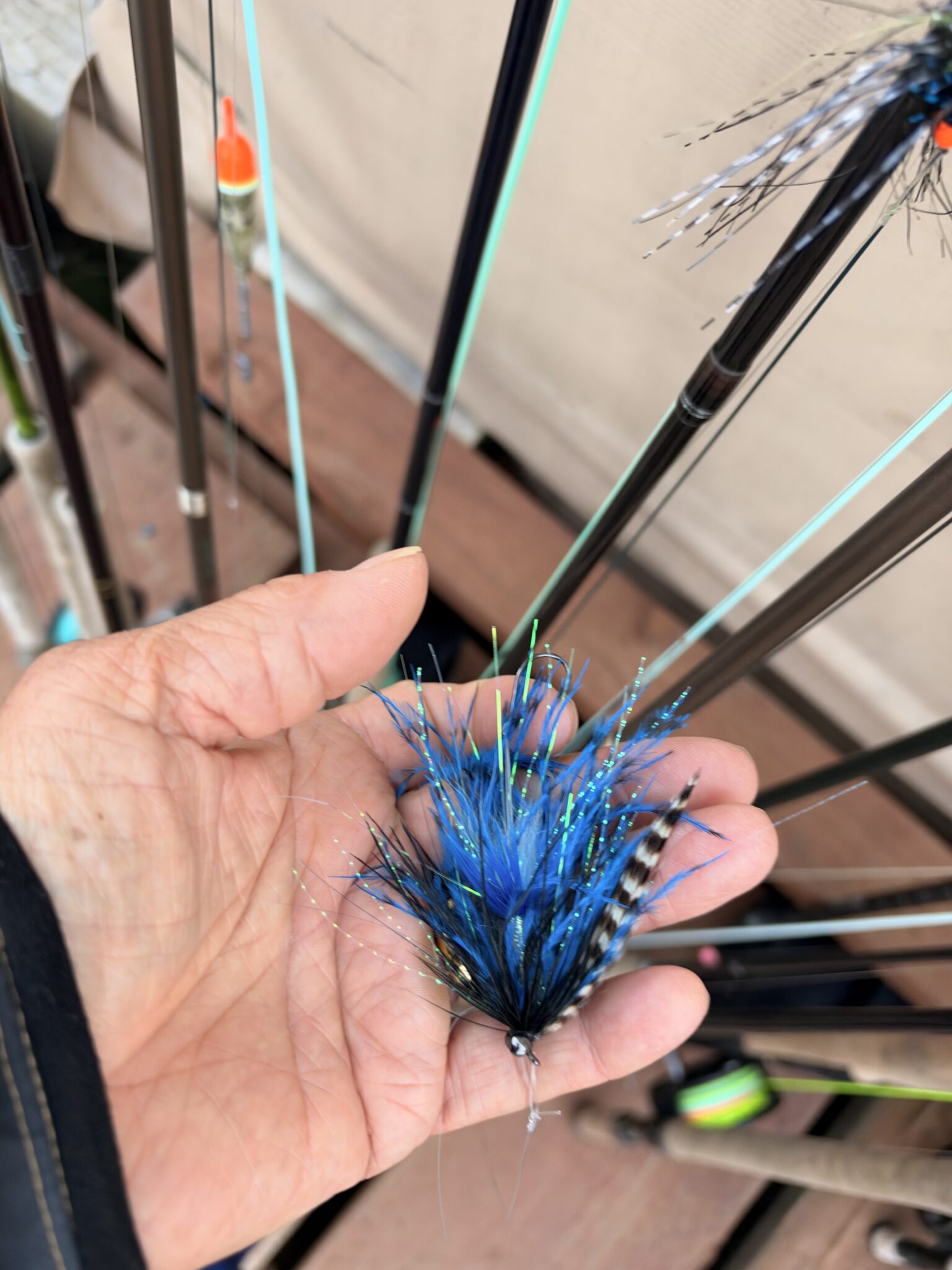
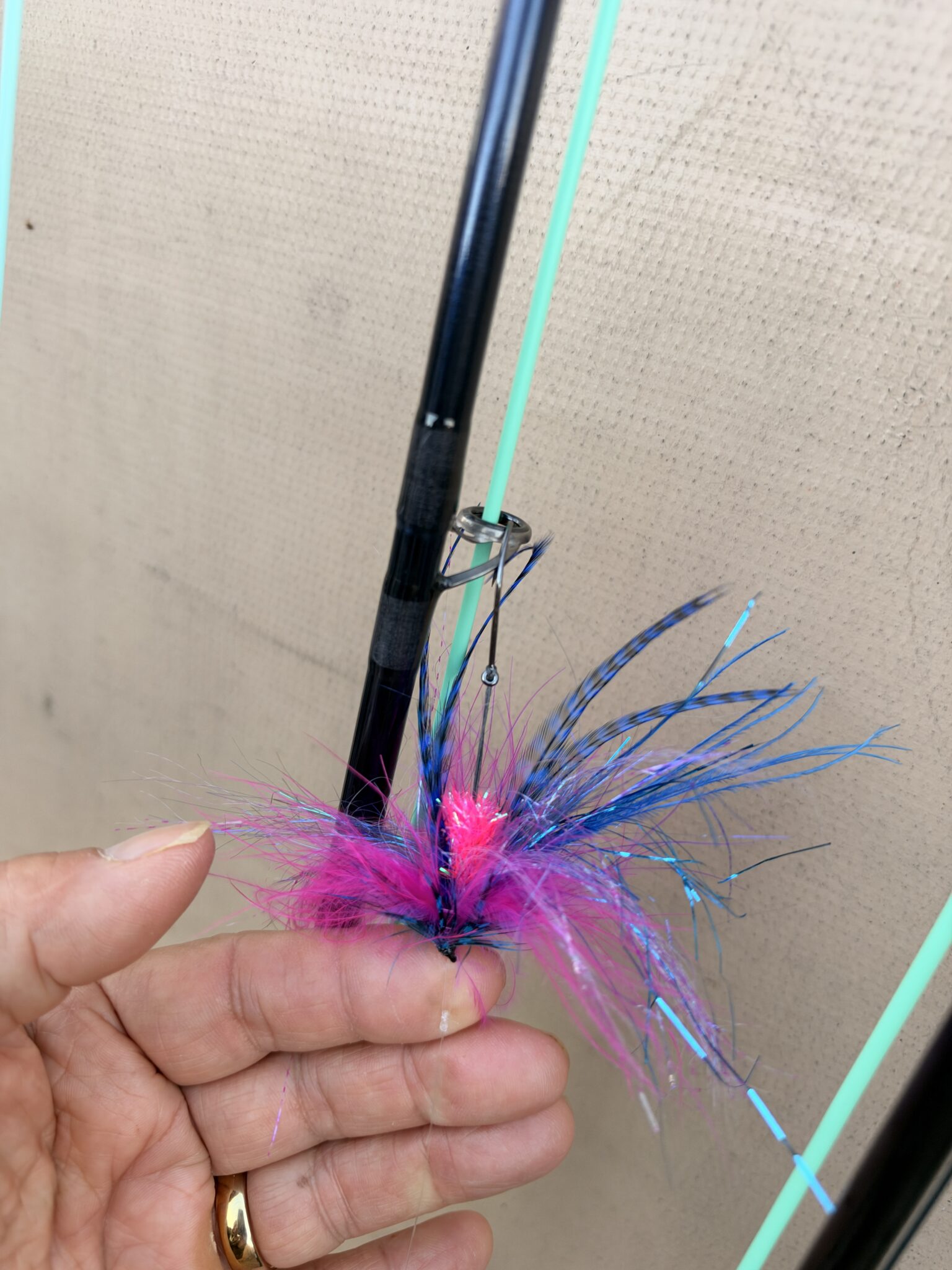
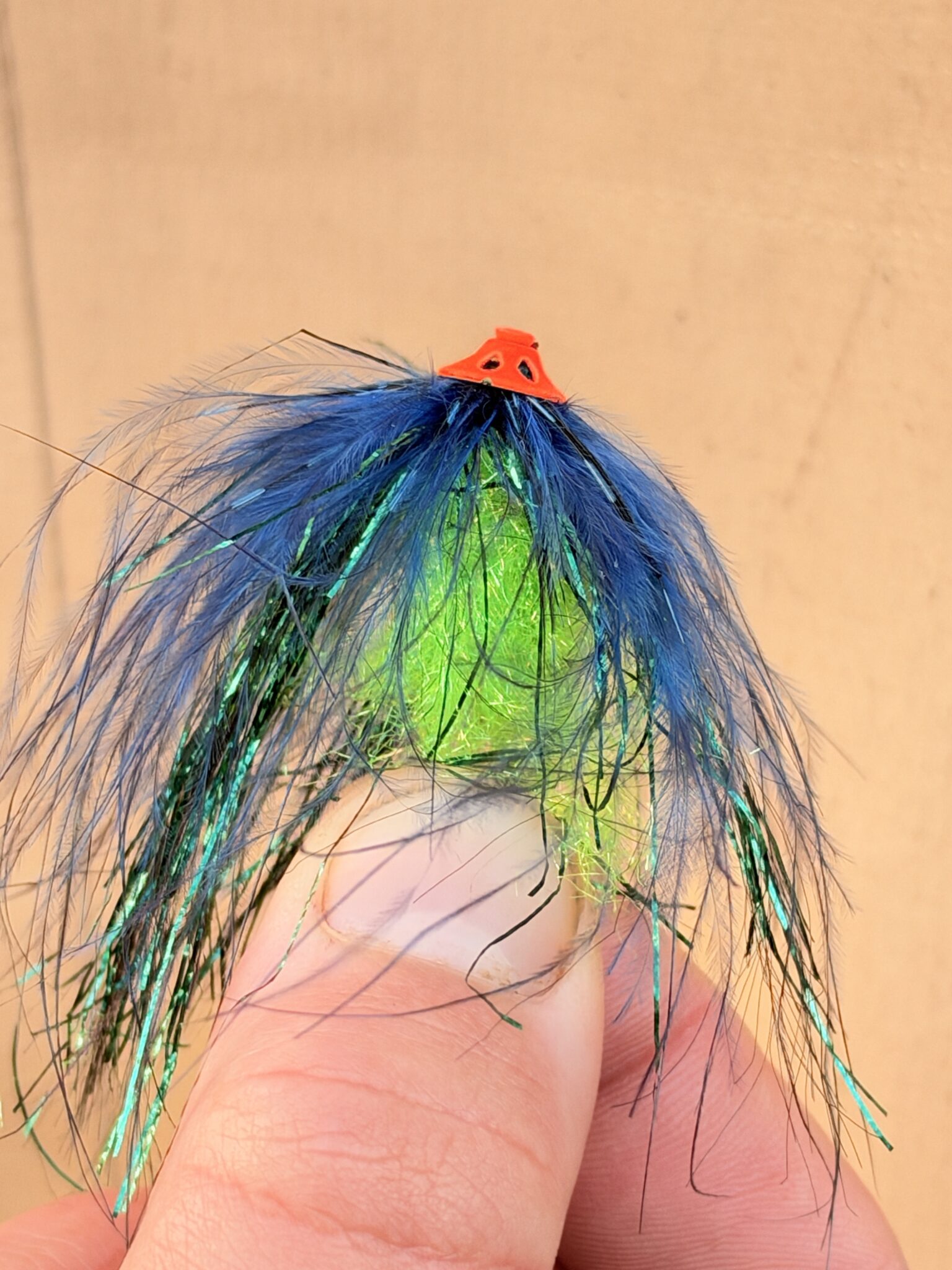
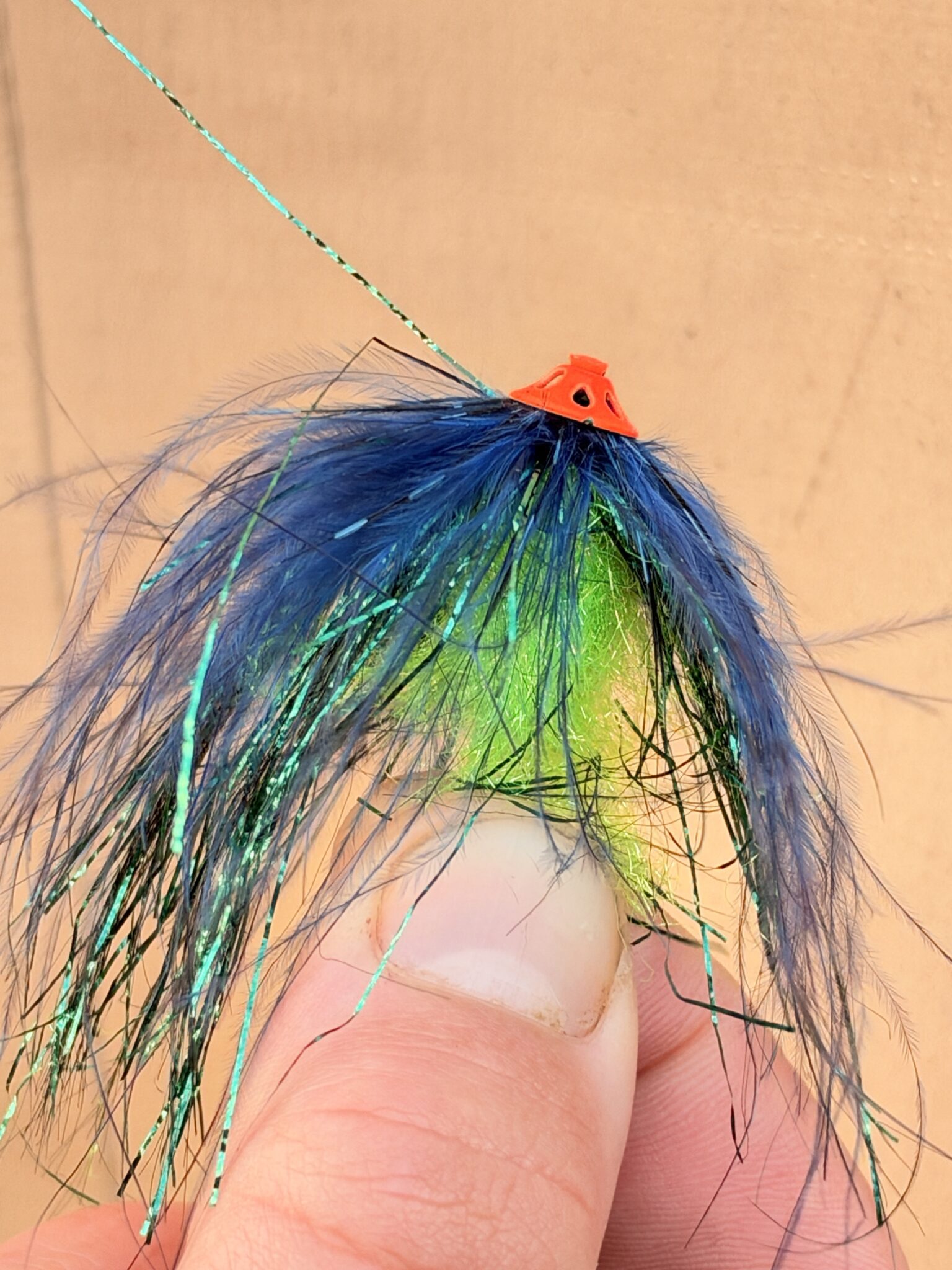
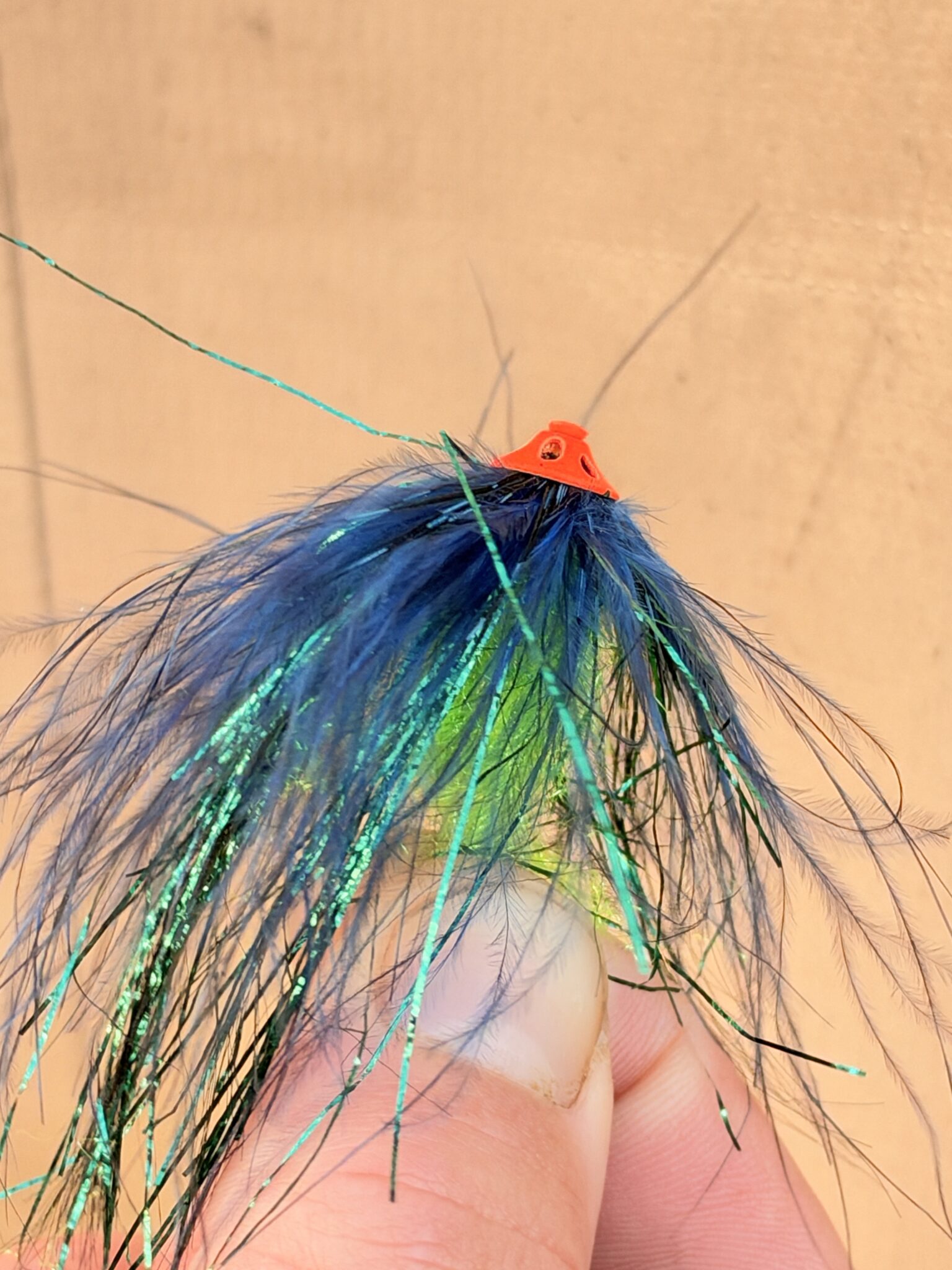
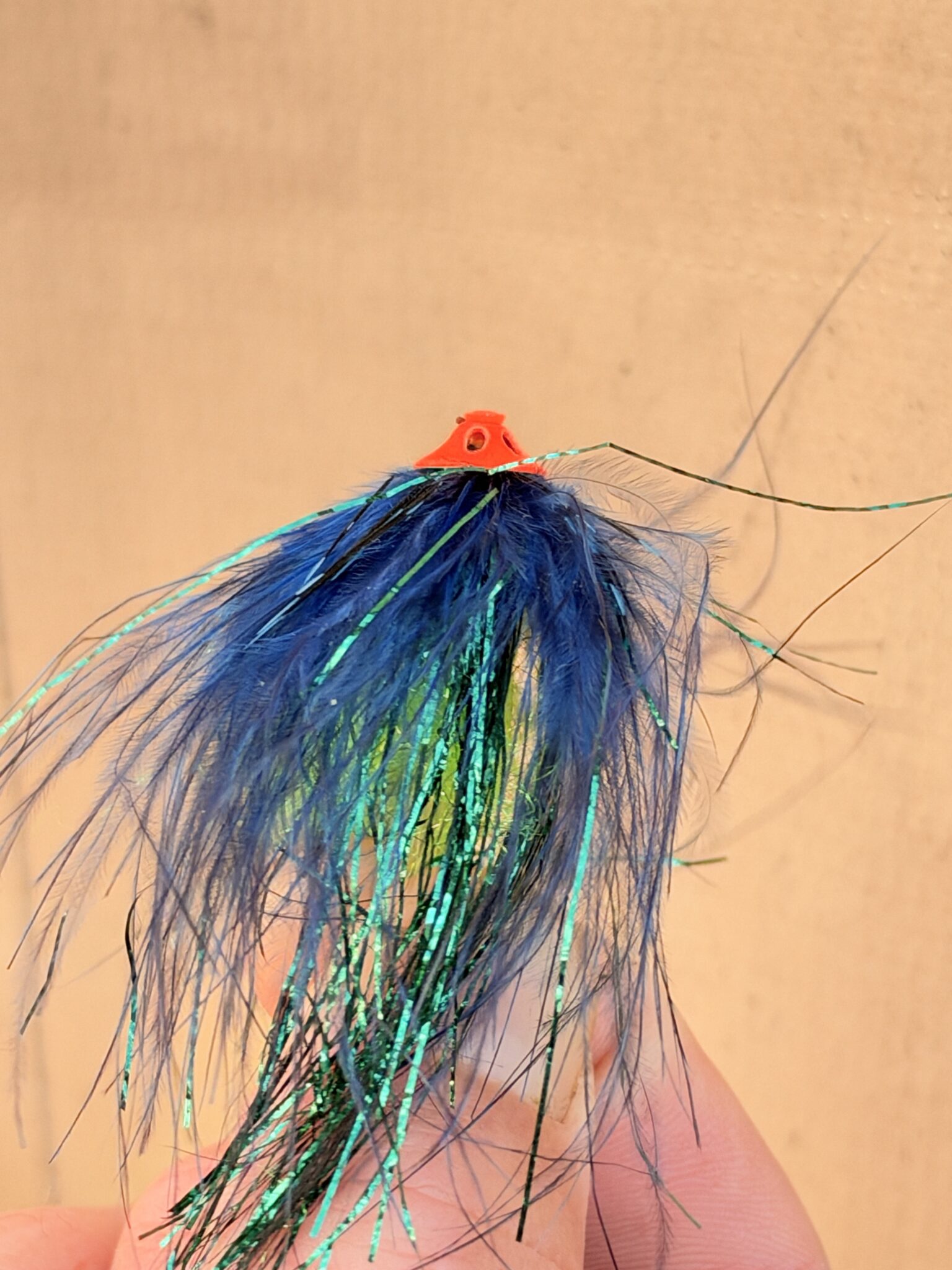
We mainly threw t11, t8 and half and half tips on full size spey rods. For me, half and halfs were the ticket for 3 feet or shallower, Then longer leaders and weighted flies for 3-6 ft. Also I can see the benefit of longer spey lines which means less retrieving after the hang, longer casts thus longer swings which translates to fly in water longer – more steelhead.
I recently purchased a new Spey Rod for the trip based on some advice from Preacher Mike and some research. I changed up the way I pack for Spey trips. I use to fish alaska with spey rods that would fit in my 36 inch Fishpond bag but after watching the way Mike traveled with a soft roller bag and a Fishpond 45 inch Dakota Rod and Reel case , which the float planes prefer over my gigantic fishpond roller bag, I’m really happy to finally take lighter and longer rods on these swing trips. Packing all fishing gear in the Dakota and all clothes and waders in soft bag is a game changer, The only downside is checking two bags, but the old man in me is booking first class whenever possible and that comes with two free bags!
I recently acquired a Nam GWT 7126-4 It is described as a surprisingly light in hand, fast recovering but with a smooth deep flex with a preferred line wgt of 432 to 556gr. Glen had recommended shorter 11-12 switch rods, but after the first day studying the spey runs, we both agreed that full length spey rods would be more ideal, I brought a Meisner S2G13669CX-6 and a Berkheimer CF 8121-5c but stuck with the lighter Nam which seemed perfect,
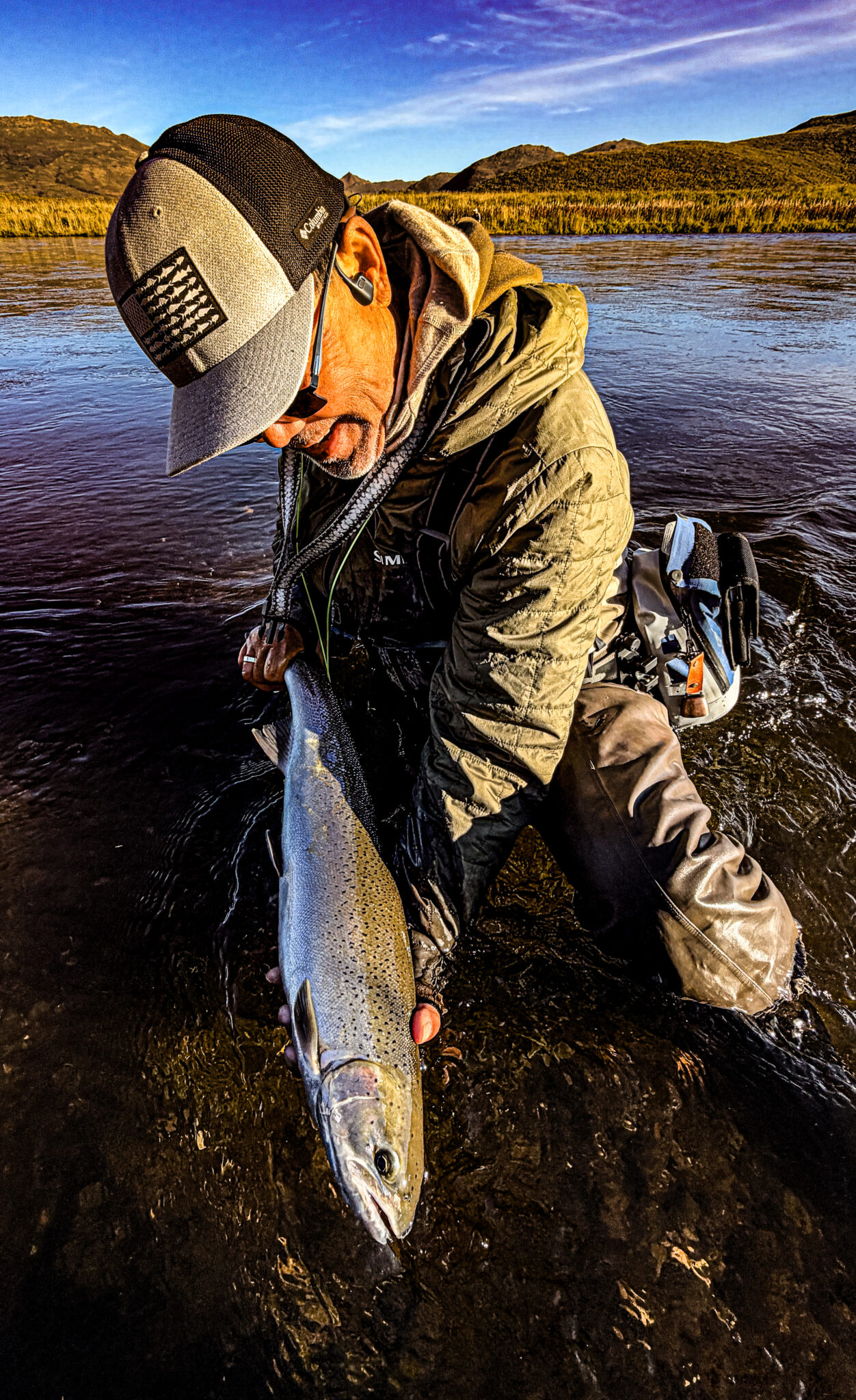
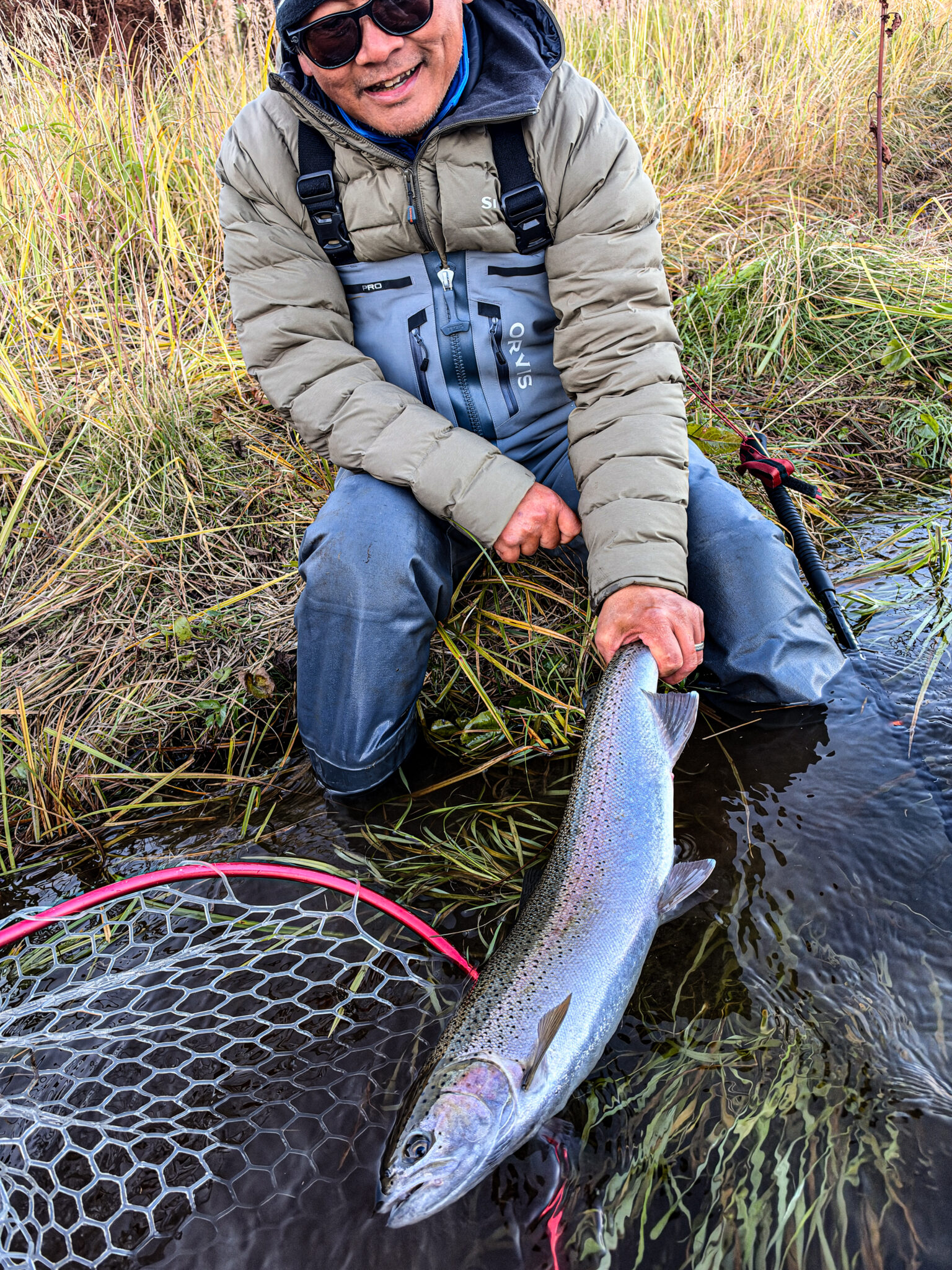
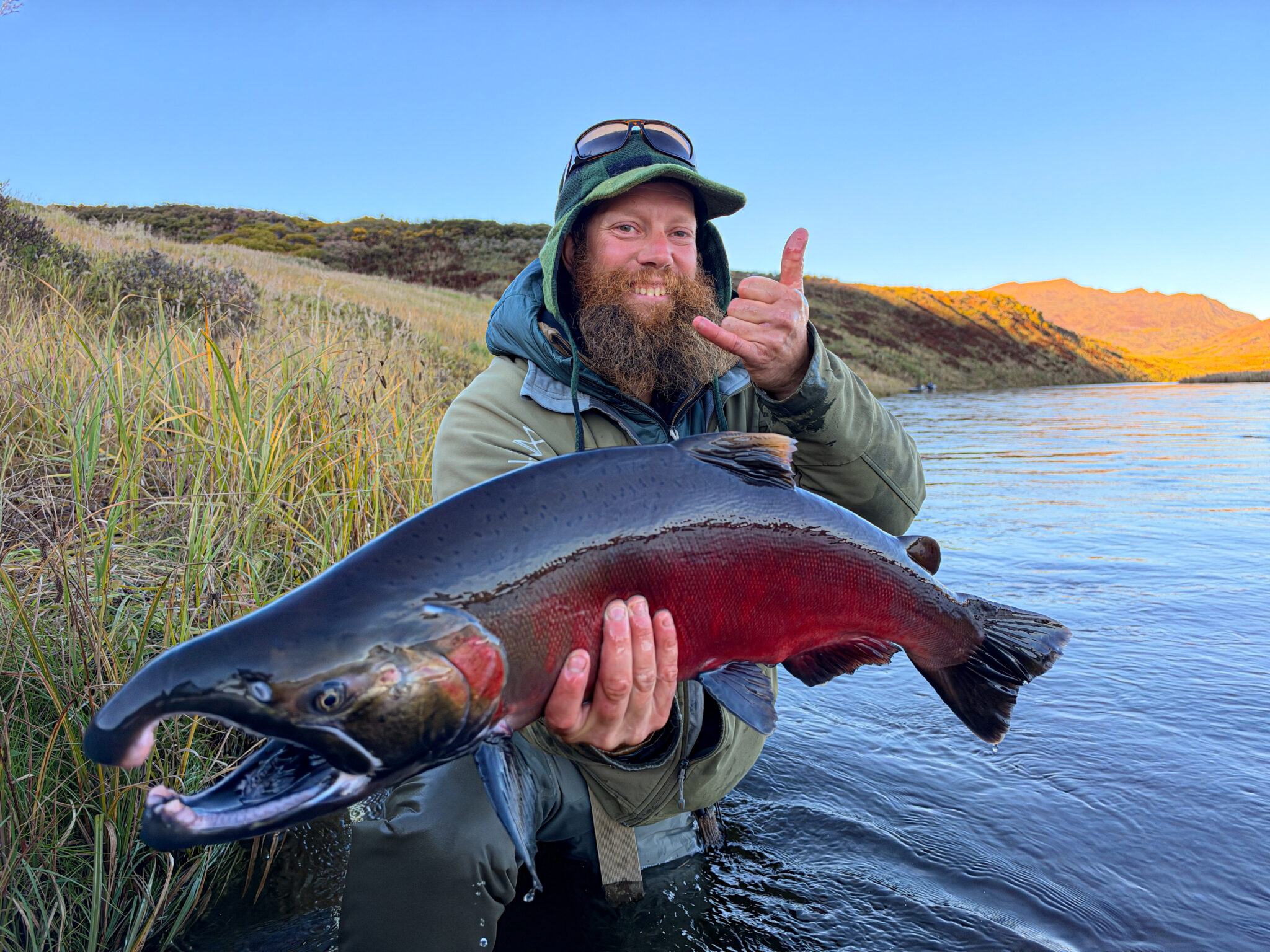
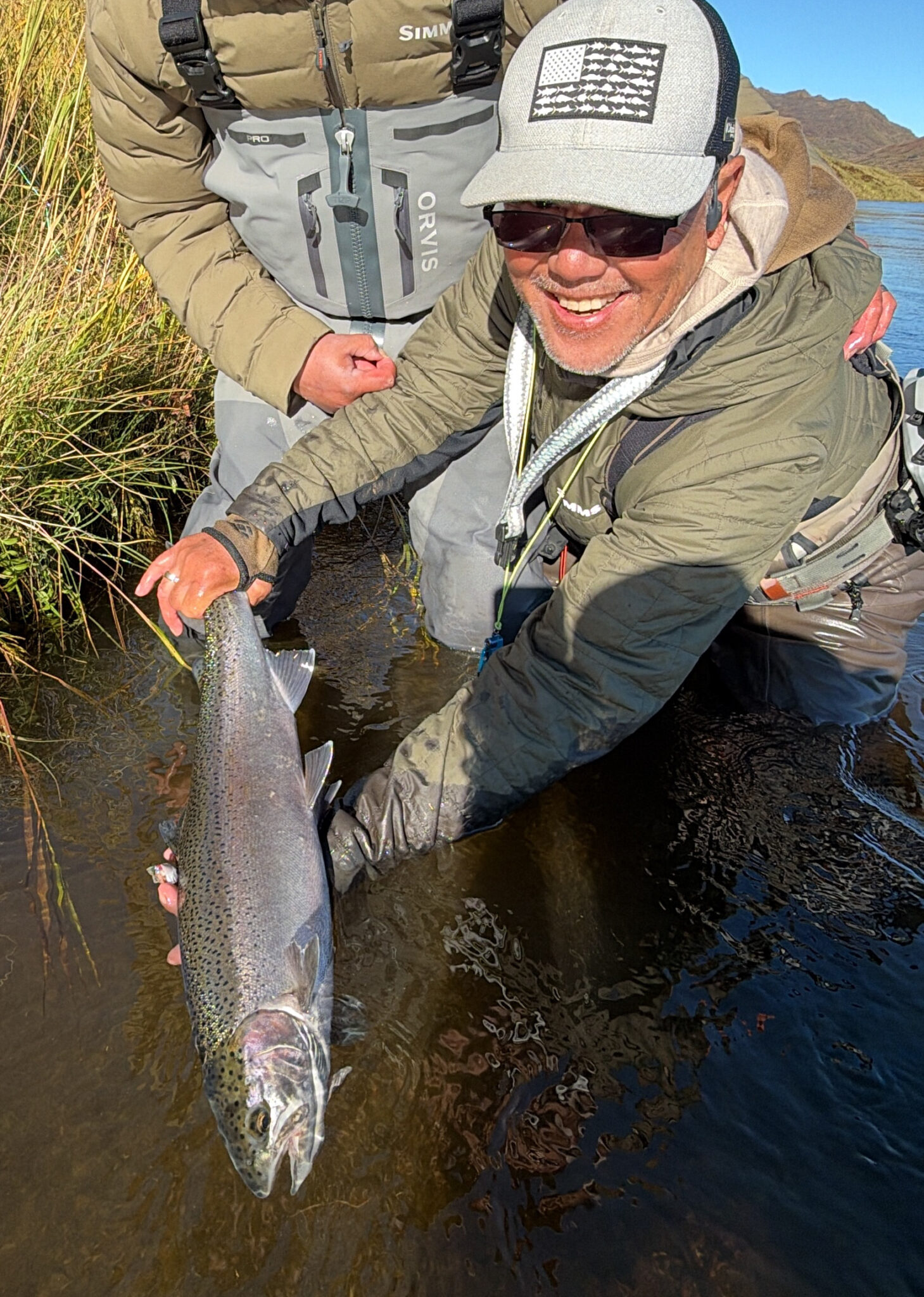
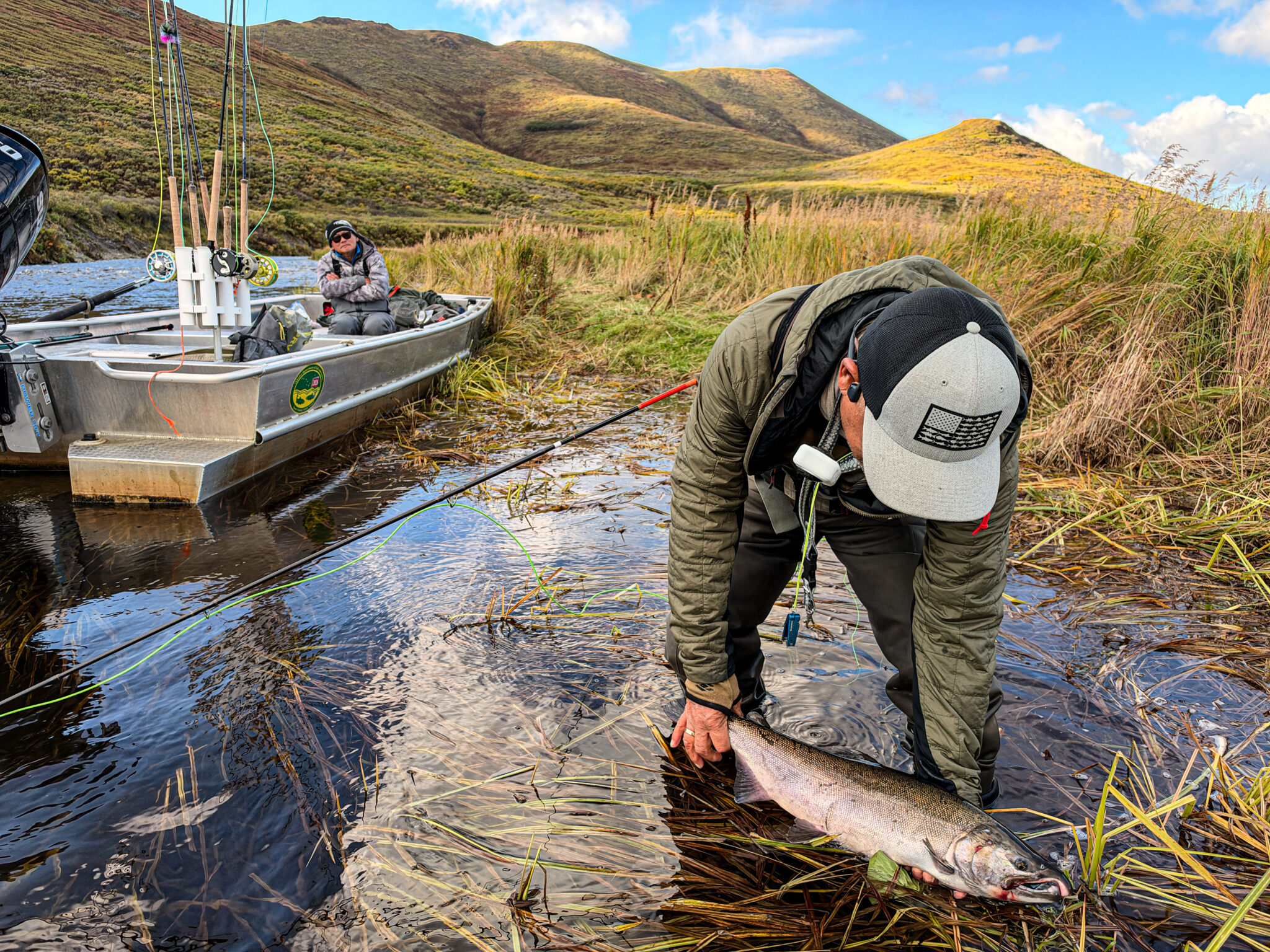
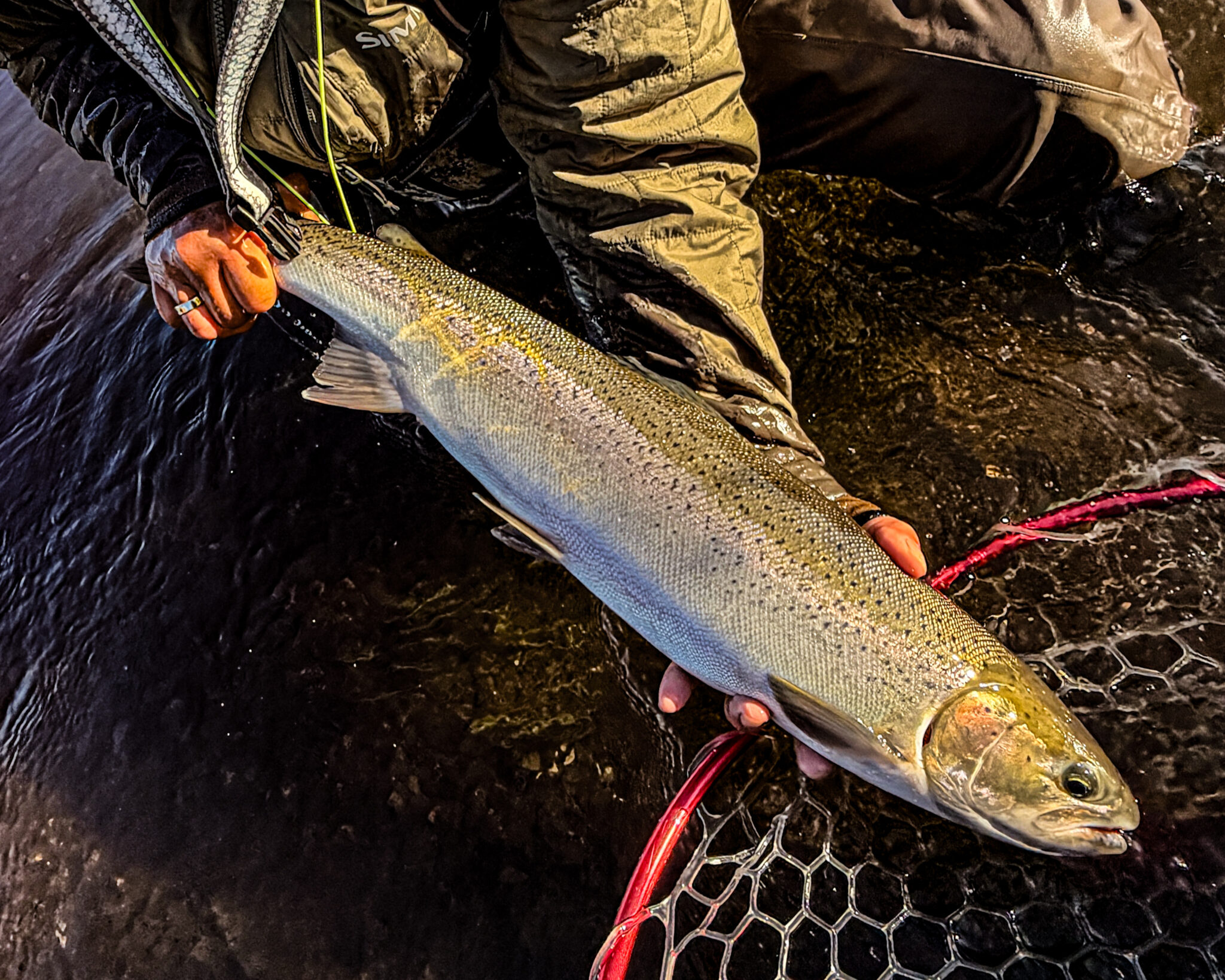
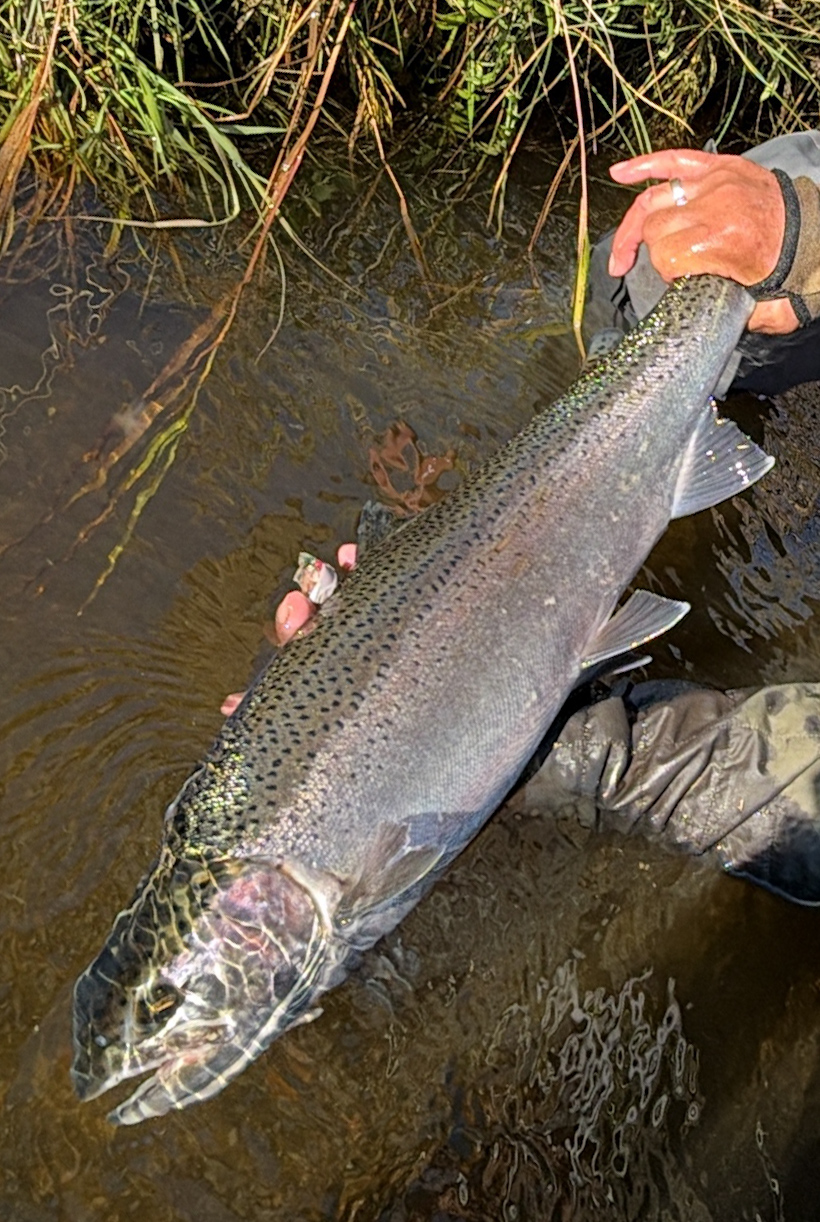
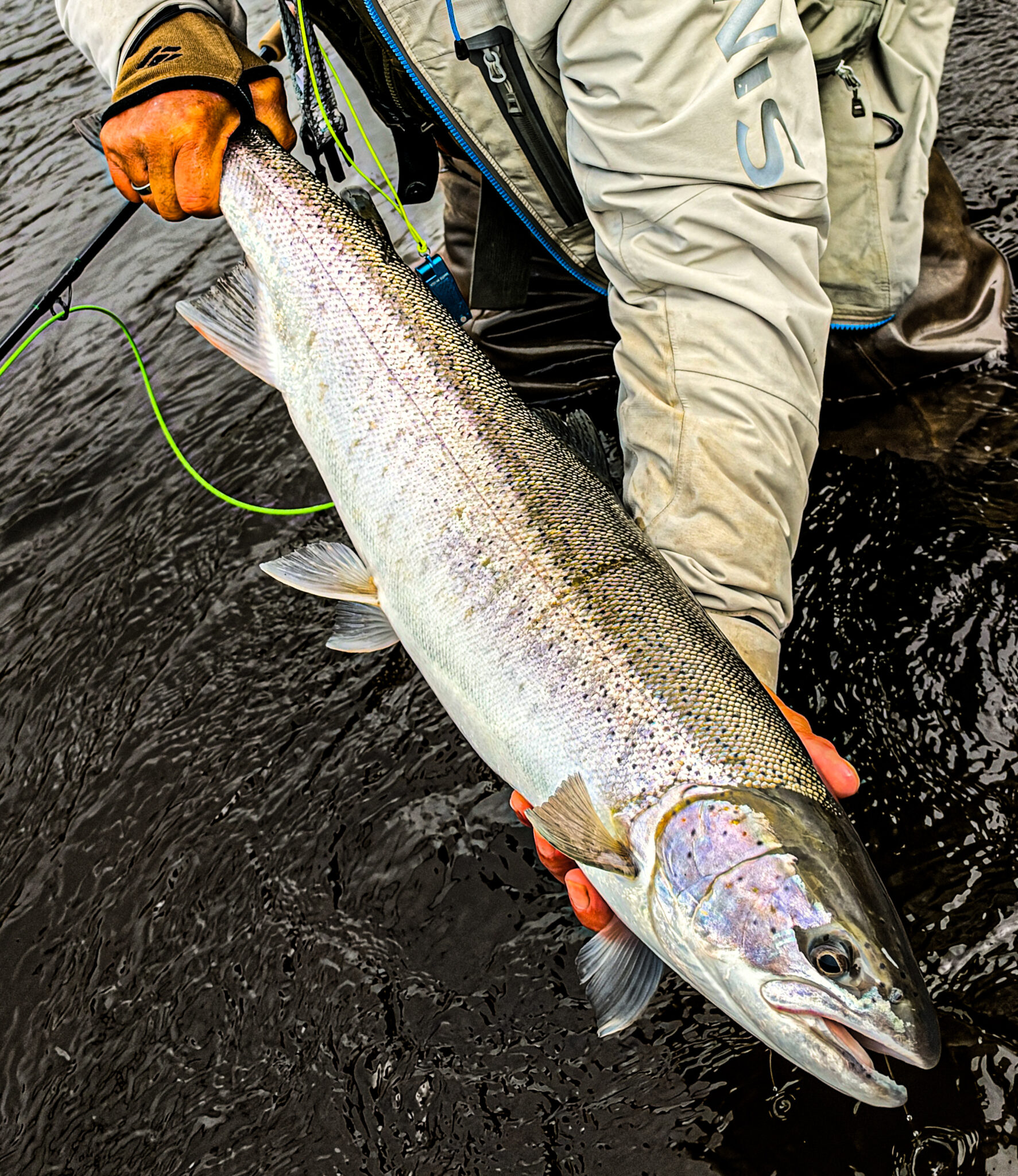
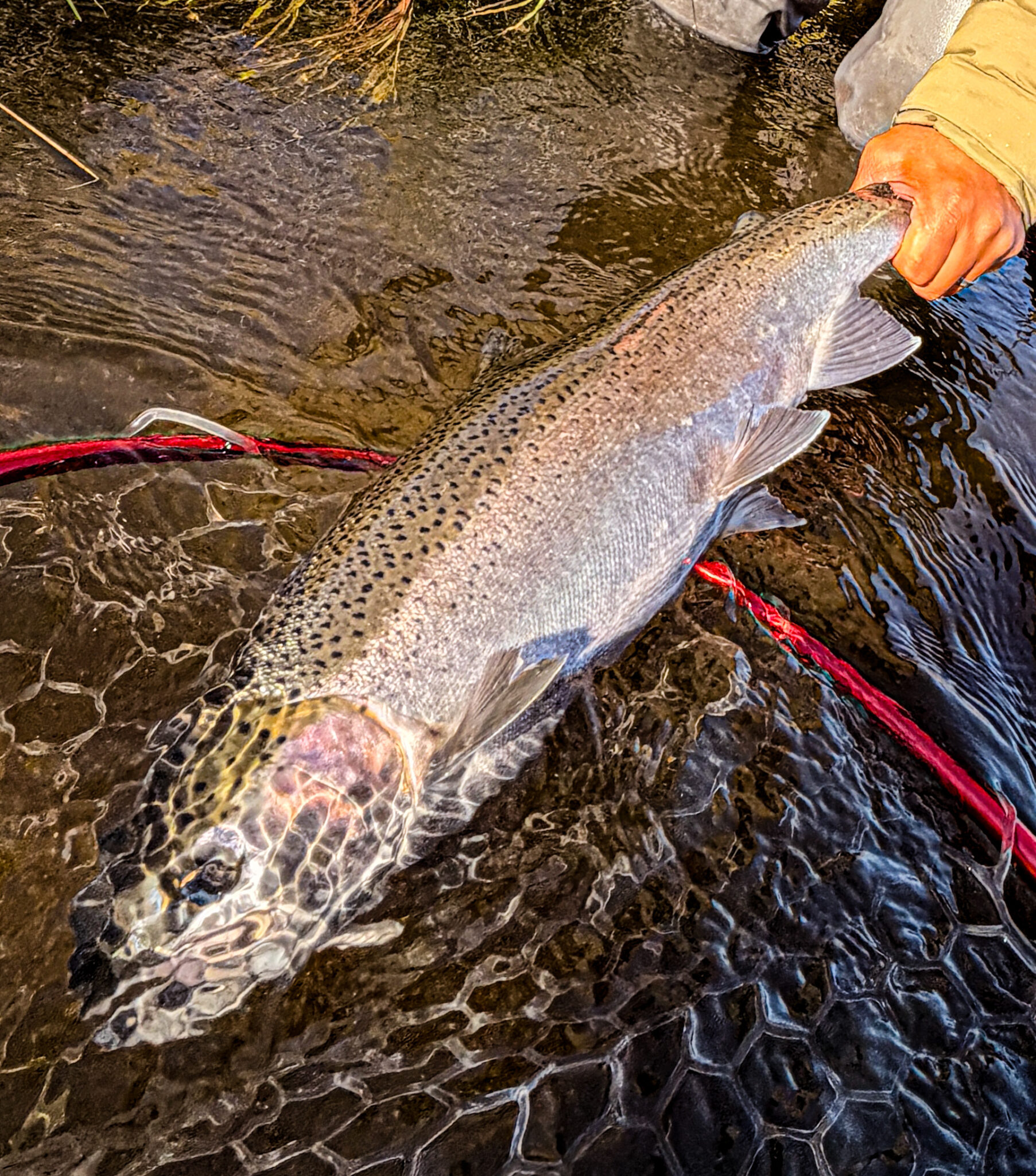
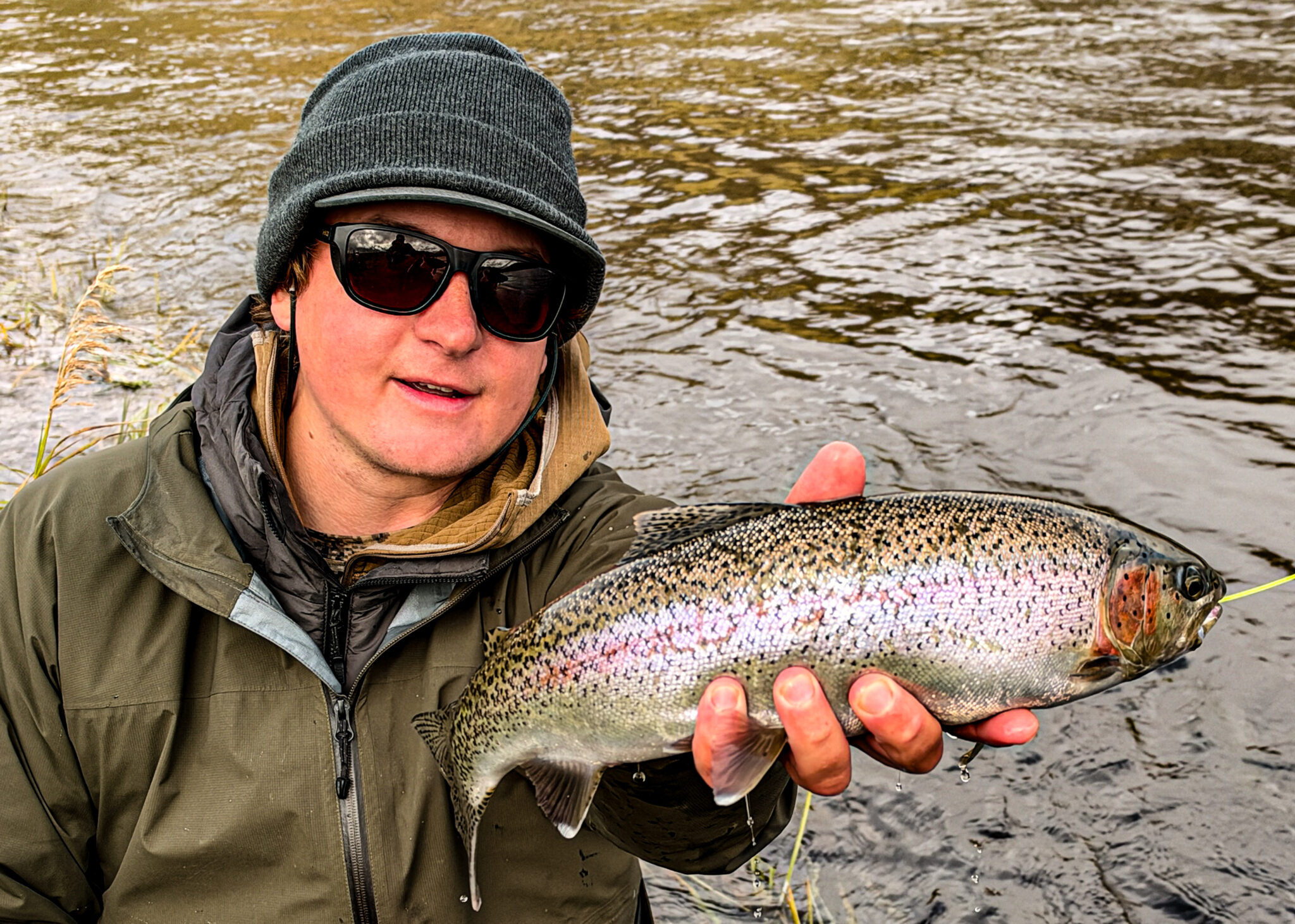
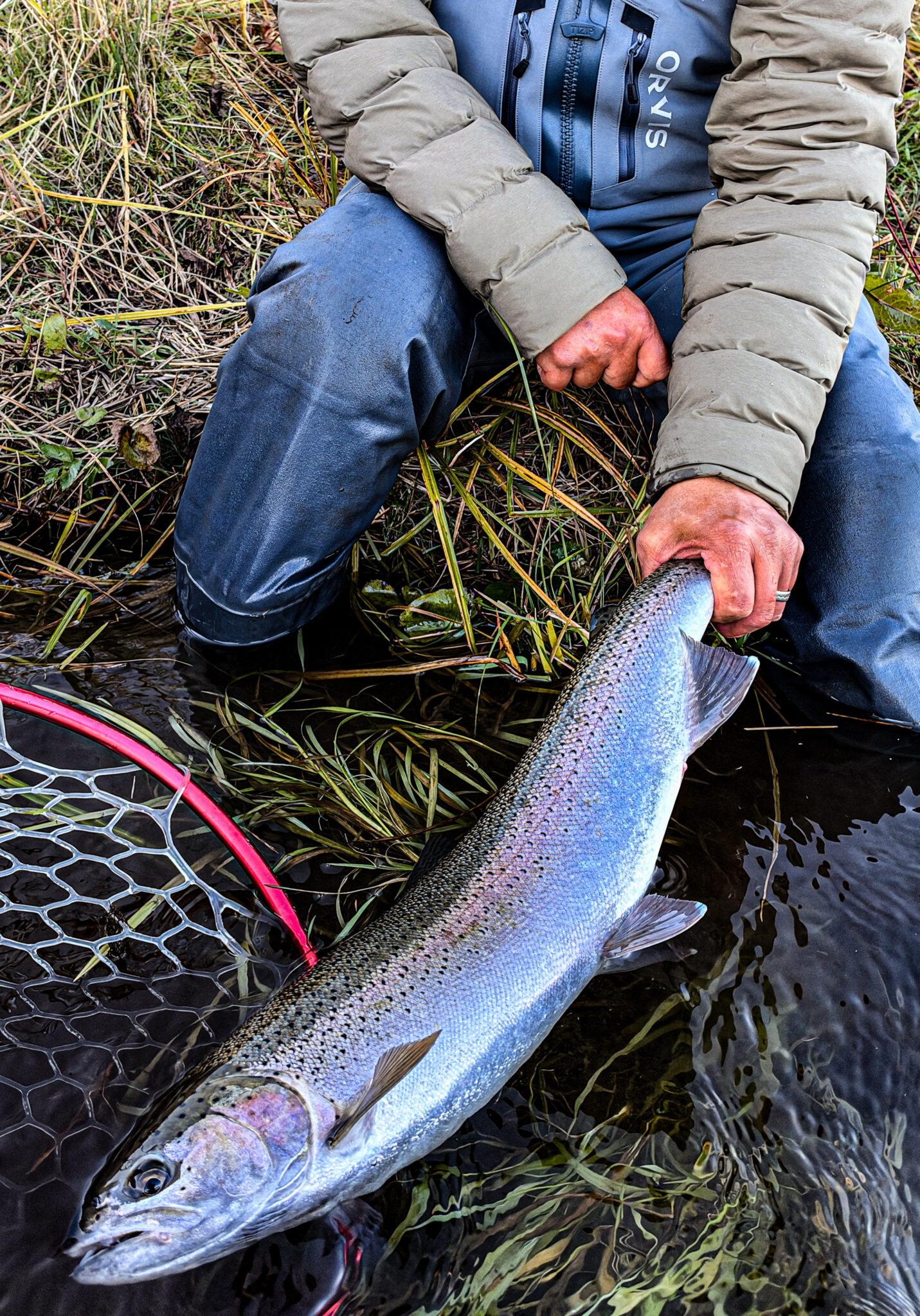
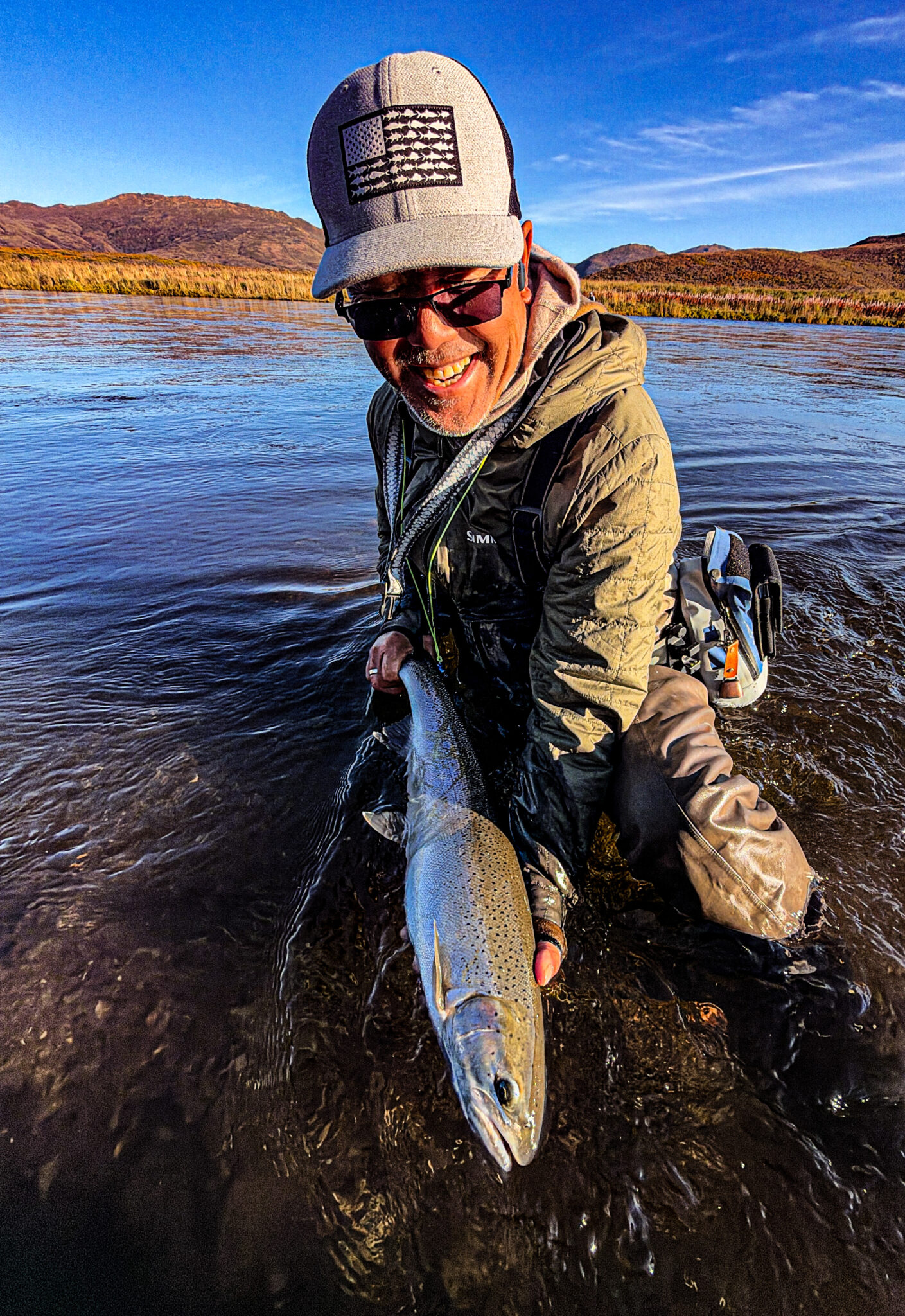
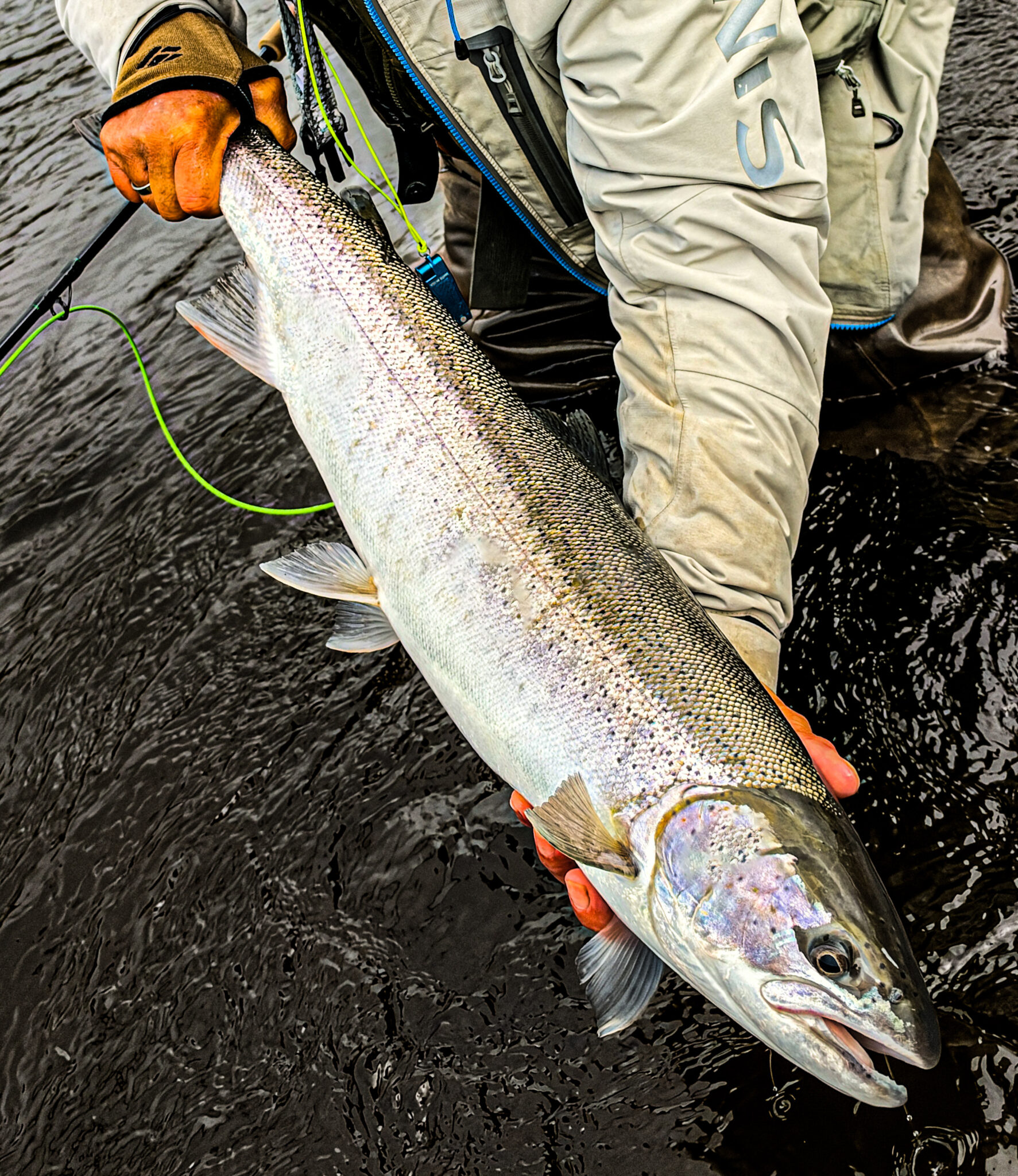
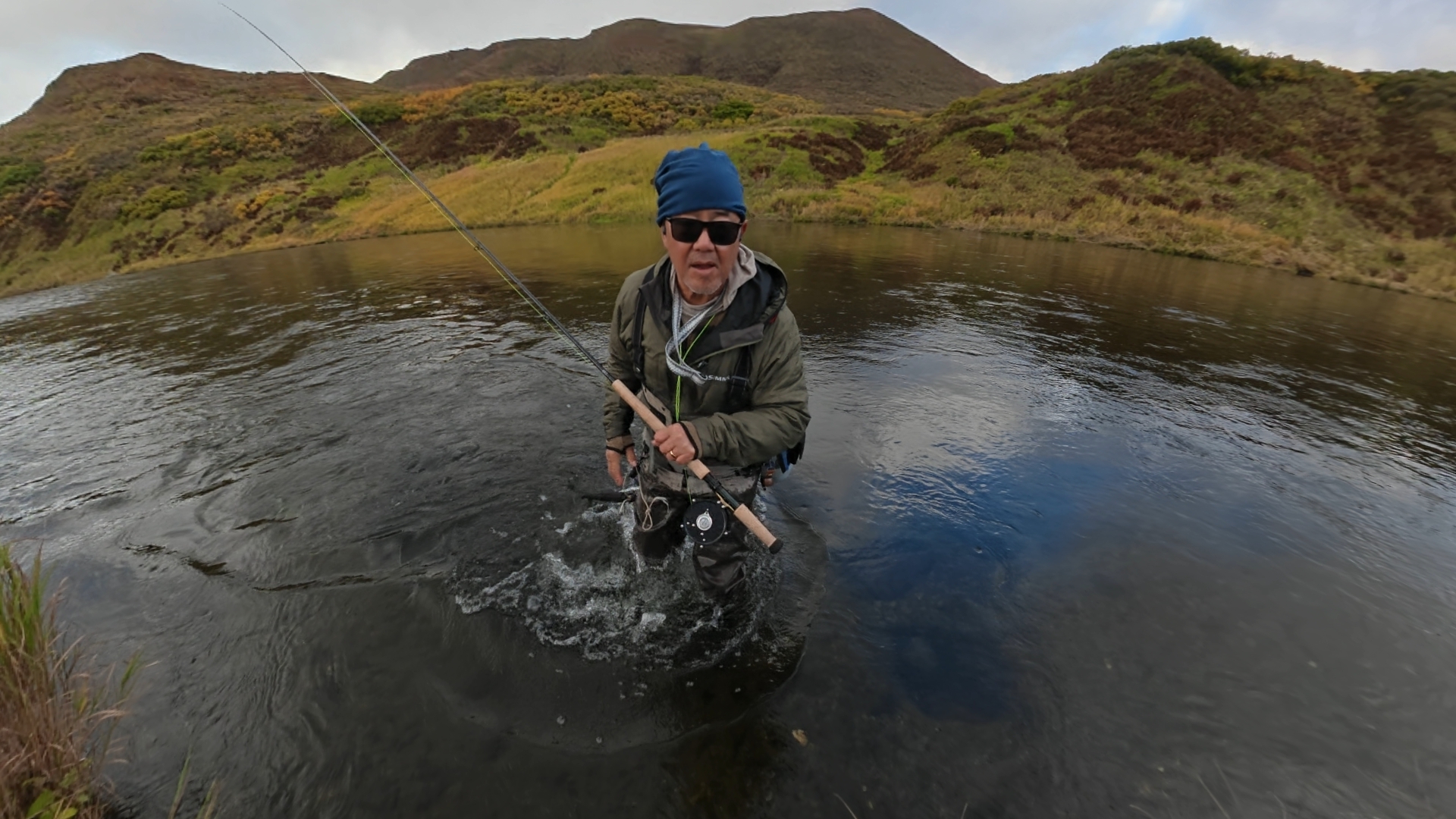
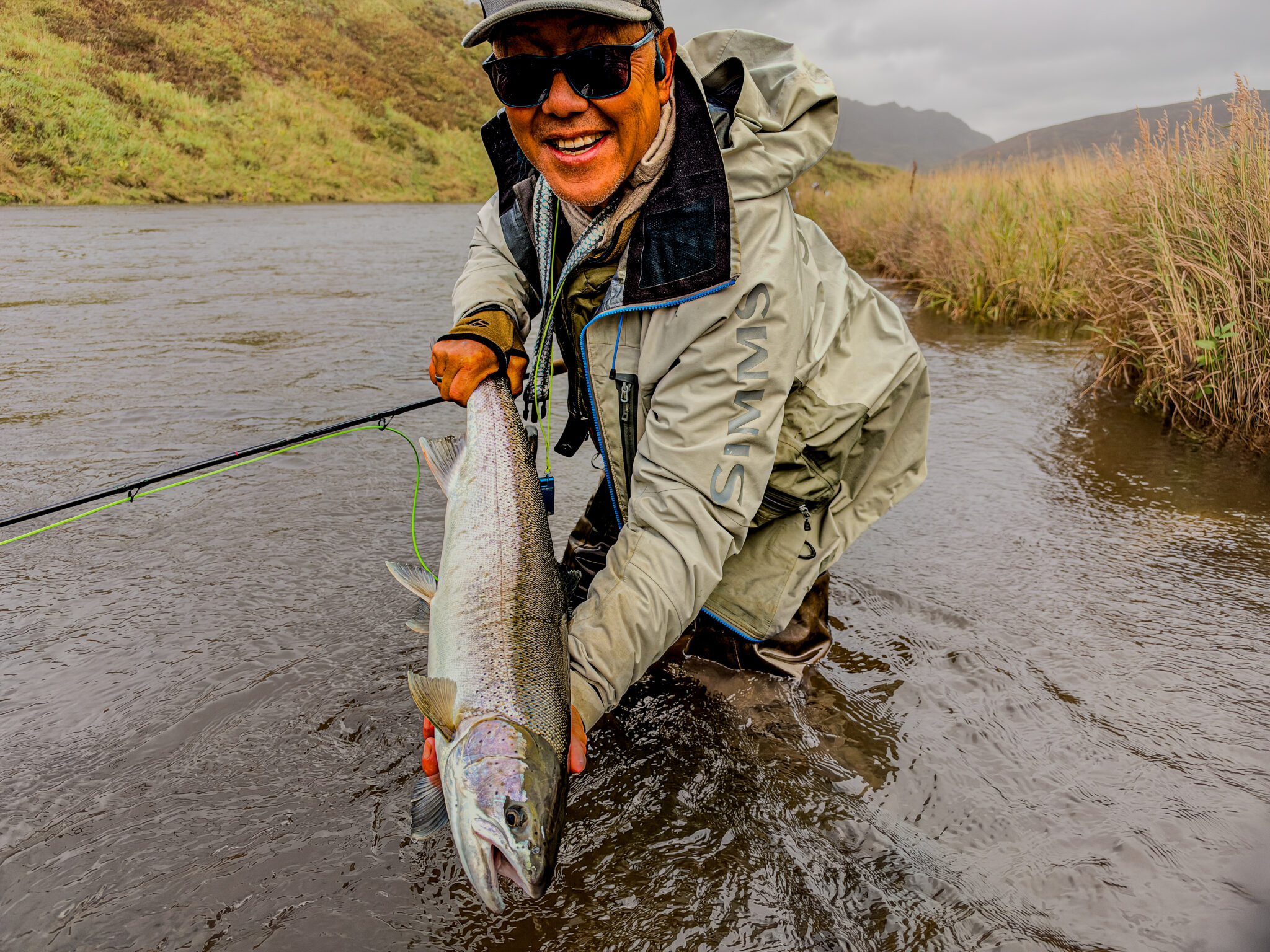
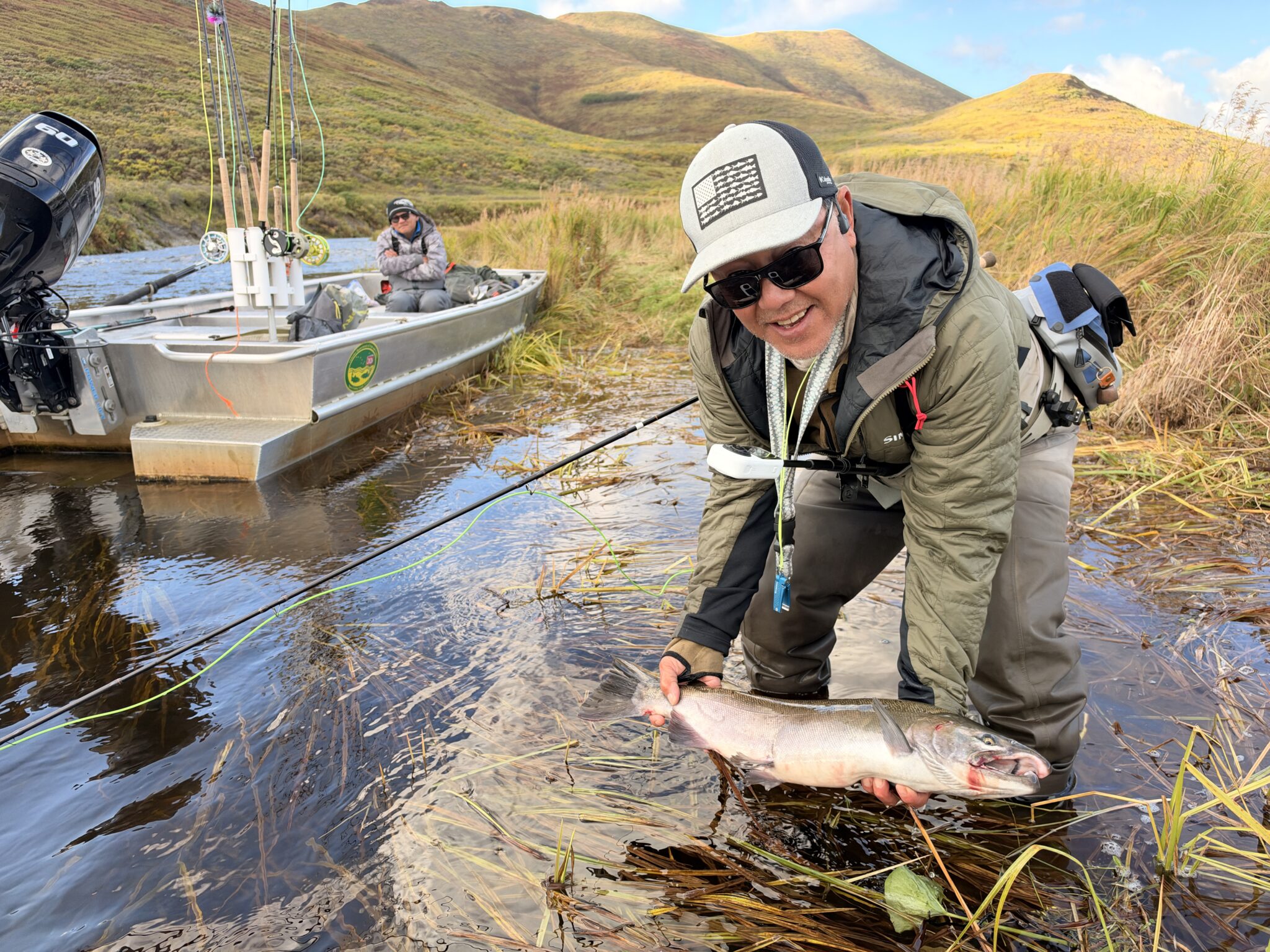
Best Coastal Steelhead Water in the World
I asked AI a simple question: Where are the best steelhead rivers in the world for swinging flies with a Spey rod? It came back with the usual hall-of-fame lineup:
Dean River, British Columbia — the dream river. Ocean-fresh summer steelhead, spectacular country, and gorgeous swing water.
Bulkley River, British Columbia — perhaps the quintessential Spey river, with mile after mile of classic runs and wild steelhead.
Skeena River, British Columbia — enormous river, enormous fish, and the center of one of the most legendary steelhead watersheds on Earth.
Thompson River, British Columbia — famous for big water, big rods, and steelhead with enough horsepower to make you question your backing knot.
North Umpqua River, Oregon — one of the historic temples of swung-fly steelheading in the Lower 48.
Fair enough. But that wasn’t quite what I was looking for. So I narrowed the question: What about coastal steelhead rivers from California to Alaska? We’re talking coastal steelhead rivers from California all the way through Alaska, and specifically asking which ones deserve attention for two-handed rods and swung flies, the list is considerably broader than the six we were discussing.
AI grouped them as such.
- Northern California: Smith is the headline river—beautiful, extremely clear coastal water and famous wild winter steelhead.
- Oregon: North Umpqua is the historic swinging icon. I’d also include the Rogue as an important two-handed steelhead river.
- Washington: The Olympic Peninsula is the center of gravity—Hoh, Queets, Sol Duc, Bogachiel and Calawah. Washington officially includes the Hoh, Queets and Sol Duc among its iconic coastal steelhead systems. WDFW
- Southeast Alaska/Yakutat: Situk is the heavyweight for numbers. Alaska calls it the state’s largest steelhead fishery; average fish are about 30 inches, and in some years roughly 5% exceed 36 inches. The downside for our particular discussion is that much of the river is relatively small and isn’t classic expansive Spey water. Alaska Department of Fish and Game
- Kodiak: Ayakulik and Karluk deserve consideration, particularly if we’re weighting wilderness, wild fall steelhead and low pressure heavily.
- Alaska Peninsula: Sandy absolutely belongs on the list—and I understated it earlier. ADF&G says the Sandy holds one of the Alaska Peninsula’s largest concentrations of steelhead; Peninsula steelhead average roughly 12–14 pounds, with some fish reaching about 22 pounds. The Sandy is also the Peninsula’s most popular river specifically for steelhead anglers, although “popular” is relative in such a remote place. Recent reports show a decline in fish.
From California’s Smith, through Oregon’s North Umpqua and the great Olympic Peninsula rivers, and north to Alaska’s Situk, Ayakulik and Sandy, the Pacific Coast holds some extraordinary wild steelhead water. But I wasn’t looking for the river with the most steelhead. I was looking for something more specific: a remote river with big wild fish, great two-handed swing water, and almost nobody there to fish it. That’s when the Ayakulik began separating itself from the pack. The Ayakulic. Remote Kodiak Island. No road access. Floatplane country. Wild steelhead. Bears. Weather. Miles of water and remarkably few fishermen. Now that sounded interesting. Apparently I’d accidentally booked a trip to one of the more unusual places in North America to chase steelhead on the swing.
The Bears
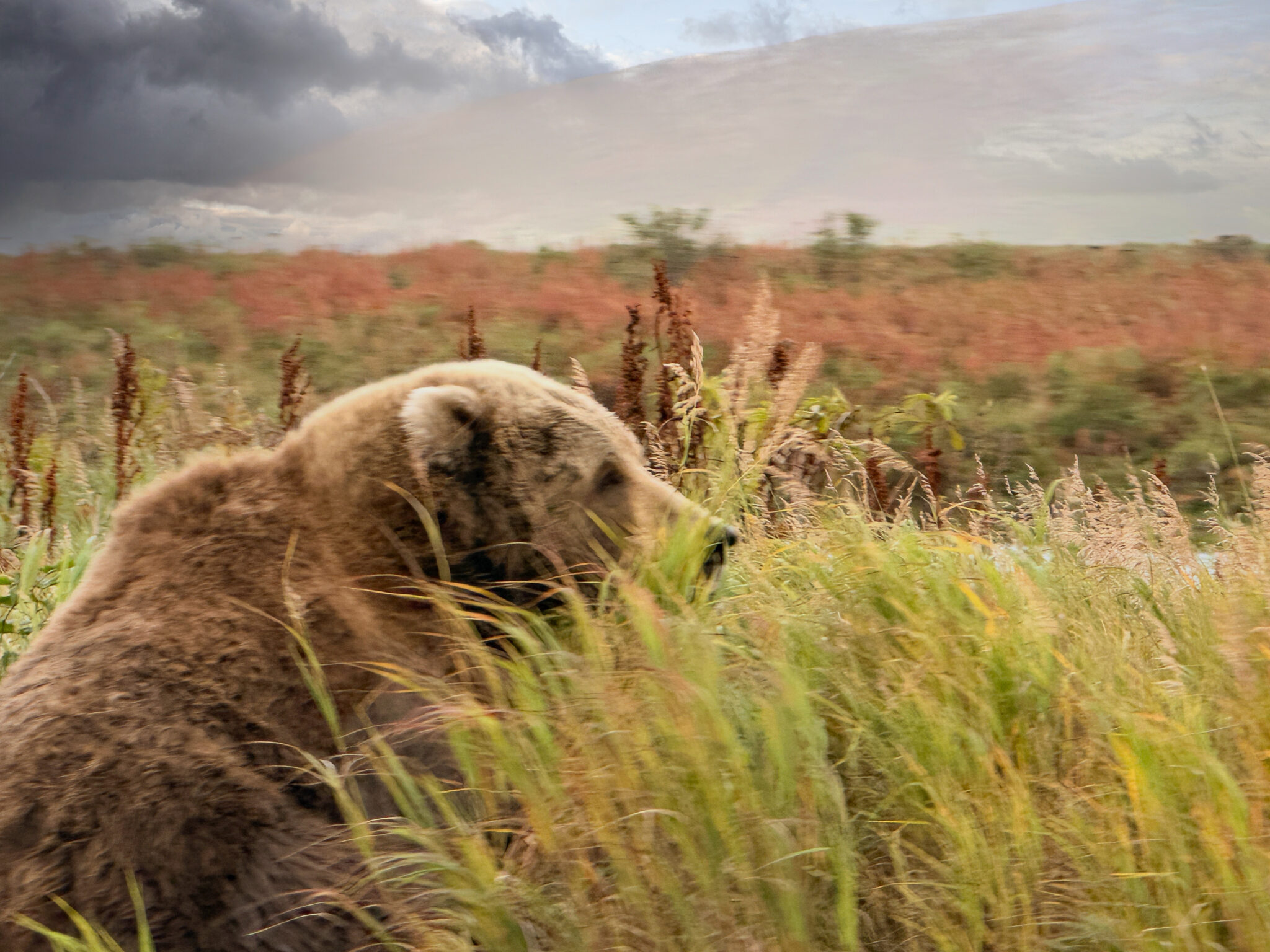
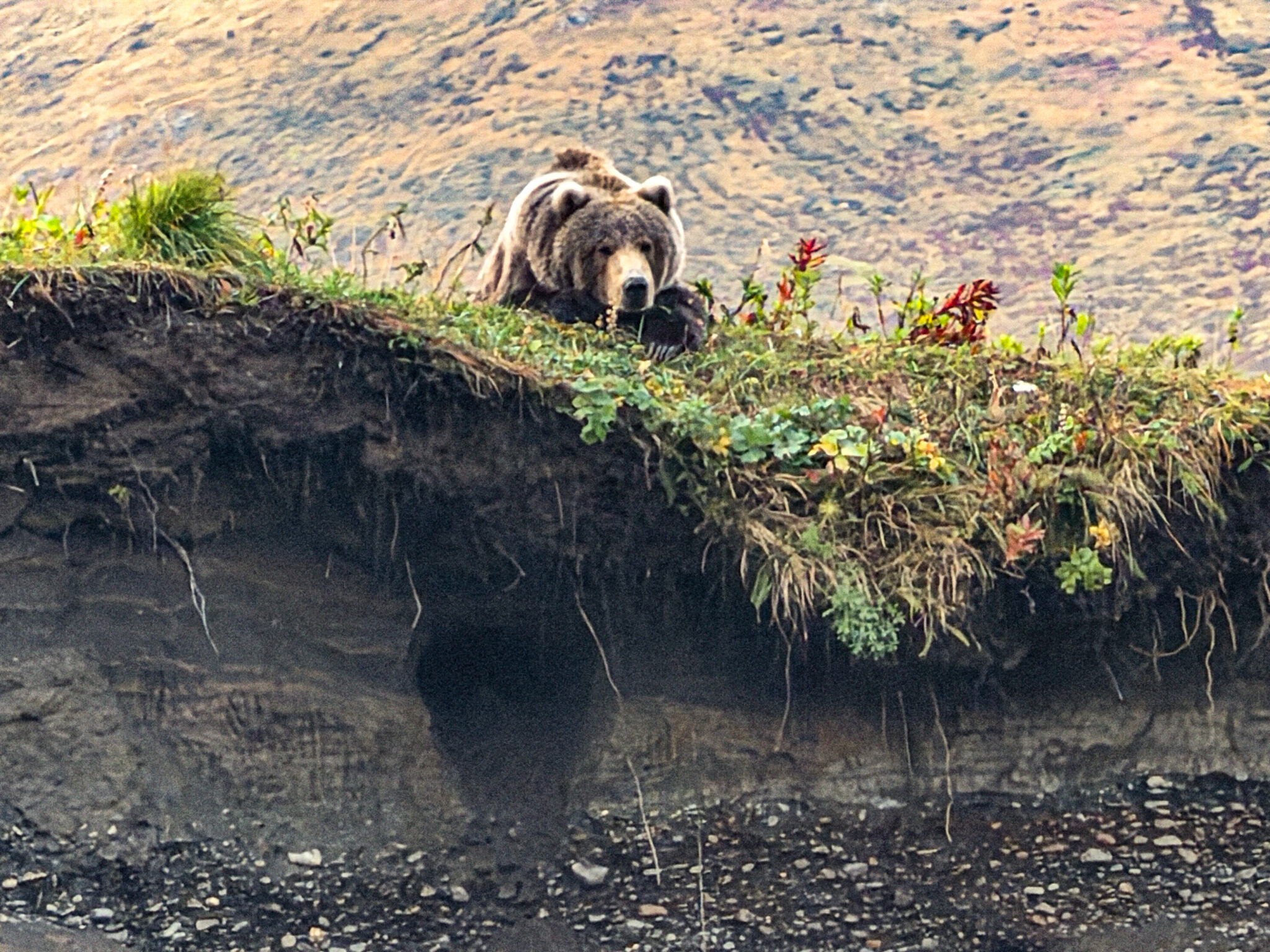
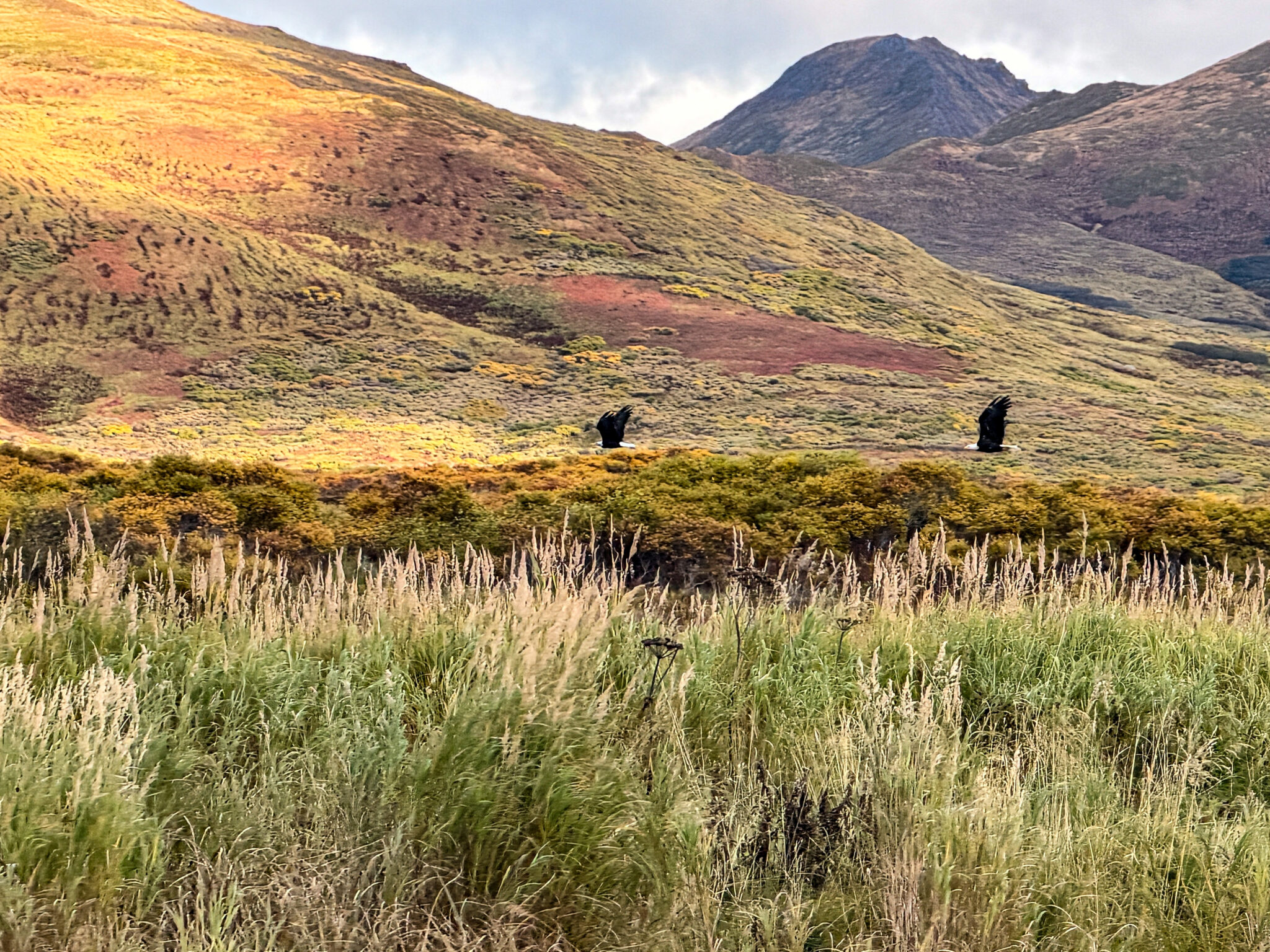
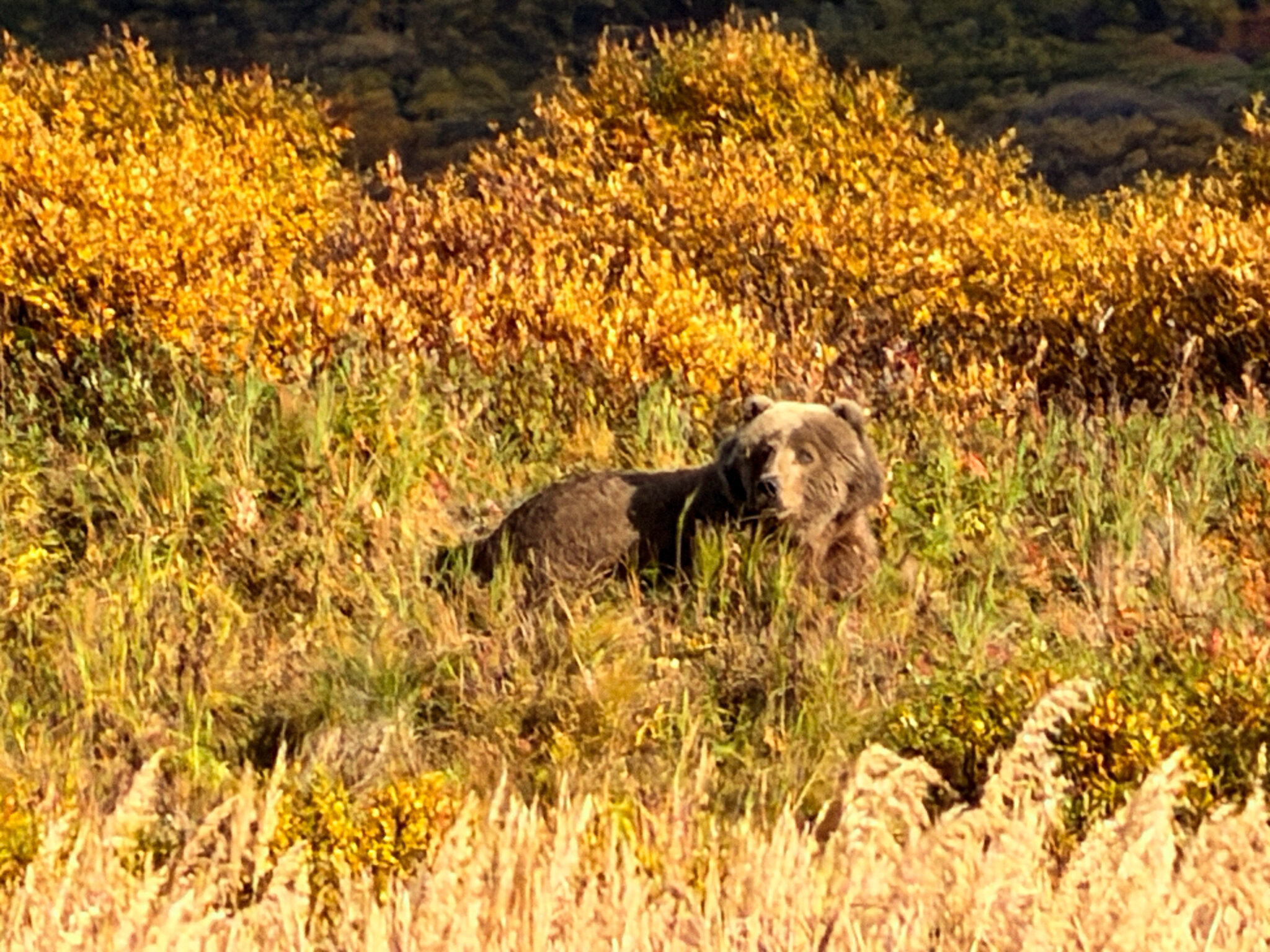
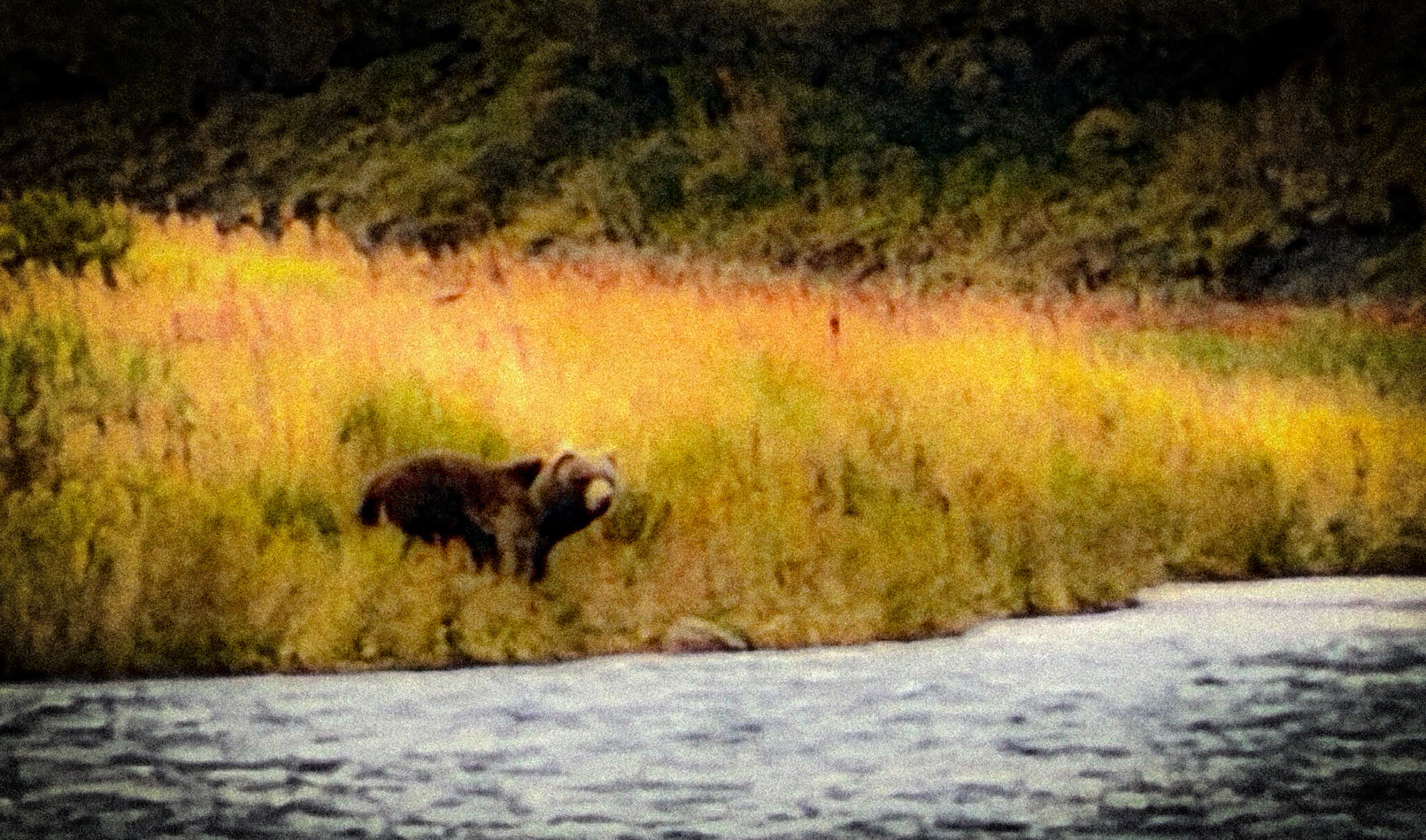
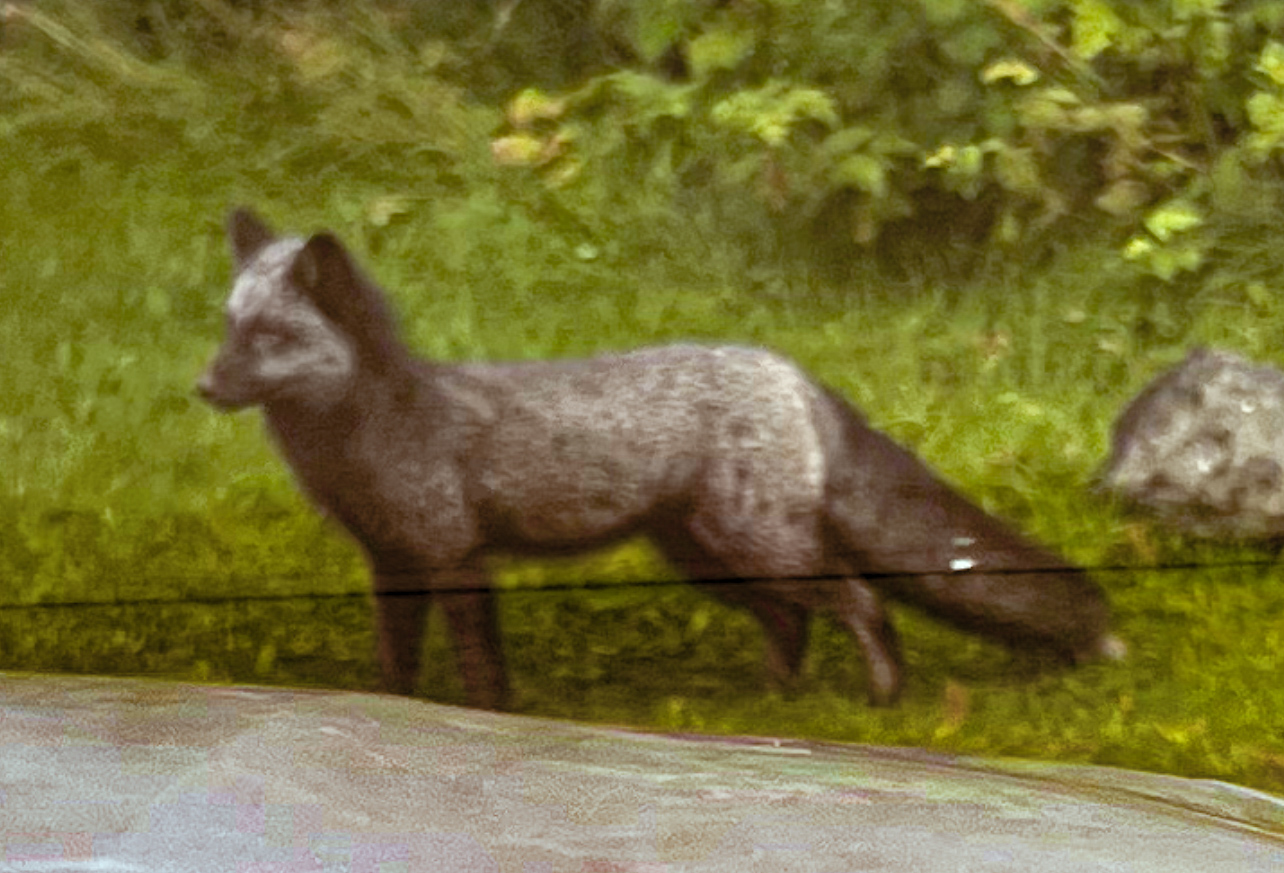
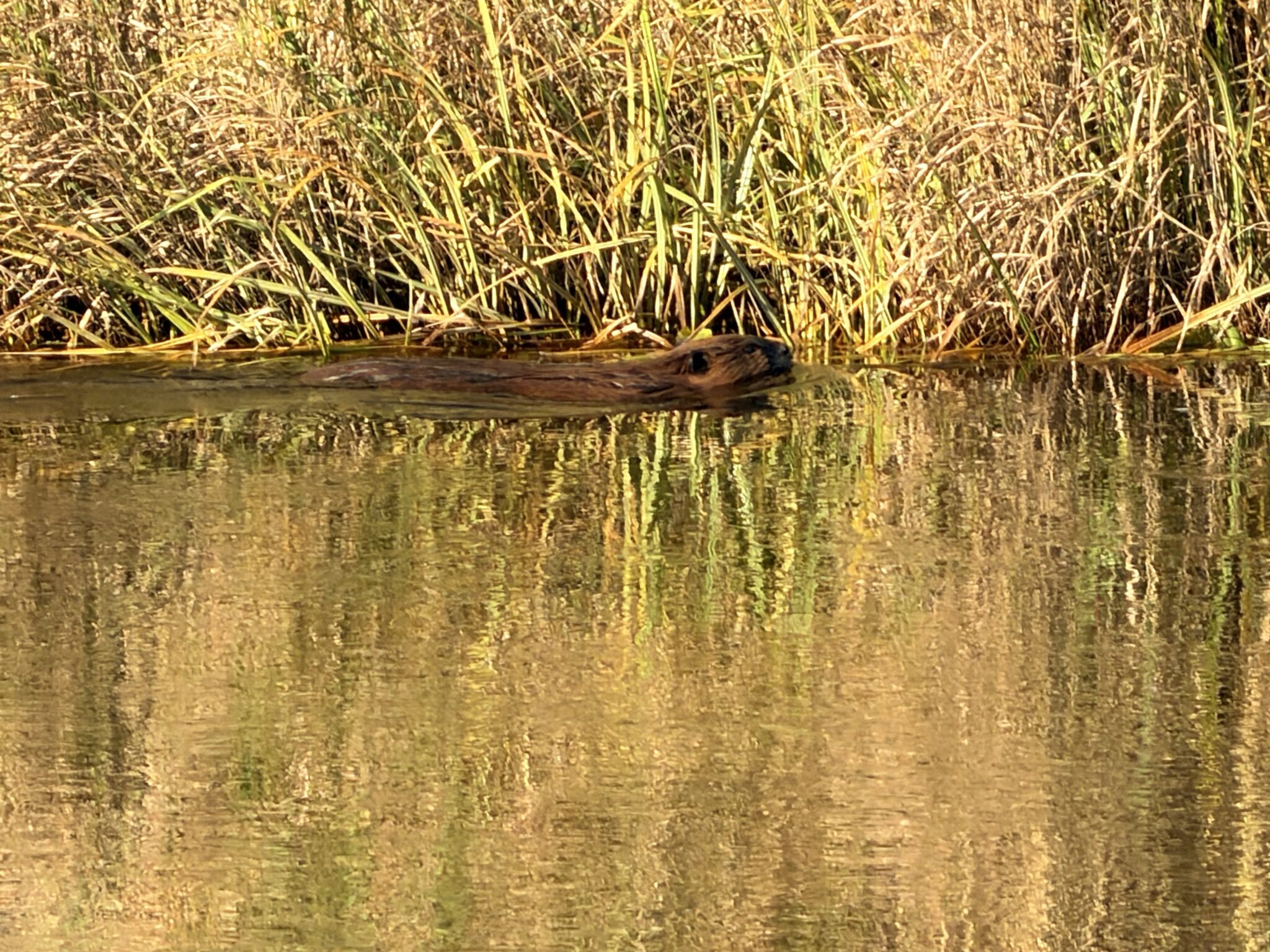
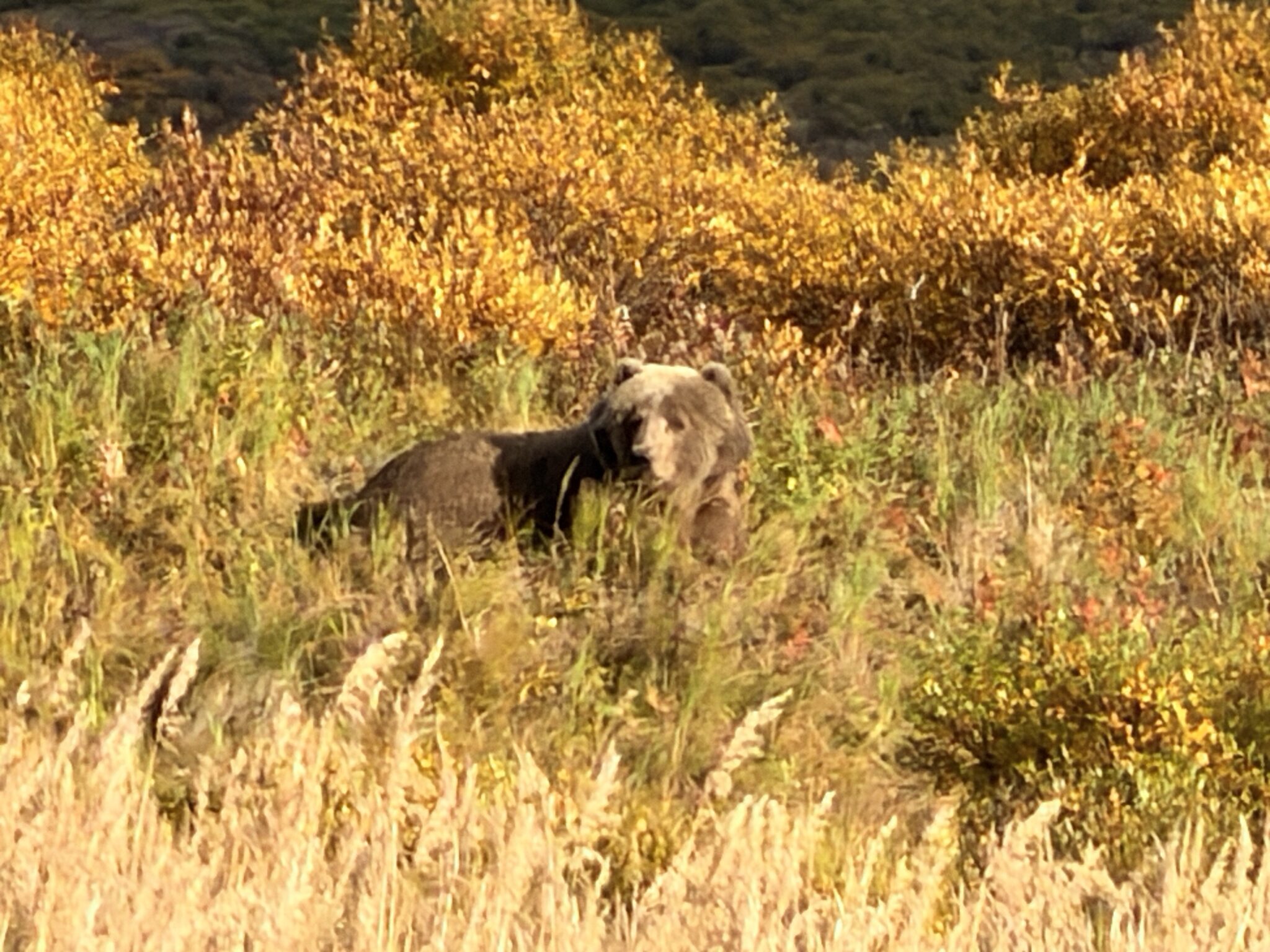
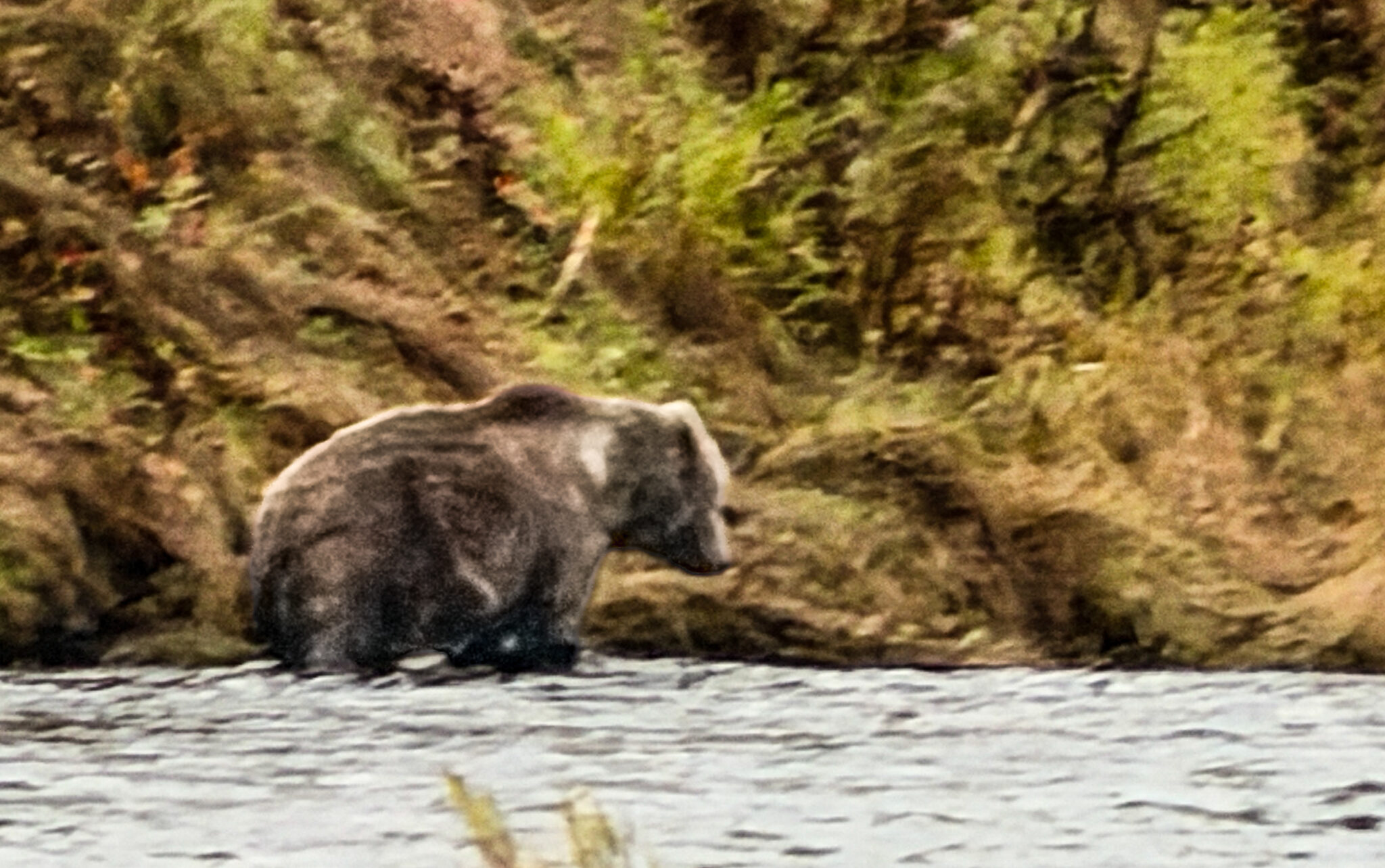
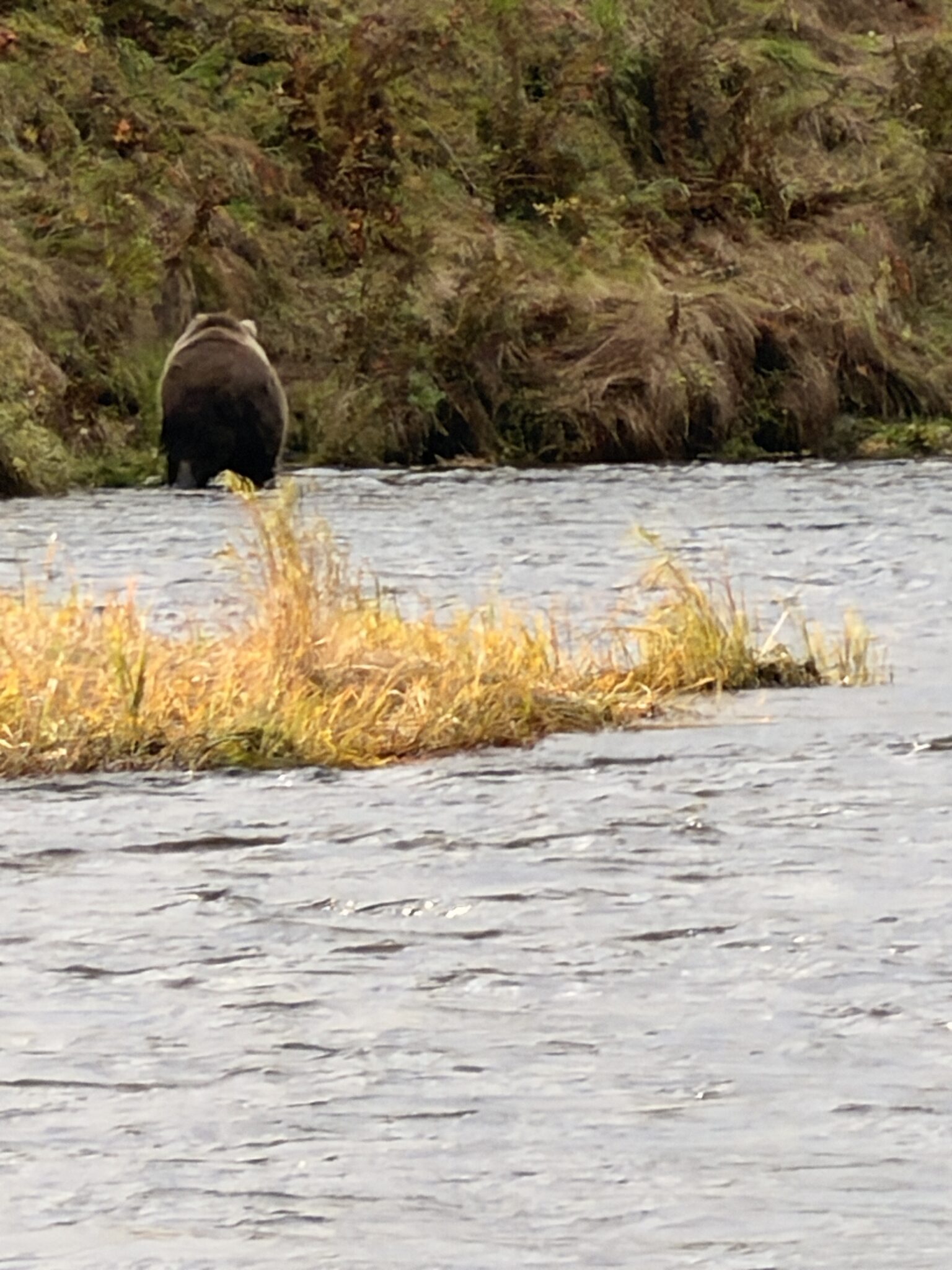
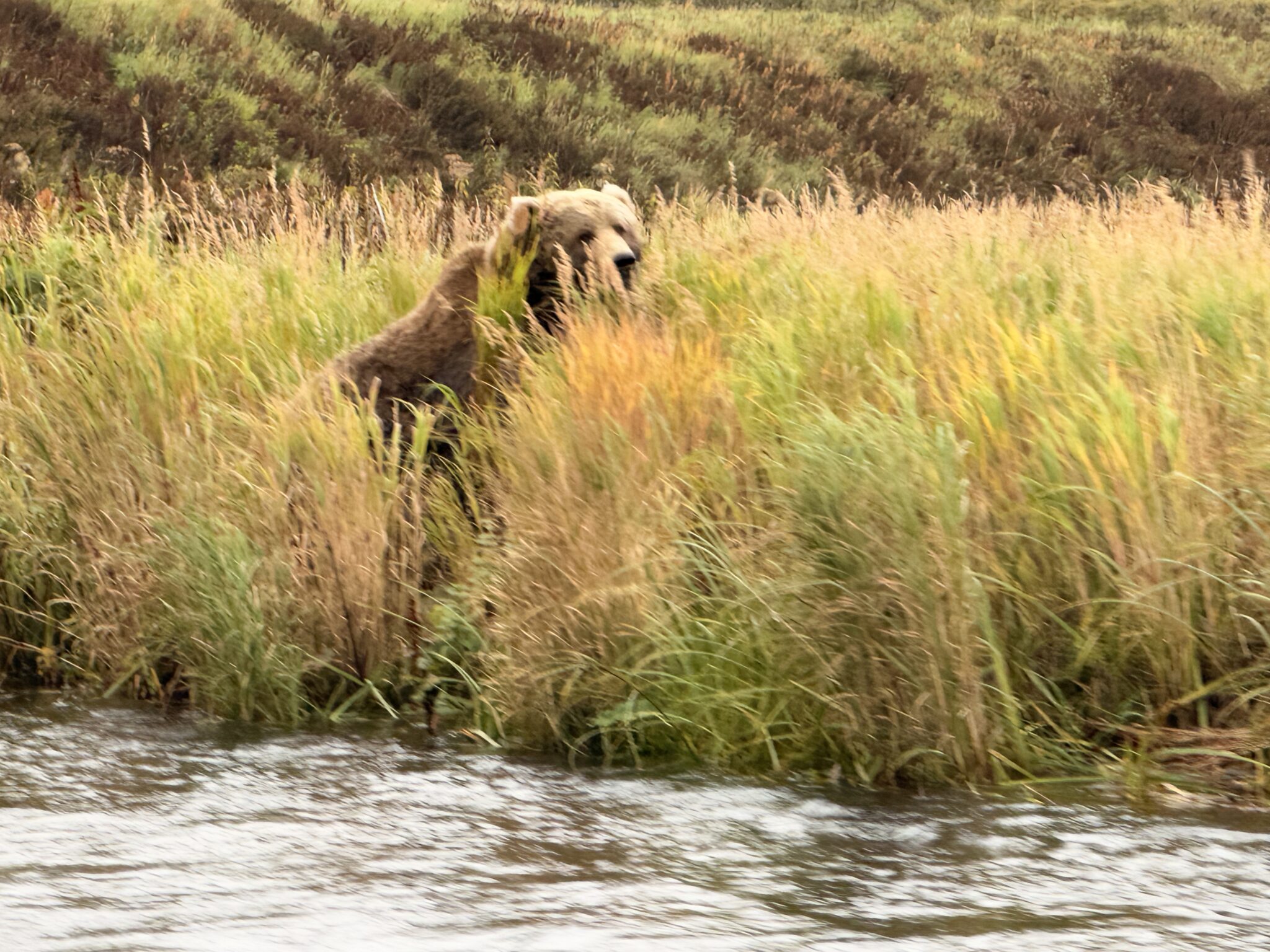
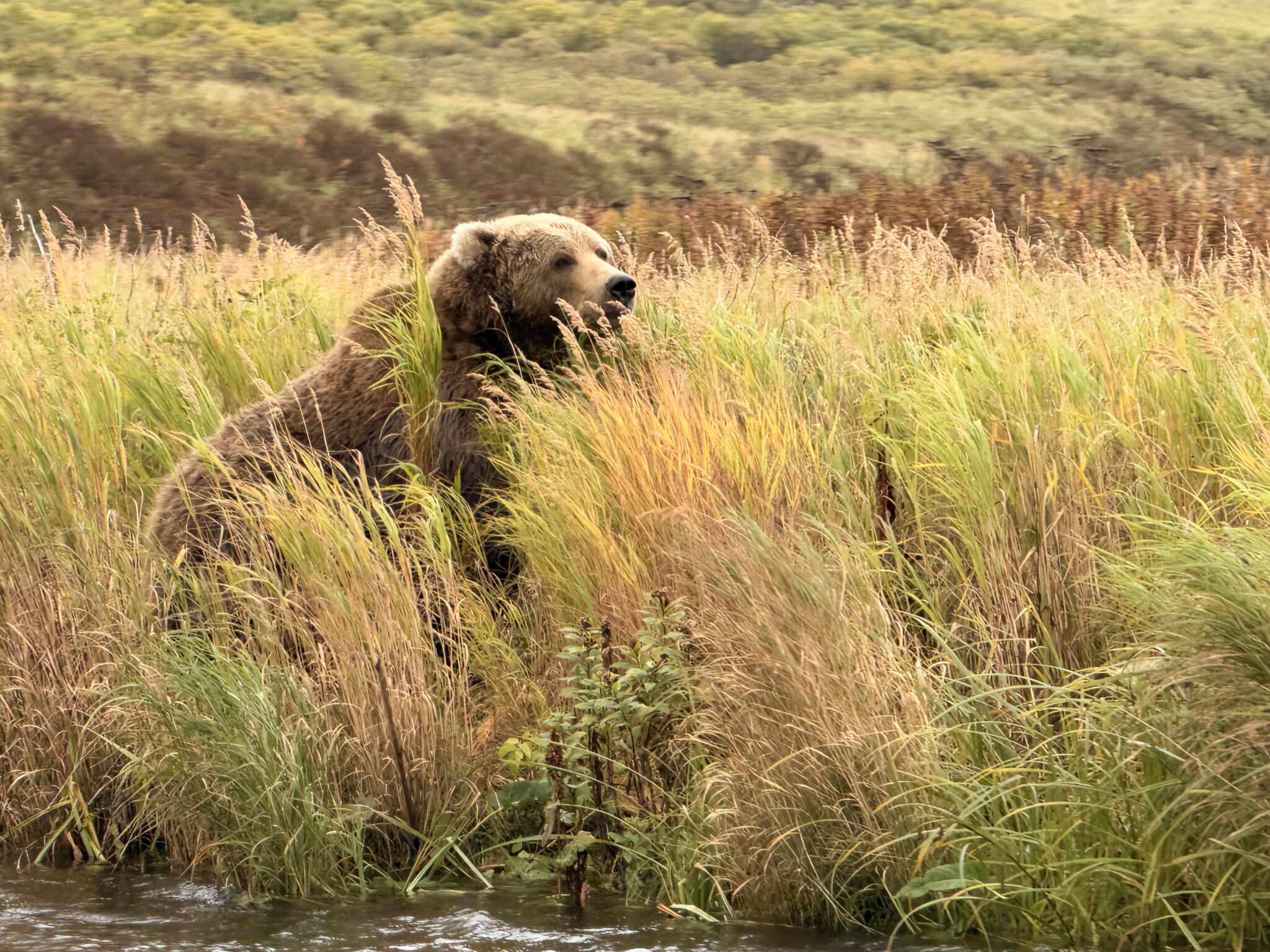
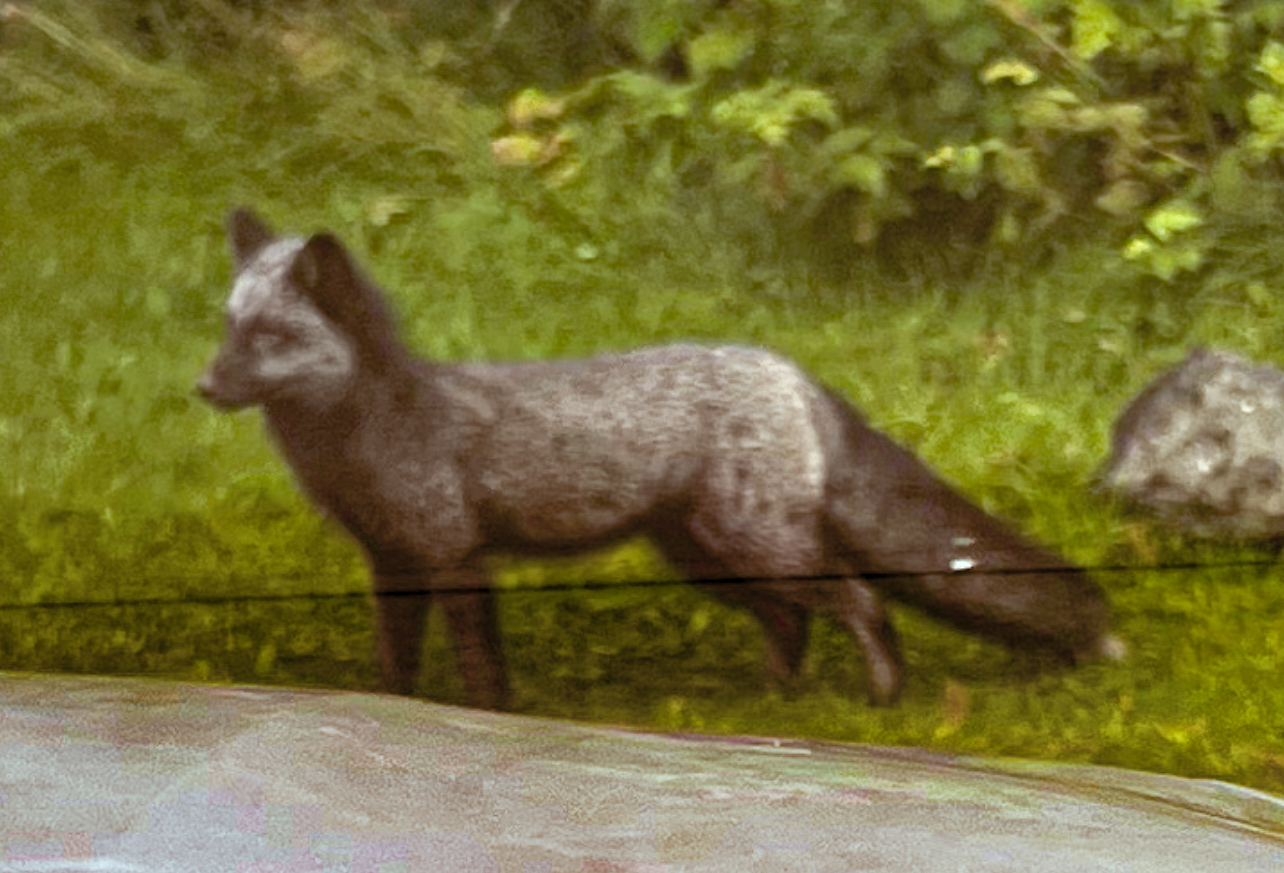
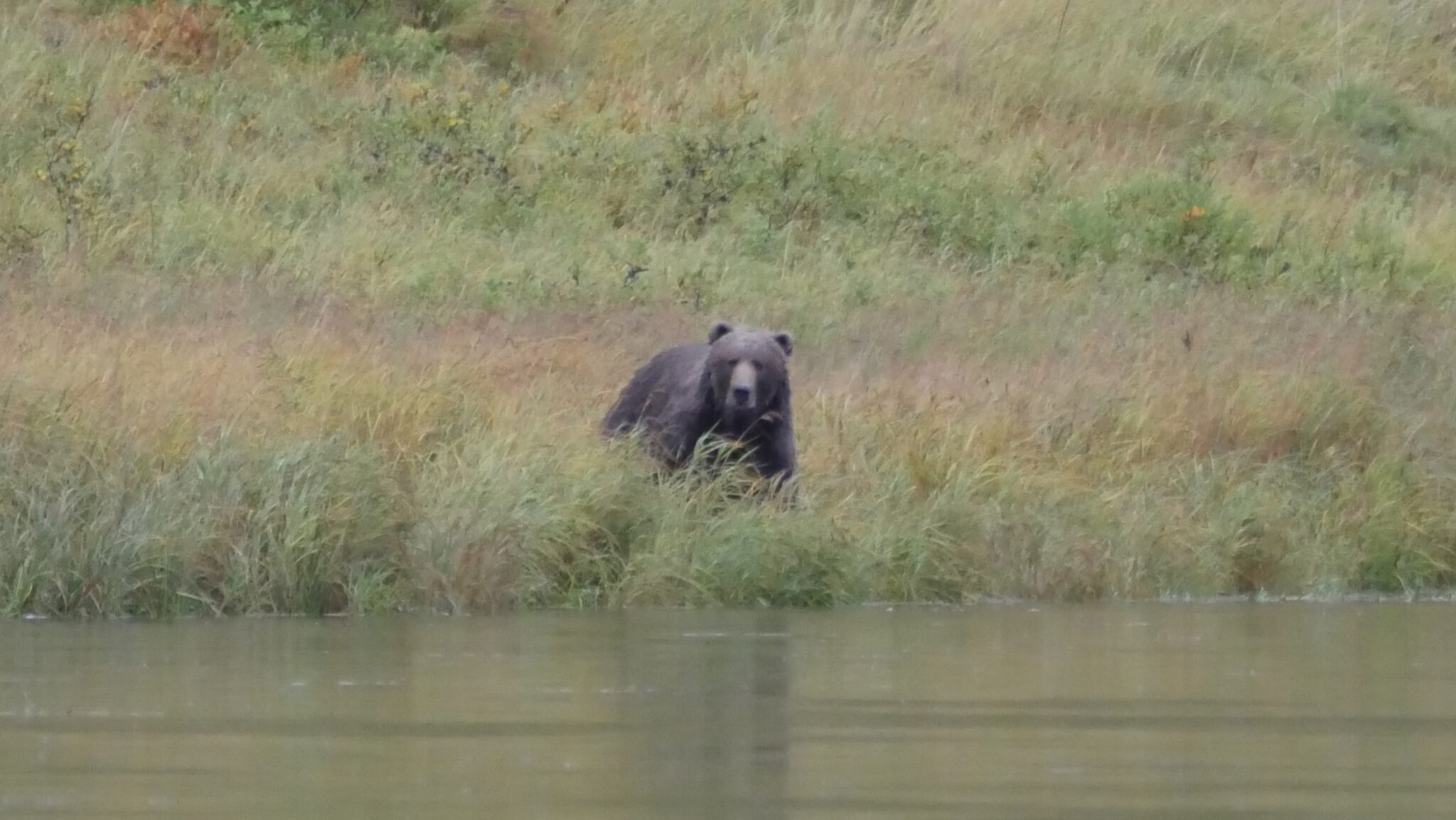
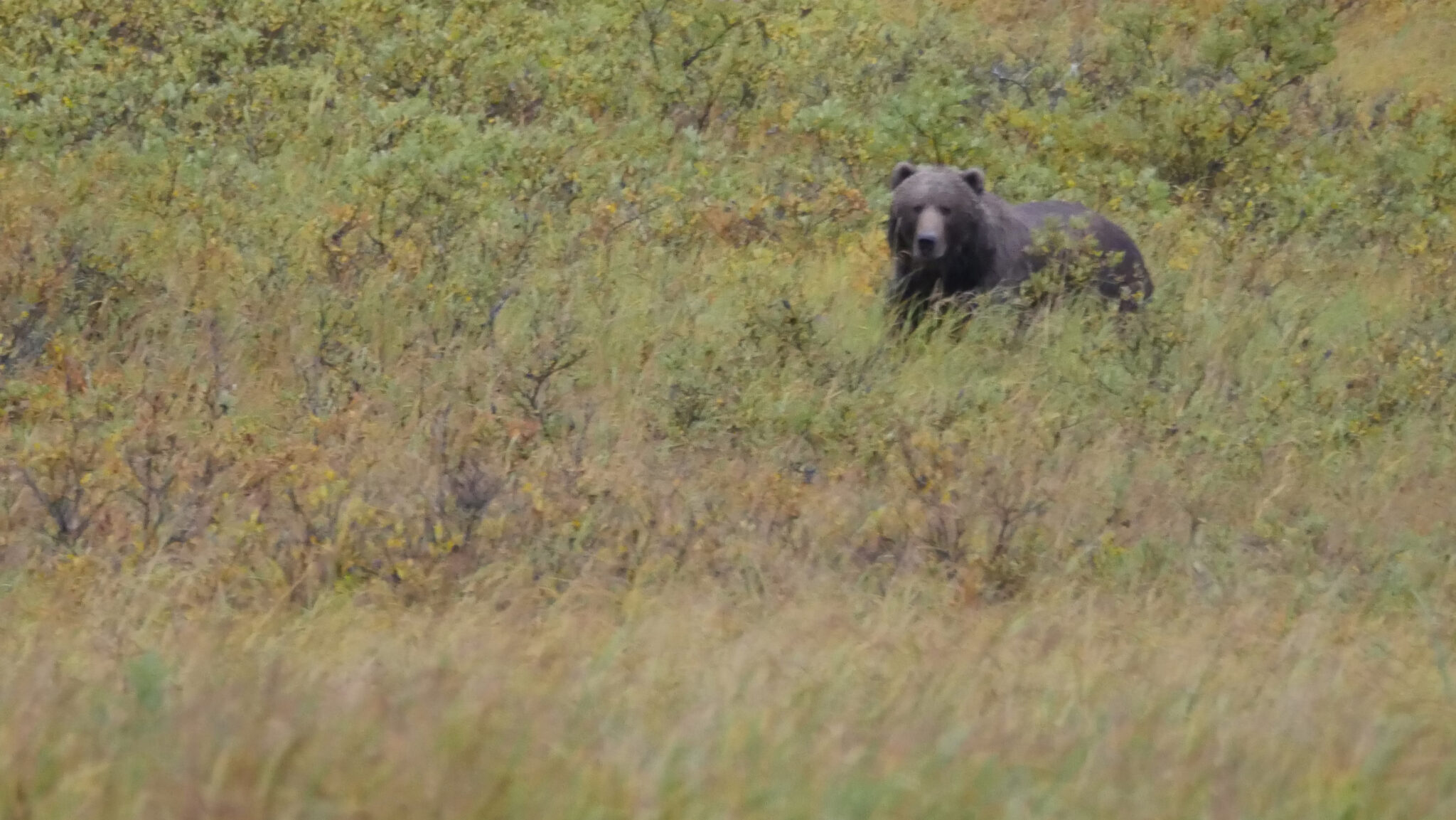
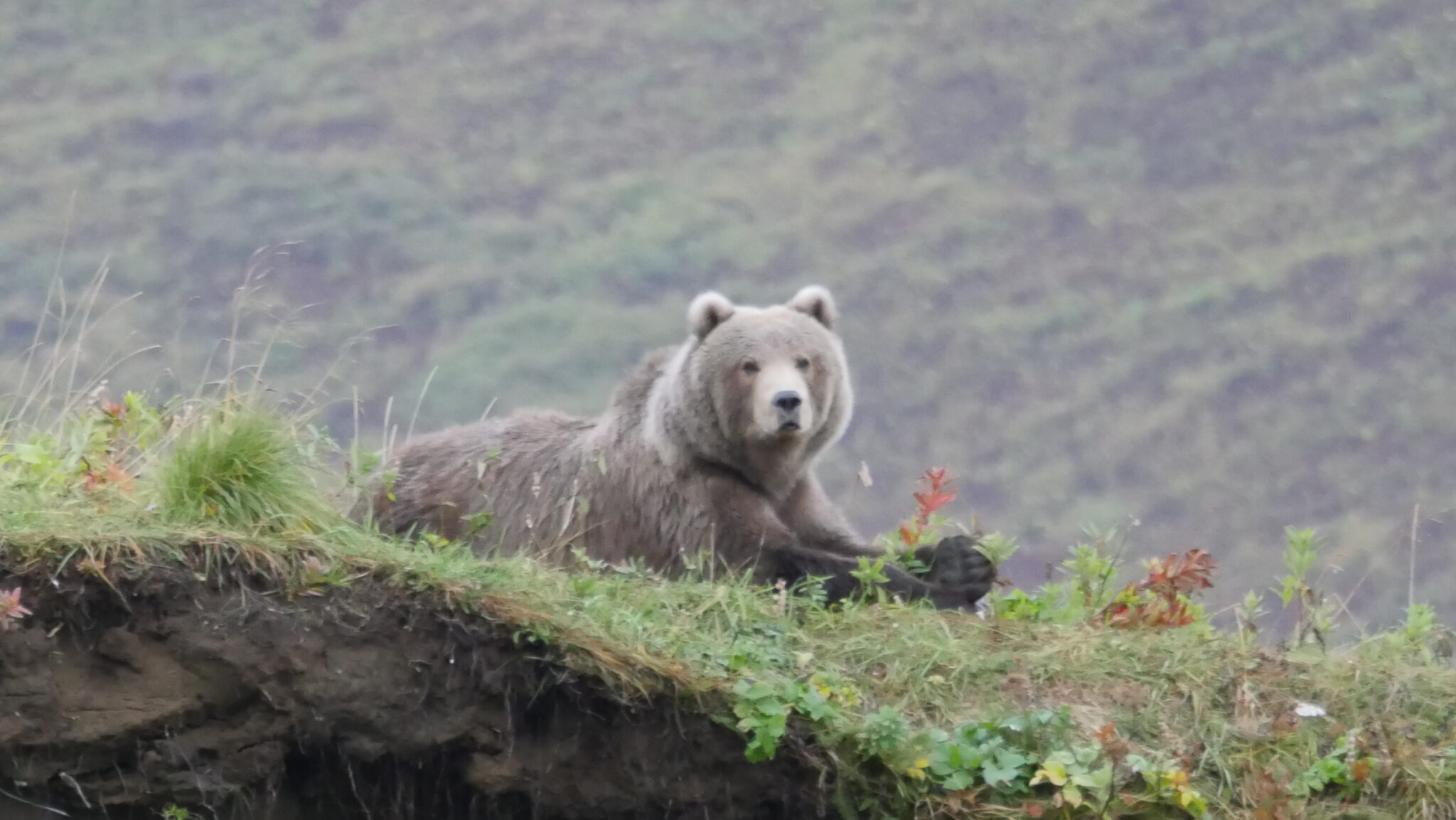
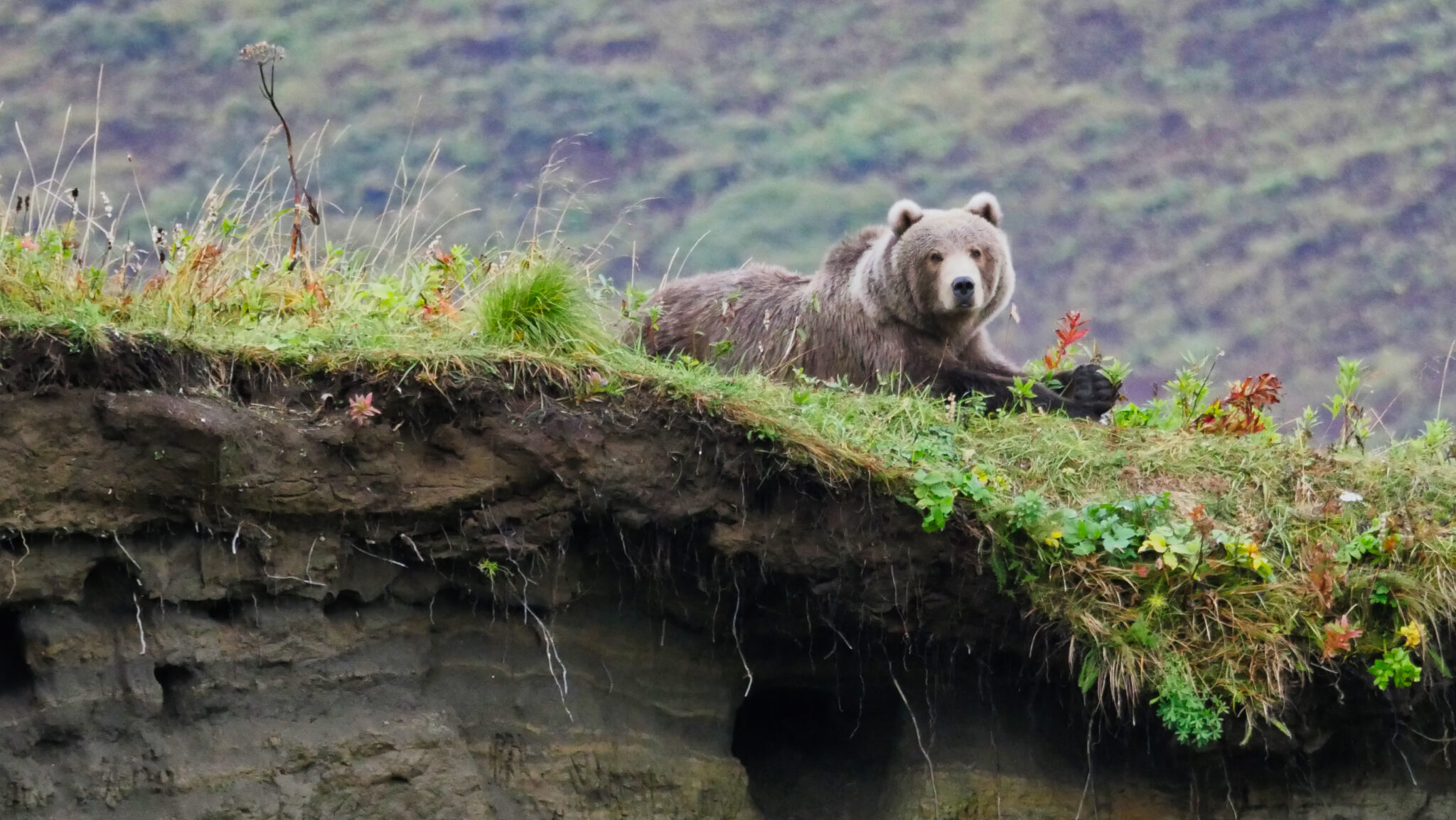
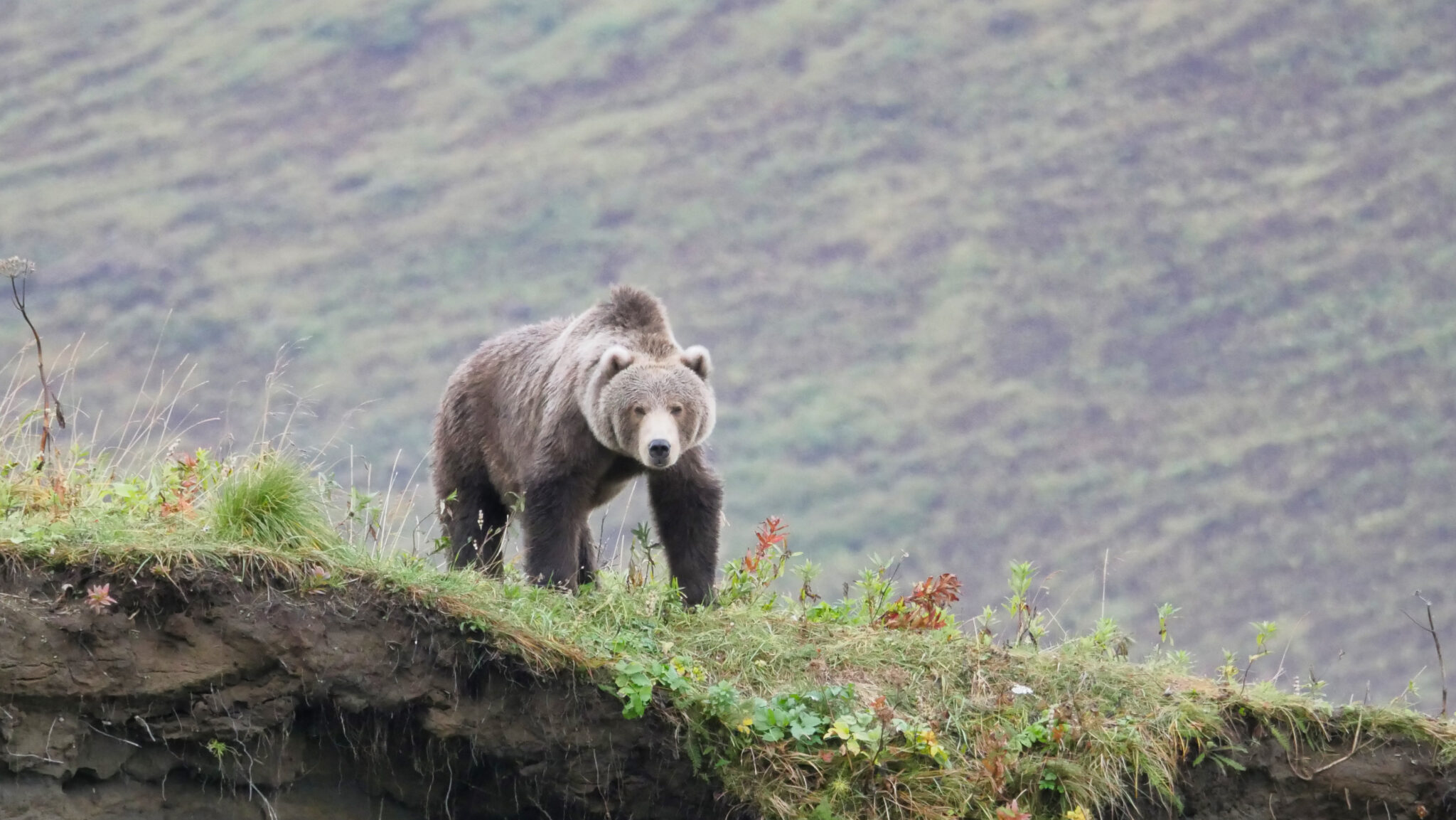
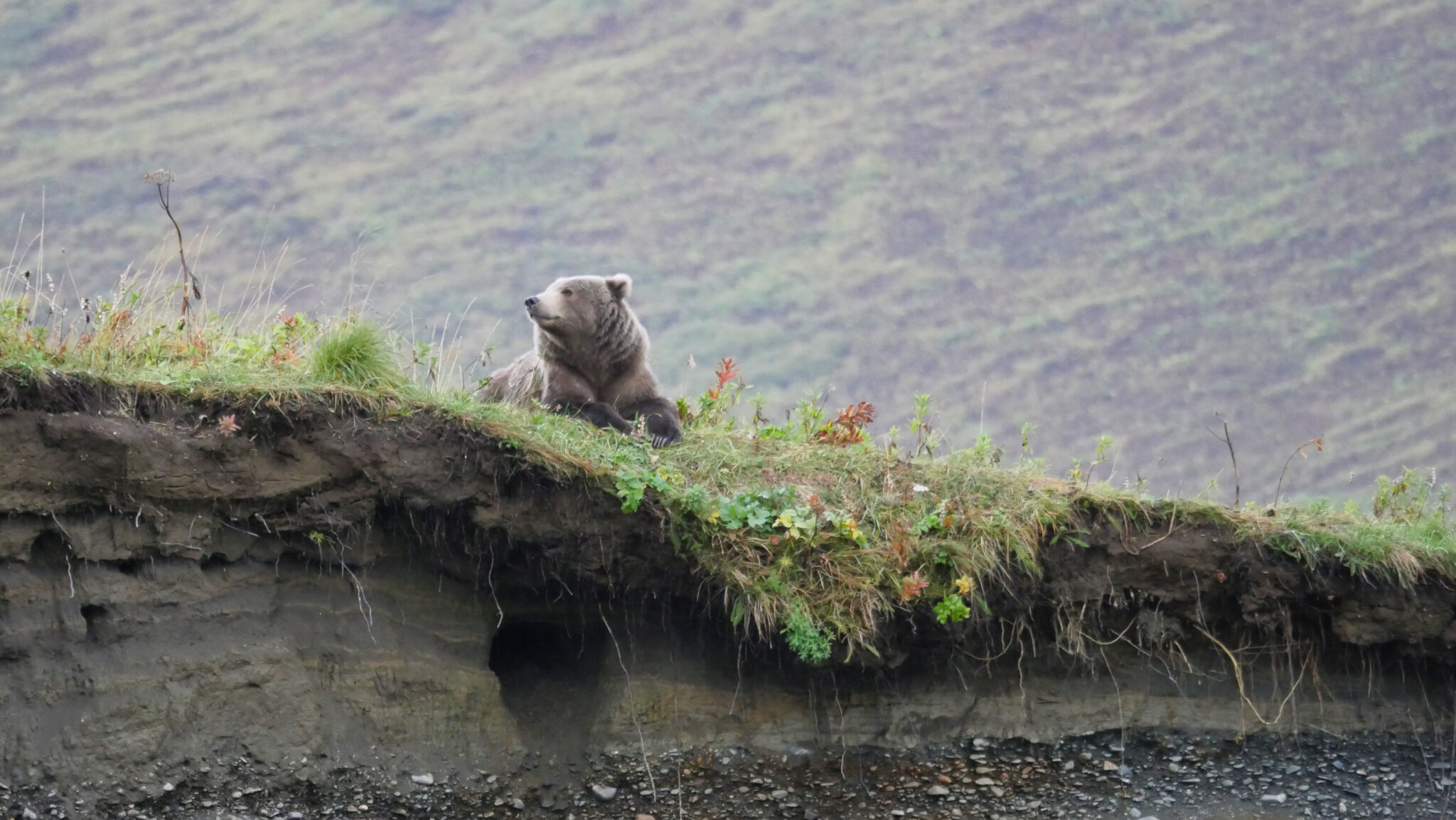
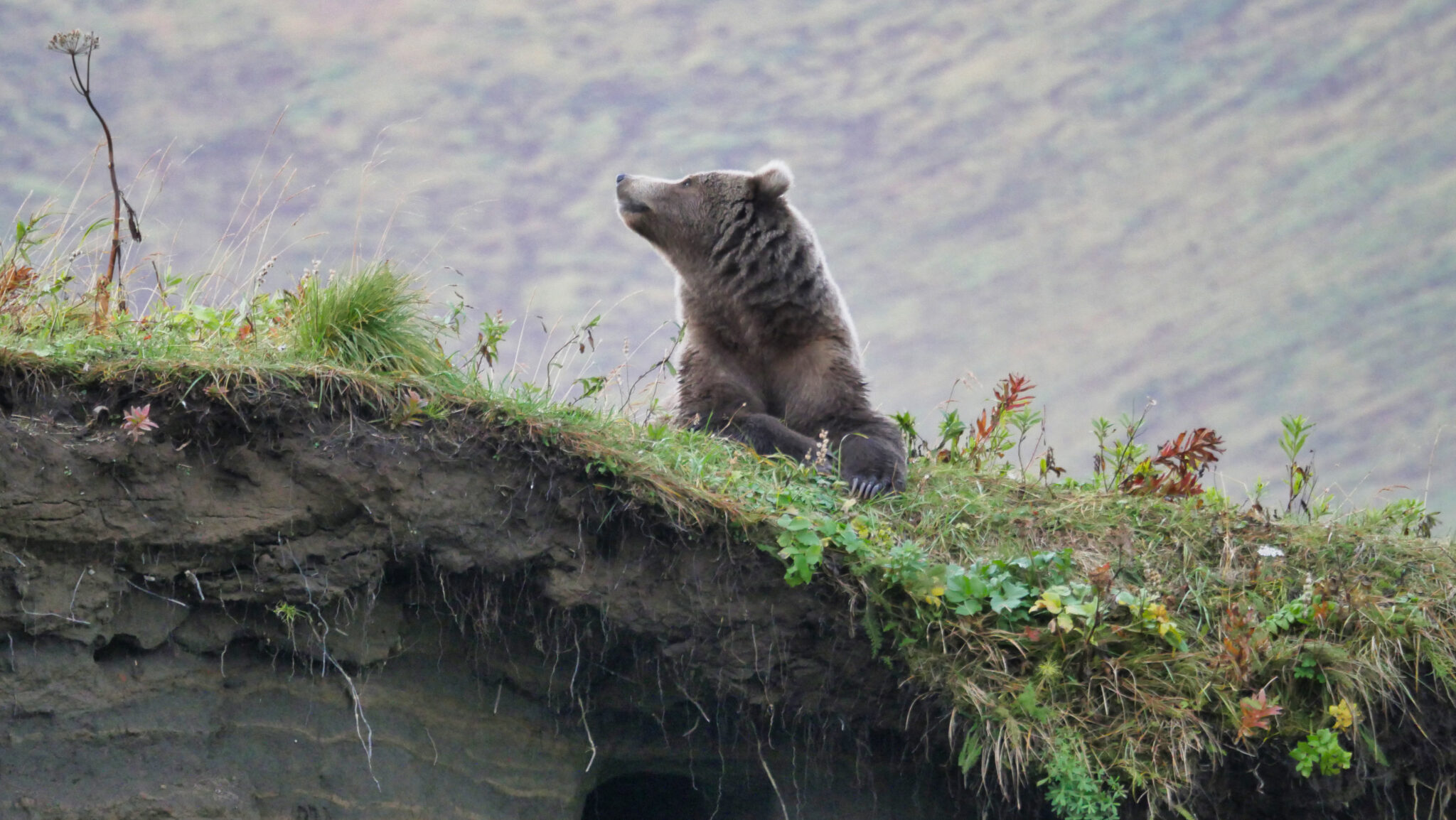
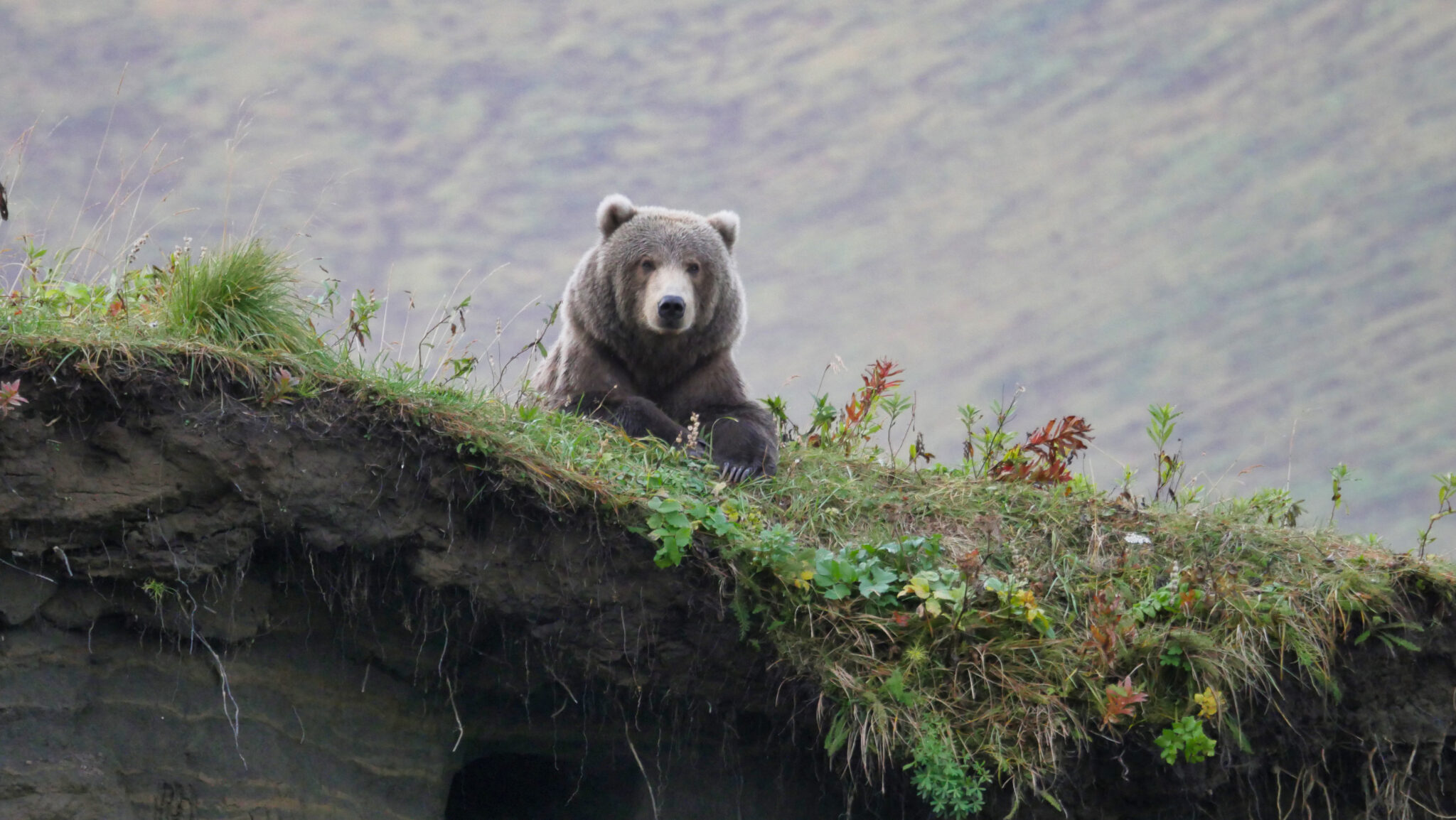
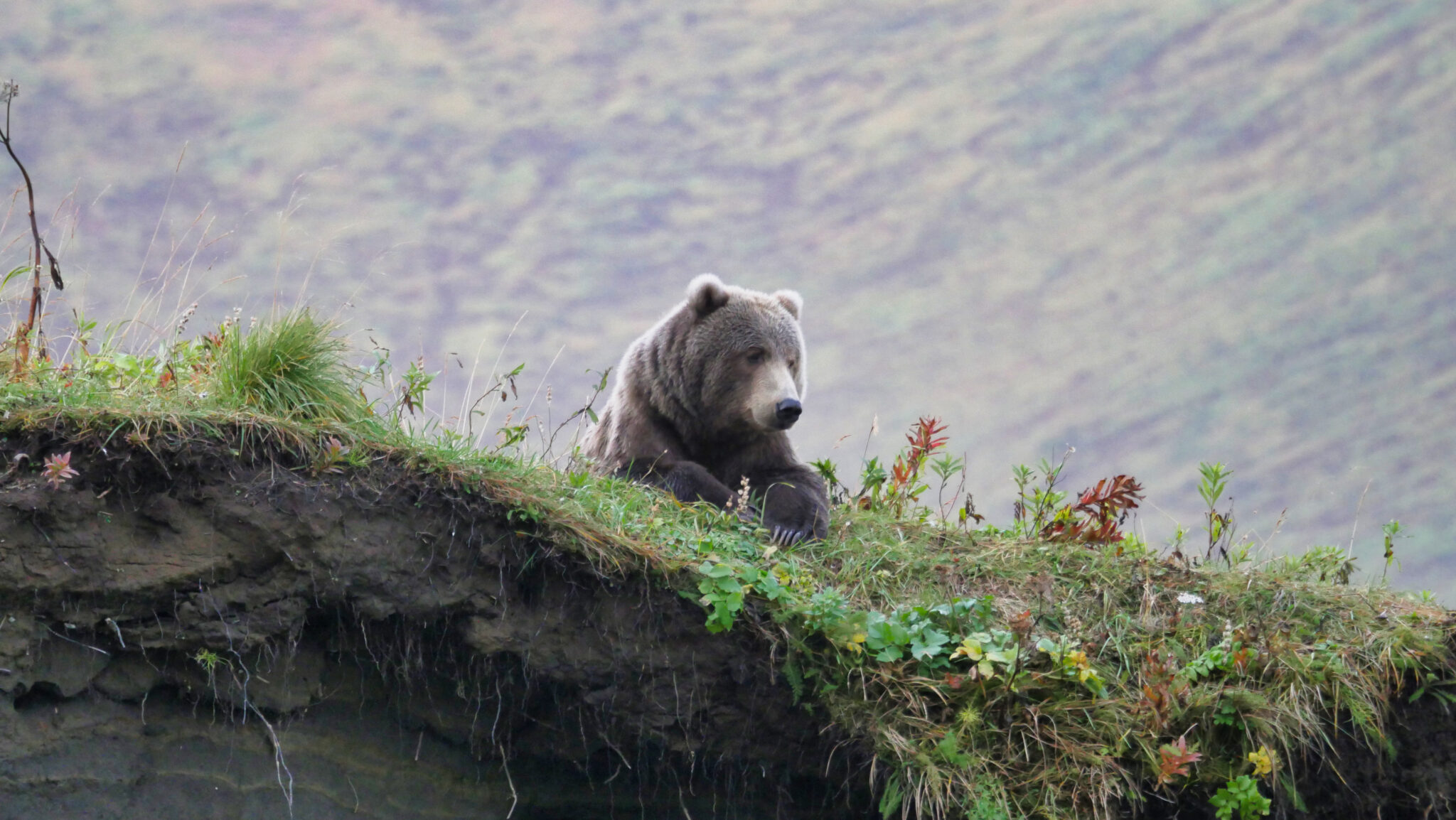
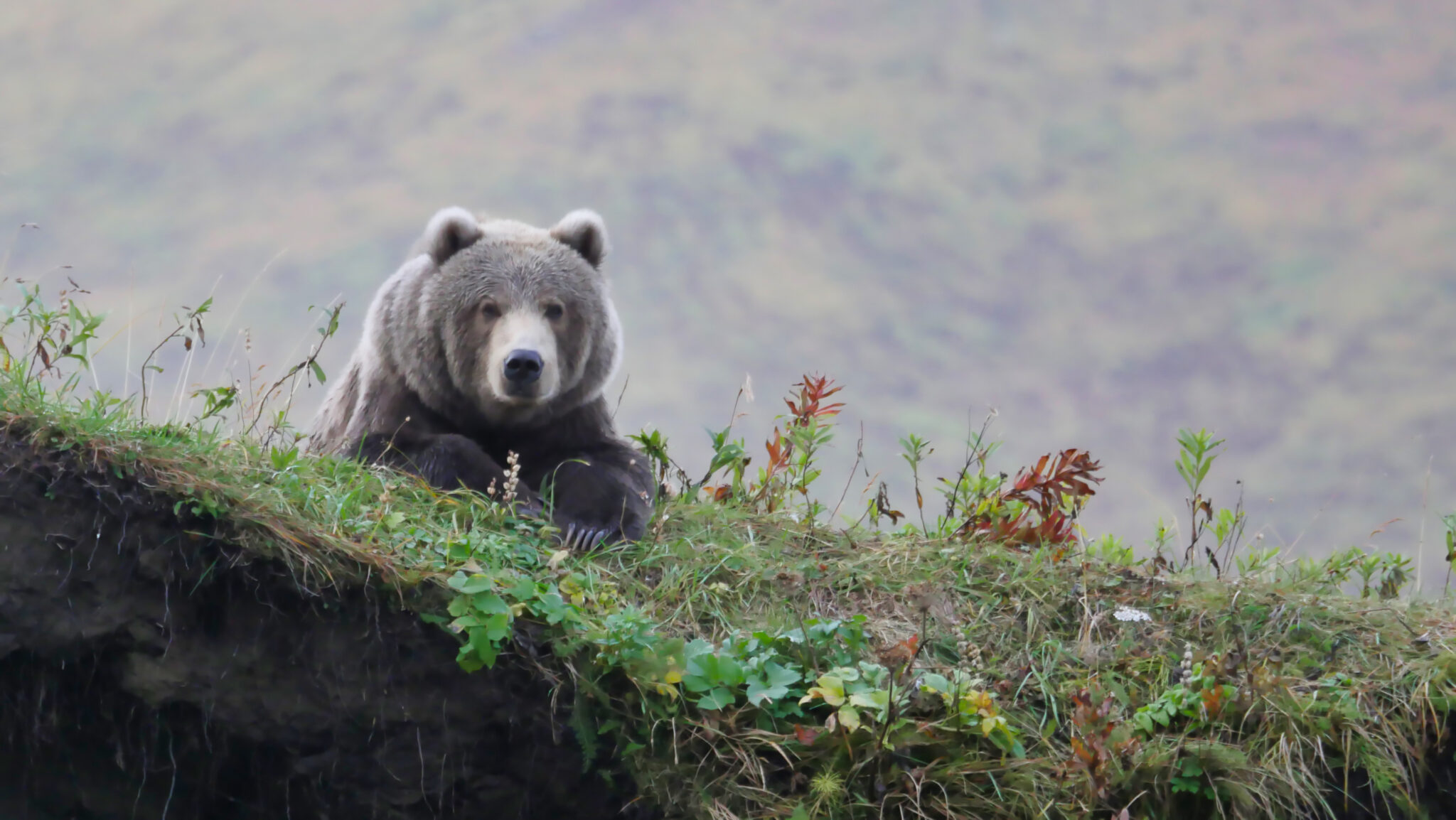
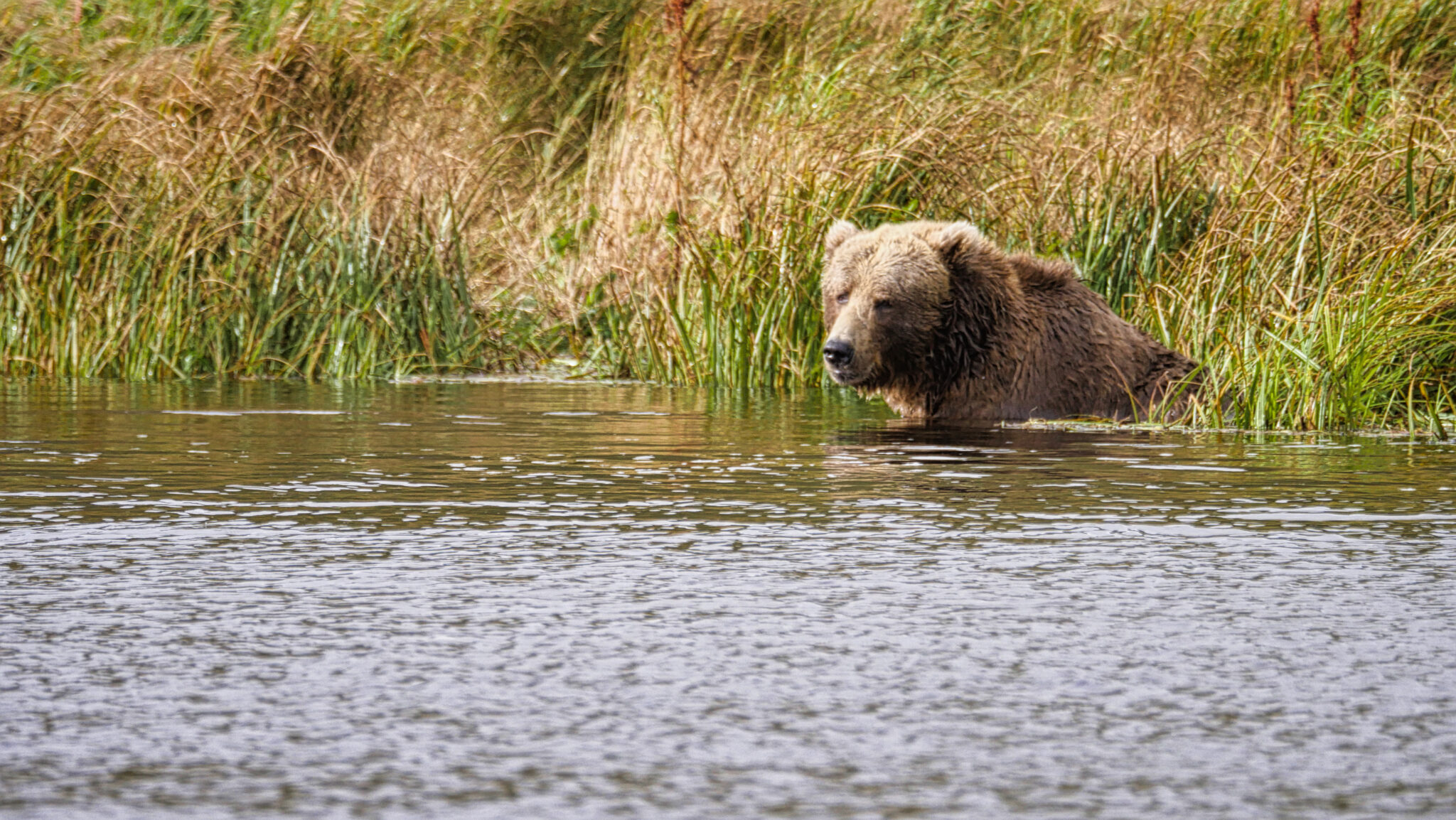
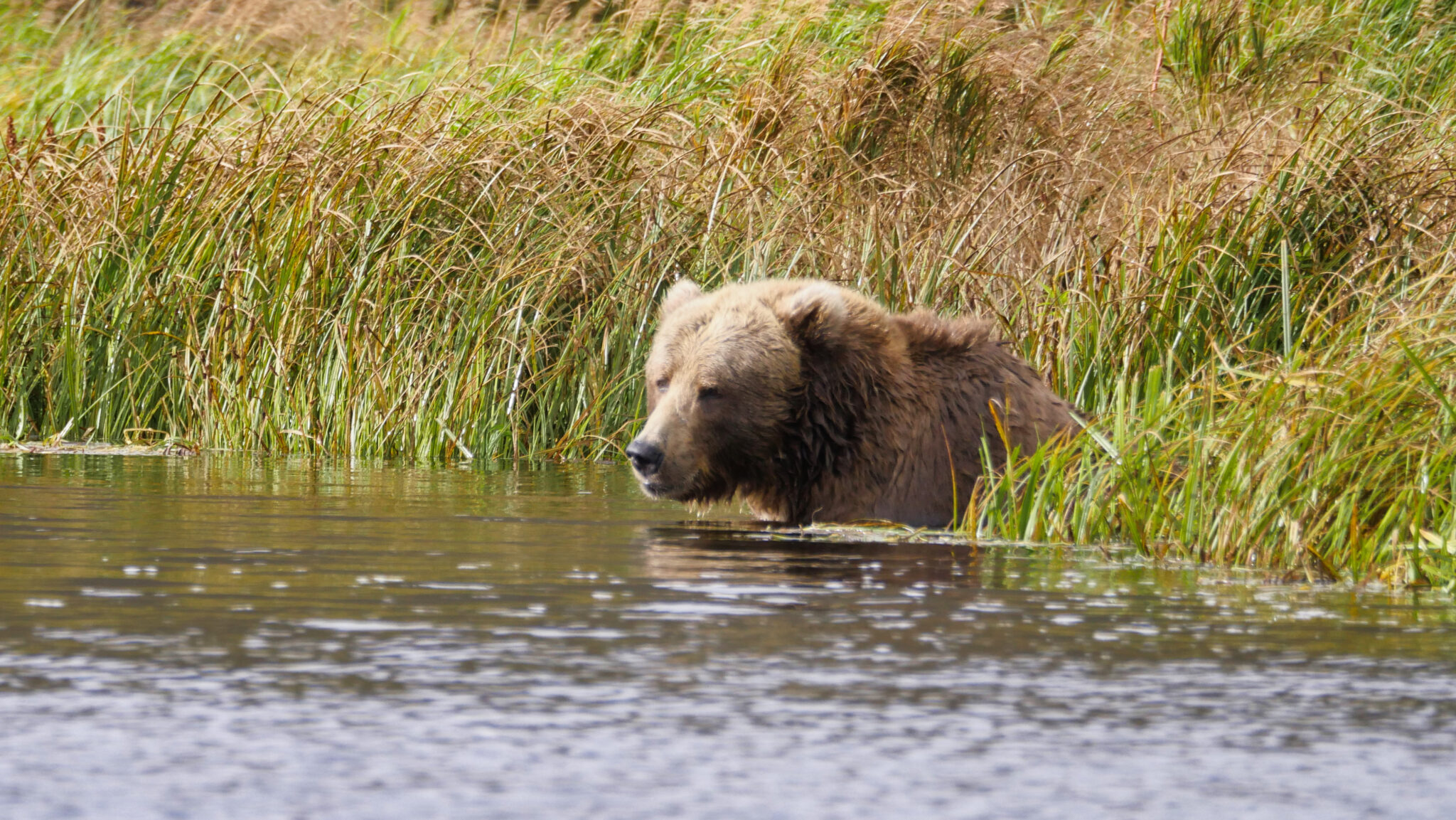
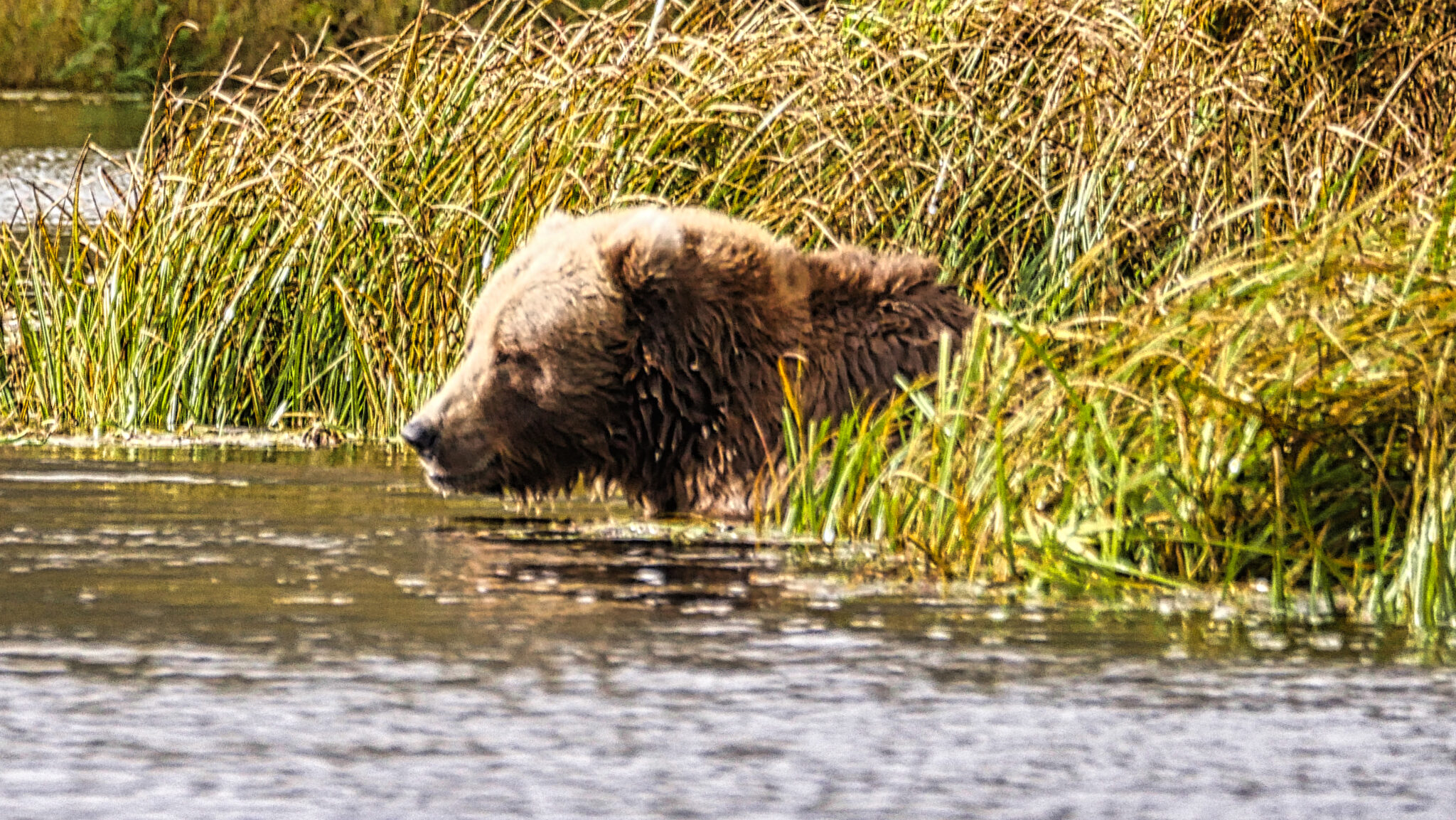
It had been years since I’d fished Kodiak Island, and I had almost forgotten that one of the coolest things about the place isn’t the fishing—it’s the bears. Kodiak bears simply don’t care. They are enormous, they are everywhere, and they wander around with the confidence of an animal that knows perfectly well it is at the top of the food chain. This time I came prepared with a real camera and a 300mm lens, and before long, photographing bears became almost as much fun as catching steelhead. They are magnificent animals—huge, powerful, and surprisingly beautiful—and watching one work the river at close range is something you never forget. Of course, I also noticed that the guides carried 10mm sidearms loaded with deep-penetrating ammunition, just in case one of my photographic subjects decided that 300mm was still a little too intimate. I carried a camera. They carried the backup plan.
One More Year
Even during a difficult week, it was easy to see the potential of the Ayakulik.
Wild steelhead fishing seems to get tougher almost everywhere with each passing year, yet the previous season had produced extraordinary fishing here during this same prime October window. The river showed us just enough. Enough fish. Enough beautiful swing water. Enough grabs. And enough unanswered questions to make me want another shot. So I think I’ll give the Ayakulik one more year before I start looking for different water. Because that’s the problem with steelhead. You know they’re in there. You know you’ve made hundreds of casts without touching one. And yet every time you set the anchor, form the D-loop and send another fly across the river, there’s that ridiculous little voice in your head saying: This could be the one. Send it. Swing it. Hang it.
Step.
Repeat.


